What Are the 2026 Top Mini Electric Golf Carts? The answer is becoming more complicated than a simple ranking. Buyers now compare range, charging time, turning radius, braking feel, weather protection, and repair access. A compact cart may look perfect beside a garden path, yet feel cramped after twenty minutes. That difference matters.
Golf-cart industry consultant Rick Kasper once said, “The best cart is the one that fits the route, not the showroom.” That principle guides this 2026 review of Mini Electric Golf Carts. The strongest models are not always the fastest or most expensive. They should handle narrow lanes, uneven pavement, short errands, and repeated stops without wasting energy. A useful test includes a real load: two adults, groceries, a small incline, and a full day of neighborhood driving.
Small details reveal quality. Check whether the steering stays steady at low speed. Listen for rattling panels over rough ground. Look at the battery compartment, wiring protection, tire clearance, and charger placement. A bright display is helpful, but reliable range information is better. Some manufacturers also make bold range claims under ideal conditions. Real use can be less generous.
That is the imperfect part.
The 2026 market still lacks one universal winner. Lithium batteries often reduce weight and maintenance, but they can raise purchase costs. Lead-acid systems remain familiar and sometimes easier to service. This guide compares leading Mini Electric Golf Carts through practical ownership, transparent specifications, safety-conscious design, and everyday usability—not showroom excitement alone.
What Defines a Mini Electric Golf Cart in 2026?
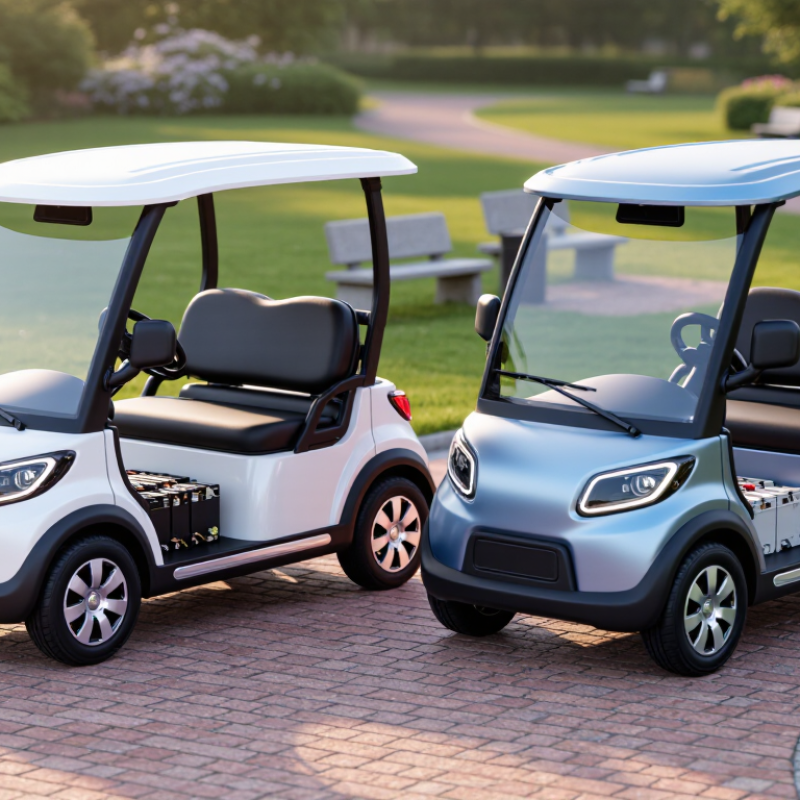
A mini electric golf cart in 2026 is defined by proportion, efficiency, and practical use. It is smaller than a standard four-seat cart, usually carrying two passengers comfortably. Most models measure about 2.4 to 3 meters long and remain narrow enough for tight paths. That footprint matters beside garden gates, maintenance lanes, and crowded storage areas.
Power systems are changing the category. Compact carts commonly use 48- or 72-volt battery systems, with lithium cells reducing weight and charging time. The U.S. Department of Energy’s Alternative Fuels Data Center identifies low-speed vehicles as generally operating between 20 and 25 mph, depending on classification. A mini cart should prioritize controlled acceleration, regenerative braking, and predictable handling over speed. Small does not mean weak. It should still climb modest slopes without overheating.
Market demand supports this shift. Allied Market Research projected the global golf cart market to grow from about $1.7 billion in 2021 to nearly $3.9 billion by 2031. Yet market labels remain inconsistent. Some sellers call any two-seat cart “mini,” even when its turning circle feels oversized. I would judge the category through real measurements, not marketing language. Check curb weight, battery capacity, ground clearance, and tested range with two adults aboard. Range claims can disappoint on hills, rough grass, or cold mornings. That limitation deserves more attention in 2026.
Key Features to Compare in Mini Electric Golf Carts
The best mini electric golf carts in 2026 should be judged by practical performance, not glossy specifications. Start with battery capacity, charging time, and usable range. A cart that travels 25 miles on paper may go less on hills, soft ground, or cold mornings. Lithium batteries usually reduce weight and charging effort, but replacement costs deserve attention. Ask whether the battery management system protects against overheating and deep discharge.
Size matters in tight spaces. Compare turning radius, overall width, ground clearance, and storage length before choosing a model. A narrow cart can pass through a garden gate, while stronger suspension handles uneven paths more comfortably. Check the payload rating, including passengers, tools, and groceries. Braking should feel steady on slopes, not vague or delayed. That detail is easy to ignore.
Comfort also separates a useful cart from a frustrating one. Look for adjustable seating, clear controls, bright lighting, mirrors, and weather-resistant wiring. A sealed dashboard helps after light rain, but no cart should be treated like a boat. Small tires may improve efficiency, yet they can feel harsh on gravel. Bigger tires add clearance but may reduce range slightly. I would also examine service access, warranty terms, and available replacement parts. Claimed performance is only part of the story. Local operating rules still need checking, especially for public roads.
Top Mini Electric Golf Cart Models for 2026
The top mini electric golf cart models for 2026 focus on compact dimensions, efficient power, and easier storage. A two-seat model suits short courses and narrow residential paths. Its turning circle may be under 10 feet, while a 48-volt battery can support practical daily trips. Check the manufacturer’s tested range, not the optimistic showroom figure. Grass, hills, passenger weight, and cold weather reduce distance.
A four-seat model with rear-facing seats offers more flexibility for families or small work teams. Look for hydraulic disc brakes, LED lighting, seat belts, and a reinforced roof. The extra seats add weight. Performance can feel slower on wet inclines. A cargo-focused mini cart may be the better choice for gardeners and facility staff. Useful details include a flat rear deck, a load rating above 500 pounds, and ground clearance near six inches.
Battery design also separates strong 2026 models from average ones. Lithium systems usually weigh less and charge faster than traditional lead-acid packs. However, replacement costs can be higher. An onboard charger, battery monitor, and weather-resistant connectors improve everyday reliability. I would not choose a cart from range alone. Inspect welds, suspension joints, tire wear, and brake response during a test drive. Small faults matter. Confirm local rules before using any cart beyond private property, because equipment requirements vary by location.
What Are the 2026 Top Mini Electric Golf Carts? - Top Mini Electric Golf Cart Models for 2026
| Rank |
Model |
Seats |
Overall Size
(L × W × H) |
Motor |
Battery |
Estimated Range |
Top Speed |
Payload |
Best For |
| 1 |
Mini Cart A |
2 |
2,350 × 1,200 × 1,750 mm |
4 kW AC |
48 V lithium-ion |
Up to 70 km |
25 km/h |
350 kg |
Neighborhood roads and compact private properties |
| 2 |
Mini Cart B |
2 |
2,420 × 1,240 × 1,780 mm |
5 kW AC |
48 V lithium-ion |
Up to 80 km |
32 km/h |
400 kg |
Hilly residential areas and longer daily trips |
| 3 |
Mini Cart C |
4 |
2,950 × 1,200 × 1,800 mm |
5 kW AC |
48 V lithium-ion |
Up to 75 km |
25 km/h |
500 kg |
Small families, resorts, and campsite transport |
| 4 |
Mini Cart D |
2 |
2,300 × 1,180 × 1,700 mm |
3 kW DC |
48 V lead-acid |
Up to 45 km |
24 km/h |
300 kg |
Budget-conscious buyers and short-distance use |
| 5 |
Mini Cart E |
2 |
2,380 × 1,220 × 1,760 mm |
4 kW AC |
48 V lithium-ion |
Up to 65 km |
28 km/h |
375 kg |
Quiet resort operations and gated communities |
| 6 |
Mini Cart F |
4 |
3,050 × 1,250 × 1,820 mm |
6 kW AC |
72 V lithium-ion |
Up to 90 km |
32 km/h |
550 kg |
Commercial sites and frequent passenger transport |
| 7 |
Mini Cart G |
2 |
2,280 × 1,160 × 1,680 mm |
3.5 kW AC |
48 V lithium-ion |
Up to 60 km |
25 km/h |
325 kg |
Tight spaces, private lanes, and light recreational use |
| 8 |
Mini Cart H |
2 |
2,460 × 1,260 × 1,800 mm |
5 kW AC |
48 V lithium-ion |
Up to 72 km |
30 km/h |
425 kg |
Mixed terrain and utility-focused personal transportation |
Specifications are approximate comparison figures for similarly configured mini electric golf carts. Actual range depends on passenger load, terrain, temperature, tire pressure, driving speed, and battery condition. Road use may require local registration, lighting, insurance, and safety equipment.
Safety, Range, Charging, and Maintenance Considerations
The best mini electric golf carts for 2026 should be judged by safety, usable range, charging behavior, and service access. The National Golf Foundation reported about 531 million U.S. golf rounds in 2023. That activity increases demand for compact transport, but convenience should not replace stability. Choose a cart with a low center of gravity, dependable braking, strong lights, seat belts, and clear speed controls. ANSI/ITSDF B56.8 provides useful safety guidance for personnel and burden carriers. CPSC injury surveillance also continues to identify falls, collisions, and rollovers as important golf-cart hazards.
Range figures require caution. A compact cart may claim 25 to 40 miles, yet hills, passengers, cold weather, tire pressure, and heavy loads reduce distance. Lithium batteries usually provide easier weight management, but replacement costs can be significant. The U.S. Department of Energy’s Alternative Fuels Data Center explains that charging time depends on battery size, charger output, and battery condition. Use a dedicated, ventilated charging area and inspect cables for heat damage. Never judge charging quality only by a dashboard percentage. I have found real-world range testing more useful than brochure claims, though even testing can be imperfect.
Tips:
Record distance on your usual route before buying. Check brake response every week. Keep tires inflated to the maker’s specification. Clean battery terminals carefully. Review the service schedule, warranty terms, and local technician availability. A cart that is slightly slower but easier to repair may prove more reliable. Personal habits still matter. A rushed turn can defeat excellent engineering.
How to Choose the Right Mini Electric Golf Cart
What Are the 2026 Top Mini Electric Golf Carts?
How to Choose the Right Mini Electric Golf Cart
Choosing a top mini electric golf cart in 2026 starts with your route, not a glossy ranking. Measure the garage doorway, storage bay, and narrowest turn. A compact cart should fit without scraping mirrors or forcing awkward three-point turns. I favor a short wheelbase for tight paths, but stability matters on uneven pavement. Test the turning circle in person. Spec sheets can feel optimistic.
Match the battery to real use. Lithium packs usually weigh less and charge efficiently, while lead-acid systems may lower the purchase price. Neither option is automatically better. Ask for tested range with passengers, hills, and cooler temperatures included. Check payload carefully; two adults and groceries can exceed a mini cart’s limit. Motor torque matters more than a dramatic top-speed figure on slopes. Inspect braking, tire grip, lights, mirrors, belts, and weather protection. Small details decide daily comfort.
Before paying, confirm charger compatibility, battery replacement cost, warranty terms, and local operating rules. Ask who handles repairs and how quickly common parts arrive. A low price can become expensive after one failed controller or worn battery. I would also compare noise, ground clearance, and turning behavior during a slow test drive. My first instinct might favor maximum range, yet a rough ride can make short trips unpleasant. That trade-off deserves an honest second look.
What Are the 2026 Top Mini Electric Golf Carts?
The chart compares common mini electric golf cart configurations using practical buying factors: driving range, top speed, seating capacity, charging time, and cargo capacity.
For short neighborhood trips, a compact two-seat model usually offers the easiest parking and lowest charging needs. A four-seat model is better for passengers, while a utility configuration is preferable when cargo capacity and working range matter most. Actual range varies with terrain, passenger weight, temperature, tire pressure, and driving speed.
Conclusion
Mini Electric Golf Carts in 2026 are compact, efficient vehicles designed for short-distance transportation on suitable private roads, communities, campuses, resorts, and recreational areas. Their appeal comes from quiet operation, simple handling, and lower routine energy use compared with larger vehicles. When comparing models, consider overall dimensions, passenger capacity, motor performance, battery type, charging time, ground clearance, storage space, weather protection, and available safety equipment. A well-designed mini cart should balance portability with stability and provide intuitive controls for everyday use.
Choosing the right Mini Electric Golf Carts also requires careful attention to driving range, terrain, load capacity, braking performance, lighting, seat belts, and visibility. Regular charging habits, tire inspections, brake checks, battery care, and basic cleaning can help maintain dependable performance. Buyers should select a model according to their typical travel distance, number of passengers, storage needs, local operating requirements, and available charging access. By comparing practical features rather than appearance alone, users can find a compact electric cart that is safe, convenient, and suitable for their intended environment.