
Featured Commercial Fleet Series (Direct Factory Line)
Engineered to international commercial standards. Select an active production model below to review full technical blueprints, battery performance curves, and direct wholesale pricing.






Executive Sourcing Brief: The Paradigm Shift in Low-Speed Electric Vehicles
Strategic analysis of powertrain evolution, total cost of ownership (TCO) benchmarks, and the displacement of legacy golf buggy architecture.
The Industrial Transformation from Fairway Car to Multi-Scenario Micro-Mobility
The global low-speed vehicle (LSV) and commercial golf cart market has fundamentally outgrown the confines of municipal golf courses. Today, enterprise purchasers—spanning master-planned resort communities, commercial logistics campuses, eco-tourism reserves, international airports, and municipal security agencies—require vehicles built to rigorous automotive-adjacent standards. Sourcing directly from an established Tier-1 manufacturer eliminates distributor markups, ensures structural accountability, and delivers custom powertrain tuning engineered precisely for regional duty cycles.
Historically, low-speed carts relied upon 48-volt flooded lead-acid battery packs and basic DC brushed motors. These legacy architectures are plagued by severe battery degradation, terminal acid corrosion, high maintenance labor (regular water replenishment), and steep thermal efficiency penalties under elevated ambient temperatures. The contemporary commercial standard has converged around 72V Lithium Iron Phosphate (LiFePO4) systems coupled with AC induction or Permanent Magnet Synchronous Motors (PMSM). By raising the platform operating voltage to 72V, electrical current draw is reduced for equivalent power outputs, substantially mitigating I²R thermal resistive losses, prolonging harness longevity, and delivering instantaneous torque response across steep topography.
China Factory 4.0: Supply Chain Resilience, Vertical Integration & Quality Engineering
Inside our 13,000 m² advanced production base in Dezhou, Shandong: How automated robotic manufacturing drives unmatched lead-time reliability and structural endurance.
Automated Robotic Frame Welding & E-Coat
Structural failure in coastal or humid environments remains the leading failure mode of commercial buggies. Our manufacturing facility utilizes high-precision 6-axis robotic welding jigs to fabricate heavy-duty Q235 structural steel and aircraft-grade aluminum alloy subframes. Every chassis undergoes an exhaustive multi-stage pretreatment followed by cathodic electrophoretic deposition (E-Coat) and automotive powder finishing. This achieves salt-spray resistance exceeding 1,000 hours under ASTM B117 standards, preventing rust in beachfront resorts and island applications.
Automotive-Grade Smart BMS Integration
Unlike trading intermediaries that outsource assembly to disjointed job shops, our dedicated powertrain lab packages lithium cells with intelligent Battery Management Systems (BMS). Our BMS continuously calculates dynamic State of Charge (SOC) and State of Health (SOH) via real-time cell balancing, multi-point temperature sensors, over-current cutoff, low-temperature thermal preheating, and CAN-bus integration. This safeguards against cell drift, thermal runaway, and premature pack failure during rigorous commercial usage.
End-to-End Bill of Materials (BOM) Control
By producing chassis frames, thermoformed body panels, wiring harnesses, and seat assemblies on-site in Shandong, we maintain rigid quality control over 88% of our bill of materials. This deep vertical integration insulates overseas B2B clients from global supply chain chokeholds, reduces component lead times to 15–25 business days, and ensures continuous availability of exact-match replacement parts across a 10-year vehicle service lifecycle.
| Inspection Stage | Evaluation Parameter | Engineering Testing Method | Fleet Acceptance Threshold |
|---|---|---|---|
| Stage 01: Raw Materials | Chassis Metallurgy & Tensile Strength | Spectrometer alloy validation & hydraulic stress testing | Zero micro-fractures under 2.5x max rated payload |
| Stage 02: Powertrain | Controller Thermal Curve & Inverter Ripple | Dynamometer torque sweep at continuous 100% duty cycle | Inverter efficiency >94% at 75°C junction temperature |
| Stage 03: Sub-Assembly | Wiring Harness Waterproofing & Continuity | High-pressure IP67 water spray chamber testing | Insulation resistance >50MΩ at 1,000V DC test load |
| Stage 04: Road Track | Braking Deceleration & Gradient Recovery | Dual-circuit hydraulic disc dynamic braking on 25% incline | Stopping distance <4.2m from 30 km/h; zero slip hold |
| Stage 05: Export Prep | Crate Integrity & Desiccant Moisture Control | Drop test simulation, multi-point strap tension verification | ISO container load-balancing with zero frame deflection |
Technical Roadmap: Future Architecture in Golf Cart & LSV Engineering
A deep dive into next-generation propulsion, connected vehicle telematics, and energy-harvesting roof topologies.
AC Asynchronous vs. PMSM Motors
Our engineering roadmap has evolved from traditional DC shunt-wound motors to high-efficiency AC Induction motors, with flagship platforms adopting Permanent Magnet Synchronous Motors (PMSM). PMSM units yield higher power density, superior low-speed torque delivery for steep terrain, and regenerative braking efficiency surpassing 92%, feeding reclaimed kinetic energy back into the lithium pack during deceleration.
IoT Telematics & Geofencing
Fleet management today mandates data connectivity. Our next-generation controller firmware supports 4G/GPS telematics gateways. Resort managers and course superintendents can establish precise digital geofences to limit vehicle speeds in pedestrian areas, enforce remote battery shutdown, monitor real-time vehicle coordinates, and receive predictive maintenance alerts when brake pads or bearing tolerances approach operational limits.
Integrated Monocrystalline Solar Roofs
Exemplified by the Leibin G90 flagship series, integrated monocrystalline photovoltaic solar roofs utilize Maximum Power Point Tracking (MPPT) charge controllers to supply supplementary trickle-charging during daylight standby. Under sunny conditions, an integrated 300W-500W PV canopy delivers an additional 15–25 km of autonomous driving range per day, dramatically reducing grid charging cycles and prolonging battery service lifespan.
Automotive CAN-Bus Architecture
Replacing bulky analog wiring bundles with automotive-standard Controller Area Network (CAN 2.0B) bus architecture minimizes point-to-point wiring splices by 65%. A centralized body control module (BCM) governs LED lighting, digital LCD instrumentation, directional switching, electronic parking brakes (EPB), and onboard diagnostics, isolating faults with standard OBD-II trouble codes for swift field troubleshooting.
Macro Industry Solutions: Mission-Tailored Fleet Deployments
Turnkey vehicle platforms engineered for demanding commercial ecosystems, extreme temperature profiles, and intensive duty cycles.
Hospitality & Luxury Resort Transit
For premier hotel complexes and eco-resorts, vehicle performance is intrinsically tied to guest satisfaction. Silent 72V AC drivetrains eliminate engine vibration and odor. Configurations feature premium plush marine-grade vinyl seating, independent MacPherson strut front suspension, ultra-smooth hydraulic dampers, and whisper-quiet helical reduction transaxles. Custom forward and rearward seating layouts (4-seat, 6-seat, and 8-seat) enable effortless guest check-in transfers, villa shuttles, and luggage transport.
Commercial Campus & Cargo Logistics
Manufacturing facilities, university campuses, and logistics fulfillment centers demand rugged utility workhorses. Our heavy-duty utility series (such as the G30 Cargo Platform) combines reinforced rear trailing-arm suspensions with hydraulic dump beds, drop-down tailgates, and integrated tool racking. Boasting a payload rating up to 800 kg and high-torque gearing, these vehicles replace expensive combustion utility trucks for internal campus freight distribution at a fraction of the operating expenditure.
Municipal Security & Airside Patrol
Designed for public venues, gated residential enclaves, and airport aprons, our electric patrol platforms deliver high-visibility deterrence and 24/7 reliability. Features include roof-mounted emergency LED strobe bars, PA sirens, lockable storage compartments for medical and tactical gear, all-weather transparent roll-down enclosures, and integrated power taps for onboard radio and surveillance hardware.
Global Enterprise Procurement Framework: Sourcing Protocol & Cost Optimization
A strategic blueprint for fleet procurement officers, leasing conglomerates, and regional distributors to maximize capital efficiency.
SKD vs. CBU Shipping Optimization
International ocean freight is a primary determinant of landed unit cost. We offer flexible shipping modalities: Completely Built Up (CBU) inside reinforced steel pallet cages for immediate plug-and-play deployment, or Semi-Knocked Down (SKD) packaging. In SKD format, wheels, roof canopies, and windshields are systematically nested, increasing 40ft High Cube (HQ) container loading density by up to 100% (loading up to 18–24 units per 40HQ), which drastically slashes per-vehicle sea freight overhead.
Comprehensive OEM & ODM Customization
Corporate branding consistency is essential for hotel groups, golf associations, and rental franchises. Our factory supports extensive customization: Pantone-matched PPG automotive clear-coat exterior paint, bespoke upholstery stitching with debossed corporate emblems, custom aluminum alloy rim offsets, branded steering hub inserts, and bespoke digital dashboard boot screens customized with client logos and metric/imperial readouts.
Transparent Warranty & Consumables Buffer
Every commercial container order is accompanied by a recommended 2-Year Consumable Spare Parts Buffer (brake pads, steering knuckles, bushing kits, electrical relays, and tire sets). Our commercial contracts feature clear, tier-one warranty coverage: 5 years on LiFePO4 battery modules, 3 years on AC motors and controllers, and 5 years on structural frame anti-corrosion integrity, backed by dedicated factory field engineering support.
Localized Support & Compliance Safeguards
Navigating global Low-Speed Vehicle (LSV) homologation, road-legal homologation frameworks, and battery transport certifications.
North American Compliance (FMVSS 500 & SAE J2358)
To qualify as a street-legal Low-Speed Vehicle (LSV) permitted on public roads with posted speed limits of 35 mph (56 km/h) or less, U.S. federal law requires full compliance with 49 CFR 571.500 (FMVSS 500). Our factory equips compliant units with DOT-certified AS4 laminated safety windshields, 3-point retractable seatbelts, automotive-grade headlights, amber turn signals, brake lights, dual exterior rear-view mirrors, pedestrian acoustic alert horns, backup cameras, and 17-digit VIN stamping for seamless DMV registration.
European Union Homologation (CE & EEC L6e/L7e)
For European buyers, low-speed electric buggies operated outside strictly private land fall under EU Regulation 168/2013 for L6e (light quadricycle) or L7e (heavy quadricycle) type-approval. We provide verified CE compliance documentation, electromagnetic compatibility (EMC) reports under ECE R10, dual-circuit hydraulic braking certification, and Certificate of Conformity (COC) documentation to facilitate smooth regional importation and member-state licensing.
Global Hazardous Material Logistics (UN38.3 & MSDS)
Exporting high-capacity lithium battery assemblies across international waters demands stringent maritime oversight. All our battery systems carry genuine UN38.3 test summaries, Material Safety Data Sheets (MSDS), sea freight dangerous goods (DG) container packing certifications, and comply with IMDG Code requirements, ensuring smooth customs clearance without detention at destination seaports.
Specialized Utility, Sightseeing & Extended Range Platforms
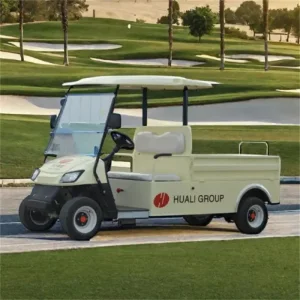
Explore our heavy-duty utility transporters, high-capacity passenger shuttles, and factory-direct club vehicles ready for global export dispatch.


Authoritative Procurement FAQ: Technical, Financial & Logistics Inquiries
In-depth responses compiled by our chief powertrain engineers and international export trade directors.
1. Why is 72V LiFePO4 systematically replacing 48V lead-acid systems in commercial fleets?
The shift is governed by fundamental electrical and electrochemical advantages. A 72V system operates at higher voltage and correspondingly lower amperage for an identical power output (Power = Voltage x Current). Lower current minimizes resistive heat generation across wire harnesses and controllers, delivering higher continuous torque on steep gradients. Furthermore, LiFePO4 chemistry provides 3,500+ full charge-discharge cycles at 80% retained capacity compared to 500–800 cycles for lead-acid. LiFePO4 eliminates battery maintenance labor (zero acid top-ups), reduces overall vehicle curb weight by up to 180 kg (improving steering ergonomics and reducing turf wear), and supports rapid 2-to-3 hour opportunistic charging without capacity memory fade.
2. What specific homologation documentation is supplied for street-legal registration in North America?
For vehicles destined for the U.S. and Canadian markets as Low-Speed Vehicles (LSVs), we engineer vehicles to strictly adhere to FMVSS No. 500 and SAE J2358 standards. We issue a formal Manufacturer’s Certificate of Origin (MCO) / Manufacturer’s Statement of Origin (MSO) containing a standardized 17-digit ISO-compliant Vehicle Identification Number (VIN) registered with the World Manufacturer Identifier (WMI) registry. Vehicles are configured with DOT/SAE-approved glazing, certified seatbelts, illuminated instrument clusters with digital speedometers, turn signals, high/low beam headlights, and dual exterior side mirrors, ensuring straightforward titling and licensing with state motor vehicle agencies.
3. How does your factory manage international warranty claims and replacement spare parts supply?
We implement a direct factory-to-operator support matrix. Along with every bulk container order, we provide a 2% curated buffer of high-turnover service components (fuses, relays, brake calipers, bushings, switches). In the event of a powertrain fault, our technical support engineers diagnose issues remotely via CAN-bus data logs and high-definition video walkthroughs. Core components under warranty (BMS, motor, controller) are dispatched by air express (DHL/FedEx) within 48 business hours. Furthermore, our wiring harnesses utilize standard Delphi/Deutsch automotive connectors, allowing local electrical technicians to perform field replacements without proprietary dealer-locked service tools.
4. What is the container loading efficiency for CBU vs. SKD configurations?
Container packing geometry is optimized based on the customer’s destination assembly capabilities. In Completely Built-Up (CBU) form with steel pallet skids, a 40ft High Cube (HQ) container accommodates approximately 6 to 8 units of 4-seater or 6-seater models, permitting immediate operation upon uncrating. In Semi-Knocked-Down (SKD) configuration—where roof assemblies, front cowls, and wheels are nested into specialized racking fixtures—the identical 40ft HQ container accommodates 16 to 22 units depending on wheelbase length. For regional distributors with basic workshop facilities, SKD packaging reduces the ocean freight burden per vehicle by up to 55%.
5. What minimum order quantity (MOQ) and production lead times apply for custom OEM fleet orders?
For standard catalog configurations in factory stock colors (White, Black, Metallic Silver, Royal Blue, Forest Green), our baseline MOQ is a single unit sample or trial order to allow enterprise clients to conduct physical field evaluations. For fully customized OEM orders—incorporating bespoke Pantone exterior colors, client branding, specialized tire compounds, and custom interior upholstery—the standard production MOQ is a 20ft container (typically 4–6 units). Factory production turnaround from signed CAD configuration and deposit confirmation is typically 18 to 28 calendar days.
6. How do integrated solar roof canopies perform in commercial operations?
Our integrated solar canopies utilize grade-A monocrystalline silicon photovoltaic cells laminated beneath high-transmittance, shatter-resistant polymer sheets. Paired with a digital MPPT boost controller, the solar array operates whenever ambient UV light is present, continuously topping off the 72V or 48V battery pack even when the vehicle is parked on course fairways or outdoor parking aprons. In Mediterranean, Middle Eastern, Caribbean, and Sunbelt climates, the canopy generates 1.2 to 2.4 kWh of supplementary electrical energy per day, extending operational driving range by 15–25 km and preventing deep pack discharge during extended shifts.
7. What chassis corrosion protections are implemented for tropical and maritime coastal deployments?
Coastal salt air and high relative humidity represent severe threats to structural chassis integrity. Our manufacturing process applies a three-layer defense: First, robotic welding of high-tensile structural steel tubes is followed by automated acid pickling and phosphating to eliminate all surface oxidation. Second, frames undergo full-immersion cathodic electro-deposition (E-Coat), ensuring complete internal and external coverage of hollow structural members. Third, an electrostatic thermoset epoxy powder topcoat is baked at 200°C. Suspension bolts and hardware utilize Dacromet coating or 304 stainless steel, ensuring rust-free performance under ASTM B117 salt spray tests for 1,000+ continuous hours.
8. Can existing golf buggy fleets with lead-acid batteries be retrofitted with factory lithium packs?
Yes. We engineer plug-and-play drop-in 48V and 72V lithium conversion modules designed specifically for existing golf buggy retrofits. These turnkey packs incorporate the LiFePO4 cell bank, internal intelligent BMS, integrated state-of-charge LED display gauge, and compatible high-frequency onboard smart chargers within a single enclosed aluminum battery casing that mounts directly into standard battery trays. This upgrade instantly sheds 130–160 kg of parasitic vehicle mass, restores uphill acceleration, and eliminates ongoing battery maintenance.
Direct Factory Sourcing: Engineering Support & Fleet Quotations
Partner directly with Dezhou Leibin Vehicle Industry Co., Ltd. for factory-direct wholesale pricing, custom OEM/ODM tooling, and comprehensive technical homologation support. Our engineering desk is prepared to provide tailored technical spec sheets, CAD packaging analyses, and shipping freight simulations.