
Choosing the right Single Golf Cart manufacturer requires more than comparing prices on a product page. Global buyers must examine vehicle design, battery options, production capacity, quality control, and after-sales support. A reliable manufacturer should explain its frame materials, motor performance, charging system, and expected service life clearly. Photos help, but factory evidence matters more.
Real-world use reveals important differences. A golf cart operating on resort paths may need a different setup from one used on private communities, campuses, or large estates. Buyers should ask about hill performance, ground clearance, weather protection, seating layouts, and replacement parts. Service response also deserves attention. A competitive supplier with slow technical support can create expensive delays.
Experience suggests that established manufacturers often provide better documentation and more consistent assembly. However, a famous name does not guarantee the best fit. That assumption can fail. Smaller factories may offer useful customization, closer communication, or flexible order quantities. Their inspection procedures must still be verified carefully.
Request clear specifications, sample units, inspection records, warranty terms, and shipping information before placing a substantial order. Compare real operating costs, not only the initial quotation. Battery replacement, tire wear, charger quality, and maintenance access can change the final value significantly. Details matter.
This guide reviews leading Single Golf Cart manufacturers for global buyers, focusing on product reliability, manufacturing capability, customization, support, and buyer confidence. The goal is practical judgment rather than exaggerated rankings. Market information changes, and supplier claims should be independently checked. Fit comes first.
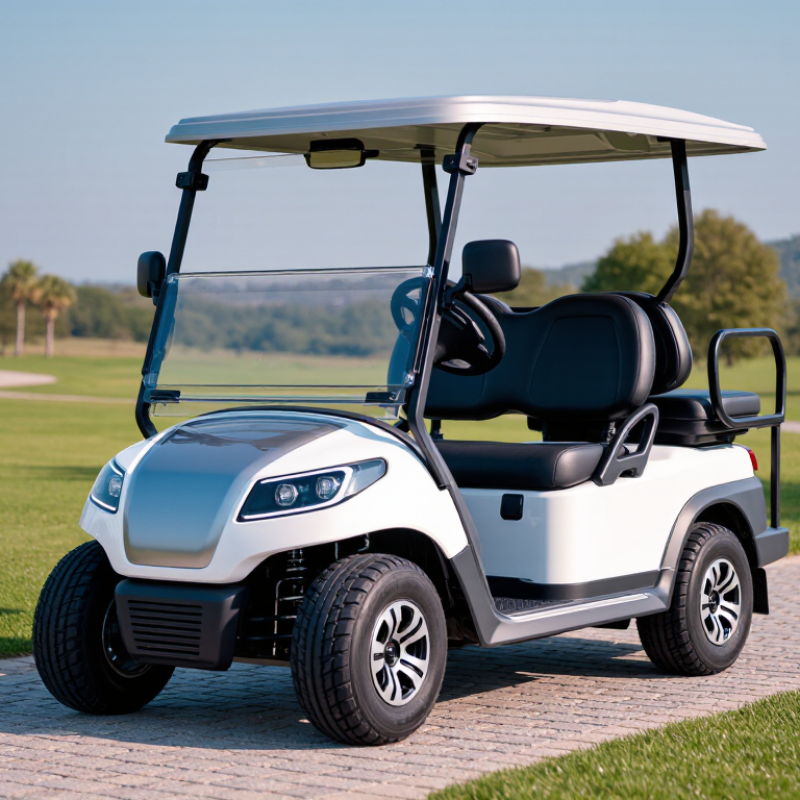
A leading single golf cart manufacturer is defined by evidence, not attractive specifications. Buyers should examine production consistency, battery testing, braking performance, and after-sales support. A reliable manufacturer can provide test records, clear manuals, spare-parts data, and traceable quality procedures.
MarketsandMarkets valued the global golf cart market at about USD 1.6 billion in 2023. Its report projects approximately USD 2.4 billion by 2028, with an 8.5% compound annual growth rate. These figures vary because reports classify vehicles differently. That difference deserves attention. A serious manufacturer explains its data instead of hiding behind market forecasts. It should also demonstrate practical experience with hills, wet storage, uneven paths, and frequent stop-start driving. A quiet motor means little if the controller fails after repeated use.
Tips: Ask for battery cycle information, charger protection details, payload limits, and warranty response times. Check whether replacement parts remain available in your destination market. Request proof of quality management and independent safety testing where applicable. A useful supplier should answer technical questions directly, even when the answer is inconvenient.
Global buyers should also compare total ownership cost. Energy use, tire wear, shipping damage, service training, and battery replacement can exceed the original price. I would not judge a manufacturer by range alone. Range claims often use ideal conditions. Real performance depends on load, temperature, terrain, and driving habits. That is where professional documentation becomes more valuable than polished advertising.
Comparing single golf carts requires more than checking speed and appearance. Start with the operating environment. A compact model may suit resort paths, warehouse aisles, or gated communities. However, steep roads, loose gravel, and tropical humidity demand stronger tires, braking, and corrosion protection. The 2024 Global Golf Cart Market assessment by Grand View Research identifies utility and recreational applications as major demand areas, showing why one specification rarely fits every region.
Battery choice deserves careful testing. BloombergNEF reported that average lithium-ion battery prices fell to 115 dollars per kilowatt-hour in 2024. Lower prices can improve ownership economics, but battery quality, thermal control, and replacement access still matter. Ask for usable capacity, charging time, cycle expectations, and performance after cold storage. A charger rated for local voltage is essential. Small detail, large consequence.
Compare the turning radius, seat height, ground clearance, payload, and service intervals. A single-seat cart with a tight turning circle feels safer beside shelving or narrow resort lanes. Check whether ordinary technicians can inspect the brakes and controller. Global buyers should also review documentation, spare-part availability, and regional safety requirements before ordering. A manufacturer’s claimed range may use flat, warm, lightly loaded conditions. Real use is messier. I would test the cart on a representative route, record energy use, and repeat the test after several weeks. Fancy screens are less valuable than predictable braking and dependable charging.
Global buyers should compare golf cart manufacturers through design, performance, and market reach rather than price alone. Grand View Research estimated the global golf cart market at about USD 1.82 billion in 2023, with a projected 6.8% CAGR from 2024 to 2030. That growth increases buyer choice, but it also makes evaluation harder.
Design should fit the operating environment. Look for corrosion-resistant frames, sealed wiring, adjustable seating, and clear service access. Performance depends on battery chemistry, motor output, braking control, and load capacity. Lithium systems can reduce weight and charging time, although replacement costs remain significant. The International Energy Agency reported that electric vehicle battery pack prices fell 14% in 2023, but small-vehicle buyers may not receive the same savings immediately. Numbers vary.
Market reach shows practical strength. A manufacturer with regional parts warehouses, trained technicians, and multilingual documentation usually reduces downtime. Buyers should request verified range tests, warranty terms, spare-parts lead times, and compliance documents for each destination. MarketsandMarkets has projected continued expansion in electric mobility equipment, including low-speed vehicles, through the decade. However, reports use different market definitions, so direct comparisons can mislead. No ranking is perfect. A coastal resort, a private community, and a construction site need different specifications. In my view, the strongest supplier is the one whose design survives local conditions and whose support remains available after delivery. That last point is often underexamined.
| Evaluation Area | Leading Manufacturer Benchmark | Typical Specification or Capability | Global Buyer Importance | Assessment |
|---|---|---|---|---|
| Vehicle Design | Modular platform architecture | Configurable two-, four-, and six-seat layouts with interchangeable roof, windshield, cargo, and rear-seat modules. | Allows distributors and fleet operators to adapt one vehicle platform for tourism, residential, resort, campus, and utility applications. | Very High |
| Vehicle Design | Passenger and utility versatility | Common configurations include rear-facing seats, flatbed cargo decks, enclosed storage boxes, and maintenance-service bodies. | Reduces the need to source separate vehicle platforms for passenger transportation and light-duty work. | High |
| Powertrain | Electric drive system | Battery-powered models generally use low-voltage electric systems, with lithium-ion and lead-acid batteries being the principal options. | Electric vehicles offer low local emissions and are suitable for resorts, campuses, gated communities, and other controlled environments. | Very High |
| Battery Technology | Lithium-ion battery option | Typically provides lower vehicle weight, reduced maintenance, higher usable energy, and faster charging than conventional flooded lead-acid batteries. | Useful for commercial fleets that require frequent operation, predictable availability, and lower routine battery maintenance. | Very High |
| Charging | Standard AC charging compatibility | Most electric golf carts use onboard or external chargers connected to common AC electrical outlets; charging time varies by battery capacity and charger output. | Compatibility with local electrical standards is essential when importing vehicles across different regions. | High |
| Performance | Low-speed vehicle capability | Many road-capable configurations are designed around low-speed limits of approximately 25 mph or 40 km/h, depending on local regulations. | Suitable for private roads, planned communities, resorts, campuses, and designated low-speed public-road applications. | High |
| Performance | Operating range | Practical range commonly varies from approximately 40 to 80 km per charge, depending on battery chemistry, load, terrain, speed, temperature, and driving conditions. | Range should be matched to daily route length rather than evaluated only from laboratory or unloaded figures. | Very High |
| Performance | Load and towing capability | Utility-oriented models normally provide reinforced frames, higher payload ratings, and optional towing equipment compared with basic passenger carts. | Important for hotels, golf facilities, warehouses, agricultural sites, and property-maintenance operations. | High |
| Terrain Capability | Suspension and braking package | Higher-specification models may include independent front suspension, hydraulic or upgraded mechanical braking, all-terrain tires, and increased ground clearance. | Improves stability and durability on uneven roads, slopes, gravel paths, and outdoor commercial properties. | High |
| Safety | Low-speed road equipment | Road-oriented versions may be equipped with seat belts, lighting, mirrors, turn signals, windshields, parking brakes, and other equipment required by the target market. | Safety equipment must be verified against the destination country or local authority before purchase. | Very High |
| Compliance | Regional vehicle certification | Compliance requirements differ by jurisdiction; examples include United States low-speed-vehicle rules, European category approvals, and country-specific import or road-use requirements. | Certification affects registration, insurance, import clearance, road legality, and resale value. | Very High |
| Manufacturing Quality | Frame and corrosion protection | Durable steel or aluminum structures, powder-coated components, sealed electrical connections, and corrosion-resistant hardware are preferred for humid or coastal markets. | Material selection directly influences service life and maintenance cost in demanding climates. | High |
| Market Reach | International dealer and distributor coverage | Strong global suppliers generally support regional distributors, replacement-parts channels, technical documentation, and warranty procedures. | Local service availability is often more important than purchase price for fleet operators and remote buyers. | Very High |
| After-Sales Support | Parts availability | Essential service items include batteries, chargers, controllers, motors, brake components, tires, suspension parts, body panels, and electrical switches. | Consistent parts supply reduces vehicle downtime and protects the total cost of ownership. | Very High |
| Customization | OEM and fleet customization | Common options include custom colors, logos, seating layouts, cargo bodies, refrigeration units, enclosures, lighting packages, and accessory systems. | Enables buyers to align vehicle appearance and functionality with specific commercial operations. | High |
| Total Cost of Ownership | Energy and maintenance efficiency | Electric carts generally have fewer drivetrain maintenance requirements than internal-combustion vehicles, while battery replacement remains a major lifecycle cost. | Buyers should compare purchase price, energy consumption, battery life, service intervals, spare parts, and resale value together. | Very High |
Top Single Golf Cart Manufacturers For Global Buyers?
For global buyers, quality starts with measurable standards, not showroom appearance. ANSI/ITSDF B56.8 covers safety requirements for personnel and utility transport vehicles. ISO 12100 also supports structured risk assessment during design. Battery packs should show documented testing against relevant IEC standards, especially for thermal and electrical safety. Ask for load tests, braking results, water-ingress protection, and charger certifications.
Customization should match the operating environment. Choose lithium batteries for lower routine maintenance and faster charging. Lead-acid batteries may still suit buyers focused on lower purchase costs. Useful options include regenerative braking, weather enclosures, foldable windshields, cargo beds, LED lighting, and adjustable suspension. The Golf Cart Market report by Allied Market Research estimated a global value of about USD 1.5 billion in 2020. It projected approximately USD 2.3 billion by 2030, showing steady demand rather than explosive growth. That distinction matters.
Tips: Request a sample vehicle before placing a large order. Inspect welds, cable routing, seat anchors, and battery access physically. Confirm spare-part availability, software support, and warranty response times. Ask for independent laboratory reports, not only factory declarations. A low-cost configuration can become expensive after shipping and service delays. I would also compare real range under passenger load, because advertised range often uses ideal conditions. That weakness deserves attention.
Key standards, features, and customization benchmarks commonly evaluated when sourcing single golf carts for international markets.
The chart presents practical reference targets frequently used by global buyers: a 48V electrical platform, approximately 25 km/h top speed, up to 80 km driving range, around 8 hours for a full recharge, and six-passenger capacity. Actual specifications vary according to battery chemistry, terrain, load, climate, and local regulations.
Global buyers should evaluate suppliers beyond attractive catalog photos. Request factory videos, production records, and recent quality inspection reports. A reliable manufacturer should explain battery options, motor performance, frame materials, and expected service life clearly. Ask whether the cart suits steep roads, coastal air, or rough warehouse floors. These details often expose weak technical support. Check certifications required in your destination market. Also review warranty terms, spare-part availability, and response times before ordering.
Tips: Compare at least three suppliers. Order a sample unit when possible. Confirm the exact battery type, charger voltage, tire size, seating layout, and paint finish in writing. Include these details in the purchase contract. A small difference can affect shipping space and operating costs. Do not assume the quoted price includes packaging, inland transport, or customs paperwork.
Before placing a larger order, request a pro forma invoice with product codes and delivery terms. Use staged payments tied to production and inspection milestones. An independent inspection can check braking, lights, steering, welds, and battery charging. Buyers should also ask for loading photos and serial-number records. No checklist is perfect. I would still leave room for unexpected delays, especially during peak production periods. A supplier that admits limitations may be more dependable than one promising everything.
Compare the operating environment, turning radius, ground clearance, payload, braking, battery, and service access. Appearance can mislead. Test the cart on real local routes.
Compact models suit resort paths, warehouse aisles, and gated communities. Narrow lanes reward a tight turning circle. Steep roads need stronger tires and controlled braking.
Battery quality affects range, charging time, weight, and replacement cost. Ask about usable capacity, cycle life, thermal control, and cold-storage performance. Small detail, large consequence.
Confirm charging time and local voltage compatibility before ordering. A mismatched charger can delay daily operations. Also check charging access during regional service visits.
Test the cart with passengers and normal equipment. Record energy use on slopes, gravel, and flat paths. Repeat the test after several weeks. Real use is messier.
Request braking results, load tests, water-ingress protection, and battery safety reports. Review relevant regional requirements. Factory statements alone may not reveal every weakness.
Useful options include weather enclosures, foldable windshields, cargo beds, LED lighting, adjustable suspension, and regenerative braking. Choose features for local conditions, not showroom appeal.
Check spare-part availability, technician coverage, documentation, warranty response times, and software support. Ask about delivery lead times. A low purchase price may become expensive later.
Lithium batteries usually offer lower routine maintenance and faster charging. Lead-acid systems may suit lower initial budgets. The better choice depends on use, service access, and replacement planning.
Relying on price, screens, or advertised range alone. Predictable braking and dependable charging matter more. My comparison would still have gaps without local route testing.
Choosing the right Single Golf Cart manufacturer requires more than comparing prices. Leading suppliers are defined by reliable engineering, consistent production quality, safety-focused design, efficient after-sales support, and the ability to serve international markets. Buyers should compare models by range, battery type, charging efficiency, passenger capacity, terrain performance, comfort, durability, and ease of maintenance. Attention should also be given to vehicle dimensions, climate adaptability, available accessories, and transportation requirements.
A strong manufacturer should provide clear technical specifications, quality-control procedures, applicable certifications, and flexible customization options such as colors, seating layouts, utility features, and power configurations. Global buyers can evaluate suppliers by reviewing production capabilities, export experience, communication efficiency, warranty terms, spare-parts availability, and order lead times. Before placing an order, they should confirm product documentation, packaging standards, payment conditions, inspection arrangements, and delivery responsibilities. A careful comparison helps buyers select a dependable Single Golf Cart solution that matches local operating needs and supports long-term value.
