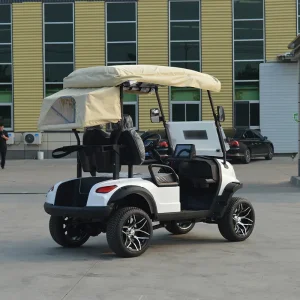
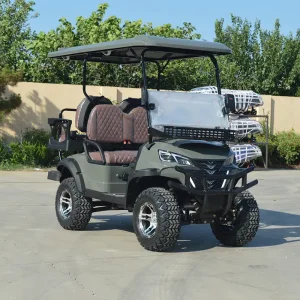
72V AC Lithium
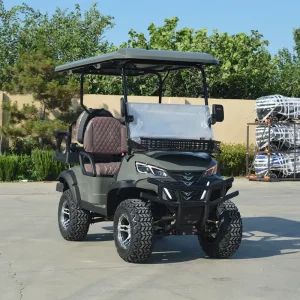
Explore our flagship 72V lithium-powered and all-weather chassis architectures configured for global commercial fleet deployability.
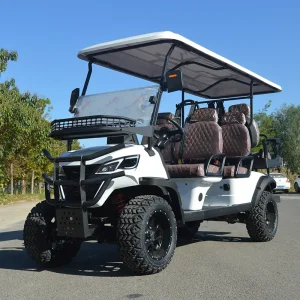

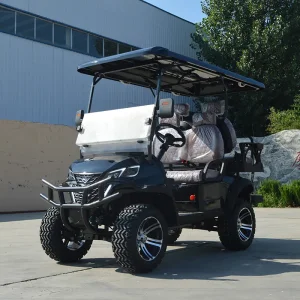

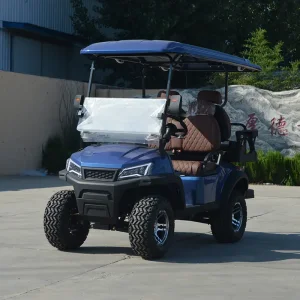
Comprehensive market analysis: How climate volatility, carbon mitigation targets, and operational efficiency are accelerating the global transition from traditional open golf carts to fully enclosed, climate-controlled cabin electric vehicles.
Traditional open-curtain golf carts are experiencing declining utilization rates in extreme operating environments. Across the North American Sunbelt, the Middle East, and Mediterranean Europe, enterprise fleet managers report critical operational standstills during seasonal heat waves and monsoonal storms. Fully enclosed electric golf carts engineered with sealed automotive doors, thermal-break glass, and integrated 12V/72V HVAC heat-pump systems eliminate weather downtime, protecting human capital and ensuring seamless year-round operations.
Legacy 48V lead-acid configurations struggle under the auxiliary load demands of fully sealed cabins. Operating modern dual air-conditioning compressors, digital dashboard telemetry, and heavy-payload power steering requires high efficiency. The industry transition toward 72V AC induction and permanent magnet synchronous motors (PMSM) reduces continuous current draw by over 33%, minimizing resistive heat losses in wire harnesses and prolonging the cycle lifespan of high-density LiFePO4 battery modules.
The regulatory convergence between golf cars and road-going Low-Speed Vehicles (LSVs) is reshaping procurement strategies. In jurisdictions observing United States FMVSS No. 500 regulations and European Union L6e/L7e type approvals, enclosed platforms provide the structural rigidity necessary to integrate certified three-point safety harnesses, DOT/E-mark laminated safety glass, exterior reversing cameras, and crash-attenuation subframes.
Empirical operational data from commercial resort and municipal facility operations indicates that although an enclosed 72V lithium electric vehicle incurs an upfront capital expenditure premium of approximately 22% over a basic open-chassis model, fleet maintenance expenses decline by 41% across a 5-year operational lifecycle. This return is directly driven by internal electrical component shielding from corrosive saline mist, zero battery watering maintenance, and extended asset longevity.
How Dezhou Leibin Vehicle Industry integrates complete vertical supply chains, robotic tooling, and stringent quality control protocols to deliver cost-superior, automotive-standard electric vehicles.
Unlike assemblers relying on tubular manual welds and fiberglass body shells, our 13,000 m² Dezhou production base incorporates precision robotic robotic welding jigs and automotive sheet-metal stamping lines. All high-strength steel chassis undergo Cathodic Electrodeposition (E-Coating) and automotive stoving finishes, delivering salt-spray resistance exceeding 1,000 hours to completely prevent rust in tropical and maritime resort environments.
Situated within the Shandong advanced mobility cluster, our facility achieves unmatched cost efficiency and agility. From native LiFePO4 cells with CAN-bus Battery Management Systems (BMS) to micro-inverters, integrated drive-axles, and hydraulic disc braking systems, our entire component network operates within a 100-kilometer radius. This eliminates upstream logistics markups and slashes OEM sample-to-production lead times to just 15 days.
Every enclosed cart undergoes a comprehensive 5-phase validation cycle prior to container packaging. This includes a 30-minute high-pressure monsoonal water ingress chamber test to verify weather seals, electronic dynamometer torque profiling on simulated 25% inclines, acoustic insulation noise decibel metering, full-load emergency braking distance verification, and CAN-bus diagnostic stress screening.
Engineered to adapt across commercial hospitality, municipal governance, logistics corridors, and luxury community developments.
High-end eco-resorts require passenger vehicles that preserve client comfort without emitting noise or exhaust odors. Fully enclosed 4-seat and 6-seat shuttle models with panoramic automotive glass, whisper-quiet electric drives, and dual air-conditioning provide seamless transport between villas, spas, and golf fairways regardless of humidity or rain.
Security teams operating on university campuses, international airports, and industrial manufacturing compounds require 24/7 patrol readiness. Enclosed patrol units protect officers from winter sleet and summer heat while housing radio transceivers, emergency strobe light arrays, public address speakers, and continuous recording equipment.
Equipped with rear heavy-duty hydraulic dump beds or enclosed aluminum van boxes, our G30 utility platforms transport maintenance tools, hotel laundry, and factory inventory across expansive logistics parks and food processing facilities where internal combustion engines are strictly prohibited by air quality regulations.
Modern lifestyle estates and master-planned communities in Florida, California, Dubai, and Australia utilize enclosed electric golf carts as primary neighborhood electric vehicles (NEVs). Providing automotive-like door locks, Bluetooth multimedia hubs, power windows, and DOT safety belts, they deliver car-like convenience at low speeds.
A technical assessment of the major architectural and digital innovations redefining the low-speed electric mobility industry over the next decade.
Integrated monomorphic photovoltaic roof panels—such as those engineered into our Leibin G90 flagship series—generate up to 400W of supplemental solar generation. Governed by a dedicated MPPT charge controller, this system continuously trickle-charges the 72V lithium bank during daylight parking, extending daily operating autonomy by 15-25 km and preventing deep cell discharge during long idle cycles.
Modern enterprise procurement increasingly mandates integrated telemetry. Our models support 4G/GPS telematics units interfacing with central enterprise resource management software. Fleet operators can remotely monitor battery state-of-health (SoH), log driver speeds, configure geofencing boundaries, track precise real-time positions, and receive automatic maintenance warnings via encrypted CAN-bus diagnostics.
Operating an air conditioner in an enclosed mini-cabin consumes significant battery power if thermal transfer is high. Leibin utilizes structural dual-skin composite body panels injected with polyurethane core insulation, combined with double-sealed EDPM automotive door gaskets and UV-reflective windshield coatings. This reduces HVAC compressor power draw by 40%, directly protecting driving range.
A rigorous specification matrix designed to assist enterprise procurement managers, resort developers, and municipal buyers in matching vehicle platforms to terrain, route loads, and duty cycles.
| Evaluation Parameter | 48V Standard Open-Frame | 72V Enclosed LiFePO4 Platform | 72V Solar-Assisted Enclosed |
|---|---|---|---|
| Primary Climate Suitability | Temperate, dry climates; low humidity | All-weather, severe heat or rain/cold | High solar irradiance, desert/tropical resorts |
| Cabin Architecture | Tubular canopy with vinyl rain covers | Automotive stamped doors, safety glass | Sealed composite cabin with integrated PV roof |
| Climate Control (HVAC) | Not supported (dash fan only) | 72V electric compressor AC & PTC heating | Dual HVAC with pre-cooling solar trickle |
| Gradeability (Full Payload) | 15% - 18% slope rating | 25% - 30% steep hill climb ability | 25% - 30% with continuous torque reserve |
| Motor Technology | 3.0kW - 4.0kW DC / AC Induction | 5.0kW - 7.5kW PMSM Brushless Motor | 7.5kW High-Torque AC / PMSM System |
| Operational Range (per charge) | 50 - 70 km (diminishes under load) | 90 - 130 km (nominal driving cycle) | 110 - 160 km (via supplemental solar gain) |
| Maintenance Cycle | Bi-weekly watering, terminal checks | Near maintenance-free BMS automated | Autonomous BMS balancing, sealed components |
A procurement checklist based on international automotive trade benchmarks, homologation rules, and supply chain logistics.
Global procurement teams must confirm whether the manufacturer provides compliant VIN stamping, CE conformity documentation under machinery directives, FMVSS No. 500 low-speed vehicle lighting arrangements, and E-mark certified laminated windscreens with active wipers and washer reservoirs. Dezhou Leibin directly provisions complete homologation packs to expedite port customs and national DMV/ministry registrations.
Ocean freight rates directly impact landed unit costs. Professional manufacturers offer tailored loading plans. Utilizing modular steel-frame cradles or Semi-Knocked-Down (SKD) packaging, Leibin engineers maximize container cubing—fitting up to 6 enclosed units per 40ft HQ container without risking panel abrasions, glass cracking, or alignment distortions during multi-week ocean transit.
A golf cart is only as viable as its after-sales support pipeline. Enterprise procurement contracts must specify standard wear-and-tear consumables kits (brake pads, suspension bushings, wiper blades, fuses, charging connectors) shipped alongside the initial container. Dezhou Leibin backs every fleet with dedicated English-speaking technical engineers providing high-definition video diagnostics, circuit schematics, and rapid courier component delivery.
Direct answers from our engineering and export departments addressing compliance, custom battery sizing, HVAC energy consumption, and shipping logistics.
Operating an electric air-conditioning compressor continuously draws approximately 800W to 1200W from the electrical system. On a standard 72V 105Ah LiFePO4 battery pack, running the AC at maximum capacity decreases overall driving range by approximately 15% to 20%. Because Leibin utilizes thermal-insulated composite cabins and double-lip door seals, the cabin cools down quickly, enabling the inverter compressor to cycle down to low-power maintenance mode, saving energy.
Depending on the destination country, Leibin provides complete vehicle documentation packs including CE Declaration of Conformity, manufacturer Certificate of Origin (CO), FMVSS-compliant 17-digit VIN stamping on the chassis rail, certified E-mark/DOT glass and lighting component approvals, and factory brake test reports. We collaborate directly with your local import customs broker to verify compliance before dispatch.
Lithium Iron Phosphate (LiFePO4) offers superior thermal and chemical stability, preventing thermal runaway even under high-temperature resort operations. LiFePO4 delivers 3,000 to 5,000 charge cycles at 80% Depth of Discharge, compared to only 500-800 cycles for lead-acid batteries. This eliminates battery replacement requirements for 8 to 10 years and cuts weight by over 120 kg, increasing hill-climbing torque and range.
Yes. As a direct source factory, we support full OEM/ODM customization. This includes custom RAL automotive exterior paint colors, custom-stitched marine-grade vinyl seating with embroidered client logos, custom lift kits with 12-inch or 14-inch all-terrain aluminum wheels, utility cargo beds, medical stretcher mounts, or police light bars.
We provide two industrial export packaging methods. For Fully Built Units (FBU), vehicles are mounted on heavy-gauge welded steel channel pallets, covered with anti-scratch PE film, and enclosed inside heavy corrugated crates with desiccant packs. For containerized shipments, units are secured to internal container lashing rings using high-tensile ratchet straps and structural wheel chocks, preventing movement during rough seas.
Our minimum order quantity (MOQ) for standard models is 1 unit (for sample testing and dealer evaluation), and 2 to 4 units for customized OEM configurations. Standard production cycle times range from 15 to 20 working days following technical sign-off and deposit receipt. Customized body modifications or custom-tooled components typically complete within 25 to 30 days.
Review additional models from our production lines, including compact 2-seaters, solar-supplemented utility carts, and high-capacity resort transporters.