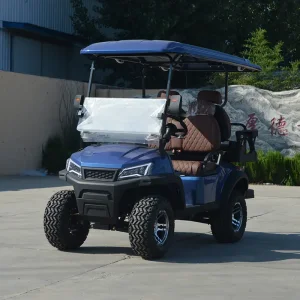
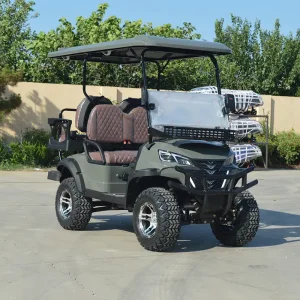
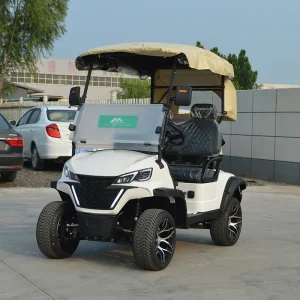
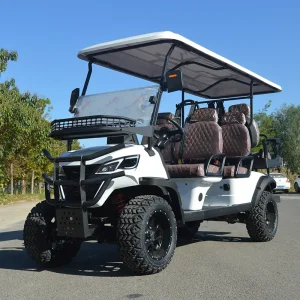
Featured Commercial & Passenger Series
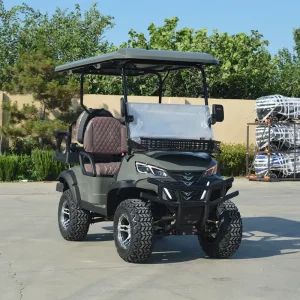
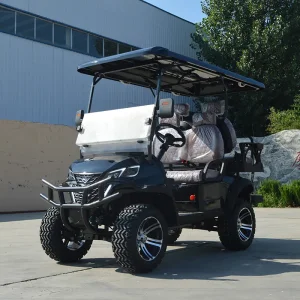
Precision-engineered 4-passenger and 6-passenger configurations featuring high-torque AC drivetrains, modular lithium packs, and heavy-duty chassis architecture.


The Micro-Mobility Paradigm Shift: Evaluating Leading Golf Cars Inc Manufacturers
Navigating the transformation from low-speed fairway carts to sophisticated, street-configurable Low-Speed Vehicles (LSV) and multi-passenger utility platforms.
High-Torque AC Powertrain Baseline
LiFePO4 Deep Discharge Cycles
TCO Reduction Over 5-Year Fleets
Automated Cathodic Dip Coating
From Leisure to Utility
Historically, the golf cart was restricted to 18-hole country club courses. Today, enterprise operators categorized under the umbrella of Golf Cars Inc encompass municipal patrol entities, gated eco-communities, five-star hospitality operations, and airport multi-modal ground support. This requires a leap in powertrain engineering, transition to lithium energy storage, and structural crash resilience.
B2B Sourcing Metrics
Fleet directors no longer purchase solely on initial unit cost. Modern procurement evaluates the Levelized Cost of Micro-Mobility (LCMM), analyzing charger efficiency, regenerative braking recapture rates, corrosion lifecycle in coastal regions, and availability of CAN-bus telemetry. A robust manufacturing partner must supply fully auditable bill-of-materials (BOM) and international homologation.
Automotive Integration
The convergence of passenger automotive electronics with low-speed utility vehicles has revolutionized expectations. Leading OEM factories incorporate programmable Curtis and EnPower controllers, EPS (Electronic Power Steering), independent MacPherson front suspensions, and hydraulic 4-wheel disc braking, establishing a new tier of active operator protection.
Why Dezhou, China Represents the Epicenter of Global LSV Manufacturing
High-yield modular manufacturing clusters deliver unparalleled economies of scale, component standardization, and accelerated export logistics.
Integrated Industrial Clusters
Situated within Shandong's specialized vehicle manufacturing belt, our factory benefits from a 50-kilometer supply radius for tubular steel, injection-molded automotive plastics, DC-to-DC converters, and specialized wire harnesses, minimizing supply disruptions.
Automated Robotic Welding
Structural integrity begins with carbon-steel ladder frames welded on automated robotic fixtures. This eliminates micro-variations across production batches, ensuring laser-straight tracking, balanced weight distribution, and high torsion tolerance under rough-terrain duty.
Cathodic E-Coat Pretreatment
Every chassis undergoes an exhaustive 14-stage chemical immersion followed by cathodic electrophoretic deposition (E-coating). This provides high salt-spray resistance, essential for coastal golf courses, island resorts, and winter-salted municipal pathways.
Container Loading Optimization
Through custom-engineered knockdown (SKD/CKD) steel framing and roll-on loading systems, container space utilization reaches up to 18 units per 40ft HQ container. This directly decreases landed freight expenditures per cart for worldwide distribution partners.
| Evaluation Parameter | Traditional Regional Assemblers | Dezhou Leibin Tier-1 Manufacturing Baseline | Direct Operational Benefit |
|---|---|---|---|
| Chassis Architecture | Manual hand-welded angle iron | Robotic fixture-welded high-tensile tubular steel | Zero frame twist; 10+ year fatigue life under full payload |
| Anti-Corrosion Standard | Standard spray paint / primer | Cathodic electrophoretic dip (E-coat) + powder topcoat | 1,000+ hours ASTM B117 salt spray resistance |
| Powertrain Voltage | 48V Lead-Acid or primitive DC | 72V AC Induction or PMSM High-Efficiency Motors | 35% higher hill-climb torque; reduced heat loss and amperage draw |
| Battery Chemistry | Flooded Lead-Acid (periodic maintenance) | Automotive-grade LiFePO4 with active Smart CAN BMS | Zero maintenance, 3,500+ lifecycle cycles, rapid 2.5-hour recharge |
| Homologation Options | Local variances; uncertified | Full CE Machinery Directive, EEC L6e/L7e & FMVSS 500 readiness | Seamless registration as street-legal LSV across North America & EU |
Technological Roadmap: The Engineering Evolution of Golf Cars Inc
Integrating IoT telematics, photovoltaic solar charging canopies, and solid-state power systems into next-generation light electric vehicle fleets.
IoT Telematics & Remote Fleet Geofencing
Every commercial chassis can be provisioned with 4G LTE/GPS embedded telematics. Fleet supervisors can implement dynamic speed governors, designate restricted operating zones via virtual geofences, monitor live battery State of Charge (SoC), and extract real-time diagnostic codes to prevent catastrophic trailside failures.
Photovoltaic Canopy Harvesting
Integrated mono-crystalline solar cell roofs convert ambient irradiance directly into range extension. Operating via a specialized MPPT (Maximum Power Point Tracking) step-up charge controller, solar panels contribute between 15 km to 25 km of supplementary autonomy per diurnal cycle, reducing grid dependency across large campuses.
Next-Gen Solid-State Integration
Looking toward 2026–2030, our R&D engineering matrix is actively prototyping solid-state electrolyte battery integration. This guarantees absolute thermal runaway immunity at extreme ambient temperatures (-25°C to +55°C), doubling gravimetric energy density while shedding 30% of overall vehicle curb weight.
Engineered Across Mission-Critical Commercial Scenarios
Optimizing chassis dimensions, suspension damping, and payload capabilities to meet the specific requirements of worldwide operational environments.
Hospitality & Luxury Eco-Resorts
Quiet, zero-emission 6-passenger configurations transport guests through private islands, wellness retreats, and remote eco-reserves without acoustic disruption. Custom diamond-stitched marine vinyl upholstery and integrated luggage decks elevate guest perception.
Planned Smart Cities & Gated Towns
Tailored for neighborhood electric vehicle (NEV) regulations, providing high-visibility LED lighting suites, 3-point seatbelts, side rearview mirrors with integrated turn signals, and calibrated 25 mph (40 km/h) speed controllers compliant with regional traffic laws.
Industrial Cargo & Airport Ground Handling
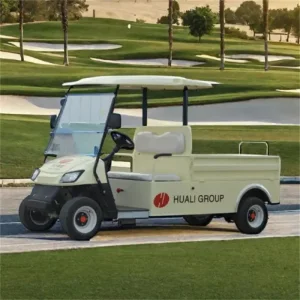
High-payload utility configurations equipped with drop-side aluminum truck beds, heavy-duty rear leaf springs, and robust tow hitches. Engineered for multi-shift facility maintenance, airside baggage distribution, and heavy-tool logistical transit.
Municipal Campus & Security Patrol
Equipped with overhead emergency strobe lightbars, PA speaker public address units, lockable weatherproof glove compartments, and rapid-swappable lithium packs for uninterrupted 24/7 security sweeps of expansive universities and medical centers.
Homologation Integrity: FMVSS, EEC L6e/L7e & ISO Compliance
Facilitating legal market entry across North America, Europe, Australia, and the Middle East through certified safety engineering.
North America: FMVSS No. 500 & SAE J2358
For street-legal LSV titling in the United States, our production lines configure vehicles with DOT-approved AS4 laminated glass windshields with electric wipers, FMVSS 209 certified 3-point seatbelts, dedicated reflex reflectors, license plate lighting, and calibrated speed governance capped at 25 mph.
European Union: EEC L6e / L7e & CE Directives
European road regulations mandate strict EMC (Electromagnetic Compatibility) compliance, ISO-certified dual-circuit hydraulic braking systems, e-mark safety lighting lenses, acoustic warning sounders for pedestrians (AVAS), and audited conformity of production (CoP) documentation.
Middle East (GCC) & Tropical Thermal Profiles
High ambient heat demands tailored engineering. Our export platforms feature IP67 water-and-dust sealed brushless AC controllers, active heat-dissipation battery management enclosures, UV-stabilized paint pigments, and marine-grade anti-oxidation stainless steel hardware.
Frequently Asked Technical & Operational Questions
Actionable answers for enterprise buyers, distributors, and fleet procurement officers sourcing directly from OEM factories.
A Tier-1 industrial manufacturer operates fully integrated production pipelines: in-house steel tube cutting, automated jig welding, 14-stage cathodic electrophoretic dip coating (e-coating), vehicle dynamics dynamometer testing, and end-of-line electrical insulation validation. Assemblers, conversely, source disparate third-party kits, leading to significant tolerance stack-up errors, inconsistent frame geometry, and unreliable electrical grounding.
Under Ohm's Law (P = V × I), producing identical mechanical power at 72V requires 33% less current compared to a 48V system. Lower current reduces heat dissipation across wiring harnesses, reduces thermal stress on MOSFET controllers, and preserves battery pack integrity during sustained inclines. Furthermore, AC brushless motors provide regenerative deceleration, recycling kinetic energy back into the lithium pack while drastically reducing brake pad wear.
We provide complete factory homologation dossiers including the Certificate of Origin (COO), specific 17-digit ISO-standard Vehicle Identification Numbers (VIN), test reports certifying compliance with FMVSS 500 standards (windshield, seat belts, braking distances), and CE Declarations of Conformity. For European destinations, L6e/L7e type-approval documentation is provided to support municipal road titling.
While initial capital expenditure for LiFePO4 is higher, the total lifecycle economics are clear: LiFePO4 offers 3,500+ deep discharge cycles (to 80% DoD) compared to 500–700 cycles for lead-acid. Lithium eliminates terminal cleaning, acid spills, and manual cell watering, saving up to 40 maintenance hours per vehicle annually. Moreover, lithium provides full voltage output until exhaustion without sluggish performance when the pack drops below 50% capacity.
Standard commercial supply contracts include a 5-year non-prorated warranty on LiFePO4 battery modules, a 2-year warranty on controllers and electric motors, and a lifetime structural guarantee on the e-coated tubular chassis. Critical wear parts (rotors, calipers, tie rods, bushings) are stocked at regional logistics hubs or dispatched via priority DHL/FedEx air freight within 48 hours.
Yes. We regularly execute private-label fleet contracts. Customization options include custom pantone-matched polypropylene body shells, bespoke UV-resistant seat embroidery, integrated fleet management touchscreen consoles, solar canopy arrays, specialized utility cargo beds, and tailored gear ratio selections for high-altitude or steep-terrain operations.
Specialized Off-Road, Solar & Sightseeing Lineup
Explore our full line of specialized micro-mobility products, from solar-assisted resort shuttles to lifted all-terrain utility vehicles.