
Flagship Commercial & Utility Fleet Models
Explore our primary tier of factory-engineered low-speed vehicles (LSV), optimized for resorts, luxury estates, and light industrial logistics with verified cycle life.
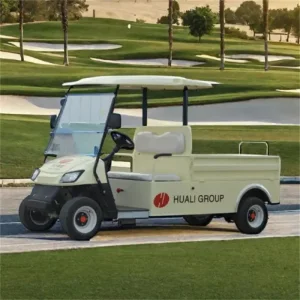
Cheap Cargo Electric Utility off Road Truck Golf Cart 48V Utility Gulf Cart Electric Golf Car Suppliers, Factory
View Specification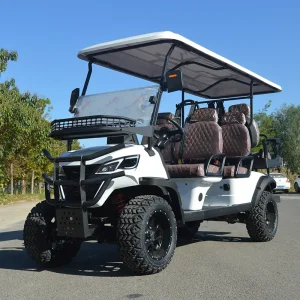
ODM Low-Speed Electric Golf Car from China Suppliers - CE Approved 15-40km/H Beemotors G70-4+2 Factory Model Suppliers, Factories
View Specification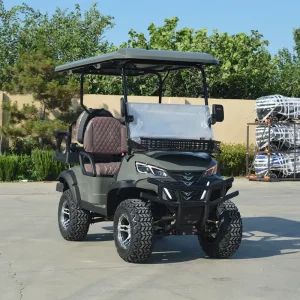
Buy 72V AC Mini Electric Golf Cart for Sale - China Suppliers & Factory, 4-Seat Lithium Battery Model, CE Certified Suppliers, Factory
View Specification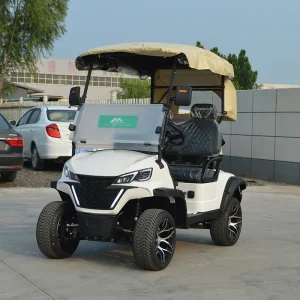
Wholesale China Factory Suppliers of 2-Seater Electric Sightseeing Cars, Golf Carts, and Versatile G70 Electric Vehicle Supplier, Suppliers
View Specification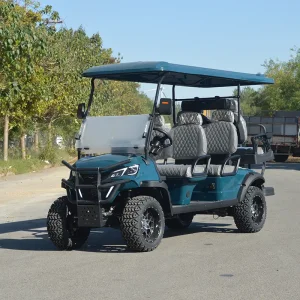
Buy 72V Modern 6-Seater Electric Golf Cart from China Suppliers | Reliable Factory Golf Buggy for On-Road & Off-Road Use Factory, Factories
View Specification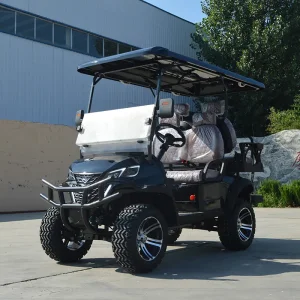
Wholesale Electric Golf Cart 4seated Golf Buggy Sightseeing Bus off-Road 72vgolf Cart Manufacturers, Factory
View Specification
Wholesale 72V AC Mini Electric Golf Cart Buggy Gold Color 4-Seat Golf Cart with Lithium Battery CE Certified and Tail Caddie Equipment Factory, Factories
View Specification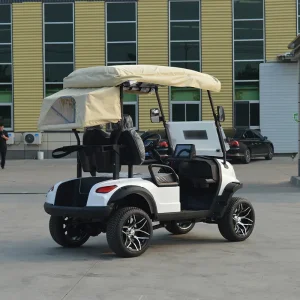
China Affordable Electric 2 Seater Mini Sightseeing Car Golf Cart from China Suppliers and Factory Supplier, Factories
View SpecificationThe Global Shift in Individual Electric Golf Cart Procurement
The international micro-mobility sector has undergone a profound tectonic migration over the past five years. Where traditional golf courses historically commanded 80% of factory production runs, commercial enterprise procurement now outpaces classic recreational demand by more than double. As municipal emissions mandates tighten across North America, Europe, and the Middle East, individual electric golf carts (and their upgraded low-speed vehicle or LSV derivations) have transitioned from simple luxury conveyances into critical, high-utilization utility capital assets.
Modern procurement officers representing 5-star hospitality resorts, master-planned residential communities, multi-acre logistics centers, petrochemical complexes, and sovereign tourist developments now treat light electric mobility as a mission-critical infrastructure investment. Under rigorous corporate ESG reporting standards and strict CapEx/OpEx scrutiny, procuring from a qualified, direct-source individual electric golf cart supplier and factory is no longer about finding off-the-shelf catalog products. It requires verified powertrain lifecycle engineering, unified CAN-bus diagnostics, traceable cell balancing protocols, and guaranteed supply continuity for components subject to severe duty cycles.
Hospitality & Gated Living
Zero-noise passenger transportation engineered with whisper-quiet helical-cut rear differentials, automotive marine-grade seating vinyl, and onboard smart multi-voltage charging hubs for luxury hotel chains and private communities.
Industrial Facility Logistics
Drop-side cargo beds, heavy-payload leaf springs, and high-tensile hot-dip galvanized steel frames capable of carrying up to 1,000 kg of tooling and raw materials across automated mega-factories and airport hangars.
Perimeter Patrol & Security
Specialized low-speed electric patrol configurations integrated with high-output auxiliary DC-DC convertors, strobe warning beacon bars, searchlight attachments, and rugged high-clearance off-road suspension packages.
Eco-Solar Extended Range
Monocrystalline photovoltaic overhead canopies dynamically wired to continuous MPPT controllers, generating an incremental 15–25 km of autonomous solar range per day for high-insolation equatorial operations.
Powertrain Roadmap: 72V AC vs. Legacy 48V DC Systems
An exhaustive technical breakdown of internal component architecture, electrical efficiency, thermal limits, and durability factors for corporate engineering evaluations.
The engineering core of an individual electric golf cart dictates both operational uptime and total operational expenditure over a typical 7-to-10-year enterprise lifecycle. While legacy low-cost manufacturers frequently rely on obsolescent 48V direct-current (DC) series-wound motors paired with flood-acid batteries, Leibin has standardized its flagship G-Series platforms on automotive-grade 72V asynchronous AC induction and permanent magnet synchronous motor (PMSM) drive systems.
By scaling system operating potential from 48V to 72V, electrical current draw is reduced by approximately 33% to deliver equivalent mechanical torque output (Power = Voltage × Current). This mathematical delta directly translates to substantially lower resistive heating within the main copper wiring loom and MOSFET controller circuits ($I^2R$ thermal dissipation losses). As a result, 72V architecture virtually eliminates controller thermal shutdowns on prolonged 25% inclines, while maintaining rapid acceleration curves even when operating under maximum rated passenger loads (e.g., 6-seater full configuration).
| Engineering Attribute | Standard 48V DC Lead-Acid Platform | Next-Gen 72V AC / PMSM Lithium Platform (Leibin Flagship) | Operational Impact |
|---|---|---|---|
| Motor Architecture | Brushed DC Series / Shunt (High brush friction) | Brushless AC Induction / PMSM with Dual Encoders | Zero brush replacement; hermetic IP67 water/dust ingress rating. |
| Thermal Efficiency | High thermal loss; prone to overheating on sustained grades | Low amperage draw; aluminum extruded heat sinks with active monitoring | Continuous duty rating without thermal throttling or shutdown. |
| Battery Chemistry | Flooded Lead-Acid / Absorbed Glass Mat (AGM) | Lithium Iron Phosphate (LiFePO4) with Active CAN-Bus BMS | 3,500+ full discharge cycles vs. 500-700 cycles for lead-acid. |
| Gradeability & Torque | 12% - 15% Max Slope Gradeability | 25% - 30% Verified Loaded Gradeability | Effortless navigation of hilly golf terrain and steep parking ramps. |
| Regenerative Braking | Minimal or nonexistent regeneration | Fully proportional 4-quadrant dynamic braking recapture | Extends real-world range by 12–18% while drastically cutting brake pad wear. |
| Chassis Treatment | Basic spray-painted black mild steel | Electrophoretic dip coating (EDP) + Robotic MIG welded alloy tubular steel | Corrosion resistance exceeding 1,000 hours of continuous salt-spray testing. |
Coupled with our proprietary vehicle control units (VCU), every critical operating variable—including individual cell voltage balancing, motor stator temperature, throttle potentiometer curve calibration, and kinetic energy recovery thresholds—can be custom-programmed at the factory or adjusted via remote diagnostic software. This level of granular control protects the battery pack from over-discharge, over-temperature, and short-circuit conditions, guaranteeing uncompromising safety across commercial deployments.
Cross-Border Compliance: North America, EU & Tropical Territories
Navigating international regulatory frameworks to ensure your imported golf cart fleet is street-legal, homologated, and immediately deployable upon customs clearance.
United States: FMVSS 500 & SAE J2358
For street-legal LSV designation (Low Speed Vehicle, 25 mph max), our production models can be pre-configured with DOT-certified AS4 laminated windshields with electric wipers, three-point inertia-reel seatbelts, illuminated license plate brackets, full exterior automotive light packages, and side mirrors.
European Union: EEC / CoC (L6e & L7e)
Compliance engineering adhering strictly to Regulation (EU) No 168/2013. We furnish comprehensive Certificates of Conformity (CoC) including dual-circuit hydraulic disc brakes, horn decibel acoustic verification, E-mark certified lamps, and speed-limiting firmware to streamline member-state registration.
Middle East (GCC): Tropicalized Thermal Packages
Operating in environments exceeding 50°C requires specific factory interventions. Our GCC export packages feature forced-air battery cooling enclosures, high-temperature electrolyte formulations, UV-stabilized virgin automotive polypropylene body shells, and insulated high-amp wiring connectors.
Global Hazardous Freight: UN38.3 & MSDS
Seamless international maritime transport compliance. Every factory battery consignment is tested and certified under UN Manuel of Tests and Criteria Section 38.3, accompanied by genuine sea transport safety reports (MSDS, IMO Dangerous Goods certification) to prevent port rejections.
Factory-Direct Customization & Quality Governance
Explore how Dezhou Leibin Vehicle Industry Co., Ltd. eliminates trading markup by providing end-to-end bespoke vehicle fabrication under strict ISO 9001 certified protocols.
Sourcing directly from an established manufacturing plant in Dezhou, Shandong gives institutional buyers unparalleled flexibility compared to working through domestic dealers or middleman trading organizations. Because our 13,000-square-meter facility houses in-house robot chassis welding, computer-controlled powder coating chambers, electrical harness assembly benches, and final testing dyno tracks, we offer end-to-end custom engineering tailored to your operational specifications.
Corporate Identity & Aesthetic Wrap
Precision multi-coat metallic polyurethane paint matched exactly to Pantone/RAL corporate livery guidelines. Seamless emblem laser engraving, screen-printed luxury diamond upholstery, and customized LED welcome illumination.
Telematics & Fleet Geofencing
Factory-integrated IoT modules equipped with 4G/GPS connectivity. Fleet supervisors can monitor real-time battery status, track live GPS locations, set programmable geofencing boundaries, and disable carts remotely via web-based dashboards.
Suspension & Wheel Architecture
Configurable running gear: choose between smooth-riding independent MacPherson front strut systems with rear coil-overs for paved golf cart paths, or heavy-duty lifted double A-arms with knobby off-road all-terrain 23-inch tires.
Optimized Container Pack-Down (SKD/CKD)
To slash international ocean freight expenditure, our engineering team supplies custom steel-pallet crating configurations. We optimize container packing density for 20GP, 40GP, and 40HQ configurations, providing step-by-step video assembly guides.
Multi-Passenger & High-Output Buggy Inventory
Explore our expanded series of 4-seater, 6-seater, and adventure-tuned electric buggies engineered for demanding topography and heavy duty cycles.
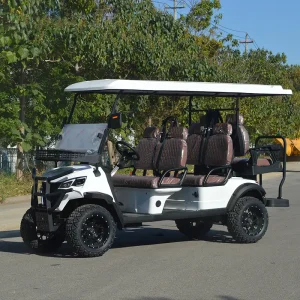
China Wholesale 6 Seat Electric Golf Carts, 72V Lithium Customized Comfortable 4 Seat Electric Golf Buggy Supplier, Suppliers
View Specification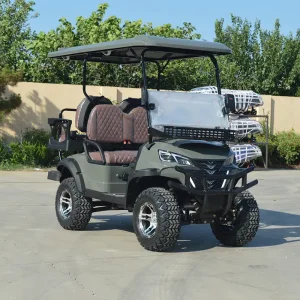
OEM Affordable China 4-Seater Electric Golf Cart - Off-Road Adventure with Custom Battery Options from Trusted Suppliers & Factory Manufacturers, Supplier
View Specification
Best China Suppliers Factory 72V AC Mini Electric Golf Cart 4-Seat Buggy Gold Color Lithium Battery CE Certified Manufacturers, Supplier
View Specification
Cheap Cheap Small 4 Seater Electric Golf Carts, Golf Cart Battery, off Road Golf Carts Factory, Factories
View Specification
OEM Affordable 2 Seater Mini Sightseeing Car Golf Cart Electric Cars Manufacturer, Suppliers
View Specification
OEM Wholesale Electric Golf Carts from China Suppliers, 72V Lithium 6 Seat Golf Buggy Factory Made for Comfort and Performance Manufacturers, Factories
View Specification
ODM Wholesale 6 Seat Electric Golf Carts - 72V Lithium, Customized Comfort from China Suppliers and Factory Supplier, Factory
View Specification
China China Suppliers Factory 72V Electric Golf Cart - 4-Seater Off-Road Buggy for Sightseeing, 35 km/h Speed, 150 km Range Suppliers, Factories
View SpecificationFrequently Asked Questions for Fleet Importers
Essential technical, financial, and regulatory insights addressing the primary concerns of institutional buyers and commercial distributors.
What is the actual operational lifespan of Leibin 72V LiFePO4 battery packs under commercial fleet cycles?
Our 72V lithium iron phosphate (LiFePO4) systems are rated for ≥ 3,500 complete discharge and recharge cycles (100% Depth of Discharge) while maintaining at least 80% of original retention capacity. In standard commercial resort conditions with single daily charging cycles, this equates to 9 to 11 years of continuous operation. Furthermore, our integrated CAN-bus Battery Management System (BMS) balances cell voltages dynamically down to ±0.005V increments, preventing premature individual cell degradation and eliminating maintenance costs associated with lead-acid water replenishment.
How does Leibin address ocean transit corrosion prevention for coastal resort buyers?
Every vehicle frame undergoes a multi-stage electrochemical pre-treatment consisting of hot alkaline degreasing, zinc phosphating, and cathodic electro-deposition primer (EDP), followed by thermoset polyester powder baking. Critical hardware fittings—including nuts, suspension brackets, and exposed steering joints—utilize Dacromet or 304 marine-grade stainless steel coatings certified to exceed 1,000 hours under ASTM B117 neutral salt spray conditions, ensuring exceptional longevity in high-salinity island or seaside environments.
What documentation and certifications are provided to ensure seamless customs clearance in Europe and North America?
We deliver complete regulatory compliance paperwork directly alongside bill of lading documents. This includes official CE documentation under Machinery Directive 2006/42/EC and EMC Directive 2014/30/EU, formal UN38.3 lithium battery transportation test certificates, complete Material Safety Data Sheets (MSDS), factory certificates of origin, and custom HS code classifications (typically 8703.10 for electric golf carts and low-speed passenger carriers). For street-legal applications, we furnish manufacturer statements of origin (MSO) and 17-digit VIN allocations compliant with ISO 3779 / SAE standards.
What is the factory lead time for wholesale fleet orders (20ft / 40ft HQ container quantities)?
Standard production runs for standardized configurations (48V or 72V, 2-to-6 seat layouts) typically require 15 to 22 business days from deposit confirmation to container loading at our Dezhou production facility. Highly customized OEM orders—such as special corporate RAL paint finishes, tailored upholstery, onboard IoT telematics integration, or custom utility aluminum beds—average 25 to 35 calendar days. Pre-shipment dyno-testing records, brake-balance certifications, and high-resolution loading photographs are provided to client procurement teams prior to vessel sailing.
How are warranty claims and replacement spare parts handled internationally?
Every Leibin fleet export is supported by our comprehensive Tier-1 factory warranty: 5 years for the lithium battery pack, 3 years for the electric drive motor and AC controller, and 2 years for main chassis structural weldments. For international fleet buyers, we maintain a dedicated fast-track air dispatch program for replacement controllers, sensors, and electrical components. Moreover, each multi-vehicle container shipment is supplied with a curated emergency spare-parts kit (containing high-wear items such as brake pads, bushings, fuses, lighting relays, and throttle micro-switches) to ensure maximum fleet availability.