
Engineered Fleet Vehicles & Premium Electric Buggies
From single-user specialized maintenance carts to agile multi-terrain low-speed utility carriers, explore precision-engineered electric platforms manufactured to strict CE and ISO quality benchmarks.

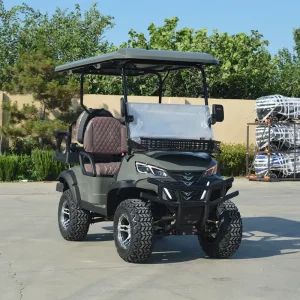
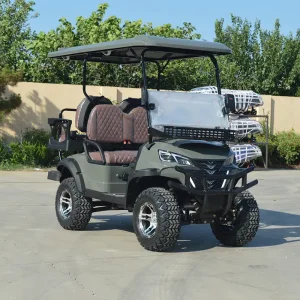
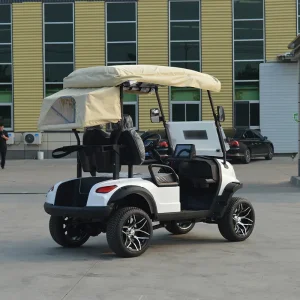

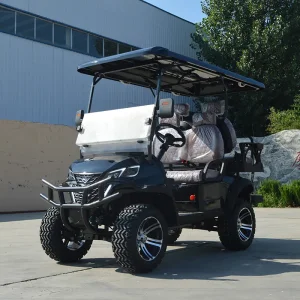
The Rise of the One-Person Electric Golf Cart: Redefining Turf Ecology & Solo Transit
How the shift from conventional dual-rider carriages toward high-torque single-seat light electric vehicles (LEVs) is accelerating round completion speeds, lowering course agronomy degradation, and altering international supply dynamics.
Pace of Play Acceleration per 18 Holes
Turf Compaction & Agronomic Stress
LiFePO4 Modular Cell Working Lifespan
High-Efficiency AC / PMSM Architecture
Solving the "Pace of Play" Bottleneck
Traditional multi-passenger carts enforce continuous zig-zagging across the fairway as two golfers share single conveyance toward diametrically opposite ball positions. One-person electric golf carts decouple golfer movement completely. Each player navigates directly to their personal lie, compressing typical 18-hole rounds from 4 hours and 45 minutes down to approximately 3 hours and 15 minutes, boosting course capacity and greens fee revenue exponentially.
Agronomic Preservation & PSI Impact
Heavier four-seater and two-seater carts exert high ground contact pressure (typically between 12 to 18 PSI), compacting root zones, causing bentgrass hypoxia, and demanding costly aeration cycles. Conversely, single-rider electric carts and compact standing/seated buggies distribute featherweight curb mass across low-impact high-flotation pneumatic turf tires, generating negligible ground psi that permits fairway drive-outs even under "90-degree cart path only" weather constraints.
Post-Pandemic Individualization
The global recreational sector witnessed permanent behavioural modification: golfers demand individual control, sanitized personal spacing, and independence. Resort directors and municipal operators leverage one-person electric golf buggies as premium VIP upgrade amenities, yielding incremental cart rental margins while expanding equipment fleet utilization during shoulder seasons and dawn-patrol individual tee-times.
Global Corporate Sourcing Trends & Fleet Modernization
Institutional purchasing directors, country club managing agents, and industrial site facility directors evaluate single-rider electric vehicles across total cost of ownership (TCO), functional versatility, and lifecycle sustainability.
Commercial Fleet Economics
Corporate procurement teams in North America, Western Europe, and Australasia are transitioning from depreciating lead-acid 2-passenger leases toward dedicated purchased fleets of 72V and 48V single-person electric vehicles. With average operating power costs below $0.22 per full 36-hole duty cycle and virtually zero scheduled lubrication downtime, institutional buyers capture payback horizons inside 14 operational months.
Cross-Sector Fleet Diversification
Beyond traditional golf links, one-person electric micro-vehicles have become standard issue for airport tarmac inspections, mega-scale automated distribution warehouses (Amazon, DHL fulfillment centers), sprawling solar PV farms, and closed-loop medical campuses. Their compact footprint enables them to negotiate 900mm pedestrian breezeways, standard industrial elevators, and narrow warehouse aisles inaccessible to conventional LSVs.
Regulatory & Safety Compliance
International distributors require factories capable of configuring braking curves, electronic roll-away inhibitors, forward/reverse speed limiters, and electromagnetic parking brakes compliant with ANSI/OPEI B71.9, CE Machinery Directive 2006/42/EC, and US DOT FMVSS 500 low-speed vehicle (LSV) statutory standards. Direct factory-level compliance documentation eliminates port-of-entry quarantine hurdles.
| Evaluation Parameter | Legacy 2-Person Cart (Lead-Acid) | Modern 1-Person LEV (48V LiFePO4) | Industrial Grade 72V AC Micro-Buggy |
|---|---|---|---|
| Gross Vehicle Weight (GVW) | 420 kg – 550 kg (Heavy) | 110 kg – 165 kg (Ultralight) | 180 kg – 240 kg (Medium-Rigid) |
| Ground Bearing Pressure | 14.5 – 18.2 PSI (High compaction) | 5.2 – 6.8 PSI (Turf-Friendly) | 7.1 – 8.5 PSI (All-Terrain) |
| Typical Battery Life Cycle | 500 – 750 cycles (Frequent watering) | 3,000+ cycles (BMS Active Balance) | 3,500+ cycles (High C-Rate Lithium) |
| Gradeability (Slope Torque) | 15% – 20% max incline | 25% – 30% incline climbing | 35% incline (High-Torque AC/PMSM) |
| Round Throughput Capacity | 4.5 – 5.0 hours / 18 holes | 3.0 – 3.3 hours / 18 holes | Continuous multi-shift facility use |
| Fleet Storage Footprint | 1 Standard Bay per Unit | 2.5 Units per Standard Bay | 2 Units per Standard Bay |
| Factory Compliance Standard | Basic Regional | CE / ISO9001 / UN38.3 | CE / FMVSS 500 / EEC L6e |
China Factory 4.0: Supply Chain Resilience & Leibin Engineering Authority
From raw tubular steel transformation to closed-loop BMS algorithm validation, Dezhou Leibin Vehicle Industry Co., Ltd. demonstrates why integrated Chinese production bases anchor the global electric low-speed vehicle market.
Integrated Robotic Chassis Welding & E-Coating
At the 13,000 m² modern manufacturing complex in Wucheng County, Dezhou, Leibin engineers build high-tensile structural frames utilizing multi-axis laser cutting and robotic jig-fixtured welding stations. Complete chassis undergo electrophoretic immersion (E-coating) coupled with automotive-grade powder coating, providing saltwater fog corrosion resistance surpassing 1,200 continuous hours—a mandatory benchmark for coastal links and humid tropical resorts.
Tier-1 Lithium Powertrain & Smart BMS Integration
Rather than relying on unvetted third-party packs, Leibin configures automotive-grade lithium iron phosphate (LiFePO4) energy storage integrated directly with intelligent CAN-bus Battery Management Systems. Thermal run-away suppression, low-temperature cell self-heating, real-time SoC telemetry, and dynamic kinetic energy recovery (regenerative braking) are tuned precisely to optimize grade-hold on 30% course slopes.
Modular OEM/ODM Agile Customization
With an in-house R&D engineering cohort of over 100 seasoned vehicle specialists, Leibin facilitates complete mechanical and aesthetic bespoke tailoring: customized bag racks, quick-release cooler brackets, magnetic rangefinder docks, GPS digital course trackers, solar charging canopies, and enterprise fleet liveries tailored to commercial client branding guidelines.
Global Commercial & Localized Use Cases
Examining how single-operator electric carts and compact multi-role LSVs fulfill high-frequency missions across differing geographic environments, climatic extremes, and functional settings.
Championship Golf Clubs
Deployed as solo-rider express rental units, these buggies allow avid golfers to play 18 holes at dawn before clubhouse rush hours without creating turf ruts or slowing foursome groups ahead.
Luxury Eco-Resorts & Villas
Silent, zero-emission transportation for guests and concierge attendants navigating undulating hillside pathways, private infinity villas, and nature reserves where internal combustion exhaust is banned.
Mega Warehouses & Ports
Inventory supervisors and safety inspectors utilize compact one-person electric carts equipped with clipboard tablets and barcode scanners to transit multi-kilometer logistics centers quickly and fatigue-free.
Gated Master Communities
Retirement enclaves and master-planned villages in Florida, Arizona, Spain, and Australia welcome ultra-compact personal electric carts for daily mailbox runs, fitness clubhouse visits, and neighborly visits.
Institutional Sourcing Checklist: Vetting Tier-1 EV Manufacturers
Key criteria established by global procurement directors to distinguish between pure middleman trading companies and verified factory-direct manufacturers with full engineering accountability.
Audit Point 1: Cell Certification & UN 38.3
Always demand certified test reports for UN 38.3, MSDS, and CE low voltage compliance covering the specific lithium battery pack assembled in the vehicle. Inquire whether the cells originate from Tier-1 automotive manufacturers (such as CATL, EVE, or Gotion) and whether the BMS provides cell-level over-voltage, under-voltage, and thermal runaway auto-disconnect safeguards.
Audit Point 2: Steel Frame Structural Rigidity
Ensure the cart chassis is constructed from minimum 2.5mm seamless high-strength steel tubing rather than low-gauge angled iron. Require factory weld inspection documentation, ultrasonic test reports, and salt-spray corrosion chamber ratings to ensure longevity in marine coastal golf resort atmospheres.
Audit Point 3: Container Packing Density
Logistics freight directly impacts delivered unit economics. Experienced suppliers like Leibin design modular dismountable roof canopies, steer column quick-folds, and specialized steel-frame stacking crates that optimize ocean shipping container load volumes—packing up to 24 to 32 compact buggies into a single 40ft HQ container.
Frequently Answered Strategic Questions
Everything fleet purchasing managers and distributor principals need to know about battery selection, homologation standards, container logistics, and direct factory warranties.
Why choose a 72V lithium powertrain over a 48V system for commercial single-person golf fleets?
How do one-person electric golf carts prevent turf damage during wet grass conditions?
What are the key export homologation and safety standards required for importing into the USA and EU?
Can Dezhou Leibin handle customized OEM/ODM branding and accessory requirements for our facility?
How are spare components, replacement parts, and warranty claims serviced internationally?
Comprehensive Electric Vehicle Fleet Lineup
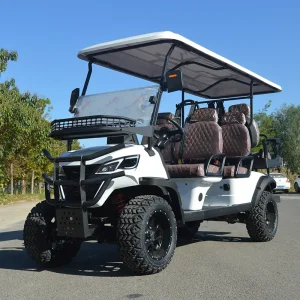
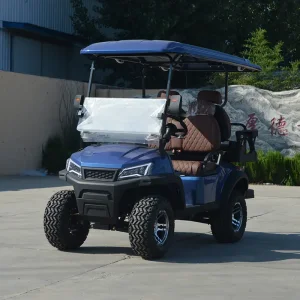
Explore our full catalog of high-performance electric golf carts, utility patrol units, and low-speed passenger carriers manufactured for global resorts, private communities, and industrial facilities.
Partner Directly with China's Premier Low-Speed EV Manufacturer
Whether establishing a proprietary private-label one-person golf buggy brand, upgrading a municipal golf course fleet with 72V lithium power, or deploying industrial utility carriers across sprawling commercial sites, Leibin delivers authentic factory accountability from CAD design to final port logistics.