

Featured Fleet Portfolio
Industrial Grade Zero-Emission Patrol & Utility Platforms
Engineered for round-the-clock facility monitoring, community surveillance, and specialized transport with rapid lithium replenishment and reinforced chassis structures.
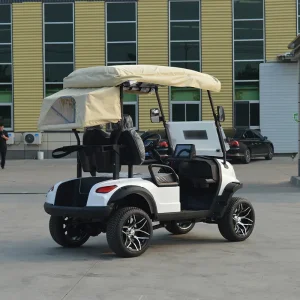
OEM Affordable 2 Seater Mini Sightseeing Car Golf Cart Electric Cars Manufacturer, Suppliers
Configure Platform →
Best 72V Modern 6-Seater Electric Golf Cart - Factory Direct from China Suppliers, Ideal for On-Road and Off-Road Use
Configure Platform →
Wholesale Wholesale 6 Seat Electric Golf Carts from China Suppliers - Customized 72V Lithium Golf Buggy Factory Direct Supplier
Configure Platform →
Best China Suppliers Factory 72V AC Mini Electric Golf Cart 4-Seat Buggy Gold Color Lithium Battery CE Certified Manufacturers
Configure Platform →
Wholesale China Factory Suppliers of 2-Seater Electric Sightseeing Cars, Golf Carts, and Versatile G70 Electric Vehicle Supplier
Configure Platform →
Wholesale Electric Golf Cart 4seated Golf Buggy Sightseeing Bus off-Road 72vgolf Cart Manufacturers, Factory
Configure Platform →
Cheap Cheap Small 4 Seater Electric Golf Carts, Golf Cart Battery, off Road Golf Carts Factory, Factories
Configure Platform →
Macro Intelligence
The Global Decarbonization Paradigm in Patrol & Fleet Logistics
Accelerated ESG mandates, localized emissions control zones, and total cost of ownership (TCO) benchmarks are driving enterprise fleet conversion from ICE to zero-emission low-speed electric vehicles.
68%
Reduction in Fleet TCO vs ICE Units
3,500+
LiFePO4 Deep Discharge Cycles
0 dB
Acoustic Signature for Stealth Patrol
100%
Zero Tailpipe Particulate Output
Fiscal TCO Compression
Internal combustion patrol fleets incur recurring maintenance overheads across oil circuits, transmission gears, spark networks, and fuel inefficiencies during extensive idle cycles. Zero-emission LSVs run on high-density lithium storage, operating under $0.02 per patrol mile while eliminating non-productive idle fuel burn entirely.
Low-Acoustic Covert Surveillance
Critical infrastructure, botanical facilities, luxury communities, and educational centers require non-disruptive physical surveillance. Leibin's permanent magnet AC motor platforms yield near-silent operation, permitting tactical nocturnal observation, deterring intrusions, and preserving guest tranquility.
High-Duty Telematics Integration
Contemporary patrol logistics require digital transparency. High-voltage CAN-bus architectures interface smoothly with onboard microcomputers, ALPR (Automated License Plate Readers), forward-looking infrared (FLIR) arrays, dynamic geofencing modules, and remote dispatch operations.
Mission Scenarios
Specialized Deployment Ecosystems & Field Applications
From tight industrial aisles to perimeter fence inspection across rough topographies, our platform matrix addresses precise mechanical constraints and environmental demands.
Residential & Gated Communities
Constant stop-and-go enforcement, speed regulation, and low-speed road safety compliance. Fitted with 15–30 km/h programmable governors and high-visibility LED light bars for neighborhood reassurance.
Manufacturing & Industrial Hubs
Tight turning radii across busy logistics yards, warehousing facilities, and chemical compounds where ICE sparks pose hazards. Non-sparking DC/AC systems ensure safe hazardous-material adjacent operation.
Educational & Medical Campuses
Zero emissions protect high-density pedestrian corridors and air intake grates near medical clinics. Low center of gravity prevents rollover risks across sidewalk curbs, ramps, and crosswalks.
Airports & Transit Interchanges
Ramp-side inspection, perimeter anti-intrusion monitoring, and baggage transit lane surveillance. Heavy-duty suspension packages absorb rail crossways, ramp inclines, and tarmac expansion joints.
Technical Whitepaper Matrix
Engineering Matrix: 48V Lead-Acid vs 72V Lithium Powertrain Systems
Review the critical parameters distinguishing entry-level utility buggies from heavy-duty, 24/7 industrial patrol mobility platforms.
| Evaluation Parameter | Standard 48V Lead-Acid Configuration | Leibin High-Spec 72V LiFePO4 Platform | Operational Fleet Impact |
|---|---|---|---|
| Usable Battery Energy Density | 35–45 Wh/kg (Rapid drop under discharge) | 120–160 Wh/kg (Stable voltage rail) | Triples operational duty cycle per charge window |
| Deep Discharge Cycles (80% DoD) | 400–600 Cycles before degradation | 3,500–5,000 Verified Operating Cycles | Extends complete battery service life beyond 8 years |
| Climbing Capability (Gradeability) | 12% – 15% Maximum slope dynamic | 25% – 30% Continuous climbing grade | Maintains speed with multi-officer payloads on steep inclines |
| Opportunity Fast-Charging | Unsupported (Requires 8–10h steady cooling) | 1C–2C fast recharge support (80% in 1.5h) | Enables perpetual shift handovers without vehicle downtime |
| Chassis Corrosion Resistance | Standard electrostatic dip painting | Cathodic Electrophoretic Deposition (E-Coat) | Resists salt mist, de-icing chemicals, and coastal humidity |
| Thermal Operating Window | 0°C to +40°C (Output drops below freezing) | -25°C to +55°C with Integrated Thermal BMS | Reliable cold-climate winter patrolling & desert endurance |
Manufacturing Precision
China Factory Supply Chain Resilience & Lean Production Advantages
Operating from our 13,000 m² state-of-the-art facility in Dezhou, Shandong, Leibin consolidates structural metallurgy, powertrain integration, and digital quality validation under a unified roof.
Vertically Integrated Cluster
Located within China's specialized electric mobility heartland, Leibin sources direct tier-1 structural raw materials, advanced MOSFET motor controllers, precision gearing, and CATL/EVE battery cells within a 100km radius. This geographic leverage protects international clients against global logistical disruptions and parts shortages.
Rigorous QA Dyno Protocols
Each patrol vehicle departs the assembly line only after completing our multi-stage inspection matrix: high-pressure water ingress testing, 25-degree ramp hold validation, laser wheel alignment, dynamic chassis dyno pull, and continuous electronic insulation monitoring to guarantee fail-safe field execution.
Tailored OEM/ODM Flexibility
Our in-house R&D and CAD engineering division allows bespoke customization for emergency fleet tenders. From specialized siren integration, rear lockable tactical gun boxes, and solar range-extender roofs to customized multi-spectrum warning strobes, we engineer to specific agency criteria.
Innovation Horizon
Technology Roadmap: The Future of Patrol Mobility
Advancing from operator-dependent buggies to intelligent edge-computing sentry assets equipped with machine vision, solar capture, and autonomous perimeter navigation.
Phase I: Roof Solar Integration
Deploying monocrystalline photovoltaic ceilings yielding up to 350W peak solar recovery. In open-air parking and continuous daylight patrolling, onboard solar harvesting supplies auxiliary telemetry draws and adds 15–25 km of non-plug range per day.
Phase II: Edge AI & Machine Vision
Integrating on-premise NPU processors with dual wide-angle camera arrays. The system processes pedestrian densities, flags unattended baggage, verifies vehicle license plates against security whitelists, and relays anomalies in real time without human intervention.
Phase III: Semi-Autonomous Sentry
Development of low-speed autonomous waypoint patrolling utilizing solid-state LiDAR and RTK-GPS guidance. Vehicles execute predetermined perimeter surveillance routes automatically, returning to inductive fast-charge pads for self-replenishment.
Regulatory Assurance
Localization Compliance & Global Procurement Assurances
Eliminating importation friction through precise homologation engineering, standardized packaging, and turnkey documentation tailored to national road safety jurisdictions.
FMVSS 500 & L6e/L7e Homologation
We engineer designated Low-Speed Vehicle (LSV) units conforming strictly to DOT FMVSS Title 49 CFR Part 571.500 (United States) and EEC L6e/L7e standards (European Union). Equipped with DOT/E-Mark certified AS1/AS2 laminated safety windscreens, three-point retracting seat belts, automotive illumination, reverse cameras, dual mirrors, and electronic VIN identification.
Optimized Knockdown & Crated Shipping
To compress maritime freight charges, vehicles are prepared in precision SKD (Semi-Knocked Down) steel racking or complete CBU (Completely Built Up) secure crates. Engineering load designs achieve maximum 40HQ container volumetric capacity—fitting up to 12 units per container without cosmetic or mechanical jeopardy.
Turnkey Spares & Direct Engineer Dispatch
Every fleet consignment includes critical maintenance replacement consumables (brake pads, contactors, relays, tie rods, bulbs). Our dedicated overseas engineering desk offers direct visual diagnostics, complete English schematics, wiring loom layouts, and direct air-express warranty dispatch for minimal fleet downtime.
Fleet Specification Selection
Specialized Patrol, Sightseeing & Tactical EV Fleet Models
Choose from high-capacity personnel transports, solar-assisted field scout buggies, and agile patrol units straight from China's premier manufacturer.
Cheap 72V New Style Modern Fashion 6 Seat Golf Cart Electric Golf Buggy Manufacturers, Supplier
Configure Platform →
China Leibin (G90) 72V Lithium Battery Solar 4 Seaters off Road Electric Street Legal Golf Carts Manufacturers, Suppliers
Configure Platform →
Buy 72V AC Mini Electric Golf Cart for Sale - China Suppliers & Factory, 4-Seat Lithium Battery Model, CE Certified
Configure Platform →
Buy 72V Modern 6-Seater Electric Golf Cart from China Suppliers | Reliable Factory Golf Buggy for On-Road & Off-Road Use
Configure Platform →
China Affordable Electric 2 Seater Mini Sightseeing Car Golf Cart from China Suppliers and Factory Supplier
Configure Platform →
OEM Affordable China 4-Seater Electric Golf Cart - Off-Road Adventure with Custom Battery Options from Trusted Suppliers
Configure Platform →
Cheap Wholesale China 6 Seat Electric Golf Carts, 72V Lithium Battery, Comfortable Customized Golf Buggy from Suppliers & Factory
Configure Platform →
ODM Low-Speed Electric Golf Car from China Suppliers - CE Approved 15-40km/H Beemotors G70-4+2 Factory Model
Configure Platform →
Procurement Intelligence
Frequently Asked Questions (FAQ) for Fleet Procurement Directors
Get definitive technical answers concerning fleet electrical architecture, homologation, and factory warranties.
Are Leibin zero-emission patrol vehicles street-legal for municipal use?
Yes. Street legality depends on localized jurisdictional rules. For North America, our vehicles can be engineered to fulfill DOT FMVSS Part 571.500 (Low-Speed Vehicles) standards for secondary roads under 35 mph, including certified automotive windshields, DOT-labeled tires, safety belts, headlamps, directional strobes, and audible alarms. For Europe, vehicles are built to EEC L6e/L7e type certifications. We deliver the certificate of conformity and VIN documentation required for localized registration.
Why is a 72V lithium setup preferable over traditional 48V lead-acid for security patrol?
Security patrol vehicles operate under continuous, demanding duty cycles. A 72V system draws lower amperage than 48V to deliver identical wattage, dramatically reducing heat generation, thermal cable wear, and motor stress. Moreover, LiFePO4 chemistry eliminates acid replenishment, slashes tare weight by ~180kg for increased acceleration, and permits rapid opportunity top-off charging during brief guard shift turnarounds.
What is the standard warranty envelope and international parts replacement mechanism?
We provide a 5-year structural warranty on the robotically welded high-tensile steel chassis, 3 to 5 years (or 3,500 cycles) on our LiFePO4 battery modules, and 18 months across AC motor controllers and mechanical transaxles. In the rare case of an issue, replacement assemblies are expedited via express international air freight alongside complete schematic troubleshooting instructions.
Can Leibin accommodate tactical adaptations and custom agency branding?
Directly from our factory lines. We routinely accommodate custom emergency vehicle strobe arrays, public address sirens, lockable polycarbonate security enclosures, onboard weapon storage brackets, ruggedized laptop mounts, and agency-specific vinyl or powder-coated livery without passing orders to third-party outfitters.