
Featured Engineering Models & Direct Factory Supply
Direct-from-plant specialized vehicle configurations verified under ISO 9001 and CE homologation standards. Select commercial units below for complete parametric specifications and wholesale crating protocols.
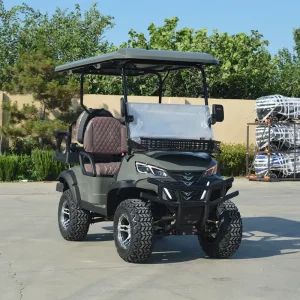
72V AC Mini Electric Golf Cart - 4-Seat Lithium Battery Model, CE Certified
View Specifications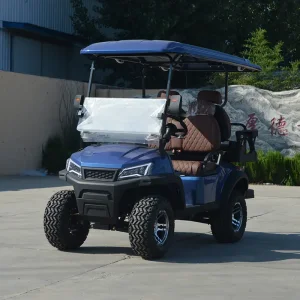
Leibin G90 72V Lithium Battery Off-Road Golf Cart - 4 Seaters, Solar Power, 35 km/h
View Specifications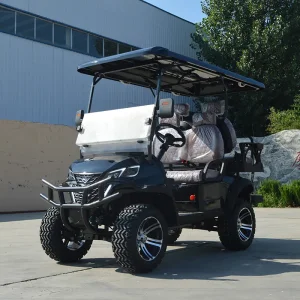
Wholesale Electric Golf Cart 4-Seater Golf Buggy Sightseeing Off-Road 72V Platform
View Specifications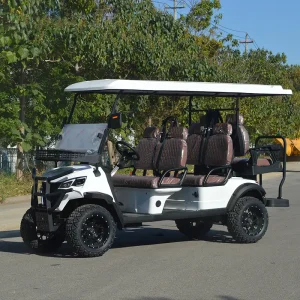
China Wholesale 6-Seat Electric Golf Cart - 72V Lithium Customized Ergonomic Buggy
View Specifications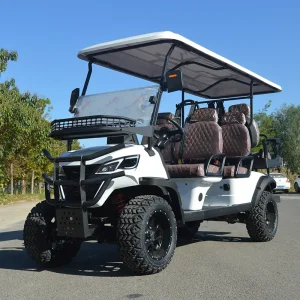
Electric Cars Buggy Beemotors Supply - CE Approved 15-40 km/h Low Speed Vehicle
View Specifications
OEM Wholesale 72V Lithium 6-Seat Golf Buggy - Engineered for Comfort and Durability
View Specifications
ODM Wholesale 6-Seat High-Output 72V Lithium Transport Buggy Direct Supply
View Specifications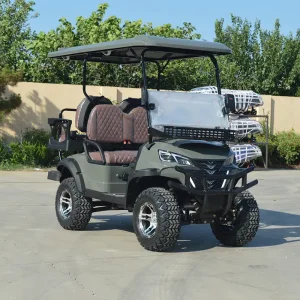
OEM Affordable 4-Seater Off-Road Adventure Cart with Custom LiFePO4 Options
View SpecificationsThe Global Commercial Landscape for Specialized Golf Cars
Evaluating the evolution from traditional recreational buggies to multi-sector Low-Speed Electric Vehicles (LSVs) and Light Utility Transporters across multinational supply chains.
Cross-Industrial Demand Proliferation
The commercial landscape has decoupled from pure green-turf golf applications. Over 62% of incoming OEM inquiries now originate from luxury eco-resorts, master-planned private communities, educational megacampuses, international air terminals, and high-security industrial parks requiring dependable passenger and cargo movement.
Direct-From-Source Supply Chain Consolidation
Global enterprise buyers are systematically eliminating regional trading brokerages in favor of primary automotive plants like Dezhou Leibin Vehicle Industry Co., Ltd. Direct engagement with manufacturing facilities provides complete transparency over chassis metallurgy, robotic cathodic electrodeposition (CED), and component-level tracing.
Stringent Homologation Requirements
Procuring golf cars for regulated global markets requires strict compliance with localized transport standards. From US Department of Transportation FMVSS Part 571.500 (Low-Speed Vehicles) to European Union L6e and L7e light quadracycle frameworks, tier-1 suppliers must deliver pre-engineered harness conduits, photometric lamps, and inertia braking systems.
Technological Megatrends Shaping Next-Generation Fleets
A granular examination of powertrain transformations, thermal energy density improvements, telematics integrations, and sustainable auxiliary recharging systems.
72V LiFePO4 Chemistry
Legacy 48V flooded lead-acid batteries are obsolete due to sulfuric stratification, heavy deadweight, and thermal degradation. Modern 72V Lithium Iron Phosphate (LiFePO4) systems deliver 3,500+ full discharge cycles at 80% DOD, cut chassis weight by over 130 kg, and utilize smart Battery Management Systems (BMS) with automated cell balancing.
AC Asynchronous Powertrains
The phase-out of mechanical brushed DC motors is accelerating. Variable Frequency AC Induction and Permanent Magnet Synchronous Motors (PMSM) controlled via intelligent Curtis or Enpower algorithmic microcontrollers provide continuous regenerative braking, zero brush maintenance, and superior gradeability under 30% slope inclines.
Monocrystalline Solar Tops
Next-gen models integrate automotive-grade flexible monocrystalline photovoltaic (PV) modules into extended injection-molded canopy roofs. Operating through MPPT charge step-up converters, rooftop arrays contribute 15 km to 25 km of supplementary autonomy per operational daylight cycle, reducing total grid reliance in tropical zones.
IoT Geofencing & CAN-Bus
Enterprise fleets are now equipped with 4G LTE/GPS telematics connected directly to the vehicle Controller Area Network (CAN-Bus). Fleet managers establish dynamic geofenced speed limiters, track battery thermal profiles in real-time, enforce remote kill-switches, and optimize preventative maintenance cycles via cloud dashboards.
Configuring Chassis & Payload for Specialized Global Applications
A single standard cart design cannot satisfy diversified operational environments. Our engineered vehicle lines solve target duty challenges across distinct operational terrains.
Luxury Resorts & Spas
Low-noise electric mobility preserves pastoral tranquility. Four- and six-seat premium buggies feature custom diamond-stitched marine vinyl, independent double A-arm front suspension, onboard refreshment coolers, and whisper-silent drive units for VIP guest logistics.
Airports & Rail Terminals
Demanding 24/7 indoor-outdoor multi-shift passenger transit. Zero-emission 6-to-8 passenger sightseeing configurations deliver non-marking synthetic rubber tires, automatic electromagnetic hold brakes, ultra-tight turning radiuses, and accessibility ramps.
Industrial Parks & Cargo
Heavy tooling and materials handling. Reinforced rear flatbed truck beds with fold-down aluminum drop-sides, 48V/72V high-torque gearing, hydraulic dumping options, and payload capacities rated up to 1,000 kg for factory warehouse maintenance.
Campus & Estate Security
Continuous perimeter surveillance across university grounds, gated communities, and port facilities. Outfitted with LED stroboscopic lightbars, high-output PA speakers, lockable dash storage for tactical gear, and reinforced anti-collision brush guards.
Off-Road & Eco-Farms
Extreme terrain handling across orchards, equestrian facilities, and nature reserves. Lifted off-road suspensions provide 8-inch ground clearance, heavy-duty 23-inch knobby all-terrain tires, front electric winches, and weatherproof sealed powertrain enclosures.
Technical Comparison: 48V DC/Lead-Acid vs. 72V AC/LiFePO4 Architecture
Fleet procurement requires objective lifecycle cost calculations. Contrast legacy drivetrains against modern high-voltage lithium assemblies across key performance parameters.
| Evaluation Parameter | Legacy 48V Lead-Acid System | Advanced 72V LiFePO4 AC Platform | Enterprise Operational Impact |
|---|---|---|---|
| Usable Battery Capacity | 50% DOD (Depth of Discharge limit to avoid damage) | 90-95% DOD without chemistry degradation | +80% Real-World Range |
| Powertrain Motor Type | Series-wound DC Motor (Requires carbon brush replacement) | Brushless AC Induction / PMSM Brushless Motor | Zero Maintenance Drivetrain |
| Battery Pack Lifespan | 400 to 600 cycles (Typically 1.5 - 2 years commercial use) | 3,500 to 5,000 cycles (8 to 10 years continuous duty) | 60% Lower 5-Year TCO |
| Pack Weight / Impact | 160 kg – 220 kg (Causes severe turf compression) | 45 kg – 70 kg (Lightweight aluminum housed modules) | Extends Suspension & Tire Life |
| Continuous Hill Gradeability | 15% - 18% slope (Suffers thermal current throttling) | 25% - 35% sustained grade under full passenger load | Reliable Mountainous Terrain Run |
| Recharging Cycle Duration | 8 - 10 hours (Requires multi-stage bulk trickle charge) | 2 - 3 hours rapid charging via high-output 25A onboard OBC | Supports Multi-Shift Rotations |
| Daily Maintenance Protocol | Weekly electrolyte watering & terminal de-corrosion | Hermetically sealed BMS unit; maintenance-free | Eliminates Labor Overhead |
Macro-Industry Solutions: Complete Turnkey Supply Chains for Fleet Buyers
When global procurement departments order fleet batches of 20 to 500 units, the manufacturing challenges shift beyond mechanical assembly into supply chain durability, knocked-down shipping logistics, and lifecycle spare part availability.
SKD / CKD Ocean Packing
We engineer proprietary steel-pallet nesting crates. Semi-Knocked-Down (SKD) packing allows 6 units per 40ft High Cube container, while Complete-Knocked-Down (CKD) packing maximizes volumetric efficiency up to 18 units per container, slashing oceanic freight tariffs by up to 55% per unit.
Cataphoretic E-Coating Anti-Corrosion
Vehicles operating in island resorts or coastal environments suffer rapid frame rust. Leibin executes a multi-stage hot-dip phosphatizing and electrophoretic bath on tubular steel frames, validated by 1,000-hour ASTM B117 salt spray testing to prevent structural frame fatigue.
Direct Spare-Parts Warehousing
Fleet operators cannot afford vehicle downtime. We include curated 2-year consumable wear-part bundles (brake pads, steering tie-rods, suspension bushings, wiring harnesses, relays) in initial container consignments alongside digitized schematic interactive parts catalogs.
Frequently Asked Questions: Global Sourcing & Engineering
In-depth answers to core technical, regulatory, shipping, and customization questions asked by international fleet buyers and commercial distributors.
Additional Utility, Off-Road & Multi-Passenger Platforms
Explore our full specialized production lines. Every model is engineered for rapid component interchangeability, scalable volume assembly, and prompt global seaport delivery.
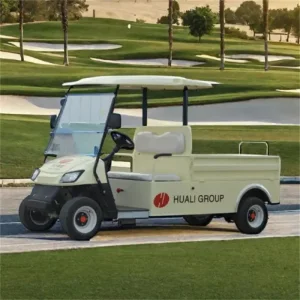
Cargo Electric Utility Off-Road Truck Golf Cart - 48V Heavy Duty Bed Platform
View Specifications
ODM Low-Speed Electric Car - CE Approved 15-40 km/h Beemotors G70-4+2 Buggy
View Specifications
72V 4-Seater Off-Road Buggy for Sightseeing - 35 km/h Speed, 150 km Range Capacity
View Specifications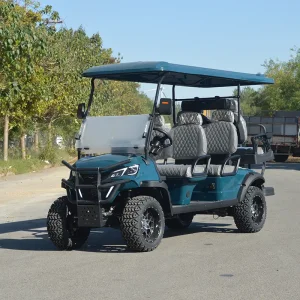
Modern 72V 6-Seater Electric Golf Buggy - Dual On-Road & Off-Road Multi-Shuttle
View Specifications
Wholesale 72V AC Mini Buggy - Signature Gold 4-Seat Lithium Cart with Tail Caddie
View Specifications
Best Factory 72V AC Mini 4-Seat Buggy - CE Certified Premium Lithium Mobility
View Specifications
Cheap Wholesale 6-Seat 72V Lithium Buggy - Customized Ergonomic Passenger Transport
View Specifications
2-Seater Electric Sightseeing Vehicle & Versatile G70 Low-Speed Club Car
View SpecificationsTechnical Roadmap: Autonomous Logistics & Smart Micro-Mobility
Strategic directions for the golf car manufacturing sector through 2030, covering drive-by-wire steering, intelligent charging infrastructure, and V2X ecosystem integration.
Drive-By-Wire & Level-4 Autonomy
Integration of electronic steer-by-wire (SbW) and brake-by-wire systems interfacing with solid-state LiDAR sensors and RTK-GPS modules. This enables driverless luggage hauling in resorts and automated night-patrol routines on predetermined perimeter tracks without human operators.
Inductive Wireless Charging Mats
Eliminating manual charging cable plug-ins through high-frequency resonant magnetic inductive pads installed flush in golf staging stalls and shuttle stops. Vehicles automatically recharge during passenger disembarkation, guaranteeing uninterrupted daily uptime.
V2G Decentralized Grid Balancing
Large commercial fleets acting as distributed battery energy storage systems (BESS). Using Vehicle-to-Grid (V2G) bidirectional onboard inverters, resort operators can discharge stored solar energy back into the property's microgrid during peak tariff evening spikes.