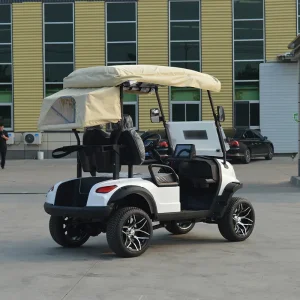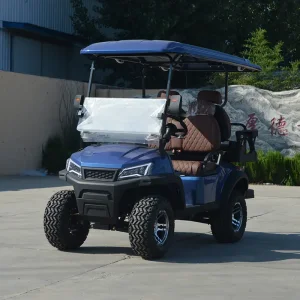
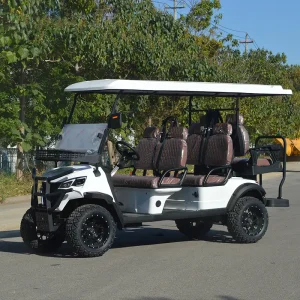
ODM Wholesale 6 Seat Electric Golf Carts - 72V Lithium, Customized Comfort from China Suppliers and Factory Supplier, Factory
View Tech Specs
Explore engineering-verified advanced electric vehicles, from long-wheelbase resort movers to high-efficiency utility shuttles ready for deployment.
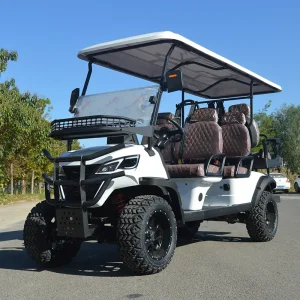
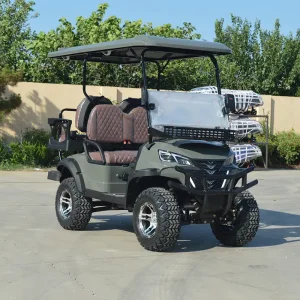
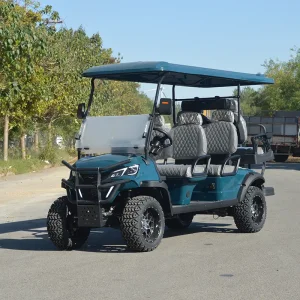
Strategic analysis of institutional fleet transitions, zero-carbon mandates, and modern Total Cost of Ownership (TCO) benchmarks across global enterprise buyers.
Traditional Lead-Acid (SLA) platforms impose hidden lifecycle costs: acid spill risks, weekly terminal maintenance, and high degradation rates over 500 cycles. Industrial buyers transitioning to advanced factory-installed 72V LiFePO4 cells reduce operating expenses by 38% over 5 years via zero-maintenance design and sustained 3,500+ thermal cycles.
Procuring advanced EVs requires strict compliance verification. US FMVSS 500 dictates 20-25 mph thresholds, high-visibility 3-point seatbelts, and AS-4 shatterproof acrylic windscreens. In the European Union, Directive 168/2013 under categories L6e and L7e imposes rigorous chassis dynamic integrity and electromagnetic compatibility testing (EMC).
Institutional operators managing mixed fleets require direct CAN-bus telemetry. Modern Chinese factories integrate 4G/GPS cellular modems directly with the motor controllers, allowing real-time battery cell health monitoring, geofencing speed limit adjustments, and predictive thermal alerting directly through central cloud dashboards.
A technical breakdown of how concentrated automotive supply chains in Dezhou deliver uncompromised mechanical reliability and customized scaling.
Unlike third-party workshop spray painting, factory-level manufacturing leverages a multi-stage immersion cathodic dipping tank. The electrostatic molecular bond guarantees uniform anti-corrosion barrier protection across high-tensile tubular steel frames, resisting over 1,000 hours of standardized ASTM B117 neutral salt spray testing.
Advanced EV plants have fully decommissioned brushed DC motors in favor of brushless AC induction systems or Permanent Magnet Synchronous Motors (PMSM). Coupled with high-frequency Curtis-programmable controllers, our 72V drivetrains deliver instant high-torque low-RPM climbing capability with zero brush replacement requirements.
Direct integration of mono-crystalline solar cell roofs into the DC-DC buck converter architecture yields 15-20% extended operating radius during daytime idle periods. The integrated solar regulator dynamically buffers the auxiliary electronics, eliminating phantom battery drain in tropical climates.
| Architecture Component | Legacy Golf Carts (48V SLA) | Factory Advanced EV (72V LiFePO4 + AC) | Enterprise Procurement Advantage |
|---|---|---|---|
| Battery Chemistry | Lead-Acid Deep Cycle (48V Flood/AGM) | Lithium Iron Phosphate (LiFePO4 72V) | Zero Electrolyte Maintenance |
| Power Transmission | Brushed DC Shunt Motor (3.0–3.8 kW) | AC Induction / PMSM Brushless (5.0–7.5 kW) | 30%+ Gradeability Torque |
| Braking Subsystem | Rear Mechanical Drum Brakes | Four-Wheel Hydraulic Disc + Regenerative Brake | Shorter Braking Distance |
| Structural Chassis | Stamped Mild Steel (Spray Painted) | Robotic Welded Tubular Frame + Electrophoresis | 10-Year Coastal Anti-Corrosion |
| Charging Efficiency | 8-10 Hours (Thermal dissipation losses) | 2.5-4 Hours Quick-Charge Direct BMS | 24/7 Turnaround In Multi-Shift |
Purpose-built vehicle profiles matched to the real-world operational challenges of resort destinations, gated communities, and industrial centers.
In luxury eco-resorts across Southeast Asia and the Caribbean, engine noise and exhaust odors spoil guest experiences. Our 6-seat and 8-seat stretched platforms feature ultra-silent helical gearboxes, marine-grade UV-resistant marine upholstery, and regenerative downhill speed control ensuring smooth passenger transit along steep golf path gradients.
For chemical facilities, automated distribution centers, and automotive testing complexes, utility configurations swap out rear seating for heavy-duty diamond-plate aluminum cargo boxes. With payload ratings reaching 600 kg and rated tow loads exceeding 1,500 kg, these vehicles replace oversized diesel vans for localized site transport.
In Florida, Arizona, and Mediterranean retirement zones, golf carts serve as everyday neighborhood electric vehicles (NEVs). Outfitted with street-legal homologation accessories—including DOT turn signals, automotive LED headlamps with high-beam dip, dual side-mirrors, and digital cluster speedometers—they bridge the gap between golf course and suburban highway.
Essential guidance on factory inspections, lithium logistics, tariff mitigation, and warranty administration directly from our technical sales engineering team.
Direct factory packing employs modular knock-down (SKD/CKD) steel framing configurations. By detaching windscreens, wheels, and roofs, a standard 40ft HQ container accommodates up to 18 to 22 units compared to just 6 to 8 fully assembled carts. This drops sea freight overhead by up to 60% per landed vehicle.
For the North American market, our vehicles feature 17-digit VIN encoding following NHTSA guidelines and EPA zero-emission certifications. For European and UK ports, full CE declaration documentation under Machinery Directive 2006/42/EC and Low Voltage Directive 2014/35/EU is supplied alongside UN38.3 battery transport testing reports.
Yes. Handheld programmers and Bluetooth-enabled CAN-bus modules allow your field technicians to alter top-speed governor brackets, adjust hill hold deceleration force, and regulate acceleration ramps without requiring physical hardware swaps or voiding factory driveline warranties.
We provide a 5-year structural warranty on our electro-coated tubular frames, alongside a 3-year or 3,000-hour direct replacement warranty on LiFePO4 battery cells and Curtis motor controllers. A recommended 'Fast-Moving Spares Kit' (bushings, brake shoes, relays, cables) is shipped alongside each volume container.
Review additional configurations including compact mini-buggies, high-clearance off-road utilities, and extended patrol vehicles built to order.