
Direct-From-Factory Solutions
Featured Commercial Fleet Platforms
Standardized utility and multi-passenger low-speed electric transport solutions manufactured under ISO 9001 and CE homologation standards.
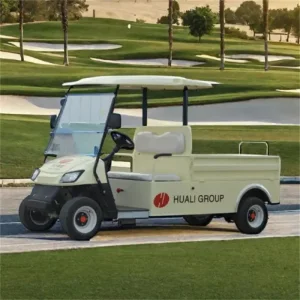
Cargo Electric Utility Off-Road Truck 48V Industrial Buggy
View Factory Specifications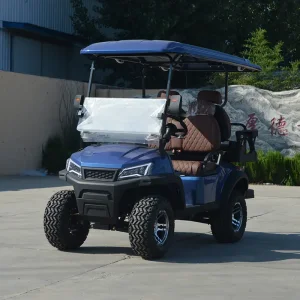
Leibin (G90) 72V Lithium Solar 4-Seater Street-Legal Buggy
View Factory Specifications
72V AC 4-Seat Lithium-Ion Commercial Resort Golf Buggy
View Factory Specifications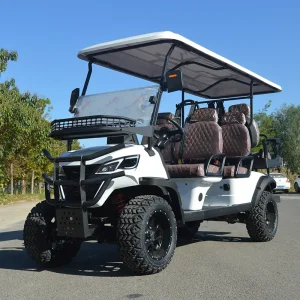
Beemotors Low Speed 15-40km/h CE Approved Utility Buggy
View Factory Specifications
72V Modern 6-Seater Dual-Purpose On-Road & Off-Road Buggy
View Factory Specifications
Direct Export 72V High-Torque 6-Passenger Passenger Cart
View Factory Specifications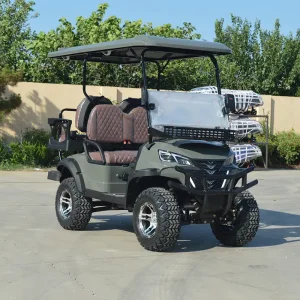
OEM Modular 4-Seater Off-Road Adventure Cart with Custom Pack
View Factory Specifications
Enterprise Fleet Solutions
B2B Procurement Intent: Decarbonization & Fleet Optimization
Corporate, governmental, and institutional buyers prioritize Total Cost of Ownership (TCO), functional safety, and duty-cycle reliability over retail aesthetics.
Resort & Gated Community Shuttling
Hospitality environments require silent operation, high uptime, and zero tailpipe emissions. Modern motorized golf carts transition beyond fairways to perform continuous 16-hour passenger-moving duty cycles across luxury island resorts, airports, master-planned residential communities, and university campuses.
Intralogistics & Industrial Security
Heavy-duty, flatbed, and cargo-box configurations replace internal-combustion utility trucks within industrial chemical plants, shipping ports, distribution centers, and sovereign security compounds, offering intrinsically safer operation and significantly reduced operational maintenance costs.
Fleet TCO: Lithium vs Lead-Acid
By migrating from flooded lead-acid batteries to 72V/48V LiFePO4 packs, enterprise operators realize a 75% reduction in pack weight, achieve over 3,500 charging cycles, eliminate manual electrolyte maintenance routines, and reduce energy consumption by up to 28% through high charging efficiency.
13,000 m²
Robotic Assembly Base
20+ Years
Vehicle Engineering Pedigree
3,500+
LiFePO4 Full Cycles @ 80% DoD
50+ Countries
Global Export Compliance
Technical Architecture
Engineering Whitepaper: Powertrain & Telematics
A systematic review of current OEM low-speed electric vehicle drivetrain topologies, thermal performance under sustained hill-climbing loads, and CAN-bus integration.
| Evaluation Parameter | 48V Standard DC/AC System | 72V High-Torque AC Induction Platform | Next-Gen 72V/96V PMSM Architecture |
|---|---|---|---|
| Powertrain Efficiency | 78% - 84% (Moderate thermal loss) | 88% - 92% (Optimized copper losses) | 94% - 97% (Field-Oriented Control) |
| Climbing Capacity (Gradeability) | Up to 15% - 20% Under load | 25% - 35% Full Passenger Payload | >35% Severe Multi-Terrain Inclines |
| Thermal Throttling Threshold | High duty cycle risk at sustained loads | Dual-stage heat sink passive dissipation | Active liquid/forced cooling options |
| CAN-Bus Diagnostics | Limited analog instrumentation | Integrated BMS & Curtis/Toyota Controller | IoT Telematics, GPS, Remote Geo-fencing |
| Battery Compatibility | Deep-cycle Lead Acid / AGM / LiFePO4 | Automotive Grade Prismatic LiFePO4 | Solid-State & LFP Battery Platforms |
International Compliance
Global Homologation & Street-Legal Standards
Ensuring seamless import customs clearance and public roadway registration across North American, European, and Asia-Pacific regulatory jurisdictions.
US DOT & FMVSS No. 500
For street-legal Low-Speed Vehicle (LSV) operation, units are factory-configured with certified DOT AS-4 windshields, 3-point seatbelts, illuminated side reflectors, precise forward illumination, backup alert buzzers, dual-circuit braking, and 25 mph (40 km/h) speed management regulators.
EU Machinery & L6e/L7e Directives
Compliance with European Union directives including 2006/42/EC Machinery Directive, Low Voltage Directive 2014/35/EU, and Electromagnetic Compatibility (EMC) 2014/30/EU. Chassis structural integrity and acoustic emissions are fully benchmarked for public and commercial resort operation.
UN 38.3 Lithium Transport Safety
All lithium cell architectures, pack assemblies, and active BMS controllers adhere strictly to UN 38.3 testing standards, guaranteeing altitude simulation, thermal shock, vibration, external short circuit, impact, overcharge, and forced discharge safety during maritime logistics.
Multi-Passenger & Sightseeing
High-Capacity Fleet & Sightseeing Transporters
Engineered for hotels, resorts, industrial facilities, and eco-tourism passenger networks requiring continuous multi-stop reliability.

ODM Wholesale 6-Seat 72V Lithium Customized Comfort Vehicle
View Factory Specifications
Modern 72V 6-Seat Electric Hospitality Buggy
View Factory Specifications
High-Capacity 6-Seat 72V Long-Range Tourism Carrier
View Factory Specifications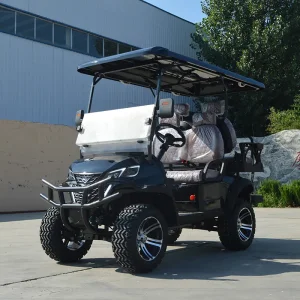
Off-Road 72V 4-Seater Cross-Country Sightseeing Shuttle
View Factory Specifications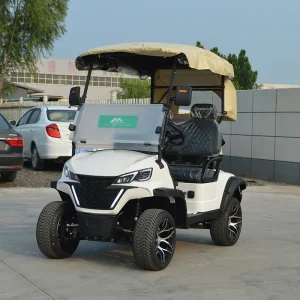
Versatile G70 Series 2-Seater Commercial Utility Platform
View Factory Specifications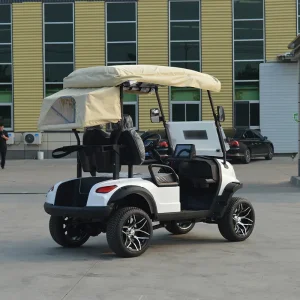
Affordable 2-Seater Mini Sightseeing Mobility Runabout
View Factory Specifications
OEM Modular 2-Passenger Course & Resort Fleet Cart
View Factory Specifications
72V High-Performance 6-Seat Passenger Shuttle (OEM Spec)
View Factory Specifications
Sourcing Excellence
Supplier Auditing & Quality Verification Protocol
How international procurement directors audit Chinese motorized vehicle manufacturers to avoid component mismatch, frame failure, and pack degradation.
1. Chassis Metallurgy & Corrosion Resistance
Unlike budget workshops using cold-rolled steel susceptible to salt-air corrosion, Tier-1 factories execute precision robotic welding of high-tensile tubular carbon steel, followed by immersion electro-coating (E-coat) and outdoor-grade thermoset powder baking, ensuring a minimum 1,000-hour salt spray endurance rating.
2. Controller-Motor Tuning & Dynamic Braking
Proper system integration demands precise matching between the AC induction or PMSM motor and micro-programmable controllers (such as Curtis or Enpower). Factory-calibrated regenerative braking curves return up to 15% of kinetic energy while offering critical hill-hold descent safety on sloped properties.
3. End-of-Line Dynamic Dyno Testing
Top-tier manufacturing facilities run 100% of finished golf buggy units across computer-monitored chassis dynamometers, verifying dynamic wheel alignment, braking deceleration distance, high-voltage insulation impedance, and electrical harness water-tightness under pressurized rainfall spray chambers.
Technical Clarifications
Frequently Asked Procurement Questions
Direct technical and commercial answers for enterprise fleet buyers, regional distributors, and import logistics managers.
What is the standard production lead time and container packing density?
Standard factory production cycles average 20–30 working days from technical specification sign-off. Logistics optimization utilizes specialized steel racking systems. For a standard 40-foot High Cube (40HQ) maritime container, packing yields range between 12 to 24 units in Semi-Knocked-Down (SKD) configuration, or 6 to 8 units in Completely Built-Up (CBU) configuration, contingent on 2-seat, 4-seat, or 6-seat chassis lengths.
How does operating temperature affect 72V LiFePO4 battery performance?
Automotive-grade LiFePO4 lithium platforms function reliably between -20°C and +55°C. In sub-zero operating environments, our integrated Battery Management System (BMS) incorporates self-heating PTC thermal blankets that activate during charging, avoiding lithium plating and guaranteeing 100% capacity retention during cold-weather storage and service.
Can vehicle controllers be programmed for custom terrain limitations?
Yes. Programmable AC controllers allow customized software maps. Parameters including acceleration rates, maximum forward speed (e.g., restricted to 20 km/h for public safety or unlocked to 40 km/h for private roads), regenerative braking strength, and stall torque limits on steep grades can be calibrated via handheld programming units or factory firmware loads before export.
What post-procurement spare parts provisioning is recommended?
For fleet operators maintaining 10+ vehicles, factories recommend ordering a standardized critical spares kit (CSK) with initial container shipments. This consists of replacement brake pads, controller contactors, dynamic throttle potentiometers, LED headlamp modules, suspension tie rods, and front hub bearings, backed by a 5-year chassis structural guarantee and a 3-year lithium battery warranty.