
Featured Motorised Golf Cart Production Models
Explore high-torque 72V lithium and 48V utility configurations engineered for commercial hospitality, master-planned communities, and low-speed passenger transit.

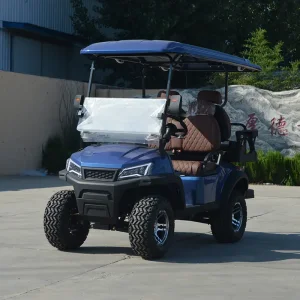

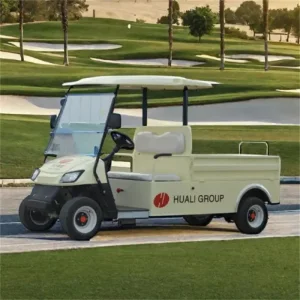
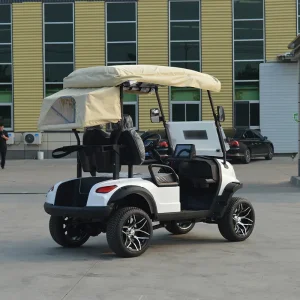
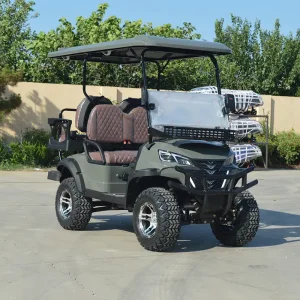
The Global Commercial Evolution of Motorised Golf Carts & Low-Speed EVs
Analyzing the shift from legacy fairway buggies to mission-critical electrified utility fleets across international luxury hospitality, airports, smart townships, and enterprise estates.
The global market for motorised golf carts has crossed a historic inflection point. No longer confined to the pristine fairways of 18-hole championship golf resorts, the motorised golf cart has mutated into an essential class of Light Electric Vehicle (LEV) and Low-Speed Vehicle (LSV). Modern B2B fleet purchasers—ranging from luxury hotel conglomerates in the Mediterranean to logistics hubs in the Middle East and master-planned residential enclaves across North America—are treating low-speed electric platforms as operational infrastructure. The convergence of zero-emission municipal mandates, rising fuel volatility, and the maturation of automotive-grade lithium iron phosphate (LiFePO4) battery chemistry has ignited widespread fleet modernization.
Historically, commercial facilities relied on 36V or 48V flooded lead-acid battery banks paired with DC brushed motors. These legacy architectures presented high total cost of ownership (TCO) bottlenecks: frequent acid topping, high terminal corrosion, extreme battery weight, thermal vulnerability in tropical or arid climates, and sluggish acceleration under full passenger payload. Contemporary industrial procurement now specifies 72V alternating current (AC) induction or permanent magnet synchronous motor (PMSM) drivetrains. By elevating system voltage to 72V, current draw drops proportionally, mitigating I²R thermal resistance losses, lengthening run times by up to 35% per kilowatt-hour, and providing the sustained torque required to navigate 25% incline gradients with full six-passenger capacity.
72V High-Voltage Architecture
By transitioning from 48V to 72V LiFePO4 packs, enterprise vehicles achieve superior amp-hour efficiency, cooler motor operating temperatures, and robust torque margins under sustained full-load duty cycles across continuous 14-hour operational shifts.
- Lower heat buildup in high-ambient zones
- Instant peak torque from zero RPM
TCO Reduction & Zero Maintenance
Enterprise procurement directors calculate fleet ROI based on lifecycle metrics. Lithium-powered motorised carts eliminate weekly electrolyte replenishment, acid terminal scrub-downs, and destructive deep-discharge sulfation, slashing scheduled maintenance overhead by 70%.
- 3,500+ full charging cycles to 80% DOD
- Rapid 2.5-hour recharge capability
Full Regulatory Homologation
Direct tier-1 suppliers build to international Low-Speed Vehicle (LSV) statutes, including DOT FMVSS 500 compliance for the US, EEC / L6e/L7e type-approval in Europe, ISO 9001 factory production control, and CE electrical safety certifications.
- 17-digit standardized VIN identification
- E-Mark lighting and AS-4 laminated glass
Chinese Manufacturing Ecosystem: The Source Advantage
Why sourcing directly from integrated industrial clusters like Dezhou, Shandong yields unbeatable price-to-performance, accelerated customization cycles, and strict quality control.
Robotic Fabrication & Assembly Facility
Special Purpose Electric Vehicle Heritage
Daily High-Precision Production Capacity
Direct Destination Port Deliveries
The manufacturing supremacy of China in the electric golf buggy and light commercial utility sector is founded on tight vertical integration. Facilities located in specialized automotive manufacturing hubs such as Dezhou, Shandong do not operate merely as assemblers of off-the-shelf components. Instead, the production ecosystem encompasses in-house laser cutting of high-tensile structural steel tubular chassis, robotic precision MIG welding, complete immersion cathodic electrophoretic deposition (E-coat) for anti-rust integrity, injection molding of impact-modified automotive PP body plastics, and proprietary digital harness fabrication.
Because the primary raw materials—including rare-earth magnet motors, microcontrollers, and Tier-1 CATL/EVE LiFePO4 cells—are manufactured in adjacent supply chain hubs, Chinese OEM/ODM factories compress development lead times from concept to prototype to just 21 days. For global wholesale distributors and fleet concessionaires, this eliminates third-party brand markups, offering direct factory-gate pricing with customizable seating configurations (2, 4, 6, 8, or utility truck setups), branded steering assemblies, custom upholstery, and localized controller calibration.
Automotive-Grade E-Coating
Frames endure a 14-stage immersion pre-treatment followed by high-voltage cathodic electrophoretic coating and 200°C curing, exceeding 1,000-hour salt spray testing for severe coastal resort environments.
In-House BMS & CAN-Bus
Custom battery management systems integrate automotive CAN-Bus communication protocols, continuously balancing cells, logging thermal profiles, and shielding powertrains against overcurrent, short-circuit, and undervoltage states.
Dyno & Slalom Quality Audit
Every rolling chassis undergoes continuous rolling-resistance dyno testing, hydraulic pressure calibration, 25-degree ramp incline hold verification, and rain-chamber water ingress testing before export crating.
Comparative Engineering Specifications: System Architecture
A rigorous engineering comparison to guide corporate procurement teams between 48V utility configurations and flagship 72V lithium platforms.
| Evaluation Parameter | Legacy 48V Lead-Acid System | Standard 48V Lithium System | Flagship 72V Lithium-Solar Platform |
|---|---|---|---|
| Powertrain Motor Type | DC Series / Shunt (3.0 – 3.8 kW) | AC Asynchronous Induction (4.0 kW) | High-Torque PMSM / AC Induction (5.0 – 7.5 kW) |
| Battery Chemistry | Flooded Deep-Cycle Lead Acid (6x8V) | LiFePO4 Automotive Prismatic (51.2V) | LiFePO4 Modular Prismatic (76.8V) + Smart BMS |
| Peak Torque & Acceleration | Sluggish; substantial voltage sag | Responsive; stable voltage profile | Superior; 120+ Nm instant output, 0-30 km/h in 4.2s |
| Max Gradeability (Full Load) | 12% – 15% incline limit | 18% – 20% incline limit | 25% – 30% incline limit (High-Torque gearing) |
| Service Cycle Life (80% DOD) | 500 – 750 cycles (Requires watering) | 2,500 – 3,000 cycles (Maintenance-free) | 3,500 – 4,500 cycles (Intelligent active balance) |
| Range Extension Capability | None; strictly mains charging | Mains plug-in charger (5-6 hours) | 150W – 250W Monocrystalline roof solar trickle |
| Braking Architecture | Rear mechanical drum brakes | Rear hydraulic drum + electromagnetic EM | 4-Wheel hydraulic discs + Regenerative downhill brake |
| Target Fleet Application | Flat private fairways, light budget | Campuses, gated estates, light utility | Hilly resorts, 6-passenger tours, security patrols |
Enterprise Operational Scenarios & Duty-Cycle Demands
Motorised golf buggies must match the specific geographic, climatic, and load requirements of distinct commercial environments.
Luxury Resorts & Island Hospitality
Island resorts require near-silent operation to avoid disturbing guests, total resistance to airborne salt-mist humidity, and soft luxury seating. Our 72V 4-seater and 6-seater carts feature whisper-quiet helical gearing, marine-grade vinyl upholstery, and solar top-up roofs that maintain battery charge while parked at beach pavilions.
Industrial Parks & Intermodal Freight
Large manufacturing campuses, aviation hangars, and logistics terminals demand durable utility vehicles capable of carrying heavy tools, spare parts, and personnel. The G30 Utility series integrates aluminum drop-side cargo beds with 500 kg payload ratings, heavy-duty rear leaf-spring suspension, and reinforced steel bumpers.
Gated Master-Planned Residential Communities
Modern residential enclaves increasingly restrict internal combustion vehicles, designating low-speed electric carts as primary intra-neighborhood transport. Our street-configurable G90 models feature DOT-compliant three-point seatbelts, automotive LED headlights with high-beam projectors, turn signals, and digital LCD instrumentation.
Global Procurement Roadmap: Factory Direct Due Diligence
A step-by-step framework for international fleet buyers, distributors, and dealers looking to source custom motorised golf cart fleets with zero communication latency.
Route Duty Profiling
Determine target operating conditions: maximum slope percentage, surface type (asphalt, grass, gravel), daily distance cycles, passenger capacity, and local regulatory requirements (LSV street-legal vs. off-road only).
Drivetrain & Pack Sizing
Engineers match the 48V vs. 72V motor output (4 kW, 5 kW, 7.5 kW AC) with appropriate LiFePO4 capacities (105Ah, 160Ah, 210Ah) and optional mono-crystalline photovoltaic canopy charging arrays.
Bespoke OEM/ODM Styling
Select custom RAL body paint tones, two-tone diamond-stitched marine vinyl seating, custom dashboard infotainment with Apple CarPlay/Bluetooth, 12-inch or 14-inch aluminum alloy wheels, and laser-engraved corporate branding.
Container Loading & CKD/SKD
Vehicles are professionally secured inside 40ft High Cube containers using heavy-duty steel skeleton racks. Choose between Complete Built-Up (CBU) or Semi-Knocked Down (SKD) to minimize customs tariffs and ocean freight costs.
Frequently Asked Questions for Fleet Importers & B2B Buyers
Comprehensive answers addressing regulatory compliance, electrical architecture, warranty support, and international shipping logistics.
What distinguishes an LSV street-legal motorised cart from a standard golf cart?
Standard golf carts typically have a maximum factory speed of 19 km/h (12–15 mph) and lack standardized road-safety equipment. Low-Speed Vehicles (LSVs) reach 32–40 km/h (20–25 mph) and are legally required under statutes such as US FMVSS 500 or European L6e/L7e to integrate DOT-approved headlights, brake lights, turn signals, emergency flashers, automotive windshields made of AS-4/AS-5 laminated glass, rear-view and side mirrors, horn, parking brakes, 3-point seatbelts, and a registered 17-character VIN.
Why is 72V lithium preferred over traditional 48V setups for commercial fleets?
In electrical engineering, Power (Watts) equals Voltage multiplied by Current (Amps). To produce 5,000 Watts of mechanical power on a 48V platform requires approximately 104 Amps, whereas a 72V system requires only 69 Amps. Operating at lower amperage generates significantly less resistive heat (I²R loss) in the motor and controller, extending component lifespans, delivering higher continuous torque for climbing steep grades, and providing superior efficiency during all-day resort shuttling.
How does the roof-mounted solar charging panel perform in real-world duty?
Our Leibin G90 and related models can be outfitted with a high-efficiency 150W to 250W monocrystalline photovoltaic panel integrated directly into the roof canopy. The solar array connects via a specialized MPPT step-up boost controller to trickle-charge the 72V lithium pack whenever exposed to ambient sunlight. In resort applications where vehicles frequently idle outdoors, solar replenishment adds 8 to 15 kilometers of operating range per sunny day, preventing deep discharges and reducing reliance on the grid.
What is the expected lifespan and warranty coverage for LiFePO4 batteries?
Lithium Iron Phosphate (LiFePO4) is the safest and most stable lithium battery chemistry commercially available, completely immune to thermal runaway and fire risks associated with NMC chemistries. Our prismatic cells are certified for over 3,500 full charge-discharge cycles at 80% Depth of Discharge (DOD), translating to 8 to 10 years of reliable commercial service. Every export fleet includes a comprehensive 5-year structural warranty on the battery pack and a 2-year warranty on drivetrain electronics.
Can the factory customize suspension systems for rugged or off-road terrains?
Yes. In addition to our low-profile fairway models, we engineer lifted off-road variants equipped with heavy-duty independent double A-arm front suspensions, adjustable coil-over hydraulic shock absorbers, and multi-leaf rear springs. Paired with 23x10.5-12 or 23x10-14 aggressive all-terrain knobby tires and heavy-duty front brush guards, these carts easily navigate gravel, sand, mud, farm tracks, and unpaved safari paths.
How many units can fit inside standard 20ft and 40ft HQ sea freight containers?
Container packing efficiency depends on whether vehicles are shipped Completely Built Up (CBU) or Semi-Knocked Down (SKD). Typically, a 20GP container holds 2 to 4 fully assembled 4-passenger carts. In a 40ft High Cube (40HQ) container using engineered two-tier steel racking fixtures, we can pack up to 8 units in CBU form, or up to 18 to 22 units in SKD format (where wheels, canopies, and rear seats are dismounted). We provide custom CAD container packing diagrams for every purchase order.
What after-sales service and spare parts pipeline are provided to overseas buyers?
We provide global B2B clients with an initial spare parts kit (critical brake pads, relays, fuses, switches, light clusters, and throttle potentiometers) packed directly in the container. For subsequent maintenance, our factory operates a dedicated international courier spare parts dispatch service with 48-hour order dispatch. Furthermore, technical documentation—including complete schematics, wiring diagrams, and CAN-Bus fault diagnostic software—is provided to your in-house service mechanics.
Can you provide private label OEM branding for our regional dealership network?
Absolutely. Over 60% of our export manufacturing is produced under OEM/ODM distributor agreements. We provide custom-molded brand badges, silkscreened steering wheel hubs, custom UI splash screens on digital dashboard displays, bespoke vinyl stitch patterns with embroidered dealer logos, customized user operation manuals, and unique branded color ways tailored to your regional market presence.
What is the factory production lead time for enterprise fleet orders of 20 to 100 carts?
Standard lead times for customized volume orders range from 20 to 30 calendar days following technical specification freeze and deposit receipt. For standard catalog configurations using inventory rolling chassis, dispatches can occur in as little as 10 to 15 days. Sample units for evaluation, homologation testing, or municipal bids can be expedited rapidly.
What certifications are supplied to satisfy port clearance and registration authorities?
We provide comprehensive export documentation, including CE Declaration of Conformity under Machinery Directive 2006/42/EC and Low Voltage Directive 2014/35/EU, ISO 9001:2015 quality management certifications, UN38.3 test summaries and MSDS for lithium battery air/sea freight transport, Certificate of Origin (CO, Form E, Form F), and individualized VIN assignment sheets with vehicle build records.
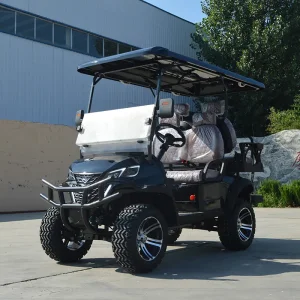
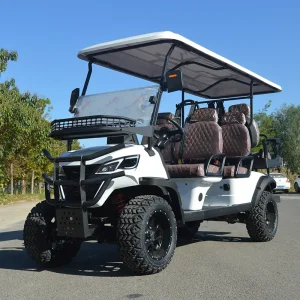
Commercial Sightseeing & High-Capacity Utility Carts
Explore our extended catalog of 2-seat utility runabouts, 4-passenger luxury buggies, and high-efficiency 6-seat guest transporters built for long service lifespans.

Initiate Your Fleet Procurement with Factory Engineers
Whether you require a trial container of 4-passenger lithium carts, specialized 6-seat resort sightseeing buggies, or custom OEM branding for your distribution business, our engineering team provides direct technical consultation, homologation documentation, and competitive factory-gate quotations.
Request Direct Factory Quotation