
Featured High-Efficiency Electric Golf Buggies & Utility Vehicles
Engineered for resorts, residential communities, golf clubs, and industrial operations worldwide. Browse factory-certified electric platforms equipped with advanced AC drive units and long-life battery modules.

Best 72V Modern 6-Seater Electric Golf Cart - Factory Direct from China Suppliers, Ideal for On-Road and Off-Road Use Manufacturer, Suppliers
Inquire Model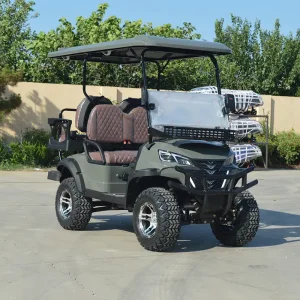
OEM Affordable China 4-Seater Electric Golf Cart - Off-Road Adventure with Custom Battery Options from Trusted Suppliers & Factory Manufacturers, Supplier
Inquire Model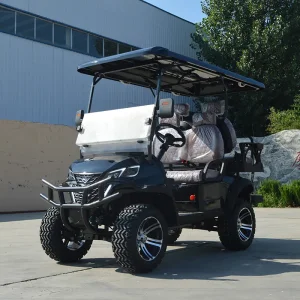
Wholesale Electric Golf Cart 4seated Golf Buggy Sightseeing Bus off-Road 72vgolf Cart Manufacturers, Factory
Inquire Model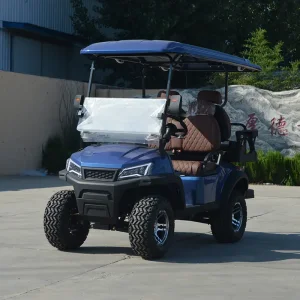
China Leibin (G90) 72V Lithium Battery Solar 4 Seaters off Road Electric Street Legal Golf Carts Manufacturers, Suppliers
Inquire Model
Wholesale Wholesale 6 Seat Electric Golf Carts from China Suppliers - Customized 72V Lithium Golf Buggy Factory Direct Supplier, Suppliers
Inquire Model
Wholesale 72V Electric Golf Cart - Modern 6-Seater Buggy from China Suppliers | High-Quality Factory Manufacturing Suppliers, Factories
Inquire Model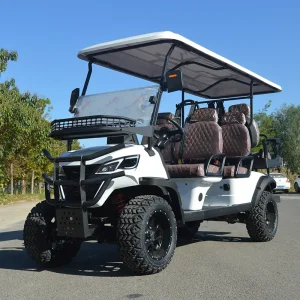
Best Electric Cars Buggy Golf Beemotors Supply CE Approved 15-40km/H Low Speed Electric Buggy Golf Car Manufacturers, Factories
Inquire Model
ODM Wholesale 6 Seat Electric Golf Carts - 72V Lithium, Customized Comfort from China Suppliers and Factory Supplier, Factory
Inquire ModelRe-Engineering "Cheap": Structural Cost Efficiencies in Chinese Golf Cart Manufacturing
In modern industrial terminology, "cheap" does not imply compromised durability. Instead, it signifies streamlined engineering, lean automation, dense supply clusters, and integrated tier-1 component ecosystems in Dezhou, Shandong.
Vertical Cluster Integration
Within a 50-kilometer radius of our manufacturing plants in Shandong, over 85% of core vehicle components are produced: cold-rolled tubular steel frames, cathodic electrophoretic dip lines, precision helical transaxles, and injection-molded automotive-grade ABS/PP body panels.
By eliminating cross-provincial freight for structural parts, manufacturers decrease raw production overhead by 18-24%, passing direct savings to international fleet purchasers without trimming material thickness.
Advanced Robotic Welding
High-precision multi-axis welding robots carry out 95% of chassis assembly. Fixture repeatability guarantees chassis tolerances within ±0.5 mm, reducing frame fatigue under harsh golf terrain and rugged off-road stresses.
Automated manufacturing minimizes defect rates, eliminates structural rework during assembly, and guarantees that export fleets match stringent CE and ISO 9001 engineering standards.
Volume-Driven Battery Economics
China commands over 75% of the world's Lithium Iron Phosphate (LiFePO4) cell manufacturing capacity. Factory-direct vehicle builders source tier-1 automotive prismatic cells (e.g., CATL, EVE, Gotion) at utility-scale pricing.
Consequently, our modern 72V lithium-powered buggies achieve capital expenditure parity with legacy American or European lead-acid platforms while providing 3x longer lifecycles and zero watering maintenance.
Industry Megatrends: The 72V AC & Smart Telematics Revolution
The golf cart ecosystem is transitioning rapidly away from archaic 36V and 48V direct-current (DC) series motors toward high-efficiency 72V alternating-current (AC) asynchronous and permanent-magnet synchronous powertrains.
Why 72V High-Voltage Architecture Dominates Modern Fleets
By stepping nominal bus voltage up from 48V to 72V, electrical current ($I = P/V$) drops by 33% for any equivalent torque demand. Joule heating losses in motor windings, electronic controllers, and cabling follow the formula $P_{loss} = I^2 R$.
In real-world deployment across hilly terrain, resorts, or heavy 6-seater passenger duty cycles, 72V architectures operate dramatically cooler, resist thermal throttling under load, accelerate up 25-30% grades with ease, and boost round-trip energy efficiency by up to 14%.
IoT Telematics & Intelligent CAN-Bus Ecosystems
Modern commercial cart fleets operate not as isolated buggies, but as connected IoT assets. Integrated 4G telematics units communicate via Controller Area Network (CAN 2.0B) bus architecture directly to the cloud dashboard.
Fleet managers monitor state of charge (SoC), cell voltage balance, real-time geofencing speed enforcement, diagnostic trouble codes (DTC), and crash detection notifications remotely from centralized software, cutting maintenance diagnostic hours by over 60%.
| System Architecture | Motor & Controller Type | Gradeability (Max Payload) | Battery Chemistry & Mass | Maintenance Profile | Expected Fleet Longevity |
|---|---|---|---|---|---|
| Legacy 48V DC Systems | Series-wound brushed DC, 3.0–3.8 kW | 12% – 15% slope limit | Flooded Lead-Acid (~320 kg) | Weekly hydrometer & deionized water top-ups | 2.5 to 3.5 Years before repacking |
| Commercial 48V AC Systems | Induction AC brushless, 4.0 kW | 18% – 20% slope limit | LiFePO4 (~90 kg) | Annual mechanical linkage check | 6 to 8 Years continuous operation |
| Advanced 72V High-Output AC | PMSM / High-Torque AC, 5.0–7.5 kW | 25% – 30% steep incline rating | Prismatic LiFePO4 (~115 kg) | Zero powertrain servicing; full BMS telemetry | 8 to 10+ Years (5,000+ charge cycles) |
Localized Application Scenarios: Beyond Traditional Fairways
While purpose-built for premium 18-hole championship courses, modern electric golf buggies have evolved into the quintessential low-speed vehicle (LSV) platform across diverse urban, commercial, and industrial ecosystems.
Luxury Hospitality & Island Resorts
High-end eco-resorts, beach clubs, and five-star private villas require zero-emission, near-silent passenger mobility. Our 4-seater and 6-seater extended shuttle chassis provide forward-facing premium ergonomics, marine-grade vinyl seating, and solar charging canopies that eliminate guest noise and oil contamination near pristine swimming pools and walking paths.
Gated Communities & Master-Planned Subdivisions
From Florida and Arizona in the US to gated luxury villas across Dubai and Australia, neighborhood electric vehicles (NEVs) have become primary short-distance transit. Street-legal packages featuring DOT-approved laminated glass windshields, side mirrors with integrated LED blinkers, seat belts, and electric horns allow seamless trips to local supermarkets and community centers.
Industrial Parks, Warehouses & Maintenance Crews
Heavy-duty utility cart derivatives equipped with hydraulic tipper beds and heavy cargo load platforms transport maintenance technicians, toolboxes, and equipment across multi-hectare manufacturing sites, automotive plants, and aviation hangars. Instant electric torque and tight turning radiuses replace noisy, high-emission diesel utility trucks.
Perimeter Security & Municipal Patrol Operations
Equipped with low-profile LED lightbars, public address (PA) horns, and lockable storage vaults, our specialized patrol vehicles provide constant silent patrol presence in university campuses, railway terminals, maritime ports, and municipal parks. Long-shift battery configurations deliver 100+ km range per charge on continuous low-speed rounds.
Enterprise Procurement Criteria & Supply Logistics Optimization
International fleet tenders require careful evaluation of homologation, modular container packaging (SKD/CKD), and customized OEM technical configurations to guarantee low landing costs.
Homologation & Safety Compliance
Global buyers must align with territorial regulations: US FMVSS 500 / SAE J2358 standards for Low-Speed Vehicles (LSV), EEC / L6e / L7e classification across the European Union, and localized GCC desert heat performance criteria.
Every Leibin export vehicle is backed by verified CE machinery certifications, full EMC electromagnetic test sheets, UL-standard charging harnesses, and UN38.3 battery transport safety dossiers.
Optimized SKD & CKD Shipping
Maritime ocean freight can skew the landing cost of fully assembled carts. We engineer tailored iron-frame packing racks for Semi-Knocked Down (SKD) and Completely Knocked Down (CKD) loading configurations.
By fitting up to 18–24 units in a single 40-foot High Cube (40' HQ) container instead of only 6–8 fully assembled buggies, shipping costs drop by over 60% per unit, protecting dealer profit margins.
OEM Brand Tailoring Matrix
Empower your regional dealership brand. Choose customized DuPont electrocoat colorways, custom stitched diamond-pattern marine upholstery, custom wheel offset offsets, and backlit custom emblems.
Our dedicated R&D engineering department accepts 3D STEP files to develop bespoke front fascias, roof racking systems, and auxiliary electronics suited specifically for your market territory.
Frequently Asked Questions: B2B Sourcing, Engineering & Operations
Get verified technical and business facts directly from our factory engineering group. Clear guidelines on battery chemistries, import homologation, container loading, and total fleet economics.
Additional Specialized Golf Carts, Mini Sightseeing Cars & Utility Trucks
Complete your fleet deployment review with these specialized models, featuring mini-utility platforms, golf buggies equipped with caddie gear, and off-road resort workhorses.
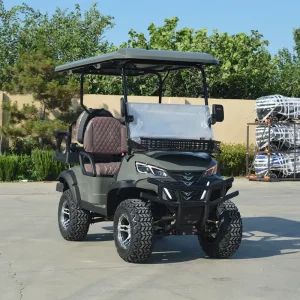
Best China Suppliers Factory 72V AC Mini Electric Golf Cart 4-Seat Buggy Gold Color Lithium Battery CE Certified Manufacturers, Supplier
Inquire Model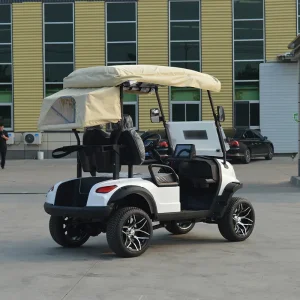
China Affordable Electric 2 Seater Mini Sightseeing Car Golf Cart from China Suppliers and Factory Supplier, Factories
Inquire Model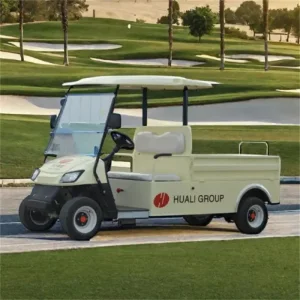
Cheap Cargo Electric Utility off Road Truck Golf Cart 48V Utility Gulf Cart Electric Golf Car Suppliers, Factory
Inquire Model
Cheap China Supplier Factory Leibin G90 72V Lithium Battery Off-Road Electric Golf Cart - 4 Seaters, Solar Power, 35 km/h Speed Suppliers, Factory
Inquire Model
China 72V Electric Golf Cart - 6-Seater Modern Design | China Suppliers & Factory Quality Golf Buggy Manufacturer, Factory
Inquire Model
Wholesale 72V AC Mini Electric Golf Cart Buggy Gold Color 4-Seat Golf Cart with Lithium Battery CE Certified and Tail Caddie Equipment Factory, Factories
Inquire Model
Cheap 72V New Style Modern Fashion 6 Seat Golf Cart Electric Golf Buggy Manufacturers, Supplier
Inquire Model