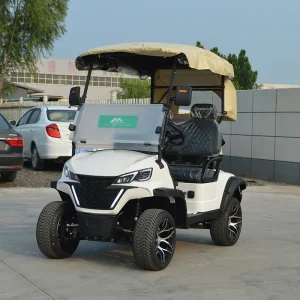
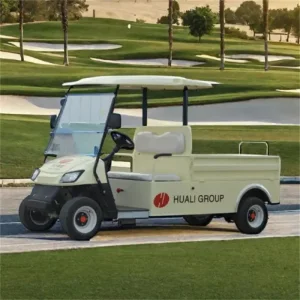
Factory-Engineered Electric Fleet & Utility Series
Explore high-torque, CE-compliant, and 72V lithium-equipped golf buggy models configured directly for international fleet operators, distributors, and resort facilities.

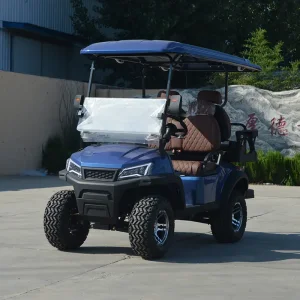
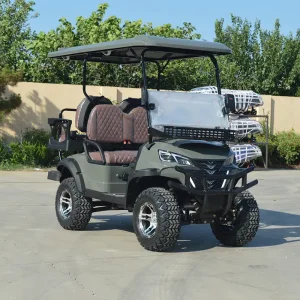
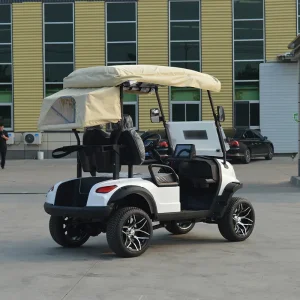
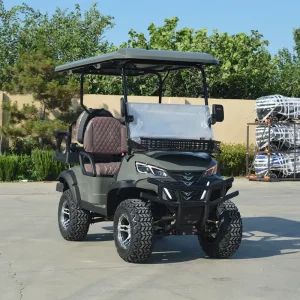
Global Commercial Dynamics of 2-Seater Electric Utility Vehicles
The transition from legacy internal combustion engines to low-speed electric vehicles (LSEVs) has fundamentally redefined intra-facility transport, micro-logistics, and luxury recreational mobility across international markets.
Macro TCO Compression
Commercial enterprises, municipal facilities, and resort operators face rising hydrocarbon overheads and strict carbon reporting standards. A modern two-seater electric vehicle offers up to 78% operational cost savings across its service lifecycle compared to gasoline utility buggies, primarily driven by regenerative braking efficiency, reduced friction losses in direct-drive transaxles, and virtually zero periodic powertrain fluid maintenance.
- Lower cost-per-mile in closed-loop cycles
- Sub-2.5 hour intelligent fast charging windows
- Zero point-of-use particulate emissions
LiFePO4 Chemistry Dominance
The global golf cart supply ecosystem is rapidly abandoning lead-acid chemistries in favor of Lithium Iron Phosphate (LiFePO4). Automotive-grade battery management systems (BMS) offer over 3,500 life cycles at 80% depth-of-discharge, eliminating acid stratification, terminal corrosion, and cumbersome distilled water replenishment routines while cutting overall vehicle curb weight by up to 130 kg.
- Thermal stability up to 60°C ambient temperatures
- Integrated cell balancing and short-circuit cutoff
- High continuous discharge ratings for hilly terrain
Micro-Mobility Regulations
Regulatory frameworks such as FMVSS No. 500 (Low-Speed Vehicles) in the United States and L6e/L7e homologation categories in the European Union have expanded the operational envelope of two-seater electric carts. When fitted with three-point inertia seatbelts, DOT-approved tempered windscreens, high-candela LED illumination, and digital reverse mirrors, these vehicles legally integrate into urban and gated infrastructure.
- Speed governors certified for 25–40 km/h compliance
- Dual-circuit hydraulic braking redundancy
- Electromagnetic parking brakes on gradient stops
Engineering Superiority: How Chinese Factories Deliver Affordable Excellence
In B2B industrial procurement, the term "cheap" does not imply compromised durability; it denotes radical supply chain compression, fully integrated in-house fabrication, and cluster-level component economies of scale.
Monocoque Structural Rigidity
Direct manufacturing centers such as Dezhou utilize robotic laser cutting and fixtured CO2 gas-shielded arc welding. Tubular high-strength steel chassis undergo automated robotic cathodic electrophoretic deposition (EPD), ensuring salt-spray resistance exceeding 1,000 hours in coastal resort operations.
Propulsion & Vector Control
By pairing high-efficiency permanent magnet AC motors with digital Curtis or Enpower vector controllers, Chinese manufacturing lines achieve up to 94% peak inverter efficiency. Precision regenerative control allows dynamic braking while recovering kinetic energy on downhill resort routes.
Upstream Cell Cluster Synergies
With domestic access to world-leading lithium cell manufacturing (CATL, EVE, Gotion), Chinese OEM factories bypass multiple tiers of middleman markups. Assembled battery modules achieve unmatched volumetric energy density and cost-per-kWh parity impossible in western assembly shops.
Modular SKD / CKD Logistics
Advanced CAD frame geometries are optimized around ISO maritime freight shipping dimensions. Flexible SKD (Semi-Knocked Down) and CKD (Completely Knocked Down) steel crating configurations maximize container packing density, cutting per-unit sea freight costs by over 45%.
| Evaluation Parameter | Direct Chinese OEM Manufacturer (Leibin Standard) | Traditional Western Re-Brander / Assembler |
|---|---|---|
| Direct Acquisition Cost (CapEx) | Factory direct baseline (Eliminates 35–55% intermediate margins) | Substantial markup due to multi-tier dealer networks and branding royalties |
| Powertrain Topology | Modern 72V Lithium LiFePO4 or 48V AC vector drive options | Legacy 48V DC series-wound or outdated flooded lead-acid base setups |
| Chassis Treatment | Automated automotive-grade cathodic electrophoresis + powder coat | Basic wet enamel spray or post-weld localized primer treatments |
| Engineering Customization (OEM/ODM) | Full CAD alterations (bed lengths, gearing, suspension lift, solar roof) | Catalog-fixed configurations with excessive change-order surcharges |
| Spare Parts Availability | Direct factory batch shipping; standardized universal wear components | Proprietary walled-garden hardware locking clients into expensive replacements |
Engineered for Versatility: Targeted Operational Scenarios
A precision 2-seater platform represents the ideal balance of maneuverability, lightweight turf footprint, and targeted utility payload across mission-critical corporate and recreational environments.
Golf Courses & Country Clubs
Preservation of delicate bentgrass fairways necessitates an ultra-lightweight axle footprint. Two-seater configurations distribute weight evenly across wide, low-pressure turf tires, preventing soil compaction and wheel ruts during seasonal rainy cycles while guaranteeing whisper-quiet player transit.
Luxury Resorts & Island Eco-Estates
Tropical hospitality operations require non-polluting, silent guest logistics that harmonize with eco-tourism branding. Equipped with corrosion-resistant aluminum trim, marine-grade synthetic leather, and rooftop monocrystalline solar panels, carts operate all day without midday downtime.
Industrial Parks & Cargo Hubs
When specified with reinforced rear steel flatbeds or high-volume aluminum cargo boxes, 2-seater utility buggies navigate narrow factory aisles, airport baggage ramps, and mega-warehouses, handling maintenance tools, package drops, and heavy facility payloads with ease.
Security Patrols & Campuses
Large university grounds, private residential complexes, and healthcare campuses leverage 2-passenger electric vehicles for rapid response and visible security monitoring. Low operating noise enables discreet night patrols without disturbing sleeping residents.
Global B2B Buyer Framework: Technical Validation Protocols
Procuring commercial vehicle fleets across borders demands structured verification of component specifications, electrical architecture, regulatory compliance, and factory audit checkpoints.
Electrical Topology: 48V vs. 72V
For predominantly level terrain and standard recreational distances, 48V architectures offer budget-friendly acquisition parameters. Conversely, commercial operations traversing severe inclines (15–30% gradeability), carrying continuous utility cargo, or operating in extreme ambient temperatures require a 72V high-voltage bus. 72V configurations deliver identical horsepower at lower amperages, dramatically mitigating I²R thermal waste inside wiring harnesses and motor windings.
- Lower heat buildup under maximum gross vehicle weight
- Extended duty cycles between operational recharging
- Sharper torque delivery for immediate acceleration
Tier-1 Component Transparency
Global fleet directors should mandate explicit Bills of Materials (BOM) auditing. Reliable suppliers proudly disclose tier-1 controller brandings (such as genuine Curtis or Infore models), sealed IP67-rated waterproof wiring harnesses, automotive-grade hydraulic master cylinders, and certified LiFePO4 cells possessing formal UN38.3, MSDS, and CE electromagnetic compatibility certificates.
- Verified controller firmware access for speed tuning
- Automotive-style sealed waterproof pin connectors
- Full traceability on cell manufacturing lot numbers
Crating & Spare Parts Provisioning
Total landed cost is profoundly shaped by shipping ergonomics. Confirm whether your supplier ships in high-tensile steel frames that can be double-stacked inside standard 40HQ ocean containers. Ensure the vendor bundles a initial wear-parts kit containing brake shoes, suspension bushings, spare steering knuckles, and harness fuses to maintain continuous uptime from day one.
- Rigid metal skeleton frames preventing transit scratches
- Up to 24 units packed per 40HQ container in CKD format
- Guaranteed 5-year replacement part availability guarantee
Emerging Technologies Shaping the Next Decade of Utility Mobility
The convergence of automotive IoT telematics, advanced photovoltaic generation, and autonomous guidance is elevating the humble golf buggy into a smart, interconnected industrial asset.
Cloud Telematics & Geofencing
Next-generation fleets integrate 4G LTE IoT modules that stream real-time operational telemetry to centralized management dashboards. Facility directors can dynamically enforce geo-fenced boundaries, automatically throttle speeds in pedestrian-heavy zones, track live state-of-charge (SoC), and receive proactive diagnostic fault alerts before component degradation results in operational failure.
Bi-Directional Solar Harvesting
Integrated flexible monocrystalline solar roofs (as demonstrated on our flagship G90 line) continuously trickle-charge the main lithium pack during outdoor daytime parking. This ambient power generation can offset up to 25–35% of daily recharge consumption, extending the operational perimeter and diminishing grid dependency during peak tariff hours.
Low-Speed Autonomous Guidance
Closed campuses and high-density industrial parks are beginning trials of LiDAR- and vision-guided low-speed automated transport. Using standardized electric steering racks and CAN-bus drive-by-wire protocols native to modern Chinese EV chassis, retrofitting autonomous navigation kits becomes both technically seamless and economically viable.
Frequently Asked Questions: Global Sourcing & Technical Specifications
Comprehensive technical guidance compiled by our senior export engineering team to streamline international vehicle procurement.
What is the true lifespan difference between 72V Lithium and 48V Lead-Acid batteries?
Under continuous commercial duty cycles, premium LiFePO4 (Lithium Iron Phosphate) packs deliver between 3,000 to 4,000 charge cycles before degrading to 80% capacity, translating to 8–10 years of reliable service. Traditional flooded lead-acid batteries rarely surpass 600–800 cycles (2–3 years), require rigorous weekly acid checks, and suffer drastic capacity drops in cold climates.
Are these 2-seater electric carts street legal in the US, Europe, and Australia?
Street legality is governed by destination jurisdiction. In the United States, carts configured to FMVSS No. 500 standards (possessing certified headlights, tail lamps, turn signals, mirrors, DOT seat belts, and an amber strobe) qualify as Low-Speed Vehicles (LSVs) for public roads with posted limits up to 35 mph. In Europe, L6e/L7e type-approval paperwork is required. Leibin engineers configure vehicles to match your regional road code.
How does purchasing direct from a Chinese factory cut landed costs without sacrificing quality?
Tier-1 Chinese vehicle factories in industrial clusters like Dezhou control end-to-end stamping, robot welding, cathodic electrophoresis, and final dynamometer testing under one roof. Sourcing direct eliminates international brand marketing royalties, multi-tiered national distributors, and third-party dealer markups, allowing buyers to secure superior lithium and AC motor configurations for less than standard baseline retail buggies.
What minimum order quantities (MOQ) and customization (OEM/ODM) services are supported?
While sample evaluation units (1 unit) are readily facilitated for commercial validation, volume production orders typically start at 4–8 units to optimize 20GP or 40HQ ocean container economics. Full OEM/ODM customization is available: corporate livery paint codes, custom upholstery embroidery, bespoke rear cargo boxes, hydraulic dump beds, raised off-road suspension setups, and integrated solar canopies.
How are warranty claims, service protocols, and replacement components handled overseas?
Leibin backs its fleet vehicles with structured warranties (chassis frames up to 5 years, lithium batteries up to 3–5 years). When components need servicing, factory technicians diagnose via CAN-bus datalogs and live video consultation. Required replacement sub-assemblies are dispatched via priority air express (DHL/FedEx) or consolidated in seasonal sea-freight inventory replenishments.
What is the typical gradeability and climbing performance of a 2-seater electric cart?
Our standard 48V utility configurations conquer slopes of 15% to 20% with ease. For extreme hilly golf courses, quarry sites, or steep alpine resorts, our 72V high-torque AC propulsion systems easily conquer sustained 25% to 30% inclines under full passenger and utility cargo payloads without motor overheating or current throttling.
Comprehensive Electric Utility & Sightseeing Lineup
Review additional commercial configurations including off-road lifted buggies, heavy-duty cargo utility haulers, and versatile multi-passenger resort cruisers.