
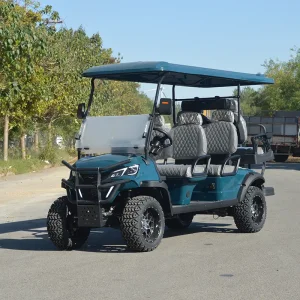
Wholesale 72V Electric Golf Cart - Modern 6-Seater Buggy from China Suppliers | High-Quality Factory Manufacturing Suppliers, Factories
Engineered specifically for low total cost of ownership (TCO) across municipal, hospitality, and industrial applications. Sourced straight from verified production lines in China.
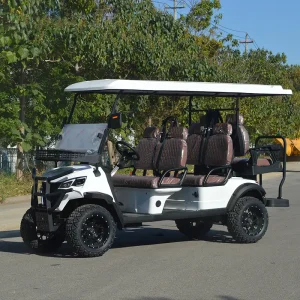
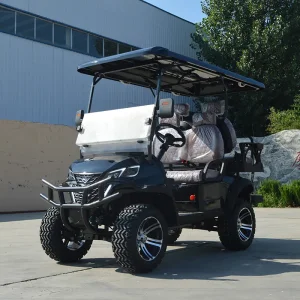
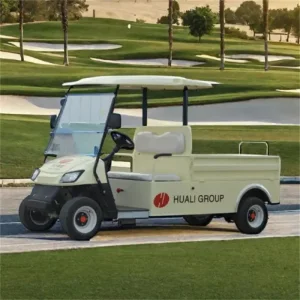
In the international low-speed electric vehicle (LSV) ecosystem, historical procurement approaches frequently made the critical error of conflating nominal purchase price with economic value. For enterprise operators across industrial parks, municipal public works, international airports, eco-resorts, and mixed-use real estate communities, purchasing so-called "cheap" utility golf carts once carried the severe penalty of frequent motor burnouts, accelerated chassis frame corrosion, uncalibrated lead-acid failures, and crippling component supply bottlenecks.
Historically, low initial CapEx translated into a 3x increase in maintenance OpEx over a 36-month horizon. Modern Tier-1 Chinese direct manufacturers have decoupled affordability from poor durability through scalable component standardization, in-house robotic tooling, and native automotive-grade lithium-iron-phosphate (LiFePO4) integrations.
Enterprise buyers no longer seek single-purpose golf carts. Modern fleets mandate quick-swap modular chassis architectures capable of transitioning from 6-passenger guest shuttling to flatbed cargo transit, enclosed ambulance stretcher logistics, or hydraulic maintenance dumping beds in less than 30 minutes of workshop labor.
Sourcing directly from verified Chinese industrial clusters now secures integrated CAN-bus architecture, allowing enterprise fleet managers to remotely monitor thermal state-of-health (SoH), battery state-of-charge (SoC), geofenced speed limiters, and automated fault reporting without costly aftermarket retrofits.
When global B2B procurement managers identify competitive factory pricing in China, the underlying driver is not compromised raw material quality—it is the geometric efficiency of hyper-concentrated industrial clusters, automated manufacturing workflows, and complete domestic vertical integration.
Our manufacturing headquarters in Dezhou, Shandong, leverages China’s premier specialized electric vehicle industrial cluster. Within a 60-kilometer radius sits the entire bill-of-materials (BOM) pipeline: Tier-1 seamless tubular cold-drawn steel extruders, computerized CNC benders, high-precision hydraulic stamping presses, automotive electrophoretic painting (e-coat) plants, and leading lithium-cell packaging facilities. This dense concentration compresses freight overhead on upstream components to near zero, shielding overseas purchasers from fluctuating global component transit surcharges.
Budget carts historically rusted out within 18 months of exposure to coastal sea-spray or heavy agricultural fertilizers. China Factory 4.0 manufacturing processes deploy 14-stage automated cathodic electrophoretic dip coating (e-coating) across every micro-welded chassis member. This automotive-derived rust-proofing withstands exceeding 1,000 hours of neutral salt spray testing (ASTM B117), guaranteeing structural longevity even across aggressive beachside resort islands, fertilizer-rich agronomy centers, and humid tropical climates.
A primary source of premature fleet retirement is selecting a cart with mismatched voltage and motor torque. The table and technical overview below delineate the operational boundaries between legacy 48V utility buggies and high-performance 72V AC lithium workhorses.
| Performance / Engineering Parameter | Legacy 48V DC (Lead-Acid / Entry LiFePO4) | Next-Gen 72V AC (LiFePO4 Integrated BMS) | Procurement Strategic Impact |
|---|---|---|---|
| Operating System Current (Amperes) | High Current (Overheating risk on continuous incline) | Low Current (33% reduction in thermal dissipation) | 72V Extends Motor Life by 2.4x |
| Continuous Hill-Climbing Gradeability | 12% – 15% (Noticeable speed droop under full load) | 25% – 30% (Continuous peak torque curve) | Mandatory for Hilly Golf & Mines |
| Regenerative Braking Efficiency | Basic / Dissipative (Rapid heat build-up) | Active AC Dynamic Regenerative Braking (Recaptures 18-22% energy) | Drastically Cuts Brake Pad Wear |
| Battery Cycle Life (@ 80% Depth of Discharge) | 450 – 700 cycles (Lead-Acid watering required) | 3,500 – 5,000 cycles (Zero-maintenance sealed LiFePO4) | 8+ Years Operational Longevity |
| Unladen Chassis Kerb Weight | Heavy (~520 kg due to lead ballast) | Light (~380 kg with high energy density lithium) | Protects Golf Turf & Reduces Tire Wear |
| Optimum Application Profile | Level gated communities, light groundskeeping | High-frequency 6-passenger resorts, heavy cargo hauling | Match to Exact Route Topography |
According to Joule's first law (Heat = I² · R · t), electrical heat generation in a vehicle’s wiring harness and motor armature scales quadratically with current (I). By elevating system voltage from 48V to 72V, a cart delivering 5.0 kW of mechanical output reduces its running electrical current by 33.3%. This dramatic current reduction keeps motor controllers significantly cooler, eliminates MOSFET thermal shutoff trips during continuous hill-climbing, prevents lead-acid style voltage sag, and delivers sustained high-speed performance across extended work shifts.
Utility electric golf carts engineered by Leibin are deployed worldwide, addressing distinct regional regulations, environmental stresses, and operational requirements.
Locations: Maldives, Caribbean, Mediterranean Riviera, Southeast Asia.
Operational Challenge: High ambient humidity, constant salt-fog exposure, continuous 14-hour passenger shuttle loops, ultra-quiet zero-emission sound profile requirements.
Factory Configuration: 72V Lithium 6-Seater Buggy with marine-grade stainless-steel hardware, UV-resistant thermoformed ABS shells, on-board smart chargers, and optional solar-recharge hardtops that maintain battery float levels throughout all-day sun exposure.
Locations: Transshipment hubs across North America, Rotterdam port precincts, Dubai logistics parks.
Operational Challenge: Multi-shift operations, rapid driver changeovers, constant heavy tool and package transport across concrete expansion joints and tarmac.
Factory Configuration: Heavy-duty 48V/72V Cargo Truck Golf Cart with diamond-plate aluminum cargo box, reinforced leaf-spring multi-link rear suspension, high-output LED beacon towers, and automated electromagnetic hill-holding brakes.
Locations: North American college towns, European healthcare complexes, public botanic parks.
Operational Challenge: High pedestrian density requiring stringent low-speed limits (15–25 km/h), rapid curb hopping, all-weather crew comfort, and prompt security patrol responsiveness.
Factory Configuration: CE-approved G70 and G80 4+2 passenger configurations equipped with 3-point seat belts, DOT-certified laminated folding glass windshields, turn signals, dual automotive horn circuits, and lockable glove-box telematic dispatch mounts.
Importing electric golf carts for use beyond enclosed private courses requires navigating strict regional homologation codes. Sourcing from experienced Chinese manufacturers guarantees your fleet arrives pre-configured for rapid domestic certification.
To qualify as a Street-Legal Low-Speed Vehicle (LSV) for roads posted up to 35 mph (56 km/h), carts must strictly comply with Federal Motor Vehicle Safety Standard (FMVSS) No. 500. Leibin outfits export vehicles with DOT-certified AS4 laminated windscreens, VIN 17-digit chassis stamping, reflex reflectors, illuminated license plate brackets, rear-view backup cameras, and calibrated 25 mph speed governors.
Under EU Framework Regulation 168/2013, light and heavy quadricycles (L6e-BP / L7e-CU commercial utility) demand rigorous electromagnetic compatibility (EMC testing via UNECE R10), dual-circuit hydraulic braking performance, certified seat-belt anchorage strength (UNECE R14), and low-noise acoustic vehicle alerting systems (AVAS). Leibin provides comprehensive CoC documentation to simplify customs clearance.
International ocean container shipment of high-capacity lithium iron phosphate packs demands absolute regulatory compliance. Every Leibin lithium cart battery module ships with verified UN38.3 vibration/shock/altitude test certifications, complete Material Safety Data Sheets (MSDS), and sea-freight Class 9 packaging approvals to ensure rapid clearance at entry ports globally.
Browse our specialized compact shuttles, mini-patrol cruisers, and golf course buggies. Direct wholesale availability with global container loading support.
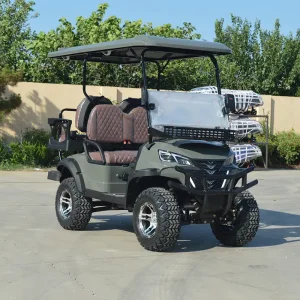
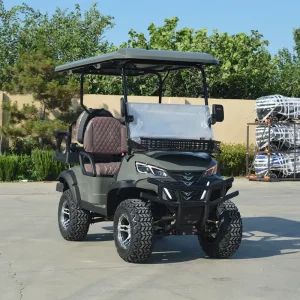
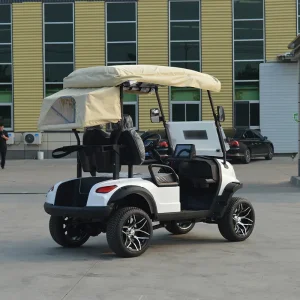
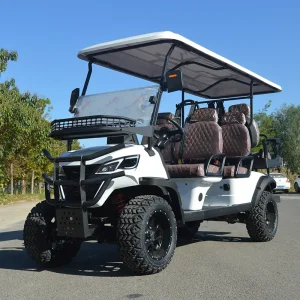
Experienced corporate controllers evaluate low-speed vehicle procurement through lifecycle cash flow rather than unit purchase invoices. Here is the financial reality of fleet ownership across 60 months (based on a standard 20-cart commercial utility fleet).
| Expense Category (20-Cart Utility Fleet) | Middleman Trading Co. (Legacy 48V Lead-Acid) | Direct Leibin Factory (Modern 72V LiFePO4) | Direct Financial Benefit to Enterprise |
|---|---|---|---|
| Initial Capital Expenditure (CapEx) | $108,000 ($5,400 / unit through trade markup) | $76,000 ($3,800 / unit direct factory rate) | $32,000 Upfront Savings (29.6%) |
| Battery Pack Replacements (Months 24 & 48) | $36,000 (Two full lead-acid set replacements) | $0 (LiFePO4 warranty covers 5+ years / 3,500 cycles) | $36,000 Eliminated Battery CapEx |
| Routine Battery Maintenance Labor | $14,400 (Weekly deionized water topping, terminal scrub) | $0 (Hermetically sealed maintenance-free packs) | $14,400 Labor Overhead Eliminated |
| Electrical Utility Charging Efficiency | $18,200 (Lead-acid charge efficiency ~70-75%) | $11,800 (Lithium charge efficiency 95-98%) | $6,400 Reduced Kilowatt Consumption |
| Brake Pad & Mechanical Service Overhauls | $11,500 (Heavy mechanical brake friction wear) | $4,200 (Regenerative motor braking absorbs 80% friction) | $7,300 Savings on Wear-and-Tear Spares |
| NET 5-YEAR TOTAL COST OF FLEET OPERATION | $188,100 | $92,000 | $96,100 Total OpEx/CapEx Savings (51.1%) |
Straightforward, engineering-backed answers addressing the practical considerations of global distributor networks, resort managers, and municipal fleet procurement officers.