
China High Power Golf Cart Suppliers & Factories
Engineering Whitepaper & Strategic Procurement Guide for Fleet Operators, Municipal Transit & Commercial Hospitality. Powered by 72V AC Powertrains, Automotive BMS, and Global Homologation Frameworks.
Featured High-Power Utility & Sightseeing Vehicles
Explore our precision-engineered low-speed electric platforms built for institutional gradeability, payload resilience, and extended duty cycles.
-
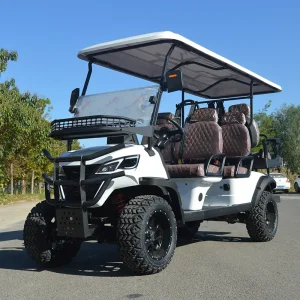
CE Certified
-
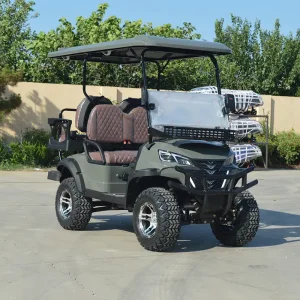
Off-Road Grade
-
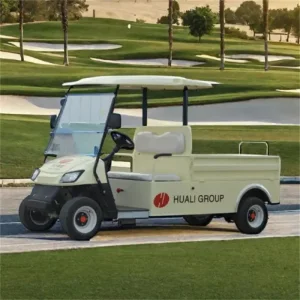
Heavy Utility
-
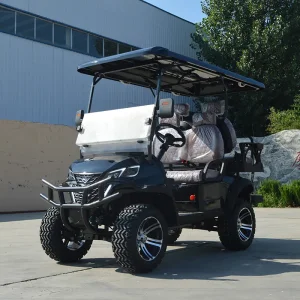
72V High Torque
-
72V Lithium

-
Multi-Terrain

-
Reliable Factory
-
Modern Styling
Global Low-Speed Vehicle (LSV) Electrification Paradigm
The shift toward high-power golf carts represents a fundamental transition from recreational runabouts to critical commercial and industrial low-speed mobility assets.
Across the commercial landscape, traditional 36V and 48V direct-current (DC) motorized carts are rapidly becoming obsolete. Global fleet operators face operational realities that legacy systems cannot satisfy: elevated thermal buildup during continuous incline traversal, voltage sag under payload capacity, and excessive downtime associated with lead-acid battery maintenance regimes. Modern institutional procurement now demands high-power alternating-current (AC) induction and permanent magnet synchronous motors (PMSM) driven by advanced 72V lithium iron phosphate (LiFePO4) storage packs.
China's manufacturing ecosystem in industrial centers like Dezhou, Shandong has transformed the production methodology of high-power golf cars. Rather than relying on stamped sheet steel and piecemeal assembly, Tier-1 Chinese suppliers have integrated full automotive production lines. These incorporate robotic pulse-welding of high-tensile tubular steel chassis, electrophoretic deposition (ED) immersion coating for anti-corrosion protection in high-salinity coastal resorts, and digitized Controller Area Network (CAN-bus) architectures that govern electronic speed control, regenerative braking, and intelligent telematics.
72V High-Torque Powertrains
By shifting nominal operational voltage from 48V to 72V, electrical current draw is decreased by up to 33% for an equivalent power output ($P = V \times I$). This dramatic reduction in thermal resistance ($I^2R$ loss) prevents controller derating and thermal shutdown on continuous 20% to 35% resort inclines.
Intelligent BMS Diagnostics
Integrated Battery Management Systems (BMS) with isolated CAN-bus transceivers continuously sample individual cell voltages, temperature gradients, and state-of-charge (SoC). Over-voltage, under-voltage, short-circuit, and thermal runaway protocols ensure operational safety.
Corrosion-Resistant Structural Subframes
Chassis undergo multi-stage zinc phosphating followed by cathodic electrodeposition (e-coating) exceeding 1,000 hours of neutral salt spray testing (ASTM B117), critical for tropical beachfront hotels and winter de-icing environments.
Engineering Comparison: Legacy 48V vs. Advanced 72V Platforms
A quantitative breakdown of mechanical and electrical characteristics to guide fleet procurement managers in total lifecycle cost evaluation.
| Performance Vector | Legacy 48V DC Fleet Configuration | Next-Gen 72V AC / PMSM High-Power Cart | Operational Impact & Benefit |
|---|---|---|---|
| Motor Output Rating | 3.0 kW – 3.8 kW Shunt / Series Wound | 5.0 kW – 7.5 kW AC Induction / PMSM | +80% instant peak torque; rapid hill-start capability without roll-back. |
| Thermal Incline Behavior | Thermal cutback occurs after 3-5 min of heavy climb | Continuous full-power grade climbing (>25% slope) | Zero interruption during peak shuttle transit on elevated golf resorts. |
| Energy Storage Medium | Flooded Lead-Acid (6x 8V or 8x 6V arrays) | Automotive LiFePO4 Pack (105Ah to 210Ah) | Zero acid corrosion, zero electrolyte maintenance, 70% weight reduction. |
| Braking Architecture | Rear Mechanical Drum Brakes | 4-Wheel Hydraulic Disc with Auto EM Park | Stopping distance cut by 45%; automatic fail-safe hold on 30% slopes. |
| Telematics & Geofencing | Analog wiring, proprietary manual limiters | Integrated CAN-bus, 4G GPS, IoT speed governor | Remote lockout, real-time battery status, dynamic golf course speed zones. |
| Serviceable Cycle Life | 500 - 750 deep cycles (30% capacity degradation) | 3,500 - 5,000 cycles (>80% capacity retention) | Operational asset lifespan extends from 3-4 years to 10+ operational years. |
Thermal Management & Incline Dynamics Under Maximum Payload
When deploying low-speed electric buggies in continuous hospitality shuttling (e.g., transporting 6 passengers plus heavy luggage across a 15% to 20% gradient), electrical resistance within motor windings generates internal heat according to Joule's first law. A 48V DC motor operating under peak current draws up to 250A to 300A, rapidly elevating armature temperatures toward 130°C and triggering thermal cutback. Conversely, our 72V high-efficiency AC motors limit continuous current to 90A–140A for equivalent tractive force, allowing continuous full-throttle duty cycles without thermal degradation or unexpected power curtailment.
Industrial & Commercial High-Power Fleet Applications
Engineered for diverse topography, extreme temperature variations, and continuous daily transit cycles across five core global environments.
Luxury Mountain Resorts & Golf Clubs
Hilly courses throughout North America, Europe, and Southeast Asia feature steep cart paths that defeat standard runabouts. With 72V AC induction technology, our 4-seater and 6-seater golf buggies effortlessly climb continuous 30% slopes while passenger climate control, premium seating, and quiet operation maintain luxury guest standards.
Heavy Industrial Plants & Logistics Yards
Equipped with drop-side cargo beds and 400kg–800kg towing capacities, our utility electric vehicles replace costly diesel-powered trucks inside automotive assembly plants, maritime ports, and airport apron zones where zero tailpipe emissions and indoor air quality standards are mandatory.
Master-Planned Gated Communities & Islands
Low-speed vehicles (LSV) are replacing secondary family sedans in sprawling residential golf communities (e.g., The Villages, FL; Palm Springs, CA; GCC residential clusters). Configured with automotive glass windshields, three-point seat belts, and turn indicators, our vehicles achieve legal street registration on 35 mph posted roads.
Localized Homologation & Import Compliance Standards
Navigating complex international vehicle regulations requires audited manufacturing conformity. Leibin vehicles meet rigorous destination-market standards.
USA: FMVSS 500 & SAE J2358
Under 49 CFR § 571.500, Low-Speed Vehicles (LSVs) must be equipped with AS4-certified laminated safety glass, DOT-compliant headlamps and taillights, backup cameras, parking brakes capable of holding fully loaded units on a 20% incline, and strict 25 mph (40 km/h) velocity governing.
European Union: EEC L6e / L7e Category
To obtain Certificate of Conformity (CoC) for registration on European public roads, vehicles conform to Regulation (EU) No 168/2013 covering electromagnetic compatibility (EMC), acoustic vehicle alerting systems (AVAS), braking efficiency tests, and occupant structural containment.
Battery Safety: UN 38.3 & CE Directives
All LiFePO4 packs carry certified UN 38.3 transport safety documentation (altitude simulation, thermal shock, vibration, impact, overcharge, and forced discharge). CE Low Voltage Directive (2014/35/EU) and Machinery Directive compliance ensure worry-free customs clearance.
Next-Generation Low-Speed Mobility Roadmap
Where manufacturing precision meets artificial intelligence: our strategic engineering vector through 2030.
AI Fleet Telematics & Course Mapping
Next-gen carts incorporate high-precision RTK-GPS receivers and LTE connectivity. Course marshals can configure dynamic speed zones around greens, automatically slow vehicles on steep downhill descents, and track live battery SoC to optimize overnight depot charging schedules.
High-Efficiency Monocrystalline Solar Roofs
Integrated 350W to 500W bifacial solar roofs paired with intelligent MPPT (Maximum Power Point Tracking) charge controllers deliver 15 km to 25 km of supplementary cruising range per day under direct sunlight, dramatically reducing grid energy reliance.
Semi-Solid State Lithium Cell Integration
Beginning in 2026, select enterprise models will pilot semi-solid state lithium chemistry, pushing energy density above 240 Wh/kg while extending thermal operational safety thresholds up to 75°C without risk of combustion.
Five-Year Total Cost of Ownership (TCO) Analysis
Why factory-direct high-power lithium electric fleets generate a 42% operational savings over legacy lead-acid alternatives.
Procurement teams frequently evaluate low-speed vehicles exclusively on Initial Acquisition Cost (CapEx). However, across institutional golf operations and commercial transit routes, Operational Expenditures (OpEx) represent over 68% of the vehicle’s five-year lifecycle cost.
Traditional lead-acid golf carts incur ongoing labor overhead for distilled water replenishment, battery terminal corrosion scraping, and routine acid neutralization. Furthermore, lead-acid batteries lose 30% to 40% of their operational capacity within 18 to 24 months, necessitating complete battery pack replacement midway through a fleet lease.
In contrast, Dezhou Leibin’s 72V LiFePO4 high-power platforms offer completely sealed, zero-maintenance power packs capable of 3,500+ full discharge-recharge cycles. With 95%+ round-trip coulombic charging efficiency compared to 75% for lead-acid, electricity consumption per fleet charging cycle is cut by over 20%, resulting in an immediate and verifiable boost to operational margins.
Heavy-Duty, Sightseeing & Custom Commercial Inventory
Browse our extended lineup of multi-passenger golf cars, utility buggies, and specialized commercial platforms ready for containerized sea shipment.
-
Sightseeing Bus
-
2-Seater Agile
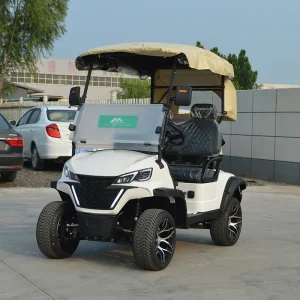
-
72V AC Mini

-
Gold Luxury
-
Off-Road 4-Seat
-
Lithium Certified
-
6-Seat Shuttle
-
Low Speed Shuttle
Frequently Asked Procurement & Engineering Questions
Direct answers from our engineering team regarding container stowage, homologation procedures, battery lifecycle, and remote diagnostics.