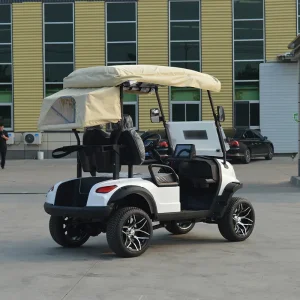
Primary ODM Commercial Bag Buggies & Fleet Platforms
Engineered for low maintenance, superior torque transfer, and long duty cycles across golf links, private resorts, and urban campuses.






Global Landscape: The Evolution of Industrial Bag Carts & Fleet LSVs
Decarbonization, total cost of ownership (TCO) optimization, and specialized logistics are accelerating fleet electrification across hospitality, sports complexes, and logistics hubs.
Lithium-Ion & High-Voltage Transition
Global golf operations and municipal transit managers are aggressively retiring legacy lead-acid systems. Modern 72V LiFePO4 battery platforms provide 3x longer operational lifespans, zero maintenance overhead, and rapid charging windows that sustain multi-shift operations without thermal runaway risks.
IoT Telematics & Fleet Intelligence
Enterprise procurement now demands cloud-connected asset visibility. Modern bag buggies integrate CAN-bus telematics, real-time geofencing, remote battery diagnostic monitors, and automated speed governors to safeguard pedestrians while optimizing course turf wear patterns.
Stringent Regional Homologation
Navigating cross-border regulatory compliance separates consumer-grade toys from certified industrial vehicles. High-value international tenders demand proven alignment with US DOT FMVSS Part 500 low-speed vehicle rules, European Union EEC/L7e standards, and CE functional safety certifications.
Engineered in China: Cost Efficiency, Supply Clustering & Agility
Why Tier-1 hospitality operators and resort development syndicates select Leibin's 13,000 m² advanced manufacturing facility in Shandong.
End-to-End Vertically Integrated Fabrication
From robotic chassis fixturing and automotive-grade electrophoretic deposition (ED) rustproofing to harness assembly, total in-house production prevents sub-tier quality compromises.
Regional Industrial Cluster Synergy
Situated in Dezhou, Shandong's world-recognized low-speed EV cluster, Leibin utilizes direct-source powertrain suppliers, tier-1 controller hubs, and stamping facilities that eliminate intermediate freight markups.
Rapid ODM Prototyping
Our dedicated engineering department transforms custom functional requests—such as heavy golf caddie brackets, solar canopy layouts, and specialized medical beds—into verified prototypes within 25 days.
Automotive Multi-Axis Validation
Every cart undergoes full ramp gradeability checks, rain-curtain ingress testing (IP67 electrical ratings), and automated dynamic brake torque diagnostics before being crate-packed for international voyages.
Diverse Commercial Application Environments
Purpose-built engineering adapted for severe duty cycles, varying surface topographies, and heavy daily payloads.
Championship Golf Courses & Country Clubs
Equipped with low-PSI high-flotation turf tires that prevent course degradation, precision bag retention cages, insulated beverage coolers, and whisper-quiet 72V AC motors that preserve pristine environmental soundscapes.
Eco-Luxury Resorts & Island Hospitality
Featuring aerospace aluminum subframes and electro-coated marine fasteners engineered for salt-spray resistance. Ideal for guest luggage transit, room-service hospitality runs, and quiet VIP guest movement.
Corporate Parks & Industrial Facilities
High-capacity utility configurations featuring flatbed cargo options, lockable tools/cargo containment, and rugged suspension tuning optimized for multi-facility intra-campus supply chains.
Future Horizons: Technology Trends Shaping Commercial Cart Platforms
Strategic engineering shifts defining next-generation low-speed electric bag vehicles over the coming decade.
Monocrystalline Solar Canopies
Integrated trickle-charge solar panels seamlessly blended into reinforced roofs, capturing ambient sunlight during midday waits to deliver up to 25% extended daily operational range.
Solid-State BMS Architectures
Next-gen solid-state relays coupled with cloud-connected Battery Management Systems (BMS) provide millivolt-level cell balance tracking and predictive thermal defense against unexpected field shutdowns.
Lightweight High-Strength Alloys
Shift toward cold-drawn tubular hydroformed aluminum structures reduces deadweight by over 30%, noticeably increasing braking efficiency, downhill safety, and overall battery operating duration.
Autonomous Collision Mitigation
Forward-facing ultrasonic distance arrays and active pedal-interlock safeguards prevent low-speed parking lot bumper scuffs and pedestrian interactions in dense public spaces.
Strategic Sourcing Protocol: How B2B Buyers Vet ODM EV Partners
A structured technical evaluation framework to mitigate warranty, compliance, and supply disruption risks.
1. Traceable Factory Direct Auditing
Confirm the vendor owns chassis stamping and immersion coating lines. Intermediaries often introduce unvetted batch variations, unstable lead times, and uncoordinated component configurations.
2. Certifications & Test Documentation
Demand documented CE declarations, EEC certificates, EMC testing for onboard electronic components, and UN38.3 battery transport safety packaging reports prior to issuing letters of credit.
3. Lifecycle Spares & Field Diagnostics
Verify manufacturer provisioning of critical wear-part packs (brake assemblies, bushings, wiring harnesses) and clear electrical schematics to maintain fleet availability.
Technical & Procurement FAQ
Clear, direct engineering answers regarding international compliance, voltage selection, shipping methods, and warranty terms.
Are Leibin electric bag carts street legal in our home territory?
Road legality is governed by national and local transport jurisdictions. In the United States, our LSVs are engineered to satisfy FMVSS No. 500 standards (including DOT seat belts, laminated safety windshields, certified turn signals, and top-speed limits of 25 mph). For EU territories, vehicles can be tailored for EEC L6e/L7e type approvals. Leibin provides factory certificates of origin and detailed technical spec sheets to support local registration.
How do we choose between 48V and 72V, Lithium vs Lead-Acid?
48V systems are ideal for flat golf courses, gated communities, and light utility assignments. 72V lithium platforms provide greater torque at lower operating current, significantly reducing heat buildup on hilly courses or with 6-seat configurations. Our LiFePO4 packs eliminate battery watering maintenance, reduce vehicle weight by over 120 kg, and deliver 3,000+ full charging cycles.
What full customization and OEM/ODM options are available?
Leibin offers extensive custom engineering options. We configure custom automotive paint colors (PPG coatings), marine-grade vinyl seating with custom embroidery, branded steering hubs, heavy-duty rear utility beds, solar roof attachments, specialized club bag caddie setups, custom audio packages, and integrated fleet GPS tracking brackets.
How are units packaged to guarantee zero transit damage?
Vehicles are secured inside custom steel-frame crates or loaded directly into 40ft High Cube containers using multi-point wheel chock lashings and anti-abrasion protective wrap. We optimize container loading diagrams (often loading 4 to 12 units per 40HQ depending on model series) to keep sea freight cost-per-unit as low as possible.
What warranty and technical parts support do you provide overseas?
All Leibin commercial vehicles include a comprehensive multi-year structural chassis warranty and up to 5-year guarantees on select lithium battery modules. In addition, we supply critical fast-wear spare kits, detailed electrical schematics, and direct video diagnostic sessions between our factory engineers and your local maintenance crews.
What are standard ODM order turnaround and delivery timelines?
Standard fleet manufacturing cycles range from 15 to 25 business days following final technical sheet sign-off. Bespoke modifications requiring custom molds or unique accessory configurations usually ship within 30 to 40 days, followed by ocean logistics coordination to your destination seaport.
Comprehensive Fleet Catalog & Specialized Buggy Solutions
Explore our extended series of CE-certified utility carts, gold-edition bag buggies, and high-performance resort transports.