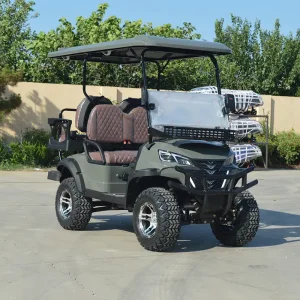
Multi-Crew Patrol
View Product Specs
Direct-from-factory modular chassis optimized for high-duty patrol lifecycles. Integrated 72V architecture, heavy-duty suspension, and custom mount points for tactical cameras, mobile command desks, and long-range radar integration.


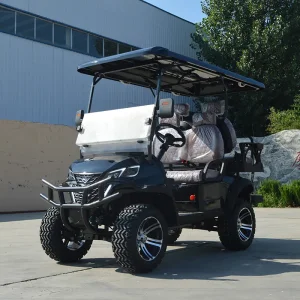
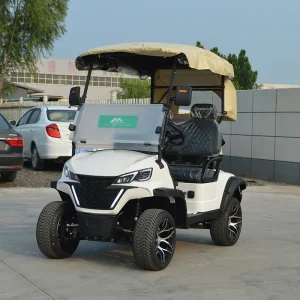
Perimeter surveillance has transformed from static, fragmented CCTV monitoring to dynamic, mobile edge-computing platforms. Modern physical security operations demand continuous mobility, multi-spectral sensing, and real-time situational awareness without the acoustic signature or carbon overhead of legacy combustion utility vehicles.
Surveillance vehicles now serve as mobile IoT gateways. High-resolution PTZ visual cameras, dual-spectrum FLIR thermal imagers, and automated license plate recognition (ALPR) run directly on vehicle-integrated neural processing units (NPUs), executing real-time threat classification without bandwidth latency.
Transitioning away from lead-acid and 48V limits, modern surveillance platforms leverage automotive-grade 72V Lithium Iron Phosphate (LiFePO4) chemistry. This enables over 16 continuous operational hours per charge while sustaining continuous 1.5kW auxiliary loads for onboard electronics and mast lighting.
Internal combustion engine patrol fleets generate noise signatures exceeding 78 dB, alerting trespassers miles away. Electric surveillance vehicles operate below 42 dB, allowing tactical close-approach capabilities across eco-sanctuaries, VIP resorts, and defense perimeter fences without disrupting residents or wildlife.
Our ODM engineering framework tailors the vehicular superstructure, electrical auxiliary bus, sensor payloads, and chassis dynamics to match the rigorous demands of specialized mission profiles.
Continuous airside patrolling demands electromagnetic compatibility (EMC) to avoid avionics interference, high-intensity amber strobe warnings, and heavy-duty FOD (Foreign Object Debris) collection attachments alongside 360-degree high-definition video capture.
Substations, solar farms, oil refineries, and nuclear installations require non-sparking electrical assemblies, intrinsic IP66 dust-and-waterproofing, and radiometer-equipped thermal sensors capable of pinpointing equipment overheating from 100 meters away.
High-density corporate compounds, university campuses, and civic districts prioritize discreet aesthetics, pedestrian safety systems, automated acoustic warning sounds (AVAS), and two-way voice intercommunication terminals for community interaction.
When global enterprise buyers, defense contractors, and municipal authorities source surveillance vehicles, low initial price frequently masks high lifecycle costs. Our engineering audit outlines the critical parameters required to ensure long-term ROI and fleet uptime.
Do not accept legacy 48V conversions. A dedicated surveillance vehicle requires a 72V architecture with high-capacity DC-DC converters to supply clean, regulated 12V and 24V power to mission-critical cameras and radio equipment without causing voltage sags during acceleration.
Surveillance hardware—including pneumatic telescoping masts, backup UPS batteries, weather stations, and operators—adds 250–500 kg of deadweight. Platforms must feature reinforced high-tensile steel spaceframes with anti-roll sway bars and four-wheel hydraulic disc brakes.
Whether deployed in Middle Eastern desert extremes (+50°C) or Scandinavian winter perimeters (-25°C), battery packs must incorporate active thermal management (PTC heating / liquid cooling) with IP67-rated electrical distribution enclosures to prevent moisture degradation.
| Evaluation Parameter | Standard Commercial Golf Cart | Basic OEM Converted Patrol Buggy | Leibin Dedicated ODM Surveillance LSEV |
|---|---|---|---|
| Nominal System Voltage | 48V Lead-Acid / Basic Lithium | 48V / 72V Lithium (Shared Bus) | 72V LiFePO4 Dual-Isolated Bus Architecture |
| Mission Auxiliary Power | <150W (Standard Headlights) | 350W (Converter Tap) | 1,500W Dedicated Isolated DC-DC Regulated Supply |
| Mast Load Capacity | Not Supported / Structurally Unsafe | Up to 15 kg (Roof Rack Mount) | Up to 60 kg Integrated Pneumatic Telescopic Mast |
| Sensor Integration | None | Stand-alone DVR, No Telematics | Edge AI NPU, CAN-Bus Telematics, ONVIF / 5G Ready |
| Chassis Treatment | Basic Spray Paint | Standard Primer Coat | Cathodic Electrodeposition (E-Coat) + Powder Armor |
| Braking Architecture | Rear Mechanical Drum Brakes | Front Disc / Rear Drum | 4-Wheel Hydraulic Disc with Regenerative Assist & EM Lock |
Deploying enterprise surveillance fleets across jurisdictions necessitates compliance with national road traffic safety administrations, electrical safety certifications, and stringent data security governance.
We design vehicular platforms ready for local street-legal registration:
Government and high-security sites require strict adherence to hardware supply chain regulations. Our ODM service provides complete component customization:
Every lithium power system engineered by our factory undergoes full testing and certification for international multi-modal transportation:
Our R&D trajectory integrates cutting-edge robotics, aerial-ground synergy, and solid-state energy storage to maintain our clients' technological edge over emerging physical security threats.
Integration of cellular V2X (Vehicle-to-Everything) protocols. Real-time telemetry monitoring battery health, brake pads, tire pressure, and location streamed seamlessly into global Command & Control centers.
Roof-mounted automated drone docks. The surveillance vehicle serves as a mobile recharge station for tethered and untethered UAVs, providing continuous 100-meter aerial perimeter surveillance while vehicle is in motion.
Integration of multi-channel solid-state LiDAR, RTK GPS, and stereoscopic vision. Enables fully driverless scheduled security rounds along perimeter fences with autonomous inductive charging docks.
Transitioning toward solid-state electrolyte cells, yielding a 40% reduction in curb weight, instantaneous fast-charging (0-80% in 15 minutes), and elimination of thermal runaway hazards in explosive industrial environments.
From custom chassis geometry and electrical CAD modeling to turnkey export crating, our 13,000 m² factory guarantees end-to-end manufacturing accountability.
We run finite element analysis (FEA) to simulate chassis stress caused by heavy camera masts, specialized battery packs, and passenger distribution to guarantee rollover stability.
Automated robotic welding jigs construct the reinforced chassis, followed by an 18-step cathodic electrocoating process to guarantee 10+ years of rust immunity in salt-air coastal environments.
Automotive-grade flame-retardant wiring harnesses with IP68 waterproof Deutsch connectors are installed to prevent field electrical shorts under extreme weather.
Every unit undergoes dynamic roller bench braking checks, 30-degree incline hill-hold assessments, and intense torrential rain chamber simulations prior to sign-off.
Units are secured in custom welded steel transport cradles or high-cube maritime containers with desiccants and moisture barriers. Complete homologation dossiers (VIN decoding, CE declarations, brake certificates) are issued for rapid local customs clearance.
Clear, direct engineering answers regarding custom ODM capabilities, battery lifespan, electronic sensor integration, and international shipping protocols.
Engineered for versatile mission readiness: rugged off-road chassis for border perimeter surveillance, solar-assisted extended-range shuttles, and luxury estate security transports.