
High-Torque Extreme Golf & Sightseeing Vehicles
Explore our heavy-duty four-wheel low-speed electric vehicles engineered for extreme grades, resort hospitality loops, and rigorous commercial transit duty cycles.
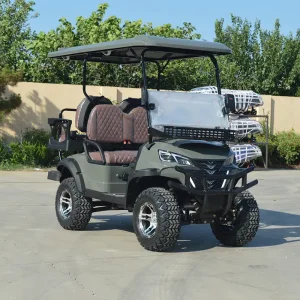
OEM Affordable China 4-Seater Electric Golf Cart - Off-Road Adventure with Custom Battery Options from Trusted Suppliers & Factory Manufacturers, Supplier
View Specifications
OEM Wholesale Electric Golf Carts from China Suppliers, 72V Lithium 6 Seat Golf Buggy Factory Made for Comfort and Performance Manufacturers, Factories
View Specifications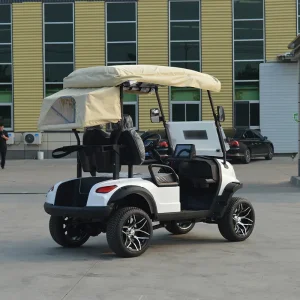
OEM Affordable 2 Seater Mini Sightseeing Car Golf Cart Electric Cars Manufacturer, Suppliers
View Specifications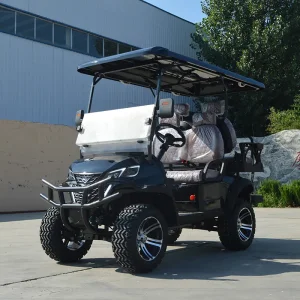
China China Suppliers Factory 72V Electric Golf Cart - 4-Seater Off-Road Buggy for Sightseeing, 35 km/h Speed, 150 km Range Suppliers, Factories
View Specifications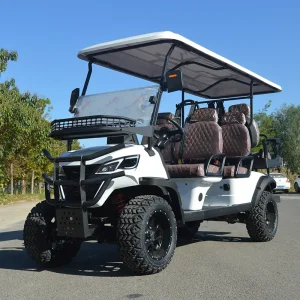
Best Electric Cars Buggy Golf Beemotors Supply CE Approved 15-40km/H Low Speed Electric Buggy Golf Car Manufacturers, Factories
View Specifications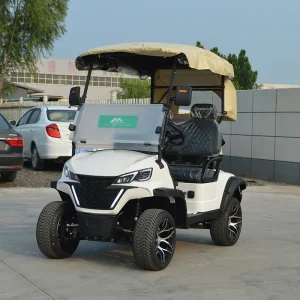
Wholesale China Factory Suppliers of 2-Seater Electric Sightseeing Cars, Golf Carts, and Versatile G70 Electric Vehicle Supplier, Suppliers
View Specifications
China Wholesale 6 Seat Electric Golf Carts, 72V Lithium Customized Comfortable 4 Seat Electric Golf Buggy Supplier, Suppliers
View Specifications
Buy 72V Modern 6-Seater Electric Golf Cart from China Suppliers | Reliable Factory Golf Buggy for On-Road & Off-Road Use Factory, Factories
View SpecificationsMacro Industry Solutions: The Evolution of "Extreme" Golf Cars
Transitioning from traditional 36V/48V fairway vehicles to high-voltage, high-durability low-speed utility transport engineered for rugged industrial, municipal, and multi-terrain environments.
The global low-speed electric vehicle (LSEV) landscape is undergoing an aggressive structural transformation. Historically confined to manicured 18-hole fairways operating on delicate 36-volt or 48-volt lead-acid banks, today's procurement directors, commercial fleet operators, and industrial facilities demand a fundamentally different caliber of mobility: Extreme Golf Cars. Characterized by reinforced ladder-frame chassis, independent double-wishbone suspension, high-output alternating current (AC) motors, integrated solar recharging roofs, and modular configurations spanning 2-seat utility pickups to 8-passenger high-incline shuttles, these machines bridge the operational gap between consumer golf buggies and heavy automotive utility transport.
At Dezhou Leibin Vehicle Industry Co., Ltd. (operating our 13,000 m² state-of-the-art production base in Dezhou, Shandong), our engineering doctrine centers on solving critical failure points common to conventional imports: structural fatigue under sustained payload, thermal throttling on sustained inclines, corrosion in coastal resort microclimates, and prohibitive maintenance costs associated with outdated battery chemistries. By establishing an integrated Original Design Manufacturer (ODM) pipeline, Leibin empowers international distributors and commercial enterprises to configure extreme-duty platforms that satisfy strict regional road standards while lowering total cost of ownership (TCO) by up to 42% over a five-year lifecycle.
Fleet TCO Rationalization
Direct factory engineering mitigates dealer markups, while 72V LiFePO4 cells eliminate battery watering protocols, acid spills, and annual replacements, generating rapid capital amortization.
Turnkey ODM Homologation
From FMVSS No. 500 LSV requirements in North America to EU L6e/L7e type-approval regulations, our technical department embeds certified lighting, safety glazing, and braking controls at the CAD level.
Modular Chassis Architecture
Our G30, G70, G80, and G90 modular vehicle series enable agile chassis wheelbase adjustments, interchangeable flatbed cargo modules, hydraulic lifts, and passenger pods on standard tooling.
Global Commercial & Industrial Landscape
Analyzing key structural drivers across North America, the European Union, the Middle East, and the Asia-Pacific region driving the demand for specialized low-speed utility electric vehicles.
The macroeconomic shift toward decarbonization and operational electrification has drastically expanded the purview of low-speed electric vehicles. Worldwide, facility operators are abandoning combustion-powered utility trucks and light pickup trucks inside enclosed or semi-enclosed campuses. Stricter corporate ESG mandates, rising diesel fuel expenditures, and emissions constraints have accelerated demand for vehicles that perform heavy commercial duties with zero direct tailpipe output.
| Global Region | Primary Use Cases | Regulatory & Compliance Focus | Dominant Engineering Demands |
|---|---|---|---|
| North America | Gated residential master developments, municipal parks, university campuses, resort rentals | FMVSS No. 500, SAE J2358, Title 49 CFR Part 571, State DOT low-speed vehicle registration | 25 mph (40 km/h) speed govern, DOT-approved automotive safety glass, 3-point seatbelts, high visibility lighting |
| European Union | Eco-tourism resorts, historical pedestrian city centers, municipal sanitation, vineyard logistics | EU Type Approval Regulation (EU) 168/2013, Category L6e-A / L7e-C, CE Machinery Directive | Electromagnetic Compatibility (EMC - ECE R10), dual hydraulic split braking, pedestrian warning acoustics (AVAS) |
| Middle East (GCC) | Mega-resorts, desert luxury estates, airport tarmac staff shuttles, island developments | GSO safety standards, SASO (Saudi Arabia) compliance, extreme ambient temperature certification | 55°C high-ambient battery thermal management, UV-stabilized virgin polymer body panels, heavy dust seals (IP67) |
| Asia-Pacific & ANZ | Eco-sanctuary transit, mining camp worker transport, high-density industrial logistics complexes | ADR (Australian Design Rules) low-speed exemptions, regional workplace safety authority guidelines | High-angle gradeability (30%+ climbing), integrated heavy cargo truck beds, corrosion-resistant galvanized chassis |
According to comprehensive commercial procurement surveys, over 67% of international low-speed electric vehicle buyers identify battery lifecycle and powertrain reliability as their primary points of dissatisfaction with legacy suppliers. By engineering our vehicles natively on 72-volt AC induction and permanent magnet synchronous motor (PMSM) systems, Leibin slashes operating amperage by up to 33% relative to legacy 48V systems under equivalent load. This dramatic reduction in system thermal stress virtually eliminates premature controller shutdown and delivers unmatched stamina across steep terrains and full-capacity passenger routing.
Engineering an "Extreme" Duty Electric Powertrain
A rigorous, bottom-up manufacturing overview of how Leibin vehicles achieve unmatched stability, structural endurance, and extended operational lifecycles.
Robotic Jig-Fixtured Chassis
Fabricated using high-strength Q235B structural tubular steel. Precision robotic welding prevents localized stress risers, followed by automated cathodic electrodeposition (e-coating) that guarantees 1,000+ hours of ASTM B117 salt spray resistance for oceanfront deployments.
High-Flux AC Powertrain
Paired with state-of-the-art Curtis or Enpower programmable digital controllers. Our 5.0 kW to 7.5 kW AC motors deliver instant zero-RPM low-end torque, facilitating effortless hill starts on 30% inclines without rollback or excessive thermal build-up.
LiFePO4 with Smart CAN-BMS
Automotive-grade Grade-A Lithium Iron Phosphate cells rated for 3,500+ deep discharge cycles to 80% DoD. The integrated CAN-bus Battery Management System monitors micro-voltages across individual cell banks, preventing overcharge, excessive draw, and thermal runaway.
Solar Canopy Integration
Flagship G90 models feature high-efficiency monocrystalline solar canopies (150W-300W) paired with an MPPT step-up charge regulator. This yields passive replenishment of 8 to 18 km per day under typical sunlight, prolonging battery life and mitigating deep depletion on field operations.
Heavy-Duty MacPherson & Leaf Springs
Front independent suspension paired with reinforced hydraulic dampers and rear longitudinal leaf springs with multi-link stabilization. Ensures maximum tire contact patch, passenger posture comfort, and roll suppression when executing sharp turns under load.
Four-Wheel Hydraulic Disc Brakes
Eliminating outdated mechanical rear drum shoes, our extreme platform utilizes four-wheel vented hydraulic disc brakes coupled with an electronic automatic parking brake (EMB). Hill-hold engages automatically upon coming to a stop, ensuring foolproof workplace safety.
Localized Applications & Commercial Work Environments
From undulating mountain resorts to heavy industrial steel works, discover how Leibin ODM vehicle configurations adapt seamlessly to rigorous environmental constraints.
Alpine Resorts & Mountain Courses
Challenge: Steep gradients (>25%), cold winter ambients, passenger comfort under full seating capacity.
Leibin Solution: 72V 105Ah/206Ah LiFePO4 pack with integrated internal heating film, 7.5kW AC motor delivering high continuous torque, and downhill regenerative descent control.
Coastal Tourism & Island Hubs
Challenge: Extreme marine salt corrosion, constant ambient moisture, high UV radiation degradation.
Leibin Solution: E-coated chassis with Dacromet-treated fasteners, virgin automotive-grade PP body with anti-UV masterbatch, marine-grade vinyl upholstery, and IP67 sealed wiring harness.
Manufacturing & Logistics Hubs
Challenge: Heavy raw material payload, multi-shift round-the-clock service, zero interior exhaust emissions.
Leibin Solution: G30 Heavy Cargo configuration featuring an extended 1.4m diamond-plate aluminum cargo box, 800kg payload capacity, and high-rate 1C fast opportunity charging.
Airports & Municipal Security Patrol
Challenge: Continuous low-speed crawl, high-frequency stop-and-go cycles, night operations with high accessory draw.
Leibin Solution: G70 and G80 Patrol platforms with rooftop auxiliary 360° light bars, integrated public address system, 12V auxiliary converter, and electromagnetic self-locking brakes.
Regardless of the operational setting, an extreme golf cart must operate beyond the limits of consumer toy vehicles. Every component—from steering knuckles forged in carbon alloy steel to heavy-duty off-road tires mounted on lightweight 12-inch or 14-inch cast aluminum wheels—is rated for severe duty cycles, high-frequency passenger cycling, and variable commercial payloads.
Localized Support & Global Homologation Standards
How Dezhou Leibin ensures full legal compliance, frictionless customs clearance, and long-term aftermarket continuity for international fleet buyers.
Acquiring electric utility fleets across international borders entails complex technical and regulatory diligence. An off-the-shelf golf cart shipped without country-specific homologation often results in impoundment at regional customs checkpoints or severe corporate liability in the event of an on-site workplace incident. As a dedicated ODM manufacturer, Leibin handles compliance upstream during vehicle development.
North America: FMVSS No. 500
We supply full DOT compliance kits: DOT-stamped AS4 laminated glass windshields with electric wipers, certified 3-point retractable seatbelts, dual exterior mirrors, side/rear reflectors, automotive-grade high/low beam LED lighting, and calibrated speed governance capped at 25 mph (40 km/h) for Low-Speed Vehicle (LSV) road licensing.
European Union: CE & L-Category
Every exported platform conforms strictly to the European Machinery Directive 2006/42/EC and Electromagnetic Compatibility (EMC) Directive 2014/30/EU. We furnish accredited TÜV or SGS test documentation, detailed wiring schematics, multilingual operator manuals, and L6e/L7e homologation technical dossiers.
Lithium Safety: UN38.3 & MSDS
Our lithium energy storage systems carry complete UN38.3 transport certifications, safety drop-test validation, and MSDS documentation. This guarantees compliance for maritime sea freight (dangerous goods Class 9) and domestic warehouse storage without prohibitive insurance surcharges.
Beyond document compliance, Leibin maintains a dedicated Overseas Engineering Support Desk. We provide international distributors with critical spare parts consignment packages (including controllers, solenoids, brake pads, and wire harness components), remote video diagnostic sessions directly with our factory assembly engineers, and modular plug-and-play harness designs that allow on-site local technicians to diagnose and replace components within minutes.
Total Cost of Ownership (TCO) & Fleet ROI Analysis
A rigorous five-year lifecycle economic model comparing Leibin 72V Lithium Extreme Golf Cars with traditional 48V Lead-Acid buggies and gas-powered utility carts.
| Evaluation Metric (5-Year Window / 20-Unit Fleet) | Legacy Gas-Powered Utility Carts | Standard 48V Lead-Acid Golf Carts | Leibin 72V Lithium Extreme Golf Cars |
|---|---|---|---|
| Initial Capital Outlay (Fleet Acquisition) | $190,000 – $240,000 | $110,000 – $140,000 | $125,000 – $165,000 (Factory Direct) |
| 5-Year Fuel / Electricity Energy Costs | $72,000 (Gasoline @ $3.80/gal) | $22,500 (Inefficient 48V charging) | $13,200 (High-efficiency 72V + Solar Boost) |
| Battery Pack Replacement (at Year 2.5–3) | N/A (Standard 12V starter battery) | $38,000 (Full 20-unit set replacement) | $0 (LiFePO4 lifespan exceeds 8–10 years) |
| Routine Maintenance & Labor | $36,000 (Oil, filters, spark plugs, belts) | $18,000 (Distilled water refills, terminal acid cleaning) | $4,500 (Brake pads, tire rotation, visual inspect) |
| Unscheduled Downtime Losses (Est. 5-Yr) | $24,000 (Carburetor/clutch failures) | $15,000 (Depleted cells, low voltage stall) | $2,200 (Minimal moving parts, smart CAN alerts) |
| Cumulative 5-Year Fleet TCO | $322,000 – $372,000 | $203,500 – $233,500 | $144,900 – $184,900 |
| Net 5-Year Projected Savings with Leibin | Baseline Reference | Save $58,600+ across fleet | Save $177,100+ vs. Gas / $48,600+ vs. Lead-Acid |
As demonstrated by industrial economic audits, while the initial procurement invoice for advanced 72V lithium platforms is marginally higher than obsolete lead-acid equivalents, the breakeven threshold is typically reached within 14 to 18 months of daily commercial service. The elimination of periodic electrolyte replenishment, corrosive terminal cleaning, and catastrophic mid-lifecycle battery replacements yields an immediate bottom-line operational dividend.
Technology Roadmap & Next-Gen Outlook (2025–2030)
A strategic preview into Leibin's active research, engineering trials, and product milestones shaping the next generation of extreme electric utility transport.
IoT Telematics & Fleet Cloud (Q3 2025)
Integration of 4G LTE/GPS telematics gateway modules. Fleet managers can monitor battery health, enforce dynamic geofencing speed limiters around pedestrian zones, and receive automated maintenance triggers via browser dashboards.
Solid-State Cell Integration (2026)
Collaborative pilot programs assessing semi-solid lithium pouch cells to provide 40% higher gravimetric energy density, near-zero sub-zero thermal performance degradation down to -30°C, and unmatched puncture safety.
L4 Campus Autonomous Shuttling (2027)
Steer-by-wire and brake-by-wire actuation chassis platforms configured for integration with commercial LiDAR, stereo camera suites, and ROS2 autonomy software for self-driving resort, university, and airport transport.
Circular Recycled Composites (2025–2026)
Transitioning body panels and structural roof components toward 100% bio-based or ocean-recycled olefin thermoplastic polymers with integrated molded-in pigments to eliminate paint curing emissions.
Technical Procurement & Engineering FAQ
In-depth responses to critical engineering, manufacturing, logistics, and customization questions asked by international fleet buyers and distributors.
What distinguishes an "Extreme" Golf Car from a standard electric golf buggy?
Standard golf buggies are typically engineered with lightweight steel or aluminum C-channel frames, low-output 48V DC motors (2.5 kW – 3.3 kW), light rear mechanical drum brakes, and low ground clearance (100–120 mm), designed solely for flat manicured turf. An Extreme Golf Car is built on an automotive-grade box-section ladder chassis, utilizes 72V AC or permanent-magnet motors delivering 5.0 kW to 7.5 kW with high continuous torque, features four-wheel hydraulic disc brakes with auto-engaging electromagnetic parking, independent long-travel suspension, elevated ground clearance (180–230 mm), and high-durability off-road or all-terrain tires capable of continuous commercial payloads up to 800 kg.
Why is a 72V lithium powertrain superior to a 48V system for commercial applications?
Under Ohm's and Joule's electrical laws (P = V × I, and Heat Loss = I²R), producing a given amount of mechanical power at 72 volts requires 33% less current (amperes) than at 48 volts. Lower current equates to radically reduced I²R resistive heat dissipation within the controller, motor windings, and wiring harnesses. This guarantees that on steep grades, high payload shuttling, or in hot tropical climates, the vehicle does not suffer thermal derating or premature component failure. Furthermore, 72V architectures support faster charging rates and higher regenerative braking energy recovery back into the LiFePO4 cells.
What specific OEM and ODM customization capabilities does Leibin provide?
Because Leibin operates an end-to-end manufacturing base with in-house laser cutting, robotic welding, electrostatic powder coating, thermoforming, and powertrain testing lines, our ODM flexibility is extensive. Clients can specify: wheelbase dimensions, seating configurations (forward-facing, rear-facing flip-flop, 2 to 8 seats), chassis payload ratings, motor power outputs (3.3 kW to 7.5 kW AC), lithium pack capacities (105Ah, 150Ah, 206Ah), custom pantone exterior colors, branded upholstery embroidery, integrated solar charging canopies, specialized utility beds (dump beds, toolboxes, medical stretcher platforms), and customized digital instrument clusters with company boot screens.
How are vehicles packaged to eliminate transit damage during maritime container shipping?
We deploy two primary international shipping methodologies depending on customer unloading infrastructure. For full container load (FCL) orders (20GP, 40HQ), vehicles are nested on customized heavy-gauge steel modular skids that allow double-stacking without body contact, secured with high-tensile ratchet webbing and humidity-absorbing desiccant sacks. Alternatively, for knock-down or partial assembly (SKD/CKD) shipments, chassis units are crated in enclosed steel-framed wooden crates. Detailed container loading diagrams and unboxing video procedures are delivered prior to port departure.
What warranty terms and remote technical support frameworks are offered to overseas buyers?
All Leibin commercial vehicles are backed by standard factory warranties: 5 years on structural chassis integrity, 3 to 5 years (or 3,500 cycles) on our LiFePO4 battery packs, and 2 years on motor, controller, and transaxle assemblies. We supply comprehensive spare parts kits with each export container, maintain complete digital parts catalogs with exploded CAD diagrams, and provide direct technical escalation via our engineering team with response guarantees within 12 business hours.
Commercial Off-Road Buggies & Utility Vehicles
Explore our specialized multi-passenger buggies, high-torque solar utility trucks, and modern low-speed electric sightseeing carriers.
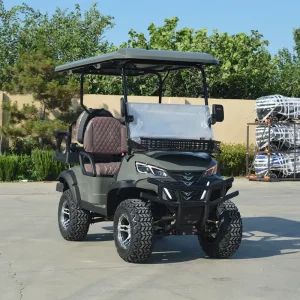
Buy 72V AC Mini Electric Golf Cart for Sale - China Suppliers & Factory, 4-Seat Lithium Battery Model, CE Certified Suppliers, Factory
View Specifications
Wholesale 72V Electric Golf Cart - Modern 6-Seater Buggy from China Suppliers | High-Quality Factory Manufacturing Suppliers, Factories
View Specifications
China Affordable Electric 2 Seater Mini Sightseeing Car Golf Cart from China Suppliers and Factory Supplier, Factories
View Specifications
Best 72V Modern 6-Seater Electric Golf Cart - Factory Direct from China Suppliers, Ideal for On-Road and Off-Road Use Manufacturer, Suppliers
View Specifications
China 72V Electric Golf Cart - 6-Seater Modern Design | China Suppliers & Factory Quality Golf Buggy Manufacturer, Factory
View Specifications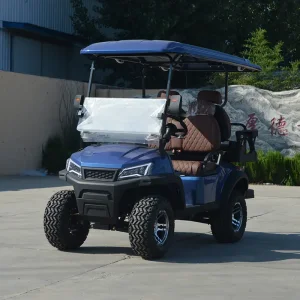
Cheap China Supplier Factory Leibin G90 72V Lithium Battery Off-Road Electric Golf Cart - 4 Seaters, Solar Power, 35 km/h Speed Suppliers, Factory
View Specifications
Wholesale Electric Golf Cart 4seated Golf Buggy Sightseeing Bus off-Road 72vgolf Cart Manufacturers, Factory
View Specifications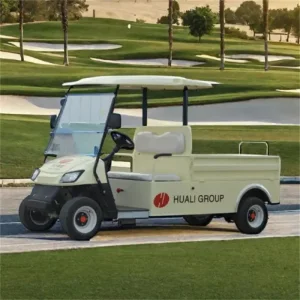
Cheap Cargo Electric Utility off Road Truck Golf Cart 48V Utility Gulf Cart Electric Golf Car Suppliers, Factory
View SpecificationsConnect Directly with Our Automotive Engineering Team
Skip middlemen markups. Schedule an engineering consultation to configure your customized ODM fleet, request formal CAD mechanical drawings, or arrange an on-site virtual 360° factory walkthrough of our Dezhou assembly lines.