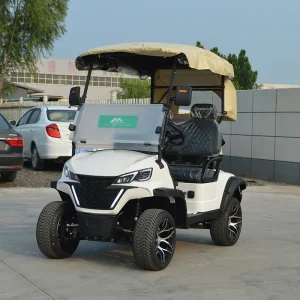
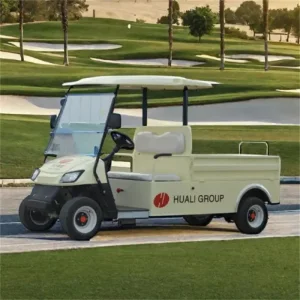
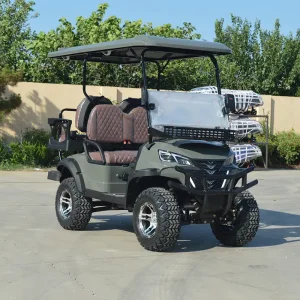
Enterprise-Grade 4-Person Carts & Platform Architectures
Direct factory-assembled configurations engineered for golf courses, private estates, smart hospitality hubs, and low-speed urban transport operations.

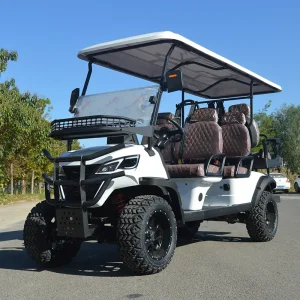
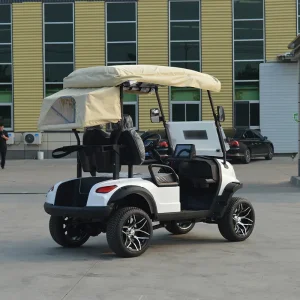
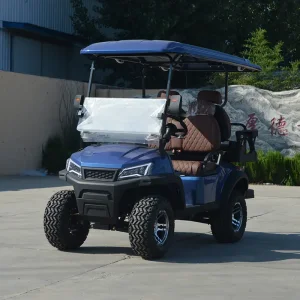

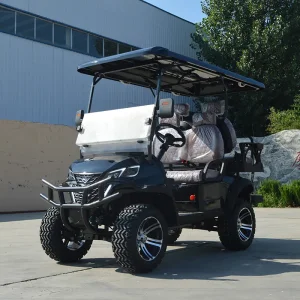
Global Commercial & Industrial Landscape of 4-Person Light Electric Vehicles
The worldwide transition from gas-powered recreational carts to purpose-engineered, zero-emission 4-person utility and passenger transporters across commercial ecosystems.
From Fairway Transport to Micro-Mobility Workhorses
The four-person cart sector has experienced a profound structural evolution over the past decade. Previously categorized solely as recreational golf course amenities, modern 4-seater electric buggies serve as mission-critical Low-Speed Vehicles (LSVs) and Neighborhood Electric Vehicles (NEVs). These vehicles bridge the transport gap between pedestrian foot traffic and full-sized automotive fleet vehicles inside controlled infrastructure networks.
- 18.4% Compound Annual Growth Rate (CAGR) in commercial resort logistics
- Integration into municipal decarbonization and smart campus frameworks
International Homologation & Regulatory Shifts
Global procurement teams must navigate increasingly stringent localized regulatory barriers. In North America, the Federal Motor Vehicle Safety Standard (FMVSS No. 500) sets strict benchmarks for Low-Speed Vehicles (20–25 mph threshold, DOT windshields, 3-point seatbelts, reflex reflectors). Simultaneously, the European Union enforces Framework Regulation (EU) No 168/2013 across L6e and L7e light quadricycle categories, requiring rigorous electromagnetic compatibility (EMC) testing and unified steering certifications.
- Mandatory Dual-Circuit Braking and ISO-standard reversing beacons
- CE, EEC, and EPA Type Approval requirements for direct fleet registration
TCO Decoupling from Legacy Internal Combustion Fleets
High internal combustion engine (ICE) maintenance costs, volatile petroleum pricing, and aggressive corporate ESG mandates have accelerated enterprise fleet renewal. A 4-person electric cart equipped with automotive-grade lithium iron phosphate (LiFePO4) architecture achieves a Total Cost of Ownership (TCO) break-even within 14 to 18 months of intensive commercial deployment compared to gas fleets, while eliminating on-site refueling hazards.
- Over 65% reduction in lifetime scheduled maintenance downtime
- Zero direct tailpipe emissions in enclosed hospitality and indoor storage hubs
Engineering Superiority & Scale in China's Dezhou EV Manufacturing Corridor
How geographical industrial clustering, vertically integrated sub-component supply ecosystems, and precision automation yield unmatched OEM/ODM speed-to-market.
Automotive-Grade Robotic Tooling & E-Coating
Unlike fragmented regional workshops assembling low-tolerance kits, Tier-1 factories in Dezhou, Shandong employ multi-axis robotic laser welding jigs for high-strength tubular steel or aerospace aluminum chassis frames. Finished frames undergo automated 14-stage cathodic electro-deposition (E-coat) pretreatment and salt-spray curing to deliver 1,000+ hours of anti-corrosion resilience, essential for coastal golf courses and high-salinity island resorts.
- Automated robotic seam welding within ±0.5 mm frame tolerances
- Automotive polyurethane paint lines resistant to prolonged UV yellowing
Vertical Upstream Component Integration
The strategic concentration of motor winding facilities, semiconductor inverter factories, and Tier-1 lithium prismatic cell packagers within a 50-kilometer radius minimizes inbound logistics lead times. This tight clustering enables OEM factories to rapidly prototype bespoke adaptations, adjust chassis track widths, install custom utility boxes, or modify suspension geometries within days rather than the months typical of western tier supply chains.
- Direct supply partnerships with CATL/EVE Tier-1 lithium cells
- Rapid 3D industrial prototyping and rapid injection mold validation
Optimized Export Logistics & SKD/CKD Tooling
Export efficiency is engineered into the cart platform from the ground up. Modular front cowl clips, quick-release roofs, and engineered nested crating protocols allow up to 18 units to be safely packed into a standard 40-foot High Cube (40HQ) maritime shipping container in Semi-Knocked Down (SKD) configuration. This structural density slashes per-vehicle ocean freight overhead by more than 40% compared to fully built roll-on/roll-off units.
- Shock-absorbent custom steel pallet frames for zero transit damage
- Standardized assembly documentation and fast plug-and-play wiring harnesses
Enterprise Mission Profiles & Localized Deployment Scenarios
Engineered to excel across diverse micro-environments, from luxury tropical seaside hospitality to rugged industrial facility perimeters.
Luxury Hospitality, Island Eco-Resorts & Spas
Modern luxury hotels demand whisper-quiet passenger mobility with pristine ride comfort. Electric 4-person carts equipped with AC asynchronous motors, independent MacPherson front coil suspensions, and rear multi-link trailing arms eliminate engine vibrations, exhaust fumes, and driveline whine. Optional marine-grade vinyl upholstery, onboard beverage refrigeration, and integrated monocrystalline solar roofs keep guests refreshed across sprawling golf and beach club networks.
- Acoustic levels below 48 dB(A) for unperturbed guest relaxation
- Monocrystalline 150W–300W solar roofs for continuous off-grid trickle charging
Industrial Campuses, Gigafactories & Ports
Modern mega-campuses and automated warehousing parks measure millions of square meters. Moving maintenance supervisors, security personnel, and engineering groups across cleanroom production zones or rough exterior tarmacs demands reliable, all-shift mobility. Configured with a convertible rear flip-flop seat that opens into an expansive diamond-plate cargo bed, our 4-seater platforms carry up to 450 kg of payload alongside specialized diagnostic kits.
- Dual-purpose utility conversion: 4-passenger shuttle to cargo utility carrier in 5 seconds
- Heavy-duty electromagnetic parking brakes prevent rollaways on warehouse loading ramps
Gated Master-Planned Communities & Smart Suburbs
In Sunbelt markets throughout North America, master-planned developments in Australia, and private villa estates in the Middle East, electric 4-person carts function as primary short-distance daily runabouts. Featuring DOT-approved laminated glass windshields with motorized wipers, 3-point ELR seatbelts, automotive LED headlights with daylight-running accents, and digital rear-view cameras, these platforms deliver automotive levels of personal safety.
- Full street-legal equipment packages compliant with municipal low-speed roadway codes
- Digital dash displays with Bluetooth audio integration and dual USB fast-charge ports
Enterprise Technical Spec Matrix: 48V vs. 72V Architectures
A direct powertrain comparison for procurement teams evaluating motor winding efficiency, thermal endurance, gradeability, and battery life cycles.
| Performance & Engineering Dimension | Legacy 48V Lead-Acid Cart | Standard 48V LiFePO4 Platform | High-Torque 72V AC/PMSM Platform |
|---|---|---|---|
| Nominal System Voltage | 48V DC (6x 8V or 4x 12V Flooded) | 51.2V DC Nominal (16S LiFePO4) | 76.8V DC Nominal (24S LiFePO4) |
| Powertrain Motor Technology | 3.0 kW – 3.8 kW DC Series Wound | 4.0 kW AC Asynchronous Induction | 5.0 kW – 7.5 kW AC Induction or PMSM |
| Peak Motor Torque | 65 Nm (Noticeable fade on hills) | 95 Nm (Electronically governed) | 145 Nm (Instantaneous low-end draw) |
| Gradeability (Full 4-Pax Load) | 15% to 18% Maximum incline | 20% to 25% Maximum incline | Up to 30% Incline under continuous duty |
| Usable Battery Capacity | 50% Depth of Discharge (DOD) threshold | 85%–90% Depth of Discharge | 95% Usable capacity with automated smart BMS |
| Cycle Life Expectancy (to 80% SOH) | 500 to 700 Cycles (18–24 months) | 2,500 Cycles (5–7 years) | 3,500 to 4,000 Cycles (8–10 years) |
| Thermal Heat Dissipation | High I²R copper resistance losses | Moderate current thermal load | Low current draw; minimal harness thermal rise |
| Braking Subsystem | Rear Mechanical Drum Brakes | Rear Hydraulic Drum + Regen Braking | 4-Wheel Hydraulic Disc + Electro-Brake |
| Maintenance Overhead | Bi-weekly distilled watering, corrosion cleaning | Zero water servicing; passive BMS monitoring | Zero servicing; cloud-integrated remote CAN-telematics |
Industry Trends Shaping the 2025–2030 Light Electric Vehicle Market
Transformative engineering shifts reshaping the low-speed vehicle landscape from hardware-defined runabouts into smart connected fleets.
IoT Telematics, Geofencing & Fleet Management Cloud
Fleet operators are moving past traditional physical keys. Commercial 4-person cart platforms now feature 4G LTE/GPS cellular telematics integrated directly into the motor controller via automotive CAN-bus architecture. Fleet managers can enforce virtual geofences, establish automated speed governors near high-pedestrian zones, monitor cell temperatures in real time, and disable lost or stolen units over the air (OTA).
- Automated geo-throttling to 10 km/h in designated pedestrian walkways
- Cloud diagnostic health alerts for individual lithium cell thermal deviation
Photovoltaic Canopy Integration & Self-Sustaining Range
Solar-assisted mobility is shifting from an aftermarket novelty into an essential factory-integrated feature. Advanced high-efficiency monocrystalline solar panels are embedded directly into injection-molded ABS roofs. In desert resorts, island eco-sanctuaries, and tropical retreats, solar canopy systems harvest up to 1.5 kWh to 2.0 kWh per day, extending runtime and reducing shore-power charging cycles by up to 35%.
- Adds 15 to 25 km of daily operational range in high-irradiance zones
- Reduces peak grid draw and utility bills across large rental fleets
Drive-by-Wire & Autonomous Transit Readiness
Looking ahead, light electric vehicle chassis are increasingly deployed as rolling mule platforms for low-speed autonomous transit (autonomous shuttles for retirement estates, ports, and theme parks). By integrating Electronic Power Steering (EPS), digital accelerator sensors, and CAN-bus brake-by-wire actuators, our latest 4-seater platforms can interface directly with LiDAR sensors and autonomous driving stacks.
- Electronic Power Steering with fine steering-angle feedback
- Factory mounting brackets for stereo vision and solid-state LiDAR sensors
Enterprise Sourcing Protocol: Auditing OEM Factory Capabilities
A practical checklist for commercial purchasers, distributors, and fleet operators evaluating tier-1 suppliers in China.
Factory Direct vs. Trading Intermediary Audit
Global procurement teams must confirm they are dealing with an established production facility rather than an export middleman. True OEM factories possess their own stamped chassis production lines, automated cathodic electrophoresis lines, dedicated wiring harness stations, and final dynamometer dyno-testing lanes. Direct access guarantees consistent quality control, reliable spare parts availability, and faster custom engineering support.
- Demand live video verification of chassis welding and frame dipping lines
- Confirm ISO 9001:2015 and CE certification ownership under the vendor's legal name
Battery Chemistry & UN 38.3 Safe Transport Compliance
A low price tag often conceals second-life lithium cells, uncertified cylindrical strings, or poorly configured battery management systems (BMS). Enterprise purchase agreements must specify prime automotive-grade LiFePO4 cells backed by certified test documentation. Verify compliance with UN 38.3, MSDS, and maritime IMDG code guidelines to prevent container holds and customs delays at the destination port.
- Specify Grade-A prismatic cells with documented cell-matching balance
- Confirm integrated BMS protection against short circuits, overcurrent, and thermal runaway
Container Packing Density & SKD Field Assembly
The landed cost of an electric cart is heavily influenced by international ocean freight rates. Evaluating factory crating engineering is essential. Suppliers should provide certified steel-framed packing systems for Semi-Knocked Down (SKD) shipment. These configurations safeguard painted body panels from transit friction while requiring minimal reassembly (only wheels, roof posts, and windshield) at the destination depot.
- Maximize container yield: fit up to 18 SKD units inside a single 40HQ container
- Request pre-calibrated quick-connect wiring harnesses to speed local assembly
Enterprise Sourcing, Technical Compliance & Operations Q&A
In-depth answers covering homologation, powertrain selection, lithium safety, and global delivery for procurement executives.
Commercial Fleet, Utility & Multi-Passenger Platform Range
Complete low-speed electric transport options from compact runabouts and cargo haulers to extended multi-passenger passenger platforms.