
High-Efficiency Electric Street Buggies & Low-Speed Shuttles
Explore our most in-demand factory-direct models engineered for street legality, community micro-mobility, off-road hospitality transfers, and continuous municipal deployment.
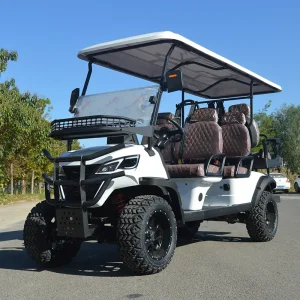
CE Approved 15-40km/H Low Speed Electric Buggy Golf Car
View Model Specs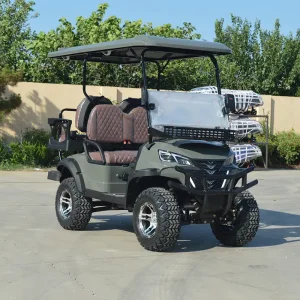
Compact 4-Seater Off-Road High-Clearance Golf Buggy
View Model Specs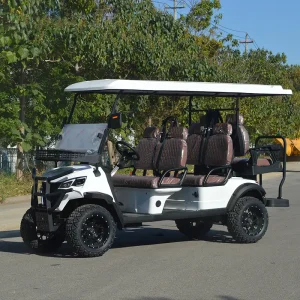
ODM 6-Seat 72V Lithium High-Torque Comfort Fleet Shuttle
View Model Specs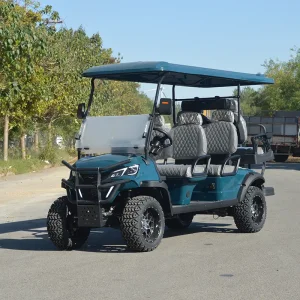
Factory Direct 72V Modern 6-Seater Dual-Terrain Golf Cart
View Model Specs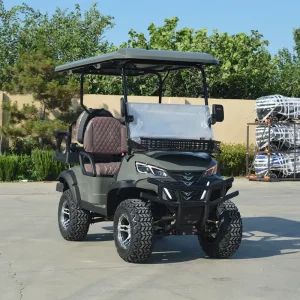
Gold Edition 72V AC 4-Seat Caddie-Equipped Lithium Buggy
View Model Specs
Wholesale 6-Seat 72V Lithium Executive Resort Buggy
View Model Specs
Modular OEM 6-Seater 72V Extended-Range Passenger Shuttle
View Model Specs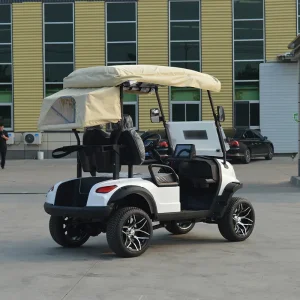
Agile 2-Seater Electric Site Sightseeing & Patrol Buggy
View Model SpecsTechnical Roadmap: Architecture, Smart Powertrains & IoT Integration
The low-speed vehicle (LSV) paradigm is undergoing a generational shift. Moving beyond antiquated DC motor and lead-acid battery platforms, modern street-legal golf carts operate as sophisticated, connected, lightweight electric platforms designed for automotive reliability.
Lithium-Iron Phosphate (LiFePO4) & Solid-State Transitions
Lead-acid batteries impose profound penalties on low-speed vehicle chassis: non-linear voltage sag under load, high mass, toxic off-gassing, and labor-intensive deionized water balancing. Dezhou Leibin standardizes high-energy density Lithium Iron Phosphate (LiFePO4) cells backed by integrated Battery Management Systems (BMS).
- Real-time thermal cut-off and cell-level balancing
- Weight reduction of over 140 kg vs. deep-cycle lead acid
- Roadmap transition toward semi-solid-state chemistry for -25°C operation
72V AC Asynchronous & PMSM Powertrain Control
Traditional 48V setups face high resistive thermal loss ($I^2R$) when handling 25% incline gradients or carrying six adult passengers. By elevating system tension to a 72V nominal architecture driven by AC induction and Permanent Magnet Synchronous Motors (PMSM), current draw drops significantly.
- 5.0 kW to 7.5 kW continuous rating with peak 15 kW output
- Dynamic regenerative braking capturing up to 18% kinetic energy
- Advanced vector field-oriented motor control (FOC) algorithms
CAN-Bus Telematics & Predictive Fleet IoT
Commercial operators cannot tolerate unplanned downtime. Leibin street-legal golf carts incorporate an open-protocol CAN-Bus wiring topology interfaced with wireless 4G/LTE fleet telematics gateways, delivering enterprise-level intelligence direct to cloud management consoles.
- Remote battery SoC, voltage drop, and temperature tracking
- Precise GPS geofencing with automatic multi-tier speed throttling
- OTA (Over-The-Air) firmware flashing for custom torque mapping
Engineering Foresight: Integrated Monocrystalline Photovoltaic Tops
In equatorial and sun-rich destinations (e.g., Caribbean resorts, GCC developments, Arizona communities), Leibin's G90 models leverage custom-contoured 200W-350W solar roofs directly linked to MPPT charge controllers. This continuously trickles 1.2 kWh to 2.4 kWh per day into the 72V pack, neutralizing phantom drain and extending daily operational duty range by up to 22 km without grid hookup.
Macro Industry Solutions: Engineered Across Diverse Operating Terrains
A single chassis cannot suit an island luxury retreat, a 500-acre automotive assembly complex, and a municipal police patrol route. We engineer purpose-built structural and functional variants tailored directly to distinct operating profiles.
Master-Planned Communities & Eco-Cities
Modern micro-mobility regulations permit street-legal LSVs on secondary municipal corridors with speed limits up to 35 mph (56 km/h). Our community carts deliver noise-free transit with automotive features.
DOT/SAE Safety Spec
DOT-stamped AS-1 laminated glass windscreens with electric wipers, dual three-point inertia seatbelts, automotive LED headlamps with integrated indicators, and digital reverse imaging cameras.
5-Star Resorts, Spas & Island Hospitality
Demanding quiet operation, smooth ride mechanics, and pristine presentation. Leibin equips resort models with independent double A-arm front suspension and premium acoustic insulation.
Marine-Grade Salt Air Defense
Hot-dip galvanized chassis frames, stainless-steel 316 fasteners, marine-grade UV-resistant textured vinyl seating, and completely sealed IP67 motor control enclosures resistant to salt corrosion.
Corporate Campuses, Airports & Logistics Hubs
For heavy maintenance equipment moving and shift-worker transportation across expansive distribution hubs, Leibin G30 cargo models substitute passenger benches for drop-side aluminum beds.
Industrial Utility Loadout
Payload capacities reaching 800 kg, hydraulic tipper bed options, integrated 12V auxiliary power sockets for tool charging, and impact-resistant molded PP body panels.
China Factory 4.0: Supply Chain Resilience & Manufacturing Efficiency
Dezhou Leibin Vehicle Industry Co., Ltd. operates a vertically integrated 13,000 m² facility located in the industrial automotive manufacturing core of Shandong, China. We do not operate as an assembly trading middleman—we execute precision chassis fabrication, robotic automated welding, e-coating, and testing under unified ISO 9001:2015 quality control.
Robotic Laser Cutting
High-precision 10kW CNC fiber laser workstations cut seamless tubular carbon steel chassis components with tolerances under 0.05 mm, eliminating structural assembly variations.
Automotive Cathodic E-Coat
Every fabricated steel frame passes through an 18-stage chemical degreasing, zinc-phosphate, and full-immersion cathodic electrodeposition (E-coat) line guaranteeing 1,000+ hours of ASTM B117 salt spray endurance.
Dyno & Gradient Testing
100% of rolling chassis undergo continuous roller-bench dyno evaluation, regenerative braking load measurement, insulation breakdown verification (hi-pot test), and a 30% hill-climb crawl check.
Clustered Supply Synergies
Located in the Dezhou automotive hub, our supply perimeter sources Tier-1 hydraulic calipers, motor controllers, wiring harnesses, and alloy castings within a 50 km logistics radius, minimizing disruption risk.
| Manufacturing Milestone | Technical Process & Machinery | Standard Quality Tolerance | Verification Protocol |
|---|---|---|---|
| Structural Chassis | Automated Fixtured Robotic MAG Welding | < 0.5 mm Axis Deviation | Ultrasonic weld joint acoustic flaw detection |
| Corrosion Barrier | Cathodic Electrodeposition + Powder Coat | Layer Thickness: 85 - 120 μm | Cross-hatch adhesion & ASTM B117 salt fog test |
| Powertrain Harnessing | Automated Wire Crimp, Heat-Shrink Seals | IP67 Sealed Multi-Pin Deutsch Plugs | Automated electrical continuity & hi-pot insulation test |
| Braking & Handling | Hydraulic 4-Wheel Disc + Electronic Park (EMB) | Stopping Distance < 4.0 m @ 30 km/h | Multi-axis dynamic deceleration deceleration meter |
| Lithium BMS Matching | LiFePO4 Cell Balancing with CAN Integration | Cell Voltage Deviation < 15 mV | Full charge/discharge thermal imaging mapping |
Regulatory Homologation & Lifecycle TCO Analysis
Procuring low-speed vehicles for international fleets involves strict compliance criteria. Sourcing uncertified golf buggies risks import impoundment, liability exposure, and early structural breakdown. Leibin eliminates friction with pre-engineered regulatory compliance packages.
North America: FMVSS 500 & SAE J2358
In the United States, Low Speed Vehicles (LSV) are federally regulated under 49 CFR 571.500. Leibin custom-configures platforms for turn-key DMV road registration.
- Speed threshold: Precisely 20 mph to 25 mph (32 - 40 km/h)
- FMVSS 209 certified 3-point seatbelts at every seating location
- FMVSS 205 automotive safety glass & SAE-compliant brake indicators
European Union: EEC / COC L6e & L7e Classes
For European public road access, vehicles must hold type approval under Regulation (EU) No 168/2013 under Light Quadricycle classifications.
- E-mark certified illumination, mirrors, horns, and tires
- Dual-circuit hydraulic braking systems with split master cylinders
- COC (Certificate of Conformity) documentation issued per VIN
Fleet TCO: 5-Year Capital & Operational Modeling
B2B fleet procurement officers recognize that initial vehicle acquisition cost (CAPEX) accounts for only 35% of Total Cost of Ownership over a five-year horizon.
- Zero acid replenishment, terminal corrosion, or mid-cycle battery swaps
- 78% energy cost savings compared to carbureted gas buggies
- Standardized modular spare assemblies (tie-rods, controllers, hubs)
OEM/ODM Customization Parameters for Global Importers
Leibin supports custom-engineered container configurations for regional distributors and municipal tenders: left-hand / right-hand drive steering rack adaptations, high-lift off-road wheel geometry (12-inch or 14-inch machined aluminum rims on 23-inch all-terrain tires), specialized corporate livery paint codes, custom upholstery embroideries, refrigerated lockable cargo units, and integrated audio/infotainment consoles.
High-Capacity Sightseeing Carts, Utility Transporters & Solar Flagships
Complete your fleet lineup with our multi-row 6-seater guest haulers, rugged 48V utility cargo transports, and high-efficiency solar-assisted street-legal vehicles built for continuous service.
Wholesale 72V 6-Seater Electric High-Stability Resort Cart
View Model Specs
72V Modern Aerodynamic 6-Passenger Commercial Buggy
View Model Specs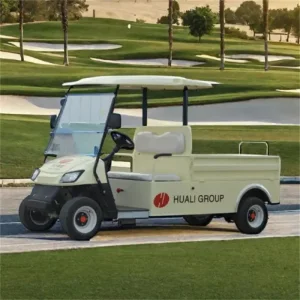
48V Heavy-Duty Cargo Utility Truck Electric Work Vehicle
View Model Specs
Dual-Purpose On/Off-Road 72V 6-Seater Hospitality Buggy
View Model Specs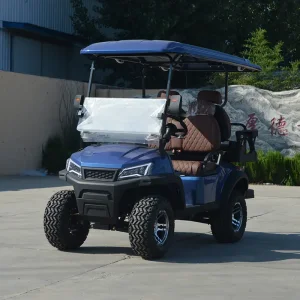
Leibin G90 72V Solar-Assisted Street Legal 4-Seater Cart
View Model Specs
CE Certified 72V AC Mini 4-Seat Urban Lithium Golf Cart
View Model Specs
G90 Flagship 35 km/h Solar-Rechargeable Off-Road Cart
View Model Specs
72V AC Gold Series 4-Seat High-Spec Electric Golf Cart
View Model SpecsOcean Freight Logistics, Knock-Down (SKD/CKD) & Packaging Protocols
Container cube utilization directly dictates delivered per-unit landing costs. We design structural shipping cradles and offer flexible Semi-Knocked-Down (SKD) and Completely-Knocked-Down (CKD) packing systems that protect vehicle surface finishes while maximizing shipping volume.
Full Steel Crate Transport (FBU / CBU)
For resort buyers and turn-key operators desiring zero onsite assembly work, vehicles ship fully erected inside modular steel tubing cages enclosed in multi-layer water-resistant shrink barrier.
- 40ft HQ Container Capacity: 8 to 12 Units (Model dependent)
- Roll-off unloading via standard forklift or ramp
- Zero post-arrival electrical wiring required
SKD / CKD High-Density Packing
For international regional distributors operating local assembly lines, SKD and CKD packing maximize container volume, slashing trans-ocean freight by up to 55% per vehicle.
- 40ft HQ Container Capacity: Up to 24 units in CKD format
- Pre-assembled wiring harnesses and tested sub-assemblies
- Step-by-step video assembly documentation & engineer support
Critical Spare Parts Buffer Program
Fleet downtime carries high cost. Leibin supplies custom-tailored "First-Year Spares Consumable Packs" delivered directly inside the shipping container alongside the vehicles.
- Standard packs: Brake shoes, master cylinders, solenoids, relays
- Pre-programmed Curtis/Enpower motor controllers for instant swap
- Express air courier dispatch for warranty components
Frequently Asked Technical, Regulatory & Commercial Questions
In-depth, direct answers from our factory engineering team addressing homologation, electrical architecture, warranty protocols, and bespoke OEM manufacturing agreements.
What specific vehicle documentation is provided to satisfy US DOT and State DMV street legal registration?
For platforms intended for US low-speed vehicle (LSV) operation under FMVSS No. 500, Leibin outfits each unit with a 17-digit ISO 3779 compliant World Manufacturer Identifier (WMI) Vehicle Identification Number (VIN) stamped directly onto the primary tubular frame. We deliver an original Manufacturer's Certificate of Origin (MCO), a detailed Bill of Sale, and the signed homologation test summary confirming inclusion of DOT AS-1 glass, FMVSS 209 seatbelts, reflex reflectors, and SAE brake lighting. This documentation packet enables importers to clear CBP customs and file registration at state DMV departments.
Why does Leibin engineer 72V electrical architecture in place of traditional 48V systems for commercial fleets?
The transition from 48V to 72V delivers significant physical advantages. Because electrical power is the product of voltage and current ($P = V \times I$), delivering 7.5 kW of peak hill-climb power on a 48V system requires 156 Amps of current. A 72V system draws only 104 Amps to generate the same mechanical power. Because resistive heat dissipation ($P_{\text{loss}} = I^2R$) scales with the square of the current, a 72V architecture reduces system heating by more than 50%. This yields cool controller operation, eliminates motor thermal throttling, and preserves cell longevity under heavy loads.
Can Leibin execute bespoke OEM white-label bodywork, custom grilles, and proprietary software configurations?
Yes. As a tier-1 direct manufacturer, our in-house industrial design, mold-making, and software departments support comprehensive OEM partnerships. For contracted annual volumes, we engineer bespoke ABS or thermoformed PP injection body panels, distinctive brand-signature front LED lighting bars, CNC-machined wheel caps with customer emblems, and tailored LCD/TFT instrument cluster splash screens. We can also lock custom controller acceleration profiles (e.g., valet mode, restricted eco-speed limits) inside the programmable AC controller before container dispatch.
What is the factory warranty coverage on LiFePO4 battery packs, structural frames, and controllers?
Standard commercial warranty terms span five (5) years or 3,500 full cycles on automotive-grade LiFePO4 lithium cell packs, three (3) years on the robotic-welded, e-coated chassis frame, and two (2) years on the AC induction/PMSM motor and primary controller. Should an electrical component display an internal failure during the coverage window, diagnostic trace files are evaluated via video inspection, and a replacement assembly is dispatched from our inventory.
How does Leibin address coastal and maritime salt-spray corrosion for island and resort fleets?
Vehicles stationed in coastal environments face accelerated corrosion from airborne salt chlorides. We counter this through a multi-tier protective strategy: first, structural tubing undergoes full-immersion cathodic electrocoat primer baths that deposit an even epoxy coating across interior channels and weld seams; second, all body brackets and exposed suspension hardware use 304 or 316-grade stainless steel or Dacromet-coated zinc-aluminum flakes; third, all wire splices are double-walled heat-shrunk with adhesive linings, and controllers are potted inside sealed IP67 alloy enclosures.
What is the production lead time, minimum order quantity (MOQ), and ocean payment terms?
Standard sample trial orders have an MOQ of one (1) unit to facilitate local homologation, road testing, and performance validation. Fleet production batches typically run between two (2) to four (4) weeks depending on the degree of custom tooling, specialized paint runs, and battery pack sourcing. Commercial payment terms are structured around international standards: 30% T/T deposit upon order confirmation, with the remaining 70% balance due against presentation of the ocean Bill of Lading (B/L) and export packing manifest. Confirmed, irrevocable Letters of Credit (L/C at sight) are supported for qualifying institutional orders and government tenders.