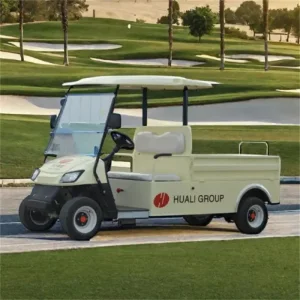
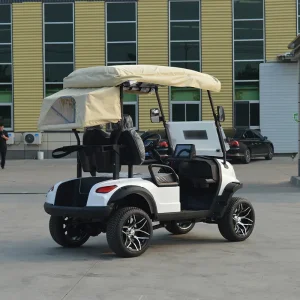
Featured Manufacturing Output
Industrial-Grade Electric Walking & Utility Fleets
Turnkey OEM/ODM low-speed vehicles engineered to withstand rigorous daily utilization across hospitality, golf resorts, and residential infrastructure.




Global Industrial Landscape & Technological Paradigms
The transformation of the electric golf and walking cart industry from traditional lead-acid runabouts to advanced, lithium-driven Low-Speed Autonomous Vehicles (LSAV).
Macro-Market Dynamics & Global Electrification
The global electric walking and golf cart market is undergoing massive structural expansion. Formerly constrained to the sports recreation vertical, these micro-mobility systems are transforming master-planned developments, commercial aviation logistics, high-end hospitality complexes, and smart campuses. The shift toward carbon-neutral micro-fleets mandates high mechanical resilience, modular payload architectures, and low total cost of ownership (TCO).
72V Architecture vs. Conventional 48V Infrastructure
Modern commercial operations have exposed the thermodynamic and efficiency limitations of classical 48V systems. Leibin engineering champions the transition to high-density 72V LiFePO4 powertrains coupled with sinusoidal AC induction and permanent magnet synchronous motors (PMSM). This architecture minimizes resistive heat dissipation, improves operating ranges by up to 28%, and facilitates instant torque output across 25% inclines.
Structural Metallurgy & Environmental Resilience
Every commercial chassis requires robust structural integrity. Leibin fabricates its frames utilizing automated robotic GMAW welding techniques on reinforced Q235 structural steel. Combined with cathode electrophoretic deposition (e-coat) and marine-grade anti-corrosion pretreatments, these vehicles survive corrosive coastal humidity, chemical turf fertilizers, and intense ultraviolet radiation cycles.
13,000m²
Modernized Production Footprint
20+
Years Engineering Track Record
72V
Advanced Lithium Core Standard
100%
Export Load Cycle Quality Audited
Technical Roadmap: Micro-Mobility Architecture Evolution
Forward-looking industrial design trajectories that optimize energy density, predictive diagnostics, and multi-terrain mechanical stability.
| Vector Metric | Legacy Implementations (48V Flooded) | Current Tier-1 Standards (Leibin 72V LiFePO4) | Next-Generation LSV Trajectory (2025–2030) |
|---|---|---|---|
| Powertrain Efficiency | 74% – 80% (DC Brushed, resistive dissipation) | 88% – 94% (AC Induction & PMSM Brushless) | > 96% (Silicon Carbide Inverters & Smart Axles) |
| Battery Cycle Life | 400 – 600 cycles (Requires manual watering) | 3,000 – 4,500 cycles (Zero Maintenance BMS) | 5,000+ cycles (Solid-State Integrated Cells) |
| Chassis Architecture | Bolted light-gauge steel channel | Robotic welded tubular steel + E-coating | Hybrid hydroformed aluminum-composite crash structures |
| Fleet Connectivity | Analog runtime meter, isolated logging | CAN-bus telemetry, real-time SoC data relay | 5G C-V2X tracking, geofenced autonomous speed control |
Localized Global Deployment Scenarios
Strategic application-level customization designed for localized operational contexts, from North American planned communities to EMEA luxury resort zones.
Hospitality & Tourism
Resort & Golf Destination Fleets
Demands zero acoustic footprints and ultra-smooth regenerative braking systems. Vehicles deployed across championship golf greens and high-tier hotels preserve peaceful environments while handling continuous steep gradient climbing with 4 to 6 adult passengers and full sporting luggage.
Residential & Commercial
Master-Planned Communities (LSV)
Street-configurable low-speed mobility options tailored for North American and European master-planned communities. Compliant with DOT FMVSS No. 500 regulations, integrating hydraulic four-wheel disc brakes, automotive LED light fixtures, certified safety belts, and windshield wipers.
Industrial Operations
Campus, Industrial & Patrol Logistics
Built for airports, secure logistics nodes, manufacturing corridors, and governmental complexes. Tailored with reinforced drop-side cargo beds, high-lumen auxiliary strobe systems, and industrial tow hitches capable of intra-facility freight conveyance up to 1,000 kg.
Procurement & Engineering Intelligence: Frequently Asked Questions
Direct insight into global homologation, OEM production customization, and overseas fleet delivery logistics.
What parameters ensure Leibin vehicles meet local homologation and road legality requirements?
Road legality depends on the target jurisdiction. For North American importation, our LSV packages are engineered to meet US DOT FMVSS Part 571.500 standards, featuring complete three-point harness configurations, AS-4 certified laminated windshields, dual external side mirrors, compliant tail and marker assemblies, and precision 25 mph (40 km/h) speed controllers. For the European common market, platforms can be harmonized to L6e or L7e light quadricycle directives, providing regional distributors with complete documentation for ease of local vehicle registration.
Why is a 72V LiFePO4 system thermodynamically superior to conventional 48V options?
By Ohm's law ($P = V \times I$), generating equivalent power using a 72V architecture draws approximately 33% less operating current compared to a 48V system. Lower amperage minimizes $I^2R$ resistive heating across the wiring harnesses, motor windings, and solid-state controller circuits. This results in cooler motor operating temperatures during demanding payload conditions, reduced thermal degradation of lithium cells, and improved powertrain efficiency under continuous duty.
What capabilities exist for white-label OEM branding and fleet modifications?
Leibin delivers full turnkey ODM/OEM manufacturing pipelines. Engineering customization includes injection-molded body color palettes, custom marine-grade vinyl seating upholstery with bespoke embroidery, bespoke roof lengths, modular rear seat configurations (transformable into flat cargo beds), independent MacPherson-style strut calibrations, integration of solar trickle charge canopies, and programmed digital dashboard interfaces with client logos.
How are export shipments packed to prevent oceanic corrosion and transit damage?
Vehicles are exported using one of two methods: SKD (Semi-Knocked-Down) encased in heavy-duty galvanized structural steel crates with moisture-barrier wrapping, or FCL (Full Container Load) direct-wheel loading secured with heavy-duty polyester ratchet straps and wheel chocks. All sensitive electronic sub-assemblies (inverters, chargers, digital displays) undergo desiccant pack installation and moisture-resistant barrier sealing to prevent sea air humidity damage during marine transport.
What warranty protocols and replacement parts workflows support international buyers?
We provide a standardized multi-tier commercial warranty covering the robotic-welded frame and chassis (5 years), LiFePO4 battery pack and advanced BMS (3 to 5 years), and electronic motor/controller components (2 years). International fleet clients receive access to factory-direct air-freighted wear components, comprehensive exploded-view parts catalogs, pin-level electrical schematics, and live engineering video diagnostic sessions.
Expanded Fleet Series
Commercial Utility, Sightseeing & High-Capacity Shuttles
Modular platforms engineered for mixed-terrain operations, resort shuttling, industrial hauling, and community transit.