

Factory-Direct Matrix
Featured Commercial Fleet Deployments
Comprehensive low-speed vehicle architectures engineered for hospitality campuses, gated multi-residential hubs, golf resorts, and industrial patrol loops.
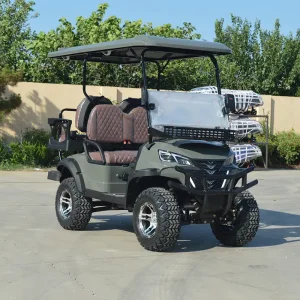
Cheap Cheap Small 4 Seater Electric Golf Carts, Golf Cart Battery, off Road Golf Carts Factory, Factories
Configure Fleet Direct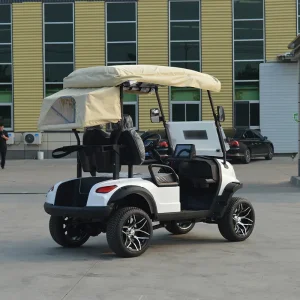
China Affordable Electric 2 Seater Mini Sightseeing Car Golf Cart from China Suppliers and Factory Supplier, Factories
Configure Fleet Direct
ODM Wholesale 6 Seat Electric Golf Carts - 72V Lithium, Customized Comfort from China Suppliers and Factory Supplier, Factory
Configure Fleet Direct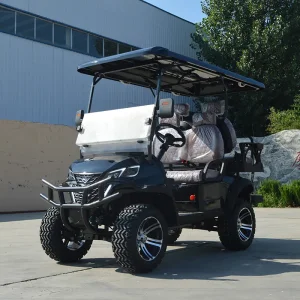
China China Suppliers Factory 72V Electric Golf Cart - 4-Seater Off-Road Buggy for Sightseeing, 35 km/h Speed, 150 km Range Suppliers, Factories
Configure Fleet Direct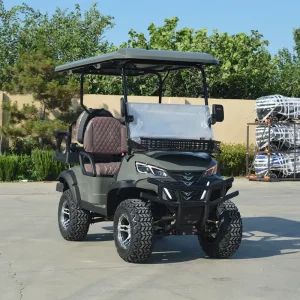
Buy 72V AC Mini Electric Golf Cart for Sale - China Suppliers & Factory, 4-Seat Lithium Battery Model, CE Certified Suppliers, Factory
Configure Fleet Direct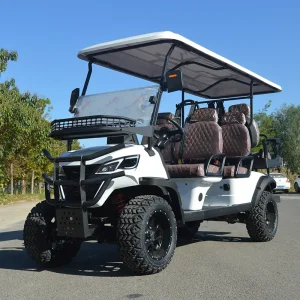
Best Electric Cars Buggy Golf Beemotors Supply CE Approved 15-40km/H Low Speed Electric Buggy Golf Car Manufacturers, Factories
Configure Fleet Direct
Buy 72V Modern 6-Seater Electric Golf Cart from China Suppliers | Reliable Factory Golf Buggy for On-Road & Off-Road Use Factory, Factories
Configure Fleet Direct
Macroeconomics & Sourcing Intelligence
Deconstructing the OEM Golf Car Cost Anatomy
A granular look at the unit-cost dynamics underpinning tier-1 low-speed vehicle (LSV) production lines, raw materials, and powertrain evolution.
38.2%
Average Powertrain Cost Contribution (LiFePO4 + AC Motor + Controller)
42%
5-Year TCO Reduction when Transitioning from Flooded Lead-Acid to 72V Lithium
13,000m²
Consolidated Manufacturing Base in Dezhou, Eliminating Intermediary Markups
150 km
Operational Range Realized via High-Density 72V 105Ah–210Ah Cell Packaging
Chassis & Materials
Structural Metallurgy vs. Cost
The bill of materials (BOM) in an authentic OEM environment is anchored by frame integrity. Low-end market entrants rely on thin-wall Q195 carbon steel prone to premature chassis bending and salt-air oxidation. Leibin deploys automotive-grade seamless steel tube hydroforming and robotic jig welding, treated via multi-stage electrophoretic deposition (EDP). While this incurs a 7–12% higher baseline frame manufacturing expense, it mitigates catastrophic operational fracture risk and extends active fleet lifespans beyond 10 operational years.
Energy Storage Dynamics
48V vs. 72V Lithium (LiFePO4)
Powertrain selection is the single largest determinant of procurement variance. While 48V AGM lead-acid packages offer tempting initial acquisition thresholds, their high internal resistance, deep-discharge degradation, and continuous maintenance generate elevated Total Cost of Ownership (TCO). Switching to 72V Lithium Iron Phosphate (LiFePO4) architectures yields double the energy density, high regenerative braking thermal efficiency, and stable current delivery that prevents motor overheating across continuous inclines.
Direct-from-Source Scaling
Tier-1 Supply Chain Disintermediation
Procurement teams frequently encounter bloated price tiers driven by third-party trading syndicates. Partnering directly with an established entity operating a dedicated 13,000 m² physical facility in Dezhou bypasses compounding agency margins (often 20–35%). Furthermore, direct engineering lines enable fine-grained customizations—including bespoke gear ratios, Curtis or Enpower programmable AC controllers, and heavy-duty transaxle configurations optimized for local terrain.
Institutional Procurement Analysis
Systemic Macro Solutions for Enterprise Fleet Operators
Transforming complex multi-unit acquisitions into predictable capital allocations with end-to-end engineering safeguards.
Hospitality & Luxury Resorts
High-occupancy resort destinations prioritize noise isolation, suspension compliance, and upscale aesthetic presentation. High-capacity 6-seater and 8-seater configurations integrated with smooth double A-arm independent front suspensions eliminate rough pavement feedback. Solar charging roof canopies top up battery banks during peak guest transit intervals, curbing daytime grid loading and lowering annual resort energy costs.
Municipalities & Smart Campuses
University grounds, logistics centers, and administrative perimeters demand reliable all-weather capability. Leibin utility modifications feature aluminum cargo flatbeds, hydraulic tipping beds, and fully enclosed cabin shells with integrated HVAC options. Fleet managers leverage centralized telematics systems to monitor state-of-charge, geographical geofencing, and speed governance parameters.
Golf Club Fleets & Concessionaires
Commercial courses require uncompromising vehicle uptime across 36-hole operating schedules. Rapid charging LiFePO4 packs allow opportunistic two-hour fast recharging between rounds without thermal runway risks. Low turf-impact radial tires prevent fairway subsoil compaction, and regenerative braking preserves mechanical brake pads, eliminating frequent manual adjustments.
Compliance & Territorial Engineering
Global Regulatory Alignment & Duty Optimization
Ensuring frictionless cross-border customs clearance and legal on-road certification across divergent world markets.
North America
FMVSS 500 / LSV Class
Full support for Low-Speed Vehicle (LSV) classifications requiring DOT-certified windshield glass (AS488), three-point inertia seatbelts, side-view mirrors, illuminated instrumentation, reverse buzzers, and factory-governed 25 mph (40 km/h) velocity limiters.
European Union
CE, L6e & L7e Standards
Compliance engineering adhering strictly to European low-voltage directives, EMC electromagnetic compatibility thresholds, and homologation-ready lighting equipment including E-mark certified LED headlights, turn signals, hazard flashers, and dual split-circuit braking circuits.
Middle East & Tropics
Thermal & Anti-Corrosion
Reinforced dual-circuit air-cooled controllers, high-temperature battery chemistry stabilizers, UV-resistant ABS vacuum-formed body cladding, and marine-grade stainless hardware designed to resist aggressive coastal sea spray and high ambient heat (up to 55°C).
Global Logistics
SKD / CKD Cost Reduction
Optimized Semi-Knocked-Down (SKD) and Completely-Knocked-Down (CKD) packing geometries inside steel-reinforced crates. This packing density doubles container unit efficiency, dramatically lowering ocean freight cost per vehicle unit.
Future Roadmap
Technological Trajectory: Connected LSV Ecosystems
Anticipating the convergence of smart micro-mobility, telemetry analytics, and zero-carbon auxiliary power plants.
Smart Telematics
IoT Fleet Command & Predictive Maintenance
Modern fleet operation moves beyond manual logbooks. Integrated 4G LTE telematics compute live battery cell balancing status, motor coil temperatures, and throttle input metrics in real time. Cloud algorithms alert service technicians to subtle insulation resistance anomalies before physical breakdown occurs, eliminating unpredicted route halts.
Solar Integration
High-Efficiency Monocrystalline Roofs
Leibin’s G90 series pioneered the direct encapsulation of high-efficiency solar cells within the structural polycarbonate canopy. Delivering a continuous trickle charge directly to the 72V lithium bank, this technology generates 8–15 km of auxiliary range daily in high-irradiance climates, minimizing deep cycling and extending cell cycle longevity to 3,500+ full charge iterations.
Autonomous Nav
Drive-By-Wire & Autonomous Guidance
Looking toward high-density autonomous campuses, our emerging EV platforms integrate CAN bus-based steer-by-wire and electronic brake boosters. These baseline vehicle dynamics integrate smoothly with third-party LiDAR and RTK-GPS perception stacks, paving the way for driverless guest transit across secure corporate headquarters and luxury private estates.
Procurement Due Diligence
Frequently Asked Questions (FAQ)
Direct technical and commercial clarifications designed to inform B2B fleet investment appraisals.
What primary factors drive the variance in OEM golf car cost?
OEM golf cart costs are primarily determined by: (1) battery chemistry and capacity (e.g., standard AGM vs. 72V 105Ah/210Ah LiFePO4 packs); (2) motor architecture (traditional DC series vs. high-torque brushless AC induction or PMSM motors); (3) chassis metallurgy and anti-corrosion treatments (powder coating vs. cathodic electrocoating); and (4) street-legal compliance packages (DOT windscreens, hydraulic disc brakes, 3-point seatbelts, and lighting kits).
Why is a 72V lithium platform commercially superior to traditional 48V setups?
A 72V system operates at lower amperage than a 48V system to produce identical wattage output (Power = Volts × Amps). This diminished current flow reduces heat buildup across the motor and wiring harnesses, lowers I²R thermal transmission losses, and unlocks superior gradeability on steep terrains without voltage drop. Combined with maintenance-free lithium chemistry, the extended operating lifespan dramatically lowers the 5-year Total Cost of Ownership (TCO).
How are street-legal compliance standards supported for export orders?
Leibin manufactures vehicles aligned with target import specifications. For the United States, configurations can be equipped to comply with FMVSS 500 (Low-Speed Vehicles) standards, complete with 17-digit VIN identifiers, certified safety glass, and lighting arrays. For European markets, configurations adhere to CE safety directives and are adaptable to support local L6e/L7e homologation procedures through certified documentation and test reports.
What is the typical lead time, and how are vehicles protected during maritime freight?
Standard production runs for batch orders (10 to 50 units) typically complete in 20–30 calendar days. Export orders are shipped inside custom-engineered, heavy-duty steel-frame crates to prevent transit abrasion and frame flexing, or flat-racked for optimal container loading. Critical electrical components, battery management modules, and digital cockpit panels are sealed in vapor-barrier packaging with desiccant systems to prevent salt-air corrosion.
Factory Inventory & Custom Line
Specialized Utility & Sightseeing Vehicle Solutions
Explore our specialized range of CE-certified electric carts, solar-assisted platforms, and high-capacity buggies built to OEM industrial standards.
Wholesale 72V AC Mini Electric Golf Cart Buggy Gold Color 4-Seat Golf Cart with Lithium Battery CE Certified and Tail Caddie Equipment Factory, Factories
Configure Fleet Direct
OEM Wholesale Electric Golf Carts from China Suppliers, 72V Lithium 6 Seat Golf Buggy Factory Made for Comfort and Performance Manufacturers, Factories
Configure Fleet Direct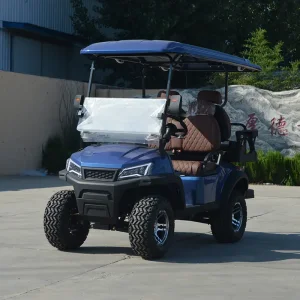
China Leibin (G90) 72V Lithium Battery Solar 4 Seaters off Road Electric Street Legal Golf Carts Manufacturers, Suppliers
Configure Fleet Direct
Best China Suppliers Factory 72V AC Mini Electric Golf Cart 4-Seat Buggy Gold Color Lithium Battery CE Certified Manufacturers, Supplier
Configure Fleet Direct
Cheap China Supplier Factory Leibin G90 72V Lithium Battery Off-Road Electric Golf Cart - 4 Seaters, Solar Power, 35 km/h Speed Suppliers, Factory
Configure Fleet Direct
Wholesale 72V Electric Golf Cart - Modern 6-Seater Buggy from China Suppliers | High-Quality Factory Manufacturing Suppliers, Factories
Configure Fleet Direct
China 72V Electric Golf Cart - 6-Seater Modern Design | China Suppliers & Factory Quality Golf Buggy Manufacturer, Factory
Configure Fleet Direct