
Featured Lithium Commercial & Off-Road Platforms
High-performance low-speed electric vehicles engineered for golf resorts, luxury residential enclaves, industrial campuses, and municipal mobility operations worldwide.

Cheap Cheap Small 4 Seater Electric Golf Carts, Golf Cart Battery, off Road Golf Carts Factory, Factories
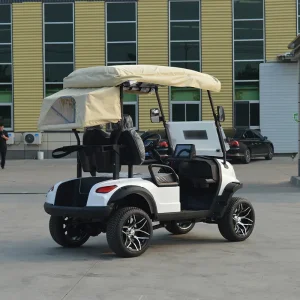
China Affordable Electric 2 Seater Mini Sightseeing Car Golf Cart from China Suppliers and Factory Supplier, Factories

China Leibin (G90) 72V Lithium Battery Solar 4 Seaters off Road Electric Street Legal Golf Carts Manufacturers, Suppliers

China 72V Electric Golf Cart - 6-Seater Modern Design | China Suppliers & Factory Quality Golf Buggy Manufacturer, Factory

Wholesale Electric Golf Cart 4seated Golf Buggy Sightseeing Bus off-Road 72vgolf Cart Manufacturers, Factory

ODM Low-Speed Electric Golf Car from China Suppliers - CE Approved 15-40km/H Beemotors G70-4+2 Factory Model Suppliers, Factories

ODM Wholesale 6 Seat Electric Golf Carts - 72V Lithium, Customized Comfort from China Suppliers and Factory Supplier, Factory
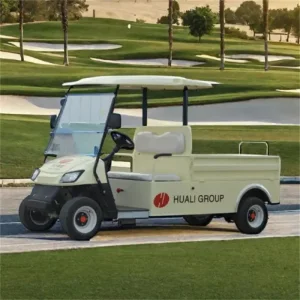
Cheap Cargo Electric Utility off Road Truck Golf Cart 48V Utility Gulf Cart Electric Golf Car Suppliers, Factory
The Strategic Imperative of Chinese OEM Lithium Golf Car Manufacturing
The transformation of low-speed electric vehicles (LSVs) and personal transportation vehicles (PTVs) is fundamentally driven by Chinese advanced manufacturing hubs. By consolidating lithium cell processing, robotic tubular chassis welding, and intelligent powertrain integration into an agile industrial ecosystem, OEM buyers capture structural cost advantages and unmatched speed to market.
Lithium-Iron Phosphate (LiFePO4) Hegemony
China controls over 85% of the worldwide battery raw material refinement and cell assembly chain. Sourcing directly from our Tier-1 automotive lithium plant eliminates multi-tier markups, giving your enterprise direct access to grade-A prismatic cells with proprietary Battery Management Systems (BMS) tuned for high-discharge thermal stability.
Full-Cycle Chassis Cathodic Electrodeposition (E-Coat)
Coastal resorts and humid tropical fairways degrade traditional painted steel frames within 24 to 36 months. Our plant employs an automotive-standard 14-tank phosphate and cathodic electrophoretic deposition coating line, creating a sub-micron salt-spray-resistant barrier rated beyond 1,200 hours of continuous ASTM B117 testing.
Rapid Prototype-to-Production Velocity
Where Western legacy manufacturers require 14 to 20 months for minor fascia or chassis tooling modifications, our modular tooling architectures, in-house vacuum thermoforming injection machinery, and dedicated CAE simulation teams compress iteration cycles to under 45 days from styling sign-off to pilot export run.
Annual Fleet Unit Production
LiFePO4 Deep Charge Cycles (80% SOH)
Automotive-Grade Manufacturing Base
Countries & Jurisdictions Exported
Engineering Taxonomy: Why 72V High-Torque AC Dominates Global Sourcing
The low-speed vehicle market has crossed an irreversible inflection point. The legacy paradigm of heavy, maintenance-intensive lead-acid batteries with inefficient DC motors has been superseded by integrated 72V AC asynchronous motors paired with CAN-bus managed LiFePO4 energy reservoirs.
| Evaluation Parameter | Legacy 48V Lead-Acid Flooded/AGM | Standard 48V Lithium Conversion | OEM Integrated 72V AC LiFePO4 Platform |
|---|---|---|---|
| Usable Battery Capacity | 50% (Subject to Peukert's Effect) | 85% - 90% DOD | 95%+ Depth of Discharge |
| Pack Weight & Ballast Impact | 280 - 340 kg (Severe turf compaction) | 65 - 85 kg (Reduced footprint) | 75 - 90 kg (Optimum axle ratio 45/55) |
| Peak Continuous Current | High voltage sag under load (<38V) | Acceptable for flat courses | Ultra-low amp draw, high continuous torque |
| Climbing Gradeability | 12% - 15% Max (Rapid thermal throttling) | 18% - 22% Slope rating | > 30% Hill gradient with full 6-passenger load |
| Battery Service Life | 400 - 650 Cycles (2-3 years) | 2,000 Cycles (5-7 years) | 3,500 - 5,000 Cycles (10+ operational years) |
| Routine Maintenance Overhead | Distilled water refills, terminal scrubbing | Occasional visual inspection | Zero Maintenance; Cloud IoT telemetry |
Automotive CAN-Bus Architecture & Smart Telematics
Our factory integrates modern high-speed Controller Area Network (CAN-bus 2.0B) backbones into every chassis. Rather than isolated components from disjointed suppliers, the motor controller, active BMS, electronic instrument cluster, GPS geo-fencing module, and onboard AC charging rectifier communicate continuously.
This enables resort managers and fleet dispatchers to enforce virtual speed governances (e.g., 15 km/h within clubhouse precincts, 35 km/h on open utility roads), track precise individual state-of-charge (SOC), and receive over-the-air (OTA) diagnostic alerts before any thermal or mechanical threshold is reached.
Proprietary Lithium BMS Protection Logic
- Cell-Level Active Balancing: Equalizes individual pouch/prismatic cell voltage discrepancies within 15mV during charging and standby states.
- Dual Multi-Stage Thermal Cutoffs: Dynamic thermal dissipation switches cut current if core internal temperatures exceed 60°C or dip below -15°C.
- Short-Circuit & Over-Current Defense: Solid-state MOSFET circuitry triggers total millisecond-scale isolation upon detecting abnormal surge patterns.
- Low-Voltage Deep Discharge Prevention: Progressive limp-home governance reserves 8% battery floor to eliminate irreversible cell crystallization.
Macro Commercial Applications: Engineered by Operating Scenario
Industrial procurement managers do not purchase vehicles based solely on cosmetic aesthetics; they match duty-cycle profiles, terrain gradients, ambient climate conditions, and passenger throughput to purpose-built chassis dynamics.
Championship Golf Courses & Country Clubs
Lightweight lithium packs reduce fairway compaction by up to 60%, drastically cutting groundskeeper turf recovery expenditures. Silent 72V AC motors eliminate high-pitch acoustic whine, offering members undisturbed play while regenerating up to 18% kinetic energy on downward undulating contours.
Luxury Resorts & Master-Planned Communities
Configured in 4-passenger and 6-passenger forward-facing configurations, these vehicles serve as executive guest shuttles. Equipped with solar-trickle roofs, mobile device fast-charging ports, independent double wishbone suspension, and four-wheel hydraulic disc brakes, they deliver automotive-level ride stability.
Industrial Campuses, Logistics & Security Patrol
Equipped with reinforced drop-side aluminum cargo boxes or heavy-duty enclosed tool vaults, our utility platforms transport maintenance gear and payloads up to 800 kg across distribution yards, airports, and military installations on 24/7 rotational shifts using fast midday opportunity charging.
Total Cost of Ownership (TCO): The 5-Year Fleet Economics
A granular financial comparison across a commercial fleet of 50 vehicles operating over a standard 60-month operational horizon reveals why corporate operators are rapidly phasing out both internal combustion engines (ICE) and legacy lead-acid systems in favor of factory-direct lithium.
Gasoline / Petrol Fleet (50 Carts)
- Fuel consumption (Avg $4.00/gal): $148,000
- Oil, belt, filter & spark plug changes: $42,000
- Engine rebuilds & exhaust repairs: $28,500
- Mechanic labor hours (5 Years): $65,000
- Noise complaints & emissions footprint: High
48V Flooded Lead-Acid (50 Carts)
- Electricity recharging (72% efficiency): $38,000
- Battery set replacements (Yr 2.5): $82,500
- Distilled water & terminal upkeep: $18,000
- Acid leak turf damage remediation: $14,000
- Battery maintenance technician labor: $45,000
Factory 72V LiFePO4 Fleet (50 Carts)
- Electricity recharging (96% efficiency): $21,500
- Solar-canopy offset savings: -$6,500
- Mid-cycle battery replacement: $0 (Lifecycle 8-10 yrs)
- Watering & chemical maintenance: $0 (Hermetic pack)
- Routine electronic inspection: $9,000
Navigating International Homologation: FMVSS 500 & EEC L6e/L7e
Procuring low-speed electric mobility across sovereign borders demands compliance with statutory road and safety certifications. Our engineering office delivers factory-configured compliance bundles customized for your target distribution market.
North American DOT / FMVSS 500
For vehicles operating on public roads posted at 35 mph or less, we build to Federal Motor Vehicle Safety Standard 500 criteria: certified AS4 laminated glass windscreens with wipers, DOT-stamped tires, three-point inertia seatbelts, dual exterior mirrors, side reflectors, and integrated backup camera systems with 17-digit VIN encoding.
European Union EEC / L6e & L7e Type-Approval
We align powertrain wattage limits, electromagnetic compatibility (ECE R10), dual-circuit hydraulic braking performance, E-mark certified LED headlight assemblies, horns, and speed governors to qualify under EU light quadricycle classifications for effortless local registration.
CKD, SKD & Ocean Freight Density
To mitigate volatile ocean freight rates, our manufacturing engineering division designs modular stackable crating systems. While fully assembled (CBU) 40ft High Cube containers fit 6 to 8 units, our Semi-Knocked Down (SKD) and Completely Knocked Down (CKD) packing protocols accommodate up to 24 units per 40HQ container, lowering landed logistics costs by up to 65%.
Five-Stage Manufacturing Quality Assurance Protocol
Every golf car exiting our assembly lines undergoes strict computerized validation before crating. We replace guesswork with rigorous, traceable metrology.
Raw Material & Chassis Weld Testing
High-precision robotic welding arms build seamless tubular steel structures. Weld integrity is confirmed through ultrasonic thickness testing and destructive batch shear testing, followed by immersion electrophoresis.
Pack Impedance & BMS Calibrations
Every lithium pack is cycled on an automated charge-discharge bench. Internal cell resistance is matched within 0.05mΩ tolerances, and BMS firmware is flashed with calibrated current shunt baselines.
Dynamometer & Brake Bench Verification
Completed vehicles run on indoor multi-roller dynamometers to verify motor wattage output, regenerative torque transitions, emergency stopping distances, and zero mechanical balance drift at peak velocity.
High-Pressure Rain & Submersion Chamber
Simulating severe tropical typhoons, vehicles endure 30 minutes of multi-angle high-pressure water jets to confirm the IP66 and IP67 weather-sealing of electrical junctions, dash consoles, and battery compartments.
End-of-Line Track & Incline Testing
Vehicles traverse a 30-degree paved test ramp, simulated cobble paths, and tight slalom courses to evaluate suspension dampening, steering center-return torque, and structural rattle mitigation.
Traceable Factory Digital Passport
Every vehicle leaves our export bay with an archived production record linking chassis number, battery serial codes, controller firmware version, and final QA test sign-offs for reliable warranty support.
Frequently Asked Technical & Sourcing Questions
Essential answers for procurement directors, commercial fleet managers, resort developers, and independent distributor networks seeking OEM manufacturing partnerships.
What are the minimum order quantities (MOQ) and lead times for custom OEM/ODM builds?
How does your factory protect against battery thermal runaway and salt-air corrosion in coastal environments?
Can your plant configure street-legal golf carts to meet US Low Speed Vehicle (LSV) requirements?
How do you handle spare parts logistics and warranty fulfillment for international markets?
What are the key differences between 48V and 72V lithium architectures in daily fleet operation?
Can solar-charging roofs genuinely expand daily range, or are they purely aesthetic?
Ready to Architect Your Enterprise Fleet Solution?
Connect directly with our senior factory engineering team to request detailed CAD drawings, complete homologation paperwork, and container loading simulations.
Wholesale & Custom Low-Speed Commercial Buggies
Compare our factory-direct export configurations. Built on standardized chassis lines with adaptable body configurations, suspension geometries, and powertrain voltages.
Best Electric Cars Buggy Golf Beemotors Supply CE Approved 15-40km/H Low Speed Electric Buggy Golf Car Manufacturers, Factories
Cheap China Supplier Factory Leibin G90 72V Lithium Battery Off-Road Electric Golf Cart - 4 Seaters, Solar Power, 35 km/h Speed Suppliers, Factory
OEM Wholesale Electric Golf Carts from China Suppliers, 72V Lithium 6 Seat Golf Buggy Factory Made for Comfort and Performance Manufacturers, Factories
Wholesale Wholesale 6 Seat Electric Golf Carts from China Suppliers - Customized 72V Lithium Golf Buggy Factory Direct Supplier, Suppliers
OEM Affordable China 4-Seater Electric Golf Cart - Off-Road Adventure with Custom Battery Options from Trusted Suppliers & Factory Manufacturers, Supplier
Wholesale 72V Electric Golf Cart - Modern 6-Seater Buggy from China Suppliers | High-Quality Factory Manufacturing Suppliers, Factories
Buy 72V Modern 6-Seater Electric Golf Cart from China Suppliers | Reliable Factory Golf Buggy for On-Road & Off-Road Use Factory, Factories
