
Enterprise Fleet Series: Patrol, Utility & Passenger Platforms
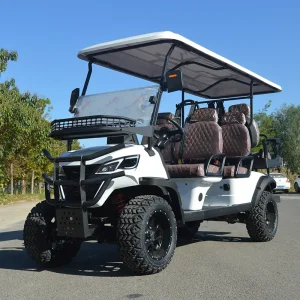
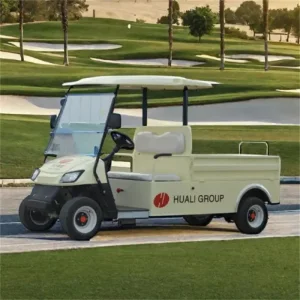
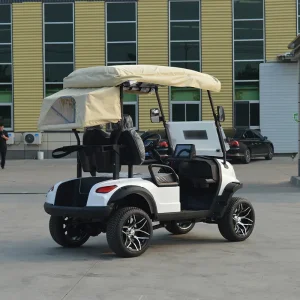
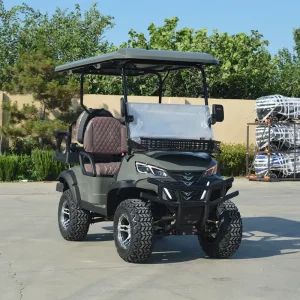
Explore our foundational chassis architectures engineered in our 13,000 m² facility, configured for heavy-duty security loops, off-road border tracks, and multi-passenger corporate transit.

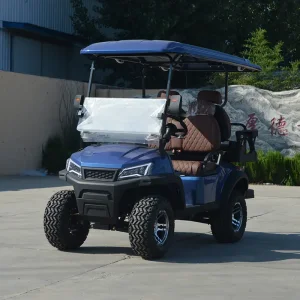
Global Status: The Maturation of Autonomous Electric Patrol Fleets
Rising labor expenditures, perimeter complexity, and the imperative for 24/7 continuous situational awareness are compelling facility managers and municipal authorities to transition toward low-speed autonomous electric mobility.
Severe Guarding Labor Deficits
Global security service providers confront an annual staff turnover rate exceeding 65% alongside escalating minimum wage thresholds. Autonomous electric patrol units (AEPVs) absorb redundant routine routes, preserving human operators for tactical incident command.
TCO Reduction Beyond 40%
Compared to manned combustion vehicles, battery-electric autonomous units lower scheduled powertrain servicing costs by up to 78%. Complete system break-even is achieved within an average of 14 to 18 operational months when deployed across two or more shifts daily.
Zero Carbon Emission Directives
Airports, petrochemical refineries, and tier-one corporate headquarters operate under stringent ESG targets. Electric chassis utilizing clean LiFePO4 chemistry eliminate scope 1 tailpipe emissions while meeting indoor-outdoor transitional air quality regulations.
Engineering Specifications: Drive-by-Wire Meets Edge Robotics
Sourcing directly from an integrated vehicle manufacturing plant ensures your autonomous software is mated to a precision drive-by-wire (DbW) chassis with low bus latency and redundant braking logic.
| Architecture Subsystem | OEM Standard Configuration | Advanced Autonomous Tier (Level 4 Operational Ready) | Industrial Advantage |
|---|---|---|---|
| Chassis Platform | Robotic Jig-welded high-tensile steel with cathodic electro-deposition | Multi-link independent suspension with heavy-duty anti-roll geometry | Resists torsional deformation under heavy roof-mounted sensor masts |
| Drive-by-Wire (DbW) | CAN-bus 2.0B integrated electronic steering & mechanical actuation | Dual-redundant CAN-FD bus, secondary emergency electronic braking valve | Zero-lag deterministic command loop for obstacle avoidance at 25-40 km/h |
| Energy Storage System | Automotive-grade 72V LiFePO4 with active balancing BMS | High-discharge LiFePO4 with integrated thermal self-heating matrix | 3,500+ deep cycles, functional in extreme climate envelopes (-20°C to 55°C) |
| Perception Payload | Dual HD wide-angle optical cameras + 8-channel ultrasonic array | Solid-state LiDAR (150m range), 360° PTZ IR night vision, 77GHz radar | Full weather operability across dense fog, heavy rainfall, and zero-lux settings |
| Edge Processing | ARM-based telematics control unit with 4G/5G remote data downlink | Dedicated AI compute module (100–275 TOPS) executing RTOS SLAM kernels | Local inference for real-time license plate, human posture, and fire detection |
Configured for Global Commercial & Critical Infrastructure
A resilient patrol platform must adapt to distinct perimeter dynamics, thermal gradients, and surface profiles. Leibin vehicle platforms solve the operational constraints across six high-value verticals.
Industrial Estates & Chemical Parks
Continuous thermal scanning along high-pressure gas pipes and raw material storage. Vehicles detect hydrocarbon leaks and boundary incursions while streaming telemetry directly to central SCADA systems.
Airports & Port Terminals
Foreign object debris (FOD) visual identification along runway taxiways combined with automated fence perimeter monitoring. Precision RTK-GNSS keeps deviations under 2 centimeters across vast tarmac aprons.
Master-Planned Communities & Resorts
Silent, unobtrusive night-shift security loops ensuring resident safety without acoustical disturbance. Integrated LED lighting modules, two-way intercoms, and automatic guest courtesy escorts.
Universities & Healthcare Campuses
Daytime speed control monitoring and crosswalk supervision paired with emergency blue-light summon points. Capable of switching from autonomous perimeter sweep to manual emergency response.
Solar Farms & Utility Substations
Remote, unstaffed substations protected against copper theft and panel degradation. Solar-boosted charging arrays ensure indefinite autonomous uptime on isolated desert or valley deployments.
Customized Border & Outpost Enclosures
Equipped with off-road tires, higher ground clearance, and long-range optics to handle rugged gravel roads, steep climbs, and adverse desert dust storms with IP67-rated electronic enclosures.
Wholesale Factory Procurement: Avoiding Intermediary Traps
Acquiring low-speed electric vehicles for autonomous conversion demands strict auditing of manufacturing depth, chassis rigidity, and open CAN communication protocols.
Original Chassis Welding vs. Assembled Trading
Trading entities source disparate tubular kits that flex under sensor payloads. Leibin executes in-house robotic frame welding in Dezhou, delivering certified structural load tolerances for heavy hardware masts.
Native DBC File & API Accessibility
Many suppliers lock CAN controllers, halting autonomous integration. We supply unencrypted CAN DBC maps, low-level steering torque commands, and raw telemetry registers to autonomous software engineering teams.
Container Packing Density & Pre-Assembly
Global ocean freight demands optimized logistics. Our engineers calculate custom steel-crate skids that maximize container cubing while protecting high-value optical brackets and pre-installed wire looms.
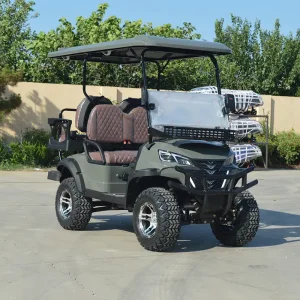
Specialty Low-Speed Vehicles, Sightseeing & Patrol Buggies
Review our specialized electric passenger carts, utility movers, and customizable 72V platforms built for institutional distributors and global volume importers.

Frequently Asked Questions: Autonomous & Electric Patrol Fleet Integration
Comprehensive engineering clarifications on homologation standards, power selection, integration workflows, and export freight documentation.
How are Leibin patrol vehicles certified for international road legality?
Road compliance is governed by destination markets. In North America, low-speed vehicles (LSV) are certified under FMVSS 500 standards (20–25 mph with mandated glass windshields, three-point belts, VIN designation, and backup indicators). For the European Union, homologation aligns with L6e/L7e type approvals. We supply complete homologation test records, EEC certificates, and technical documentation packages to support your local registration.
Why is a 72V LiFePO4 system superior to 48V lead-acid for patrol duties?
Patrol routes demand long duty cycles, continuous sensor mast power draw (150–400W), and frequent hill ascents. A 72V system draws less current at equivalent power compared to a 48V circuit, minimizing harness resistive heat build-up. Combined with automotive-grade LiFePO4 cells, our 72V systems yield 3,500+ charge cycles, zero battery maintenance, 60% weight reduction, and continuous 8 to 14 hour operational endurance.
Can external autonomous software developers integrate via our CAN bus?
Yes. Our factory provides open drive-by-wire (DbW) development packages. Clients receive raw CAN bus DBC documentation covering steering angle control, electronic throttle position, hydraulic braking pressure feedback, and gear selection commands. This allows robotics software vendors to mount autonomous stacks (ROS2, Apollo, Autoware) without reverse-engineering motor controllers.
What OEM/ODM customization scopes are supported for wholesale volume?
As a true source factory, we support full custom tooling: custom aluminum alloy extrusions, solar-panel integrated roofs, police-grade siren and strobe bar mountings, lockable IP66 electronics compartments, PTZ mast risers, and tailored corporate liveries. Hardware changes are integrated directly during chassis welding and e-coating stages.
How do you guarantee overseas after-sales support and spare parts availability?
Every export shipment includes a 2-year factory-backed warranty alongside a pre-packaged wear-and-tear replacement kit (brake pads, steering tie-rods, relays, optical harnesses). We offer direct video troubleshooting sessions between client technicians and our Dezhou electrical engineers, ensuring zero prolonged downtime across global fleet installations.