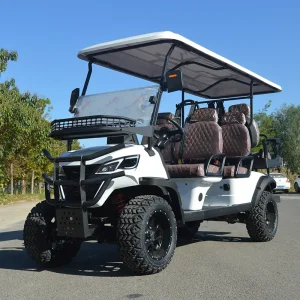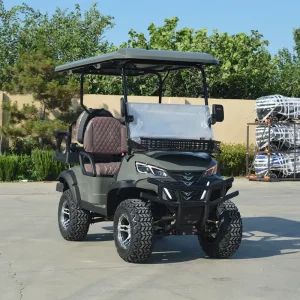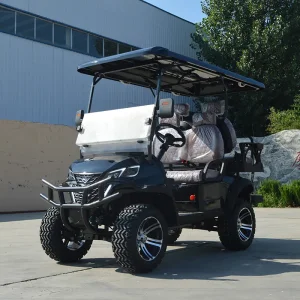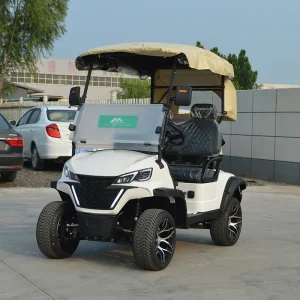
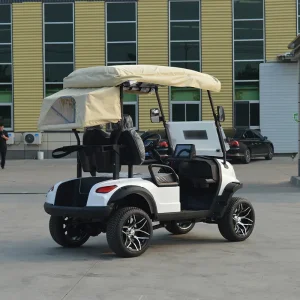
Direct-From-Factory Tier-1 Fleet Inventory
High-Efficiency Modified Electric Utility & Sightseeing Platforms
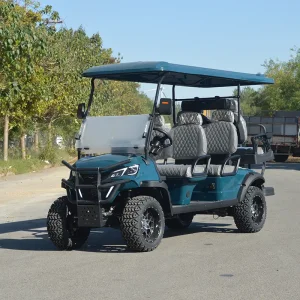
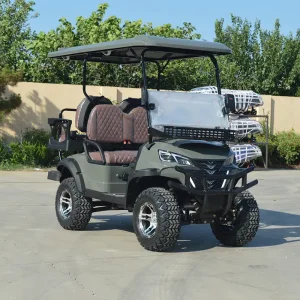
Engineered for high duty-cycles, severe campus gradients, and commercial transport requirements. Fully customizable by seating layout, cargo configurations, and battery chemistry.
Macro Solutions & Market Dynamics
The Global Shift from Standard Golf Cars to Specialized Modified EVs
The global low-speed electric vehicle (LSV) and neighborhood electric vehicle (NEV) sector is undergoing a profound paradigm transition. No longer confined to traditional fairway recreation, commercial entities require hardened, modified architectures for diverse micro-mobility roles.
Lithium Conversion (LiFePO4)
Lead-acid packs are rapidly phasing out due to heavy tare weights and high maintenance cycles. Our modified golf cars feature automotive-grade Lithium Iron Phosphate (LiFePO4) systems with integrated Smart CAN-BUS BMS, saving over 160kg, unlocking 3500+ deep cycles, and yielding 25% lower energy draw on inclines.
Total Cost of Ownership (TCO)
Procuring factory-direct modified golf cars from an established OEM slashes fleet amortisation costs by up to 42% compared to post-market aftermarket modifications. In-house chassis welding and anti-corrosion electrocoating guarantee multi-year operational uptime in corrosive marine and resort terrains.
ESG & Carbon Neutrality
Commercial campuses, industrial shipping ports, and high-end resorts are standardizing on zero tailpipe emission modified carts to fulfill mandatory Scope 1 emission reduction criteria. Auxiliary high-efficiency monocrystalline solar canopies supply up to 20-30% continuous daily top-off energy.
13,000 m²
Integrated Factory Footprint
20+ Yrs
Vehicle Industrial Engineering
72V AC
High-Torque Powertrain Std
50+ Mkts
Global Export Compliance
Regulatory & Engineering Assurance
Turnkey Localized Support, Homologation & Safety Compliance
A major failure point for international fleet procurement is importing vehicles that violate municipal low-speed vehicle codes. Leibin modifies base models directly on the assembly jig to align precisely with destination regulatory criteria.
North America: FMVSS 500 & SAE J2358
For US street-legal classification as an LSV (Low-Speed Vehicle), modified golf cars require certified DOT windshields, 3-point seat harnesses, dual mirrors, specialized lighting configurations, and digital speed governors capped strictly between 20 mph and 25 mph (40 km/h).
European Union: L6e & L7e Directives
Our EU-bound modified electric vehicles can be built to comply with L6e light quadricycle and L7e heavy quadricycle benchmarks. This includes electromagnetic compatibility (EMC), acoustic warning systems (AVAS), certified hydraulic braking, and designated VIN stamping protocols.
CKD/SKD Engineering Support
To reduce high import tariffs and ocean freight costs, Leibin provides custom Completely Knocked Down (CKD) and Semi-Knocked Down (SKD) container nesting frameworks, complete with detailed mechanical schematics, video SOPs, and factory technician remote onboarding.
Multi-Scenario Customization
Specialized Modified Golf Car Application Archetypes
From industrial logistics to first-responder transport, explore how modified chassis handle rigorous commercial assignments beyond golf resorts.
Industrial Cargo & Warehousing
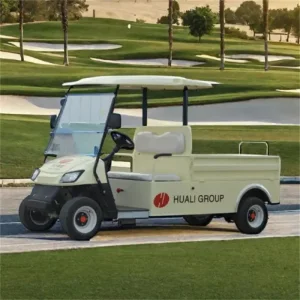
Reinforced diamond-plate aluminum cargo boxes, pneumatic tail-lifts, and 48V/72V utility configurations capable of carrying 500kg-800kg payloads across distribution hubs and factory grounds.
Hospitality & VIP Limousine
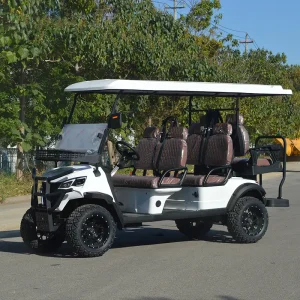
Extended 4-seat, 6-seat, and 8-seat coachwork with custom diamond-stitched marine vinyl, independent double-wishbone suspension, integrated sound systems, and onboard refrigeration consoles.
Medical Rescue & First Response
Stretcher-adapted rear deck conversions equipped with oxygen tank brackets, IV drip posts, fold-out attendant seats, and emergency red-light beacons for amusement parks and large sports campuses.
Campus Security & Law Patrol
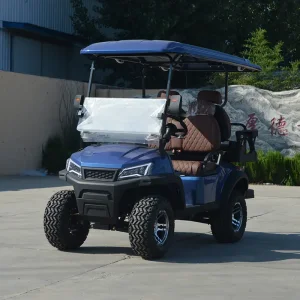
Equipped with 360-degree high-intensity strobe lightbars, PA loudspeaker systems, lockable equipment storage compartments, and upgraded off-road lifted suspensions for curb jumping.
Next-Gen Technology Roadmap
Engineering the Future of Autonomous & Connected Micro-Mobility
Leibin's R&D engineering hub in Dezhou is actively piloting next-generation electric modifications designed to integrate with smart city and automated campus grids.
Phase 01: Active
IoT & Cloud Fleet Telematics
Real-time GPS geofencing, remote digital speed throttling, automated battery state-of-health (SoH) diagnostics, and cloud-based anti-theft lockdown via cellular 4G/5G nodes.
Phase 02: Deploying
Solar-Integrated Photovoltaic Roofs
Transitioning from rigid aftermarket solar panels to high-efficiency curved solar roofs molded directly into the composite body shell, adding up to 15-20km free range per daylight shift.
Phase 03: Field Testing
Automated Drive-by-Wire (DbW)
Full drive-by-wire steering and electronic braking retrofits engineered for institutional self-driving autonomous software partners operating on predefined resort circuits.
Phase 04: Horizon
Solid-State & Sodium-Ion R&D
Next-generation sodium-ion battery testing to achieve reliable sub-zero cold-weather start capacity down to -30°C without significant energy density degradation for winter operations.
Technical & Procurement FAQ
Frequently Answered Technical Questions for Fleet Buyers
Direct technical guidance from Leibin's vehicle engineering and export logistics departments.
What is the true operational benefit of 72V AC vs 48V DC systems in modified golf cars?
A 72V AC system operates at substantially lower amperage to generate equal or superior wattage compared to a 48V DC motor. This reduction in current prevents excessive thermal buildup in wiring harnesses, extends controller lifespan, and delivers up to 35% higher hill-climbing torque with sustained 35-40 km/h speeds under full 6-passenger loading.
Can you provide custom chassis modifications (wheelbase extensions, custom boxes)?
Yes. Unlike trading firms that resell standard buggies, Leibin operates its own automated CNC tube bending, laser cutting, and robotic frame-welding jigs. We routinely build extended wheelbase configurations, drop-down maintenance side gates, rear flatbeds, ambulance stretchers, and specialized utility cargo boxes to exact millimeter specifications.
How does Leibin preserve chassis anti-corrosion integrity for coastal island resorts?
All fabricated steel frames undergo a comprehensive multi-stage anti-corrosion chemical wash, followed by electrophoretic immersion coating (E-coating) and a durable thermoset exterior powder-coat finish. For high-humidity and marine saltwater environments, we also offer complete hot-dip galvanized chassis modifications or aviation-grade aluminum frame options.
What warranty and post-sale spare parts availability do global distributors receive?
We back our industrial vehicles with a standard comprehensive frame and powertrain warranty. Critical wear components (brake pads, steering knuckles, relays, tire assemblies) are cataloged by SKU and maintained in dedicated export inventory. We also supply a 2% spare components package with volume container orders and offer remote live technician troubleshooting.
Wholesale Fleet Portfolio
Factory-Direct Customized Golf Cars & Utility Vehicles
Review additional commercial configurations engineered for global distribution, heavy campus logistics, and hospitality shuttling.