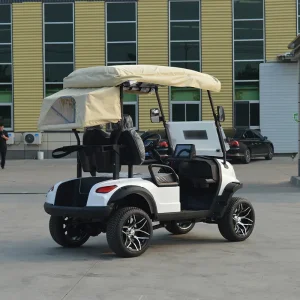
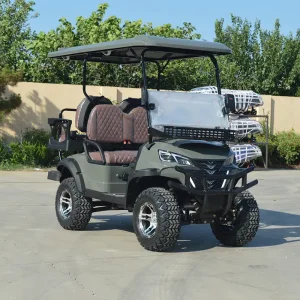
High-Torque Off-Road Commercial Golf Buggies
Featured all-terrain configurations engineered for extreme duty cycles, rugged topographical inclines, and continuous multi-shift passenger conveyance.



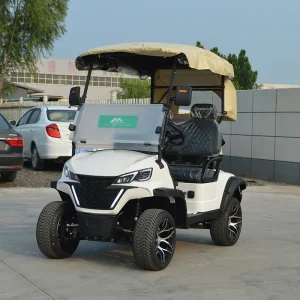
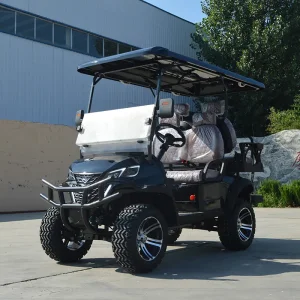
The Global Electrification of Utility & Off-Road Light Electric Vehicles (LEVs)
Analyzing the tectonic shift from low-voltage fairway buggies to high-clearance, intelligent off-road utility platforms across international commercial sectors.
The global off-road golf car and low-speed vehicle (LSV) market is currently undergoing a structural transformation. Historically relegated to smooth, manicured golf courses, light electric mobility has broken through traditional perimeter boundaries. Today, multi-passenger lifted golf carts and heavy-duty utility buggies are foundational assets across master-planned residential resort communities, high-altitude eco-tourism reserves, expansive mining sites, viticulture ranches, and secure governmental complexes. Driven by decarbonization mandates, stringent total cost of ownership (TCO) scrutiny, and rapid battery density breakthroughs, commercial operators are comprehensively retiring legacy gas-powered utility terrain vehicles (UTVs) in favor of high-torque, silent-drive electric alternatives.
Modern off-road golf carts are no longer simple adaptations of legacy golf carts retrofitted with oversized tires. Commercial deployment demands an uncompromising ground-up re-engineering paradigm: cold-drawn high-tensile steel tubular chassis structures, McPherson strut or independent double-A-arm front suspensions, multi-link trailing-arm rear axles, and automotive-grade cathodic electrodeposition coating (EDP) capable of surviving severe salt-spray, high-humidity, and acidic agricultural environments. As global fleet procurement managers prioritize low maintenance, predictable uptime, and continuous telematics integration, the convergence of high-capacity 72V Lithium Iron Phosphate (LiFePO4) chemistries and intelligent permanent magnet synchronous motors (PMSM) has established the modern industry benchmark.
In mature markets such as North America, Europe, Australia, and the Gulf Cooperation Council (GCC) territories, operational demand is bifurcated between heavy-duty cargo utility and luxury hospitality transit. In North America alone, the rapid expansion of Low-Speed Vehicle (LSV) corridors compliant with FMVSS 500 standards requires vehicles that combine 25–35 km/h regulated speeds with all-terrain competence, four-wheel hydraulic disc brakes, high-output LED lighting packages, DOT-certified laminated windscreens, and reinforced three-point seat belt assemblies. Simultaneously, luxury eco-resorts in Oceania and the Mediterranean necessitate zero-emission, silent operation that does not compromise passenger comfort across 25% to 35% topography gradients.
Localized Operational Scenarios & Tailored Duty-Cycle Profiles
Precise mechanical adaptations calibrated to regional environmental stress factors, operational topography, and institutional duty cycles.
Eco-Tourism, Mountain Resorts & National Parks
Alpine lodges and nature reserves require silent transit without polluting fragile ecosystems. Our 72V AC drive platforms with intelligent downhill regenerative braking control allow fully loaded 6-seater vehicles to navigate 30% slopes safely while recapturing up to 18% kinetic energy back into the LiFePO4 cells.
GCC Coastal & Desert Retreat Operations
Desert and high-heat coastal environments (temperatures exceeding 50°C) degrade ordinary batteries. We integrate custom heat-dissipating aluminum battery enclosures, high-volume BMS thermal cutoffs, IP67 sealed transaxles, and marine-grade stainless hardware to counter sand intrusion and marine galvanic corrosion.
Industrial Parks, Campuses & Heavy Logistics
Airports, manufacturing super-plants, and military bases demand 16-to-24 hour rotational service. Equipped with fast-charging lithium architectures capable of 0-80% top-ups in 90 minutes, flatbed drop-side cargo configurations support 500kg payloads while maintaining precise sub-5km/h creep control for warehouse navigation.
Engineering Roadmap: Next-Generation Powertrain & Smart Architecture
Continuous mechanical, electrical, and firmware advancements driving superior durability, battery thermal dynamics, and connected fleet efficiency.
72V / 96V PMSM Drive Units
Transitioning from induction motors to Permanent Magnet Synchronous Motors yielding 94% efficiency, reducing thermal loss under sustained hill climbs and boosting overall driving range per kWh by 14%.
High-Density LiFePO4 Chemistry
Automotive grade prismatic cells certified to UN38.3 standard. Over 3,500 full charge cycles at 80% DOD (Depth of Discharge), delivering a functional lifecycle exceeding 8-10 years of intensive commercial use.
Integrated Monocrystalline Solar
Curved lightweight photovoltaic roofs up to 350W directly coupled to high-voltage MPPT step-up controllers, feeding continuous ambient trickling current that extends runtime by 15-25 km on sunny operational days.
Cloud Telematics & CAN-Bus 2.0B
Real-time vehicle health diagnostics, cellular 4G/GPS geofencing, remote torque limiting, automated maintenance alerts, and battery cell balancing status reported directly to commercial fleet management consoles.
| Engineering Specification | Legacy 48V Lead-Acid Off-Road Cart | Leibin 72V High-Torque LiFePO4 Platform | Operational Strategic Advantage |
|---|---|---|---|
| Powertrain Peak Power | 3.0 kW - 4.0 kW DC Shunt | 7.5 kW - 10.0 kW PMSM / AC Induction | Over 2.5x instantaneous hill-start torque; eliminates stalled inclines under full load. |
| Battery Pack Weight | ~280 kg - 320 kg (Flooded lead-acid) | ~68 kg - 85 kg (Enclosed LiFePO4 Pack) | Saves >200 kg dead weight, doubling suspension longevity and reducing turf degradation. |
| Full Recharge Duration | 8 - 10 Hours (Requires equalization) | 2.5 - 3.5 Hours (Supports opportunity charging) | Multi-shift readiness; top up during shift lunch periods without memory effect or sulfation. |
| Braking & Safety Control | Rear mechanical drum brakes only | 4-Wheel Hydraulic Disc + Electromagnetic Park | Zero roll-back on slopes; emergency stopping distances cut by 54% on loose gravel surfaces. |
| Suspension Travel & Ground Clearance | 120 mm clearance, rigid leaf springs | 210 mm clearance, independent double A-arm | Unobstructed rough terrain traversal without chassis snagging or passenger shock fatigue. |
China Factory Direct: Manufacturing Resilience, Scale & Cost Efficiency
Why the Dezhou industrial vehicle manufacturing cluster provides global distributors with an unassailable strategic procurement advantage.
Full Vertical In-House Integration
Unlike trading assemblers, our Dezhou manufacturing facility spans 13,000 square meters housing complete industrial processes: automated robotic chassis tube bending and laser cutting, fixture-welded vehicle frames, electrophoretic dipping tanks, automated electrostatic powder coating lines, and integrated motor-transaxle dyno test benches. Direct line accountability ensures zero intermediate margin markups and uncompromising tolerance adherence across every production batch.
Tier-1 Component Clustering
Shandong's mature electric vehicle industrial corridor permits complete supply chain synchronization within a 50-kilometer radius. From high-grade lithium cell packs to injection-molded automotive thermoplastic bodies and precision helical planetary gears, our component sourcing cycles remain resilient against global disruption. This tight clustering shortens standard production lead times to just 15-25 business days even for highly customized OEM orders.
This structural manufacturing efficiency translates directly into quantifiable bottom-line benefits for wholesale fleet distributors. When procuring high-specification off-road electric buggies, foreign buyers typically encounter bloated OEM pricing from Western brands that frequently outsource subassemblies overseas. By partnering directly with Leibin Vehicle Industry Co., Ltd., wholesalers obtain authentic factory-gate pricing, direct access to the design engineering department, and fully transparent bill-of-materials (BOM) customization options that allow distributors to capture healthy 35-50% gross retail/leasing margins in their home territories.
Global Homologation, Safety Compliance & Freight Optimization
Ensuring frictionless international border clearance, regional street legality, and precision containerized delivery configurations.
Turnkey Homologation Standards
We configure lighting, brake dynamics, acoustic pedestrian warning systems (AVAS), dual rear-view mirrors, AS4 laminated safety glass, and 17-digit ISO standard VIN stampings to streamline customer compliance with USA FMVSS 500 / SAE J2358, European Union EEC/COC L6e/L7e, and CE Machinery & Low Voltage directives.
SKD / CKD Optimized Packaging
Ocean freight efficiency directly dictates landed unit cost. We provide engineered Semi-Knocked Down (SKD) steel-frame crating and Complete Knocked Down (CKD) packing programs. A standard 40-foot High Cube (40HQ) maritime container accommodates up to 18-24 units under CKD protocol, slashing per-unit ocean freight charges by up to 60%.
Lifecycle Spares & Remote Diagnostics
Every commercial wholesale order is supported by a prioritized consumable wear-and-tear spares package (brake pads, suspension bushings, control arm ball joints, contactors, and relays). Our senior electrical engineers provide English-language video diagnostic consultations and firmware updates over CAN-bus interface.
Frequently Asked Questions: B2B Fleet Procurement & Engineering
In-depth responses to critical technical, regulatory, warranty, and commercial logistics inquiries for professional volume buyers.
Extended Commercial, Sightseeing & Custom Off-Road Buggies
Explore our specialized extended-wheelbase, resort sightseeing, and heavy cargo-bed models built to exact international institutional standards.