
Enterprise Golf Carts & Heavy-Duty Shuttles Ready for Delivery to Boston
Engineered for university campuses, waterfront resorts, and industrial facilities across Suffolk, Middlesex, and Norfolk counties. Source directly from the manufacturing line without middleman surcharges.
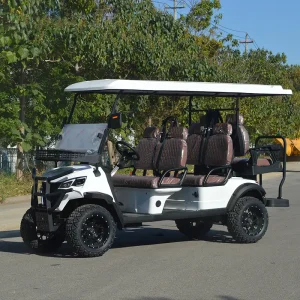
Boston Fleet ODM Wholesale 6 Seat Electric Golf Carts - 72V Lithium, Customized Comfort
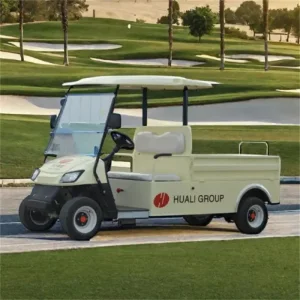
Industrial Cargo Electric Utility Off Road Truck Golf Cart 48V Utility Cart for Boston Warehouses
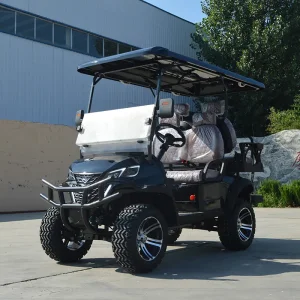
Commercial 72V Electric Golf Cart - 4-Seater Off-Road Buggy for Boston Sightseeing & Tours
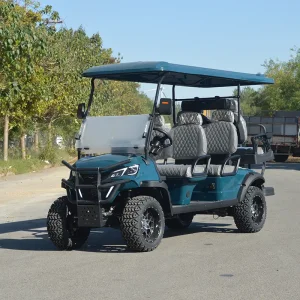
Wholesale 72V Electric Golf Cart - Modern 6-Seater Buggy for Boston Resort & Campus Mobility
The Greater Boston Commercial Cart Landscape: Solving the Cost Paradox
In the metropolitan Boston area—spanning Cambridge, Newton, Quincy, and extended corridors along I-90 and Route 128—the demand for commercial low-speed electric vehicles (LSVs) and utility carts has surged by over 42% since 2021. However, procurement officers and facilities directors face an entrenched market barrier: extreme regional dealership markups. Traditional New England dealership franchises tack on 40% to 75% margins above manufacturing costs, justifying bloated list prices by citing regional distribution overhead and inventory flooring rates.
When enterprise operations—such as university facilities departments, life science parks in Waltham and Kendall Square, or municipal event planners—seek a "cheap golf cart factory" or "factories in Boston", their goal is rarely to buy substandard plastic hardware. What they actually seek is factory-direct pricing without distributor cannibalization.
Procurement Metrics: Boston Dealership vs. Factory-Direct
Understanding the real breakdown of fleet expenditure across a standard 5-year commercial operational lifecycle.
- Upfront Unit Cost: Regional Dealer: $16,500+ | Factory-Direct: $4,800–$6,900
- Battery Architecture: Dealer: Flooded Lead-Acid | Factory-Direct: Grade-A LiFePO4 72V
- Lead Times on Bulk Fleets: Dealer: Allocations capped | Factory-Direct: 20–40 Units/Container
- Hardware Customization: Dealer: Standard catalog | Factory-Direct: Tailored wheelbase & chassis
- 5-Year Fleet TCO Savings: 58.4% reduction per operational vehicle
Massachusetts RMV, FMVSS 500, & Street-Legal Homologation
Operating a golf cart or LSV within Boston city limits, Cambridge thoroughfares, or Massachusetts public roadways requires exact technical conformity under Massachusetts General Laws (MGL Chapter 90, Section 1F) and federal Low-Speed Vehicle safety regulations.
17-Digit VIN & Certificate of Origin
Every unit produced in our manufacturing facilities ships with a valid ISO-standard 17-digit Vehicle Identification Number (VIN) registered under international WMI standards, accompanied by a clean Manufacturer’s Certificate of Origin (MCO) for immediate Massachusetts RMV title and plate registration.
- RMV Low-Speed Vehicle (LSV) plate issuance
- Conforms to Title 49 CFR Part 565
- Direct commercial insurance eligibility
FMVSS 500 Mandatory Hardware Pack
Under federal statute, street-legal LSVs traveling on roadways posted up to 35 mph must satisfy rigid active and passive safety measures. Our factory incorporates DOT-certified safety components on the primary assembly jig.
- DOT-approved AS-4 laminated glass windshield with electric wiper
- Three-point SAE-certified retractable seat belts for all rows
- Full optical suite: High/Low LED beams, turn signals, hazard lights
- Dual side mirrors, panoramic rear-view mirror, and backup camera
New England Thermal & Anti-Corrosion Pack
Boston winters present high humidity, road salt brine, and sub-zero temperatures. Standard retail golf carts suffer severe chassis rust and lithium cell drop-off. Our engineering package includes cathodic electrophoresis coating and intelligent thermal battery insulation.
- BMS with integrated PTC heating elements for sub-zero charging
- Automotive-grade CED electro-coating with 1,200-hour salt spray certification
- IP67 waterproof-sealed motor, controller, and wiring harnesses
Core Powertrain Bill of Materials (BOM)
We do not assemble low-grade kits. Our vehicles incorporate tier-1 tier supply chain components utilized by mainstream automotive manufacturers:
- Lithium Cells: CATL or EVE LiFePO4 cells with 3,500+ cycle life (80% DOD)
- Drive Motor: 4kW – 7.5kW Permanent Magnet Synchronous Motor (PMSM) / AC Induction
- Controller: Programmable Curtis (USA) or Enpower Intelligent AC Controller
- Braking Architecture: 4-Wheel Hydraulic Disc Brakes with Automatic Electromagnetic Parking
- Suspension: Independent Double Wishbone Front Suspension with coil-over shocks
- Chassis: Robotic-welded high-tensile tubular steel treated with electrophoresis
Why Direct Factory Sourcing Outperforms Domestic Assemblers
The global electric vehicle supply chain is indisputably centralized around advanced lithium cell manufacturing, high-power micro-controllers, and precision robotic frame-welding infrastructure. While traditional US-based legacy brands (Club Car, EZ-GO, Yamaha) source over 70% of their foundational parts from Chinese Tier-1 suppliers before final assembly in domestic plants, they levy a 200% to 300% brand surcharge on corporate fleet clients.
By purchasing directly from our high-capacity production facility, Boston enterprises bypass multiple layers of corporate branding markups, domestic assembler overheads, regional distributor franchises, and localized sales reps. The resulting equipment is not merely "cheap" in monetary outlay—it delivers superior technical specifications, including higher voltage architectures (72V standard vs. domestic 48V legacy), larger lithium capacities, and standard inclusion of enterprise cargo equipment.
Enterprise Commercial Applications in Greater Boston
From historic cobblestone alleys to multi-acre biotech corridors and coastal islands, our custom-engineered low-speed electric platforms serve diverse logistical demands.
University & College Campus Logistics
Greater Boston is home to over 35 collegiate institutions, including Harvard, MIT, Boston University, Boston College, and Tufts. Our quiet, zero-emission 72V utility flatbeds and passenger buggies maneuver pedestrian-heavy walkways, historic courtyards, and narrow quad pathways without disruptive noise or greenhouse emissions.
- Silent campus security patrols
- Dining hall and mail delivery freight bodies
- VIP alumni and campus tour passenger shuttles
Historic District Tourism & Seaport Mobility
Operating historical guided tours around Beacon Hill, the Freedom Trail, and the high-traffic Boston Seaport District requires compact, highly agile LSVs. Our 6-seater and 8-seater street-legal coaches navigate congested historic streetscapes with ease, offering unmatched panoramic sightlines for passengers.
- Tight turning radii for 18th-century street layouts
- FMVSS 500 compliance for public road mixed traffic
- On-board public address (PA) and digital audio guides
Biotech Parks, Warehouses, & Cape Cod Resorts
Whether handling cleanroom parts movement in Route 128 life science parks or operating seasonal guest transportation across Martha’s Vineyard, Nantucket, and Cape Cod resorts, our heavy-payload cargo boxes and solar trickle-charging roofs guarantee uninterrupted, zero-maintenance operational uptimes.
- Hydraulic tip cargo beds with 1,500 lb capacity
- Solar canopy range extension for coastal sun exposure
- Non-marking turf and warehouse indoor tires
5-Year Total Cost of Ownership (TCO): 10-Unit Fleet Comparison
A definitive comparison between acquiring a 10-unit commercial utility fleet from typical Boston dealer networks versus direct factory procurement from our manufacturing facility.
| Evaluation Parameter | Boston Local Dealership (Lead-Acid / Brand Tier) | Domestic Dealer (Lithium Retrofit) | Direct Factory Procurement (Our 72V LiFePO4 Platform) |
|---|---|---|---|
| Initial Capital Expenditure (10 Carts) | $145,000 ($14,500 / unit) | $195,000 ($19,500 / unit) | $62,000 ($6,200 / unit landed DDP Boston) |
| Powertrain & Voltage | 48V DC Shunt Motor | 48V AC Induction Motor | 72V High-Torque AC PMSM |
| Battery Chemistry & Replacements | Lead-Acid (Requires full replacement Year 3: +$18,000) | First-Gen Lithium (Estimated 2,000 cycles) | CATL Grade-A LiFePO4 (3,500+ cycles, 10-year lifespan) |
| Battery Maintenance Labor | $9,500 (Bi-weekly distilled water topping) | Zero maintenance | Zero maintenance (Smart BMS active telemetry) |
| Street Legal Package (DOT / FMVSS) | +$1,800/unit retrofit surcharge | Included on specific trim packages | Factory-integrated standard (MCO & 17-digit VIN included) |
| Total 5-Year Fleet Investment | $172,500 | $195,000 | $62,000 (Saves $110,500 to $133,000) |
Frequently Asked Questions: Sourcing Golf Carts for Boston Fleets
Direct, engineering-backed answers addressing import customs, Massachusetts street-legal homologation, cold weather resilience, and spare parts supply chains.
How do we legally register an imported golf cart as a Low-Speed Vehicle (LSV) with the Massachusetts RMV?
Under Massachusetts General Law Ch. 90 § 1F, a low-speed vehicle must be capable of a minimum speed of 20 mph but not exceed 25 mph, weigh under 3,000 lbs GVWR, and strictly comply with federal safety standard FMVSS No. 500 (49 CFR 571.500). Our factory provides an official Manufacturer's Certificate of Origin (MCO) and assigns an authenticated 17-digit ISO VIN. With our DOT lighting suite, AS-4 safety glass, and 3-point seatbelts pre-installed, your business or institution can immediately obtain standard Massachusetts LSV passenger plates.
How do your 72V lithium battery systems perform during sub-zero Boston winters?
Extreme cold temperatures can severely restrict lithium ion conductivity, which often paralyzes consumer-grade carts. We configure our North American commercial export builds with integrated PTC heating blankets embedded within the CATL/EVE LiFePO4 battery enclosures. When plugged into a standard 110V/220V outlet during a Boston blizzard, the smart BMS prioritizes cell heating to optimal operating thresholds (above 5°C) before enabling high-rate charging, completely avoiding cold-temperature lithium plating and preventing range degradation.
Can your factory customize vehicle branding, colors, and cargo beds for Boston universities?
Yes. As a pure OEM/ODM manufacturing facility, we execute complete custom factory runs. We routinely apply PMS-matched corporate or collegiate colorways (e.g., Harvard Crimson, MIT cardinal and silver, Boston College maroon/gold) through multi-stage baked polyurethane paint finishes. Additionally, we manufacture customized aluminum toolboxes, medical stretcher platforms, hydraulic dump beds, and custom ladder racks integrated right onto the chassis before export packaging.
What is the actual process for customs clearance and delivery into the Port of Boston?
We handle export protocols on FOB, CIF, or full DDP (Delivered Duty Paid) terms. Ships route directly into Conley Terminal in South Boston. Our logistics department coordinates the ISF filing, US Customs clearance, EPA low-speed vehicle exemptions, DOT Form HS-7 declarations, and harbor drayage. Vehicles are delivered directly on roll-off transport or in securely banded steel container frames straight to your designated depot or facility address.
How does our internal maintenance team handle spare parts and technical service?
We do not manufacture proprietary, "walled-garden" electronic controllers that require expensive proprietary dealer diagnostic computers. We utilize industry-standard, globally supported Curtis or Enpower controllers and high-reliability AC induction or PMSM powertrains. Complete schematics, wire harness diagrams, and diagnostic software are supplied with every order. In addition, critical consumable spares (brake pads, control relays, bushings, windshields) are packaged into your initial delivery container, with secondary express parts dispatched within 48 business hours.
Why is a 72V system vastly superior to traditional 48V carts on Boston terrain?
Historic Boston topology features sharp, sustained gradients—such as Beacon Hill, Fort Point ramps, and academic hill campus paths. In a 48V electrical system, climbing a 15% grade under a 6-passenger load causes huge amperage draws, creating heavy heat buildup in the motor and triggering thermal throttle shutdowns. By stepping up to a 72V architecture, the current demand is reduced by 33% for equivalent mechanical wattage ($P=V \times I$), keeping controller temperatures low and delivering effortless uphill torque without draining the battery pack prematurely.
Complete Factory-Direct Fleet: Models 05 Through 12
Explore our complete OEM production catalog configured for Massachusetts institutional buyers, resort hospitality fleets, and golf course operations.

Boston Street Legal Leibin (G90) 72V Lithium Battery Solar 4 Seaters Off Road Electric Golf Cart
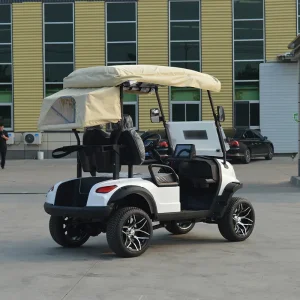
OEM Affordable 2 Seater Mini Sightseeing Car Golf Cart for Boston Facilities & Campus Mobility
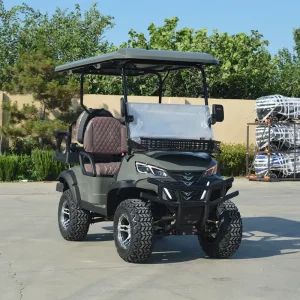
Premium 72V AC Mini Electric Golf Cart 4-Seat Buggy Gold Edition CE Certified for Boston Resorts
Affordable Electric 2 Seater Mini Sightseeing Car Golf Cart for Boston Operations & Security
Direct Factory 72V Modern Fashion 6 Seat Golf Cart Electric Buggy for Boston Hospitality Shuttles
Wholesale 6 Seat Electric Golf Carts, 72V Lithium Customized Comfortable 4/6 Seat Electric Buggy
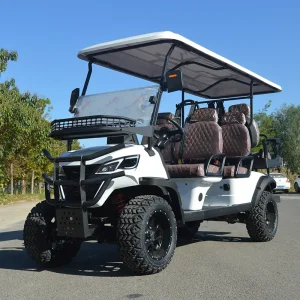
Commercial Electric Buggy Golf Cart CE Approved 15-40 km/h Low Speed Vehicle for Boston Properties
ODM Low-Speed Electric Golf Car CE Approved Beemotors G70-4+2 Model for Boston Commercial Fleets
Accelerate Your Greater Boston Fleet Decarbonization Today
Skip excessive New England dealership markups. Partner directly with an established OEM/ODM low-speed electric vehicle manufacturer to design, build, and deliver FMVSS 500-compliant golf carts and commercial utility vehicles straight to your Boston address or facility.