
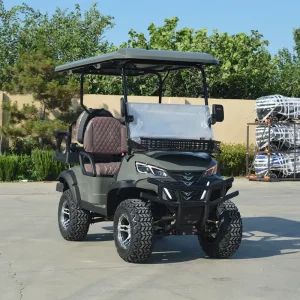
Immediate Dispatch Deployment
High-Efficiency Flagship Electric Vehicles for Nagoya Regional Operators
Configured specifically with high-torque 72V AC drivetrains, automotive-grade LiFePO4 battery modules, and certified components for seamless deployment across Aichi and Mie prefectures.

Chubu Heavy-Duty 6-Seater Resort & Campus Shuttling Platform
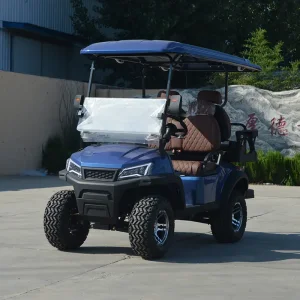
Leibin G90 Solar-Assisted 72V 4-Seat All-Terrain Patrol Buggy
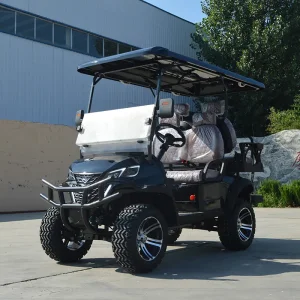
Long-Range 150km Endurance 72V Industrial Sightseeing Buggy
Chubu Regional Market Intelligence
Macro Dynamics Driving Low-Speed Electric Mobility in Nagoya
As the undisputed capital of the Chubu Economic Zone and Japan's industrial engine, Nagoya demands extreme mechanical reliability, zero tailpipe emissions, and streamlined total cost of ownership (TCO).
Automotive Tier-1 Intra-Logistics
The Greater Nagoya region (spanning Aichi, Mie, and Gifu) hosts the world’s dense automotive supplier cluster. Mega-facilities across Toyota City, Kariya, and Komaki require high-frequency, emission-free material and supervisory transit between assembly buildings, eliminating diesel exhaust in enclosed staging bays.
Highland Golf & Heritage Tourism
From the rolling elevation changes of Aichi Country Club and Chukyo Golf Club to the premium international resorts along the Ise-Shima coastline, regional operators face steep topographic gradients. Conventional 48V carts frequently suffer motor thermal throttling; our 72V architecture solves climbing fatigue permanently.
Municipal "Green Slow Mobility"
Japan’s Ministry of Land, Infrastructure, Transport and Tourism (MLIT) actively funds Green Slow Mobility (グリーンスローモビリティ) programs. Municipalities across the Nagoya fringe utilize our electric low-speed chassis for elderly last-mile mobility and pedestrian-zone ecological circulation in suburban regeneration districts.
Powertrain Architecture
Engineering Superiority: 72V LiFePO4 Drivetrains vs Conventional 48V
Why modern commercial operations across Nagoya are systematically phasing out lead-acid and low-voltage systems in favor of Leibin's high-efficiency powertrain architecture.
Thermal Efficiency & 33% Amperage Reduction
By elevating system voltage to 72V nominal, our AC induction and permanent magnet motors deliver identical wattage at one-third less continuous current (I = P/V). This minimizes I²R thermal losses inside harnesses and controllers, guaranteeing zero torque degradation during sustained 25% gradient climbs in hilly Mie and Gifu terrain.
Grade-A Lithium Iron Phosphate (LiFePO4) Cells
Engineered with zero cobalt for unmatched chemical stability. Boasting >3,500 continuous deep-discharge charge cycles at 80% DoD, these maintenance-free sealed packs eliminate acid spill hazards in precision Japanese manufacturing plants and withstand harsh winter temperature swings down to -15°C.
Automotive CAN-Bus 2.0B Integration
Every controller, smart BMS, and digital gauge cluster communicates over a high-speed unified CAN-Bus backbone. Fleet managers can interface telematics units directly to track vehicle status, speed govern settings, geofencing limits, state of charge (SoC), and predictive battery cell health in real time.
Solar Photovoltaic Range Extender Rooftops
Integrated mono-crystalline solar cell arrays flush-mounted to the reinforced ABS hardtops deliver up to 250W peak supplemental trickle-charging. For carts parked outdoors during daylight tournaments, this extends operational range by up to 18 km daily without plugging into the grid.
3,500+
LiFePO4 Cycle Lifespan
35 km/h
Electronic Governor Precision
30%
Max Continuous Gradeability
150 km
Single-Charge Autonomy
Regulatory & Engineering Homologation
Strict Compliance with Japanese Road & Safety Regulations
Navigating the legal boundary between off-road industrial transport and street-legal operation requires precision manufacturing. We configure our chassis to align with Japanese statutory codes.
| Regulatory Standard | Japanese Statutory Requirement | Leibin Factory Engineering Response | Compliance Benefit |
|---|---|---|---|
| Road Transport Vehicle Act | Classified as Small Special Motor Vehicle (小型特殊自動車) under strict dimensional and speed constraints. | Width restricted under 1.48m; maximum speed electronically governed at 15 km/h (or 35 km/h for private enclosed campus use). | Eligible for Green Plate registration by municipal tax offices in Nagoya and surrounding prefectures. |
| PSE Mark Electrical Safety | Product Safety of Electrical Appliance & Material (DENAN Act) compliance for AC-DC chargers. | Included smart charging hardware certified to Japanese 100V/200V single-phase grid standards with full PSE documentation. | Fire insurance compliance inside Japanese warehouse facilities and resort charging docks. |
| Active Dual-Circuit Braking | High-redundancy deceleration on steep gradients with emergency mechanical lock. | Four-wheel hydraulic disc brakes combined with electromagnetic automatic park brake that engages on 0 rpm stoppage. | Roll-away prevention on mountain golf courses in Gifu and Aichi hillsides. |
| Lighting & Signaling Arrays | E-mark and JIS-compliant turn signals, side markers, dual high/low LED headlamps, and certified horn decibels. | Full automotive-spec optical arrays integrated directly into front cowl and rear styling panels with sealed IP67 harnesses. | Meets twilight and night-shift visibility standards in port container yards and high-traffic resort campuses. |
| Chassis Anti-Corrosion (JIS Z 2371) | Protection against coastal sea breezes and industrial sulfur emissions along Ise Bay / Nagoya Port. | High-strength carbon tubular steel treated with multi-stage cathodic electrodeposition (ED) coating and powder finish. | 10+ years structural chassis integrity without rust perforation in humid marine atmospheres. |
Direct-From-Source Supply Chain
China Industry 4.0 Manufacturing: The Dezhou Production Powerhouse
Combining hyper-efficient tier-1 industrial supply chains with robotic manufacturing lines to deliver uncompromised commercial vehicle quality at 35–45% procurement cost savings.
Robotic Fixture Chassis Welding
Our 13,000 m² modern manufacturing plant employs multi-axis robotic welding cells on precision modular jigs. This ensures microscopic dimensional repeatability (within ±0.5mm), eliminating suspension misalignment and abnormal tire wear during high-mileage commercial duty cycles.
Automotive Cathodic Dip (ED) Coating
Unlike conventional spray-painted frames that corrode within seasons, every chassis undergoes an automated 14-stage immersion tank pretreatment, phosphating, and electrophoretic dip coating. This creates a resilient, pinhole-free barrier resistant to extreme salt spray.
Rapid Direct Shipping to Port of Nagoya
Located near primary northern container shipping hubs with direct scheduled maritime routes to the Port of Nagoya (Meiko). We engineer custom SKD (Semi-Knocked-Down) steel shipping cradles that allow up to 18 units per 40HQ container, dramatically lowering transpacific ocean freight overhead per unit.
Enterprise Procurement Framework
Strategic Fleet Procurement for Nagoya Corporate & Municipal Buyers
Enterprise sourcing demands more than just unit quotes; it requires comprehensive risk mitigation, lifecycle spare parts forecasting, and flexible customization.
Full OEM/ODM Branding & Body Shell Tooling
Custom match your brand's visual identity with automotive UV-stabilized metallic paints, corporate logo silkscreening, bespoke two-tone marine upholstery, and custom utility bed attachments for maintenance equipment.
Consigned Critical Spare Parts Kits
Every multi-unit enterprise order includes a 2-year maintenance kit containing solid-state relays, controllers, solenoids, brake pads, tie rods, and optical sensors to ensure near-zero fleet downtime during busy peak seasons.
5-Year LiFePO4 Battery Warranty Backing
Direct factory-guaranteed warranty coverage on our lithium iron phosphate modules and smart battery management units, backed by remote diagnostic engineering review and rapid component express airfreight.
Export Documentation & Port Clearance Support
Complete provision of Bill of Lading, Packing Lists, Certificates of Origin (RCEP tariff preferences), MSDS battery safety transit sheets, and UN38.3 test certifications for seamless customs clearance at Port of Nagoya.
Comprehensive Lineup
Specialized Electric Shuttles & Utility Workhorses for Nagoya
Explore our complete commercial vehicle catalog, covering 2-seat agile utility carriers up to multi-row 6-seat hospitality transports, all fully configurable for Japanese fleet requirements.
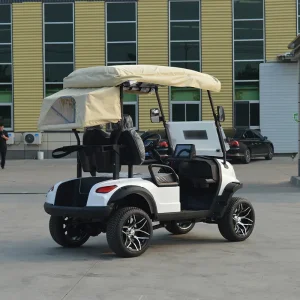
Nagoya Urban 2-Seater Mini Sightseeing & Security Cruiser
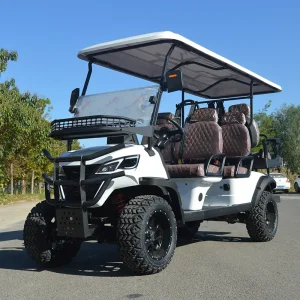
Beemotors G70-4+2 Flexible Passenger/Cargo Shuttle
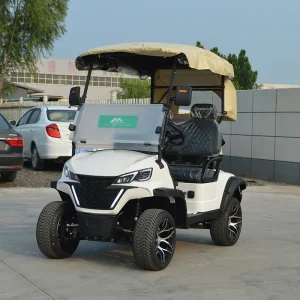
Aichi Commercial G70 2-Seater Fast-Response Service Cart

Nagoya Hospitality 6-Seat Customized Comfort Electric Buggy
Performance Edition 72V Lithium 6-Seat Resort Cruiser
Chubu Commercial 72V 6-Seat Extended Wheelbase Buggy
Modern Aerodynamic 72V 6-Seat High-Efficiency Golf Buggy
Prestige Gold 72V AC 4-Seat Tournament Lithium Edition
Technical FAQ
Frequently Answered Questions for Nagoya Fleet Sourcing
Direct engineering and regulatory guidance for resort directors, plant managers, and municipal transport committees in the Greater Chubu area.
Can Leibin electric golf carts obtain Green Plate registration in Aichi Prefecture?
Yes. Under the Japanese Road Transport Vehicle Act, our 2-seat and 4-seat models can be configured to meet the "Small Special Motor Vehicle" (小型特殊自動車) classification. We restrict overall length under 4.7m, width under 1.7m, height under 2.8m, and electronically govern maximum vehicle forward velocity to 15 km/h. Combined with our factory-fitted E-mark lighting, mirrors, horn, and dual braking systems, local municipal authorities across Nagoya, Toyota City, and Okazaki can issue green municipal taxation plates for authorized roadway traversing.
How do 72V LiFePO4 packs perform during cold winters in northern Gifu and Aichi highlands?
Traditional lead-acid batteries lose up to 45% of effective capacity below freezing due to slowed chemical kinetics. In contrast, Leibin's 72V Grade-A Lithium Iron Phosphate (LiFePO4) architecture incorporates internal thermal dissipation shields and smart BMS low-temperature self-preservation algorithms. Operational discharge range retention exceeds 88% at -10°C, providing reliable morning starts and consistent hill climbing on mountain courses.
What electrical grid infrastructure is required for commercial charging in Japan?
Every export vehicle destined for the Japanese market is delivered with a high-efficiency smart onboard or external charger configured for standard Japanese alternating current: single-phase 100V (50Hz in Eastern/60Hz in Nagoya/Western Japan) or 200V commercial sockets. Chargers feature PSE certification marks, active power factor correction (PFC > 0.98), and automatic shutoff at 100% SoC, drawing standard utility currents that require no substational grid overhaul.
What is the typical maritime lead time and port handling process for Port of Nagoya?
Direct ocean transit from our primary northern export ports (Qingdao/Tianjin) to the Port of Nagoya takes approximately 4 to 6 business days. Total production to dock arrival cycle typically spans 20 to 28 days for standard fleet volumes. Vehicles are packed in engineered SKD steel cradles to avoid maritime shipping damage. We coordinate directly with your licensed customs broker (Otsu-shu) to deliver complete RCEP origin paperwork for preferential import tariff treatment.
How are warranty claims, technical diagnostic support, and spare parts resolved remotely?
Our engineering support department features bilingual technical liaisons who work via direct digital video links and CAN-Bus datalogger telemetry review. If an electrical component or sub-assembly fails within the warranty term, replacement parts are dispatched via rapid express air service (DHL/FedEx, typically 48-hour delivery into Chubu Centrair International Airport). Detailed bilingual schematics and video disassembly workflows ensure your local mechanical technicians can swap modules effortlessly.
Initiate Your Nagoya Commercial Fleet Consultation
Whether you are procuring an intra-plant shuttle fleet for an automotive assembly campus, modernizing a golf club with 72V lithium carts, or rolling out municipal low-speed mobility, our engineers are ready to build your specification sheet.
Send Inquiry Now