
Top-Ranked Electric Buggies Engineered for Norway's Harsh Terrain
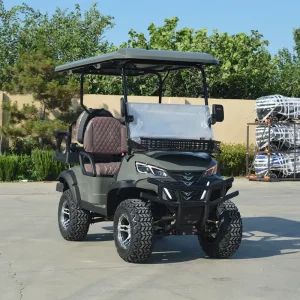
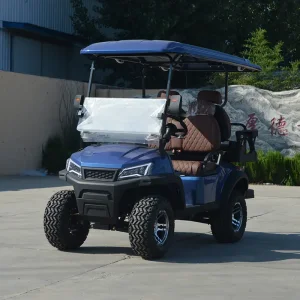
Explore our flagship 72V low-speed electric mobility products built to meet demanding Scandinavian operational demands, combining intelligent lithium management, reinforced anti-corrosion chassis, and high climbing gradient capability.

Commercial Dynamics & Electrification Mandates in Norway
Norway stands as the world leader in per-capita electric vehicle adoption. However, while highway passenger EVs have achieved unprecedented market saturation, the commercial, utility, and resort micro-mobility segments are undergoing an urgent zero-emission transition driven by stringent national ecological regulations.
Strict Fjord & Heritage Emission Laws
The Norwegian Parliament (Stortinget) has mandated zero emissions for cruise ships and tourist ferries operating within UNESCO world heritage fjords like Geirangerfjord and Nærøyfjord. This mandate cascades onto landside shore excursions, demanding that sightseeing shuttles, golf buggies, and guest transport run exclusively on clean electric power.
Capital-Intensive Local Equipment Costs
Domestic Nordic and Western European small-batch EV manufacturers face exceptionally elevated domestic labor costs and fragmented component supply chains. Norwegian commercial fleet purchasers seek direct OEM and ODM manufacturing partnerships with verified global facilities capable of offering tier-1 componentry at wholesale pricing.
Public Sector Zero-Emission Tenders
Municipalities across Oslo, Bergen, Stavanger, and Trondheim have strict green procurement frameworks. Public parks, municipal cemeteries, water filtration facilities, and university campuses are swapping internal combustion utility buggies for heavy-duty electric flatbed carts featuring 72V power architectures.
Engineering for Sub-Zero Scandinavian Climates & EU Norms
A standard golf cart configured for tropical golf courses rapidly deteriorates under Norwegian maritime salinity, sub-zero winter spells, and rugged granite topographies. Our vehicles are built with custom Nordic packages designed from the chassis up.
LiFePO4 Chemistry with Active Thermal Preheating
Lithium iron phosphate (LiFePO4) packs deployed in our 72V platforms integrate intelligent Battery Management Systems (BMS) with built-in silicone thermal heating jackets. When temperatures plunge to -30°C in inland regions such as Lillehammer or Røros, the self-heating circuitry optimizes cell temperatures before high-current discharge or fast charging, eliminating cold-induced lithium plating and capacity degradation.
Electrophoretic (E-Coat) Anti-Saline Corrosion Treatment
Operating in coastal Norwegian cities like Ålesund or Tromsø exposes vehicle chassis to aggressive salt-fog marine atmospheres and de-icing road salts. Our vehicle frames undergo an automotive-grade 14-stage immersion pre-treatment followed by cathodic electrophoretic deposition (ED) and high-bake powder coating, passing 1,000-hour ASTM B117 salt spray tests with zero perforation.
Electromagnetic Regenerative Braking & Gradeability
Navigating fjord slopes and mountainous alpine resort ascents demands superior torque and fail-safe downhill restraint. The 72V AC induction and permanent magnet synchronous motors (PMSM) produce instantaneous peak torque, powering up 25-30% inclines while providing automatic downhill regenerative engine braking that prevents brake-fade on long descents.
CE, Machinery Directive & Road Homologation Ready
Every unit ships complete with CE documentation conforming to EU Directives 2006/42/EC (Machinery), 2014/30/EU (EMC), and harmonized electrical standards. Vehicles configured for low-speed street legality can be optioned with certified three-point E-mark safety belts, tempered laminated glass with defogging elements, LED automotive lighting arrays, and electronic speed limiters compliant with Norwegian Vegvesen guidelines.
Why Norwegian Fleet Importers Source Direct from Our Chinese Plant
By bypassing multiple tiers of European trading middlemen and local distributors, Norwegian commercial buyers secure direct factory engineering oversight, accelerated customization cycles, and substantial cost advantages without compromising precision manufacturing tolerances.
| Evaluation Parameter | Direct Chinese OEM/ODM Factory (Our Dezhou Facility) | European Assemblers & Local Re-sellers | Traditional Trading Companies |
|---|---|---|---|
| Capital Investment (Per Unit) | Direct wholesale pricing from raw material conversion; 35-50% cost savings. | Substantial markup due to high local Scandinavian labor and warehousing fees. | Hidden broker fees and intermediary markups with limited transparency. |
| Powertrain Customization | Full customization: 48V/72V systems, CATL/EVE lithium cells, AC/PMSM motors. | Restricted to static off-the-shelf catalog configurations. | Zero engineering capability; dependent on supplier inventories. |
| Thermal Engineering for Norway | Factory-integrated battery preheating jackets, silicone insulation, anti-ice cab kits. | Expensive aftermarket retrofits with mismatched warranties. | Standard warm-weather configurations unsuitable for Nordic winters. |
| Spare Parts Pipeline | Direct parts inventory dispatched via air/ocean with OEM wiring schematic support. | Dependent on factory replenishment with extended European lead times. | Inconsistent parts traceability and no technical wiring documentation. |
| Production Capacity & Scalability | 13,000 m² factory footprint capable of fulfilling orders from single units to 500+ fleets. | Low-volume production bottlenecks during peak seasonal demand. | Unreliable delivery timelines due to third-party scheduling. |
High-Yield Application Scenarios Across Norway
Our 72V low-speed electric platforms are deployed across a wide spectrum of Scandinavian industries, delivering clean, near-silent operation and lower total cost of ownership (TCO).
Fjord Tourism & Scenic Cruise Ports
Shore excursion operators in Flåm, Olden, and Hellesylt deploy our 6-seater and 8-seater open-air sightseeing buggies to transport cruise passengers up scenic valley overlooks without exhaust fumes or engine noise that disrupt pristine natural ecosystems.
High-Latitude Golf & Country Clubs
Courses such as Lofoten Links, Oslo Golfklubb, and Miklagard Golf operate under short, high-intensity seasons. Our 72V lithium carts recharge in under 3 hours, offering round-the-clock availability under the Midnight Sun with minimal turf compaction.
Alpine Ski Resorts & Winter Villages
Venues across Trysil, Hemsedal, and Hafjell utilize our G90 off-road buggies equipped with heavy-lug snow tires, fully enclosed heated polycarbonate cabins, and auxiliary lighting for staff transport and mountain luggage handling across packed snow.
Industrial Warehousing & Logistics Hubs
Supply chain centers outside Oslo and Moss deploy our heavy-duty utility flatbed variants inside enclosed fulfillment centers and outdoor transshipment yards, eliminating internal combustion exhaust while carrying up to 800 kg of cargo safely.
Municipal Parks & Botanical Facilities
Municipal departments in Bergen and Trondheim trust our quiet utility vehicles for groundskeeping, waste collection, and maintenance throughout historic cemetery avenues and urban botanical gardens without public disturbance.
Private Fjord Estates & Eco-Lodges
Exclusive boutique hotels and private archipelagos across western Norway deploy custom gold-edition and luxury matte-finished 4-seat buggies to provide discreet, silent chauffeur service between luxury chalets, saunas, and private docks.
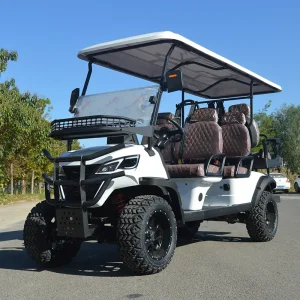
Wholesale Electric Golf Cart Models Available for Norway Import
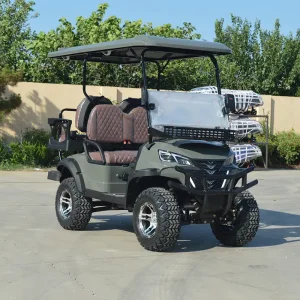
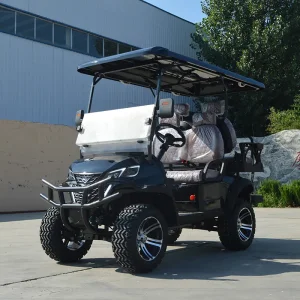
Explore our complete range of certified 4-seat, 6-seat, and multi-passenger platforms available with customized color finishes, battery chemistries, and localized accessories for Norwegian fleet commercial buyers.

Frequently Asked Questions: Sourcing Vehicles for Norway
Key information regarding shipping logistics, Norwegian customs, customs duties, battery safety compliance, and after-sales support protocols.
What customs tariffs and VAT apply when importing electric golf carts into Norway?
Under Norway’s Customs Tariff (Tolletaten), electric low-speed vehicles falling under HS Code 8703.10 benefit from zero customs duty rates. Furthermore, while standard consumer cars have evolving tax brackets, commercial utility and electric micro-mobility vehicles imported by VAT-registered Norwegian enterprises can claim reverse-charge VAT credits. Our export team provides full commercial invoices, Packing Lists, Certificates of Origin (Form A / REX statement), and CE declarations to ensure streamlined customs clearance through the Port of Oslo, Drammen, or Bergen.
How do the lithium battery systems behave in extreme Norwegian winter conditions?
Our carts utilize high-grade LiFePO4 cells paired with an automotive-grade Battery Management System (BMS) featuring integrated internal heating elements. If stored or charged in ambient temperatures down to -30°C, the BMS directs incoming charging power to warm the internal heating elements first, raising internal cell temperatures to safe levels (+5°C) before initiating cell charging. This active thermal safeguard prevents dangerous dendrite formation and maintains lithium battery cycle life exceeding 3,500 full charge cycles.
Can these electric buggies be homologated for Norwegian public roads?
Yes. Low-speed electric vehicles can be registered for public road use in Norway under European L6e-A (Light quadricycle) or L7e-A (Heavy quadricycle) categories, or operated on private property, municipal pathways, and golf resorts without registration. For public road registration, we configure vehicles with the requisite homologation hardware: E-mark certified laminated windscreens, electric windshield wipers and washers, automotive LED lighting with high/low beams and indicators, dual hydraulic braking circuits, horn, rearview mirrors, and three-point seat belts.
What is the typical shipping lead time and container packing efficiency for Norway?
Standard ocean transit time from Qingdao or Tianjin port to major Norwegian entry ports (Oslo, Larvik, Brevik, Bergen) is approximately 38 to 45 days. We engineer modular steel transport racks that maximize container volume. A standard 40ft High Cube (HQ) container accommodates up to 8 units of 4-passenger golf carts in semi-knocked-down (SKD) configuration or 6 units in completely built-up (CBU) status. Assembly upon arrival requires less than 45 minutes per unit with basic shop tools.
How is warranty support and replacement parts replacement handled for Norwegian fleets?
We provide a comprehensive 3-year factory warranty on the lithium battery pack and 2-year warranty on the AC drive motor, controller, and chassis structure. For commercial fleet contracts (5+ units), we include a critical spare parts package (relays, fuses, brake pads, switches, controller harness) inside the container. Replacement parts are dispatched via DHL Express with delivery to Oslo or Bergen within 4 to 6 business days, accompanied by video diagnostic support from our powertrain engineering team.