
Best 3 Wheeled Electric Golf Cart Suppliers & Factory
Comprehensive Technical Whitepaper, Sourcing Benchmark, and Smart Manufacturing Report for Commercial Fleets, Resort Shuttles, and Municipal Low-Speed Electric Vehicle (LSEV) Ecosystems.
Featured Commercial & Resort Electric Fleet Solutions
Engineered for high-duty operational longevity, modular battery architectures (48V/72V LiFePO4), and structural resilience across diverse terrain profiles.
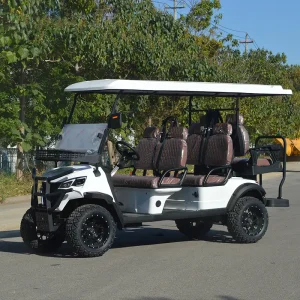
Cheap Wholesale China 6 Seat Electric Golf Carts, 72V Lithium Battery, Comfortable Customized Golf Buggy from Suppliers & Factory Factory, Factories
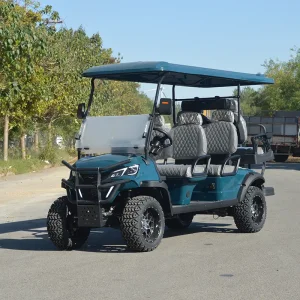
China 72V Electric Golf Cart - 6-Seater Modern Design | China Suppliers & Factory Quality Golf Buggy Manufacturer, Factory
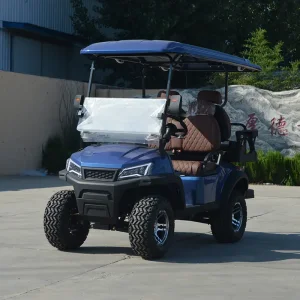
China Leibin (G90) 72V Lithium Battery Solar 4 Seaters off Road Electric Street Legal Golf Carts Manufacturers, Suppliers
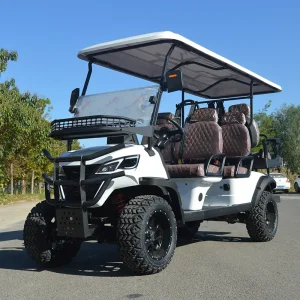
ODM Low-Speed Electric Golf Car from China Suppliers - CE Approved 15-40km/H Beemotors G70-4+2 Factory Model Suppliers, Factories
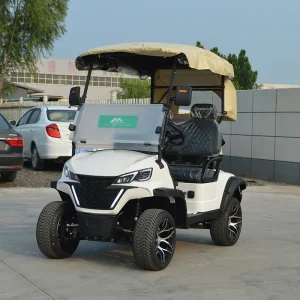
Best The Factory Directly Supplies 2-Seater Electric Sightseeing Cars, Golf Carts, Club Cars and Vans for Sale Manufacturers, Manufacturer
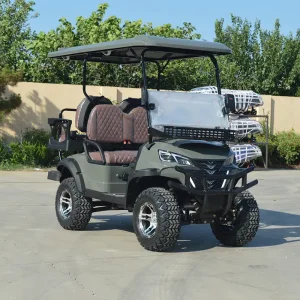
Cheap Cheap Small 4 Seater Electric Golf Carts, Golf Cart Battery, off Road Golf Carts Factory, Factories
China Wholesale 6 Seat Electric Golf Carts, 72V Lithium Customized Comfortable 4 Seat Electric Golf Buggy Supplier, Suppliers
Wholesale 72V Electric Golf Cart - Modern 6-Seater Buggy from China Suppliers | High-Quality Factory Manufacturing Suppliers, Factories
The Paradigm Shift: Trike Platforms vs. Quad Carts
Understanding kinetic stability, turning radius optimization, and ground-pressure footprints across commercial golf course and utility applications.
Ultra-Tight Zero-Scuff Kinematics
Three-wheeled electric golf carts (often designed with a front steer wheel and rear dual-drive differential or front delta steering) yield an extraordinarily tight turning radius under 2.8 meters. This eliminates the lateral shearing forces that traditionally damage sensitive fairway turf (Bentgrass and Bermuda) during abrupt tight-angle navigation.
Powertrain Mechanical Efficiency
By eliminating the front steering knuckle linkage and redundant front axle differential drag, 3-wheeled architectures reduce rotational mechanical friction by up to 18%. Combined with our 72V permanent magnet synchronous motors (PMSM) or AC induction drives, fleet buyers achieve prolonged runtime per kilowatt-hour stored.
Lower Curb Weight & Payload Ratio
A lightweight structural tubular chassis (extruded high-tensile steel treated via automated electrophoretic deposition) drops vehicle tare weight by up to 22% compared to standard four-seat quad golf carts. This weight saving directly translates into higher battery efficiency, extended hill-climbing endurance, and minimal soil compaction.
Ultra-Tight Turning Radius
High-Torque Lithium Vector
Advanced Industry 4.0 Facility
Gradeability Hill Climb
Technology Roadmap: Intelligent Micro-Mobility Through 2030
How Dezhou Leibin Vehicle Industry Co., Ltd. is bridging embedded electronics, IoT edge telematics, and renewable self-charging platforms.
CAN-Bus Intelligent Telematics
Modern fleet management mandates real-time visibility. Next-generation controllers incorporate unified CAN-bus architecture transmitting instantaneous battery cell voltage, motor thermals, GPS coordinates, geofenced boundaries, and predictive maintenance metrics straight to centralized enterprise cloud dashboards.
BIPV Solar Roof Poly-Crystalline
As demonstrated in our flagship Leibin G90 series, Building-Integrated Photovoltaic (BIPV) solar canopies deliver continuous trickle-charging under ambient sunlight. Harnessing high-efficiency monocrystalline wafers, the system returns 15–25 km of supplementary autonomy per operational daytime shift without grid reliance.
Solid-State & LFP Thermal Armor
Lithium Iron Phosphate (LiFePO4) chemistry represents the baseline gold standard due to its non-combustible olivine molecular structure. The engineering roadmap integrates Phase Change Material (PCM) thermal wraps and active BMS cell balancing to sustain battery health from -20°C Nordic winters to +55°C Middle East summers.
Automated Ultrasonic Obstacle Avoidance
Addressing airport ground handling, closed industrial park transit, and pedestrian-dense luxury resorts, forward-facing ultrasonic transducers and optical sensors limit throttle response automatically when close proximity hazards are identified, reducing collision liabilities to negligible margins.
Macro-Industry Solutions: Tailored Fleet Duty Cycles
A single standardized chassis cannot serve varied enterprise environments. Sourcing must align with payload capacities, daily duty hours, and environmental ingress ratings.
| Sector & Vertical | Primary Operating Challenges | Recommended Configuration | Key Performance Benefit |
|---|---|---|---|
| Championship Golf Courses & Country Clubs | Greens turf shearing, noise disruption, frequent stop-and-go acceleration on rolling fairways. | 3-Wheel Agile / 4-Wheel G30 Compact with high-flotation turf tires and 48V/72V PMSM whisper motors (<50 dB). | Zero turf abrasion, zero tailpipe emissions, extended 18-hole battery margin spanning up to 5 rounds per single charge. |
| Luxury Eco-Resorts & Hospitality Villas | Hill inclines (>20%), luggage transit, salt-fog corrosion in coastal environments, high aesthetic standards. | 72V Lithium Platform (Leibin G80 / G90) with electrophoretic anti-corrosion chassis, luxury weather-proof seats, and solar canopy. | Substantial climbing torque without thermal degradation, exceptional aesthetic appeal for VIP guests, low maintenance footprint. |
| Gated Communities & Urban Micro-Mobility | Frequent short-distance runs, mixed pedestrian-traffic interaction, street-legal LSV compliance needs. | CE & FMVSS 500 compliant models with three-point inertia seatbelts, LED lighting matrix, side mirrors, and hydraulic disc brakes. | Fully homologated street safety, smooth acceleration curve, automotive-grade crash-damped steel construction. |
| Industrial Parks, Warehouses & Airports | Heavy payload hauling, 24/7 rotational shifts, tight indoor corridor navigation, zero indoor fumes. | Utility Cargo Bed Configurations (G30 Utility) with heavy-duty leaf springs, drop-side alloy gates, and fast-swapping LiFePO4 packs. | Minimal downtime via 1-hour fast charge or quick-swap pack racks; rugged payload capacity up to 800 kg. |
China Factory 4.0: Supply Chain Resilience & Lean Scale
Operating from our 13,000 m² state-of-the-art facility in Dezhou, Shandong, Leibin combines vertically integrated manufacturing with precision robotics.
Automated Robotic Chassis Welding
Dimensional precision is non-negotiable. Our tubular steel chassis components are cut by 3D multi-axis fiber lasers and unified using automated multi-joint industrial robotic welding arms. This guarantees geometric tolerance within 0.5 mm, eliminating steering pull and irregular tire wear.
Cathodic Electrophoretic Deposition (E-Coat)
To counter corrosive coastal ocean air, golf course fertilizers, and tropical humidity, every chassis undergoes a 14-stage chemical pre-treatment and full immersion cathodic electrocoating bath. The resulting bonded primer film survives rigorous 1,000+ hour ASTM B117 salt spray testing.
End-of-Line Dynamometer & Brake Testing
Before crating, 100% of vehicles undergo comprehensive roll-test dynamometer evaluation. Certified technicians stress-test mechanical hydraulic braking efficiency, battery current draw under simulated 25% inclines, steering torque backlash, and high-voltage insulation resistance.
Global B2B Procurement Matrix: Total Cost of Ownership (TCO)
How institutional fleet procurement teams analyze capital investment against operational lifespan, energy expenditure, and scheduled servicing.
Capex vs. Opex Efficiency
While lead-acid configurations present a superficially lower initial procurement cost, our 72V LiFePO4 packs deliver over 3,500 full charge cycles at 80% Depth of Discharge (DoD). Over a 5-year commercial operational horizon, lithium platforms reduce total maintenance costs by up to 64% by eliminating water refilling, terminal acid cleaning, and frequent pack replacements.
Container Freight Density Optimization
Logistics costs directly impact final landed unit economics. Leibin provides specialized Semi-Knocked-Down (SKD) and Completely-Knocked-Down (CKD) steel crating engineering. A standard 40-foot High Cube (40HQ) maritime container can accommodate up to 16–22 modular low-speed units depending on seating layout, drastically reducing per-unit freight overhead.
OEM/ODM Private-Label Customization
Institutional buyers frequently demand brand cohesion. We support comprehensive OEM/ODM engineering programs: proprietary chassis wheelbases, custom injection-molded automotive ABS cowlings, Pantone-matched electro-deposition colorways, custom stitched marine-grade vinyl upholstery, and laser-engraved corporate branding elements.
Global Homologation: North America, EU, and Australasia
Dezhou Leibin vehicle platforms are built with localized regulatory compliance integrated directly into the engineering bill of materials.
USA: FMVSS 500 & SAE J2358
For street-legal Low-Speed Vehicle (LSV) registration across US municipalities, vehicles must strictly conform to Federal Motor Vehicle Safety Standard 500 (FMVSS No. 500). Leibin provides factory-fitted DOT-certified AS4/AS5 laminated windshields with wipers, DOT-rated tires, full turn signal/hazard arrays, rearview mirrors, and precision electronic speed calibration locked at 20–25 mph.
European Union: CE & L6e / L7e Framework
Vehicles exported to EU member states carry complete CE Machinery, EMC (Electromagnetic Compatibility Directive 2014/30/EU), and Low Voltage Directive certifications. Where public road transit is required, our engineering team supplies full technical documentation dossiers (COC) conforming to Regulation (EU) No 168/2013 for light quadricycle / micro-vehicle category compliance.
Local Warehouse Spares & Field Support
Procurement reliability hinges on post-sale maintenance uptime. Leibin supports global fleet distributors with recommended wear-and-tear replacement kits (brake pads, motor brushes/sensors, tie rod ends, suspension bushings), comprehensive English wiring schematics, and rapid courier dispatch for critical controller hardware.
Specialty Sightseeing, Patrol & Off-Road Buggy Solutions
From compact two-seater utility runabouts to long-wheelbase sightseeing buses, discover factory-direct pricing backed by rigorous ISO9001 certified build consistency.
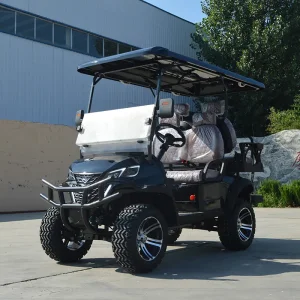
Wholesale Electric Golf Cart 4seated Golf Buggy Sightseeing Bus off-Road 72vgolf Cart Manufacturers, Factory
Best 72V Modern 6-Seater Electric Golf Cart - Factory Direct from China Suppliers, Ideal for On-Road and Off-Road Use Manufacturer, Suppliers
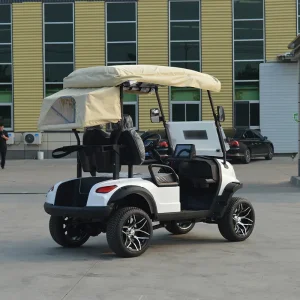
OEM Affordable 2 Seater Mini Sightseeing Car Golf Cart Electric Cars Manufacturer, Suppliers
Cheap 72V New Style Modern Fashion 6 Seat Golf Cart Electric Golf Buggy Manufacturers, Supplier
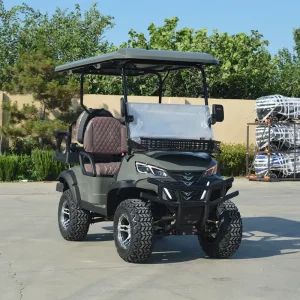
Best China Suppliers Factory 72V AC Mini Electric Golf Cart 4-Seat Buggy Gold Color Lithium Battery CE Certified Manufacturers, Supplier
Cheap China Supplier Factory Leibin G90 72V Lithium Battery Off-Road Electric Golf Cart - 4 Seaters, Solar Power, 35 km/h Speed Suppliers, Factory
OEM Affordable China 4-Seater Electric Golf Cart - Off-Road Adventure with Custom Battery Options from Trusted Suppliers & Factory Manufacturers, Supplier
China Affordable Electric 2 Seater Mini Sightseeing Car Golf Cart from China Suppliers and Factory Supplier, Factories
Frequently Asked Questions for Fleet Buyers
Objective technical analysis addressing dynamics, battery chemistry, shipping safety, and long-term operating parameters.
How do 3-wheeled electric golf carts compare to 4-wheeled carts in cornering stability?
Cornering dynamics in 3-wheeled vehicles depend on the center of gravity (CoG) and geometric track width. Leibin engineers locate heavy battery packs and PMSM drives beneath the passenger floorboards, creating an ultra-low center of gravity. For models requiring higher lateral thresholds or rough multi-terrain environments, our 4-wheel independent MacPherson suspension models (e.g., G70, G80, G90) provide increased high-speed stability while 3-wheeled models excel in compact paved and smooth turf environments.
Why is a 72V system superior to a conventional 48V platform for fleet duty?
Under Ohm's and Joule's electrical laws (P=V×I and Heat=I²×R), delivering the same mechanical wattage at 72 volts requires 33% less current than a 48V circuit. Lower current yields significantly less heat buildup across cables, controllers, and motor windings, which prevents thermal throttling on steep resort hills, extends motor operational lifespan, and boosts overall energy round-trip efficiency.
What documentation accompanies vehicles for international maritime shipping?
All export shipments are strictly certified under dangerous goods (DG) and non-DG maritime transport protocols as appropriate. Lithium batteries carry certified UN 38.3 test summaries, MSDS documentation, and sea transport safety inspection reports (IMO-compliant). The physical shipments include full commercial invoices, packing lists with individual chassis VIN / motor serial designations, Certificate of Origin (CO), and CE Declaration of Conformity.
Can your factory customize vehicle speed, braking, and geofencing for golf resorts?
Yes. Using our diagnostic software interfaces, programming parameters such as maximum acceleration curve, regenerative braking strength, top forward speed limit (e.g., restricted to 15 km/h for clubhouse zones or 25–40 km/h for open grounds), and reverse speed limits are factory programmed to customer specifications prior to dispatch, or adjusted in the field via handheld programmer units.