
Featured 4-Passenger & Specialty Fleet Models
Engineered for commercial resorts, golf courses, utility campuses, and luxury residential estates with modular 48V/72V automotive-grade drivetrains.
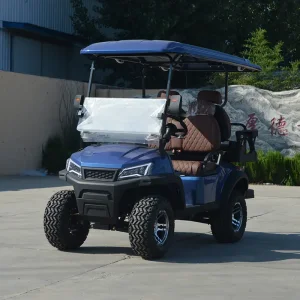
Leibin G90 72V Lithium Battery Off-Road Electric Golf Cart - 4 Seater Solar Power 35 km/h
Configure Model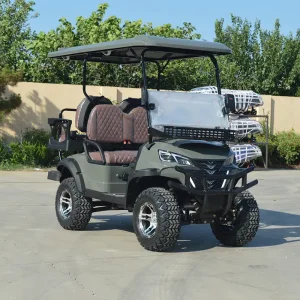
Small 4 Seater Electric Golf Carts, High Density Battery Off Road Platform
Configure Model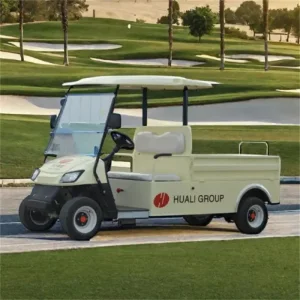
Cargo Electric Utility Off Road Truck Golf Cart 48V Heavy Duty Bed
Configure Model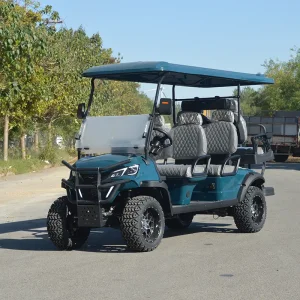
72V New Style Modern Fashion Extended Electric Golf Buggy
Configure Model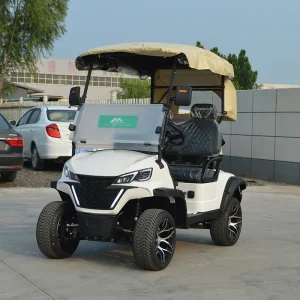
Direct Factory Supply 2-Seater Electric Sightseeing Car & Club Cart
Configure Model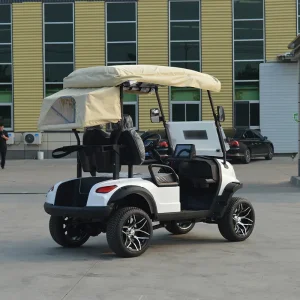
Affordable Electric 2 Seater Mini Sightseeing Golf Buggy
Configure Model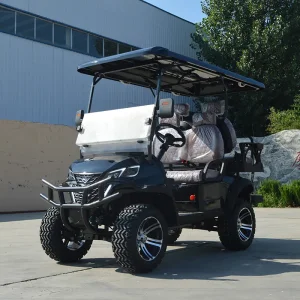
Wholesale Electric Golf Cart 4-Seater Sightseeing Bus Off-Road 72V
Configure Model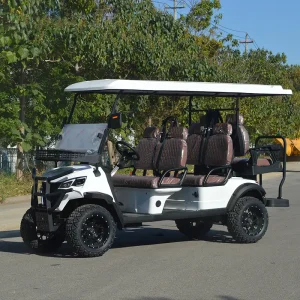
OEM Wholesale 72V Lithium High Performance Electric Golf Buggy
Configure ModelThe Engineering Evolution of the 4-Person Low-Speed Vehicle (LSV)
Modern commercial golf carts have transcended standard fairways to become multi-utility, street-legal low-speed transport platforms powered by advanced solid-state architecture.
72V Architecture vs. Legacy 48V DC
The global low-speed electric mobility sector has undergone a fundamental transition from legacy 48V direct-current (DC) series systems to 72V alternating-current (AC) induction and Permanent Magnet Synchronous Motors (PMSM). By raising system voltage to 72V, operating amperage is reduced by up to 33% under equivalent mechanical workloads.
- Drastic reduction in I²R wiring resistive heat loss
- 25%+ continuous gradeability for rugged terrain
- Seamless regenerative electronic braking integration
Automotive LiFePO4 Chemistry & Smart BMS
Flooded and AGM lead-acid batteries suffer from heavy sulfation, strict 50% depth-of-discharge constraints, and burdensome electrolyte maintenance. Premium manufacturing lines now integrate Lithium Iron Phosphate (LiFePO4) chemistry directly into the ladder chassis, paired with CAN-bus-enabled Smart Battery Management Systems.
- 3,500+ charge cycles at 80% DOD lifespan
- 60% curb weight reduction over lead-acid equivalents
- Active thermal management and short-circuit isolation
Cathodic Electro-Dip Coated Chassis
Structural reliability across coastal resorts, tropical golf estates, and industrial complexes demands rigorous corrosion resistance. Leading manufacturing centers implement robotic MIG/TIG welding on high-strength seamless tubular steel, followed by a multi-stage cathodic electrodeposition (e-coat) dipping process prior to final thermoset powder finishing.
- 1,000+ hour ASTM B117 salt spray chamber validated
- Reinforced 4-passenger cabin rollover safety margin
- MacPherson front strut & trailing-arm rear suspension
The Strategic Advantage of China’s EV Supply Ecosystem
How localized battery supply networks, unified controller fabrication, and automated stamping clusters reduce total capital expenditure while elevating vehicle quality.
Global Cell Dominance
Direct geographic proximity to tier-1 lithium cell gigafactories (CATL, EVE, Gotion) eliminates ocean freight costs on battery modules, providing access to grade-A cells at unmatched per-kWh pricing.
Integrated Tooling
From injection molding of impact-resistant virgin PP/ABS thermoformed body cowls to CNC differential axle gear machining, 100% of the manufacturing value chain operates within a 50km radius.
Procurement Cost Optimization
B2B fleet buyers realize a direct 35% to 45% capital expenditure reduction per unit compared to Western-assembled brands, without compromising on electronic controller specifications or steel yield strength.
Agile ODM Turnaround
In-house CAD/CAM engineering departments facilitate rapid prototyping of specialized commercial configurations, such as ambu-carts, security enclosures, solar roofs, and fleet livery.
Engineering Architecture: 4-Person Commercial Platforms
Compare core drivetrain, structural, and electronics specifications across standard fleet vs. premium off-road / street-legal categories.
| Technical Parameter | Standard Fairway Fleet (48V) | Premium All-Terrain / LSV (72V) | Solar-Enhanced Resort Edition (72V) |
|---|---|---|---|
| Motor Type & Output | 3.0 kW - 4.0 kW AC Induction Motor | 5.0 kW - 7.5 kW PMSM High-Torque | 5.0 kW AC High-Efficiency Motor |
| Battery Storage Chem | 48V 105Ah LiFePO4 or Deep Cycle Lead | 72V 105Ah - 160Ah Automotive LiFePO4 | 72V 105Ah LiFePO4 + 300W Monocrystalline |
| Electronic Controller | Curtis / Infore Programmable 350A | Enpower / Curtis AC Solid-State 450A | CAN-Bus Integrated 400A Controller |
| Operational Range | 50 km – 65 km per complete charge | 85 km – 110 km per complete charge | 100 km – 135 km (Daily Solar Offset +20km) |
| Top Regulated Speed | 24 km/h (15 mph) Golf Standard | 40 km/h (25 mph) Street Legal LSV | 35 km/h – 40 km/h Dual Mode |
| Braking Architecture | Rear Mechanical Drum + Motor Regen | Four-Wheel Hydraulic Disc + Auto EM Brake | Four-Wheel Hydraulic Disc + Electronic EM |
| Chassis Metal Treatment | Dip Phosphate + Single-Coat Powder | Cathodic Electrodeposition (ED) E-Coat | Marine-Grade E-Coat + Salt Protective Dip |
| Payload Capacity | 360 kg (793 lbs) | 450 kg – 550 kg (992 – 1,212 lbs) | 420 kg (925 lbs) |
Localized Compliance & Street-Legal Homologation
Navigating statutory low-speed vehicle certifications across key global import territories: North America, the European Union, Australia, and the Middle East.
United States: FMVSS § 571.500
For 4-seater electric golf carts to register as street-legal Low-Speed Vehicles (LSVs) capable of driving on roads with posted limits of up to 35 mph, the National Highway Traffic Safety Administration (NHTSA) mandates rigorous safety assemblies under FMVSS 500.
- DOT-approved AS1/AS4 laminated glass windshield
- FMVSS 209 certified 3-point retractable seatbelts
- SAE compliant LED turn signals, horn & dual mirrors
- Assigned 17-character World Manufacturer Identifier (WMI) VIN
European Union: EEC L6e & L7e
Importation into EU member states requires adherence to UNECE quadricycle regulations under Regulation (EU) No 168/2013. Four-seater configurations typically fall under L7e-CP (Commercial Passenger Heavy Quadricycle) classifications.
- Complete CE Machinery and Electromagnetic (EMC) compliance
- E-mark approved headlights, reflex reflectors & glass
- Dual-split hydraulic braking fail-safe testing
- Certified Certificate of Conformity (COC) paperwork
Middle East (GCC) & Australia (ADR)
Vehicles deployed across GCC territories (UAE, Saudi Arabia) must conform to high-ambient thermal operating standards (GSO testing at +55°C), while Australian fleets must fulfill Australian Design Rules (ADR) conditional registration guidelines.
- High-temperature electrolyte protection in LiFePO4 cells
- UV-stabilized virgin automotive polypropylene bodywork
- Sealed IP67 waterproof harness for tropical rainfall
- Roll-over structural cab certification (ROPS standards)
Specialized Deployment Environments & Duty Cycles
Engineered around specific topographic profiles, passenger rotation cycles, and ambient operating demands across premier global market verticals.
Luxury Eco-Resorts & Island Villas
Zero tailpipe emissions and whispering AC induction motors preserve pristine auditory environments in luxury resorts. Equipped with flip-flop rear seating that transitions effortlessly between VIP transport and guest luggage handling.
Master-Planned Gated Communities
Functioning as secondary neighborhood electric vehicles (NEVs), 4-passenger configurations provide safe, economical short-trip commuting to clubhouses, fitness centers, community pools, and local retail centers.
Championship Golf Clubs & Fairways
Low ground-pressure turf tires (18x8.5-8 or 205/50-10) protect delicate greens and tee boxes while precision regenerative electronic downhill braking prevents course turf tearing on 20-degree slopes.
Corporate Campuses & Clean Facilities
Quiet, efficient personnel shuttling across semiconductor plants, aircraft hangars, automotive assembly grounds, and pharmaceutical research centers where gas internal combustion engines are strictly prohibited.
Airport Terminals & Intermodal Hubs
Designed for indoor/outdoor tarmac personnel mobility, VIP transit, and crew rotation with zero toxic exhaust, integrated beacon lighting, front brush guards, and high-frequency smart chargers.
Parks, Botanical Reserves & Security
Customized police and security packages featuring high-intensity LED lightbars, PA sirens, lockable under-seat compartments, and elevated ride heights for off-road curb clearance in public parks.
Enterprise B2B Procurement & Total Cost of Ownership (TCO)
A five-year comparative financial analysis demonstrating why global fleet managers are systematically decommissioning gas carts in favor of 72V lithium fleets.
74% Operating Expenditure Reduction
Internal combustion engine (ICE) golf carts consume an average of $1,200 to $1,800 annually in gasoline, spark plugs, drive belts, and oil filters. A 72V lithium fleet model charging during off-peak hours costs less than $180 per year in electricity, delivering dramatic operational savings over 5-year accounting cycles.
Optimized SKD / CKD Logistics Yield
Maximizing container utilization is critical for reducing landed freight per vehicle. Direct factory packaging engineers offer both Semi-Knocked Down (SKD) and Completely Knocked Down (CKD) packing in custom steel framework crates, allowing 18 to 22 units inside a standard 40ft High Cube (HQ) maritime shipping container.
Cloud Telematics & Remote Geofencing
Enterprise procurement now standardizes integrated 4G IoT telematics modules directly into vehicle CAN-bus architectures. Fleet operators access real-time GPS positioning, battery cell balancing diagnostics, predictive service notifications, and boundary geofencing to prevent cart roll-aways and fairway damage.
Frequently Asked Questions for Fleet Importers & Wholesalers
In-depth engineering answers addressing commercial homologation, battery chemistry lifespans, factory customization, and overseas warranties.
What is the expected operational lifespan of a factory-installed LiFePO4 pack?
Our automotive-grade LiFePO4 battery modules feature an engineering rating of 3,500 to 4,000 complete charge/discharge cycles before reaching 80% original capacity retention. Under standard commercial fleet duty cycles (single daily discharge), this corresponds to approximately 8 to 10 years of reliable operating life, far exceeding traditional lead-acid chemistries which degrade within 2 to 3 years.
How does a 72V electric golf cart outperform a 48V system on steep gradients?
By increasing the working voltage from 48V to 72V while drawing equivalent electrical current, total motor power output increases substantially (P = V × I). The 72V AC motor produces significantly higher peak torque at low RPMs, enabling full 4-passenger payloads to ascend grades exceeding 25% without experiencing thermal throttling, controller overheating, or sudden voltage sag.
Can the factory supply official 17-digit VIN numbers for street-legal registration?
Yes. As an authorized automotive vehicle manufacturer with an officially registered World Manufacturer Identifier (WMI) code, we stamp standard 17-digit ISO 3779 compliant Vehicle Identification Numbers (VIN) directly into the steel chassis. We also supply the corresponding Manufacturer's Certificate of Origin (MCO) to support local DMV or road transport homologation.
What are the minimum order quantities (MOQ) and lead times for custom OEM orders?
Standard model configurations carry an MOQ of a single sample unit (1 cart) shipped via LCL steel crating for quality verification. Full container load OEM orders (featuring custom PMS pantone body colors, embroidered marine seating, bespoke wheel styling, and private label logos) maintain an MOQ of 4 to 8 units with typical production turnaround times of 15 to 25 business days.
How does the roof-mounted solar canopy function on the Leibin G90 model?
The G90 integrates a flexible monocrystalline high-efficiency photovoltaic solar panel (250W–300W rating) molded directly into the extended composite hardtop roof. An onboard MPPT (Maximum Power Point Tracking) solar charge controller steps up the solar voltage to 72V, continuously feeding power into the lithium bank during daylight operation, extending typical daily range by 15 km to 25 km.
What factory warranty coverage and spare parts support are extended to overseas buyers?
Export contracts include a comprehensive 5-year warranty on LiFePO4 battery modules, a 3-year warranty on the AC/PMSM electric drive motor and controller, and a lifetime structural warranty on the anti-corrosion e-coated steel chassis. Consumable wear parts (brake pads, steering knuckles, bushings, and light assemblies) are stocked in quantity and dispatched via DHL/FedEx within 48 hours.
Factory-Direct Low-Speed Passenger Vehicle Selection
Engineered for multi-passenger flexibility, off-road exploration, utility freight handling, and European CE low-speed homologation.
Customized Comfortable 4-6 Seat 72V Lithium Electric Golf Buggy
Configure Model
China 72V Electric Golf Cart - 6-Seater Modern Design Factory Buggy
Configure Model
ODM Wholesale High Capacity 72V Lithium Customized Comfort Cart
Configure Model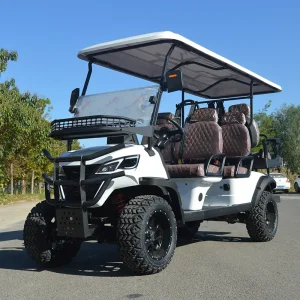
CE Approved 15-40 km/h G70-4+2 Low Speed Electric Factory Buggy
Configure Model
Affordable 4-Seater Electric Golf Cart Off-Road Adventure Series
Configure Model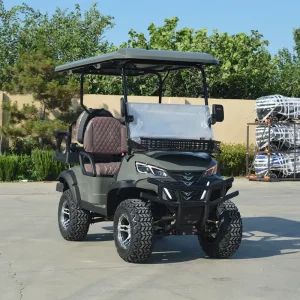
72V AC Mini Electric Golf Cart 4-Seat Lithium CE Certified Model
Configure Model
Wholesale 72V AC Mini Buggy Gold 4-Seat Golf Cart with Caddie Gear
Configure Model