
High-Efficiency 4-Seat & Multi-Passenger Electric Fleet Models
Explore Tier-1 manufactured electric carts engineered for resorts, corporate transit, golf facilities, and master-planned residential communities.
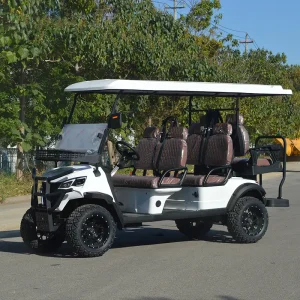
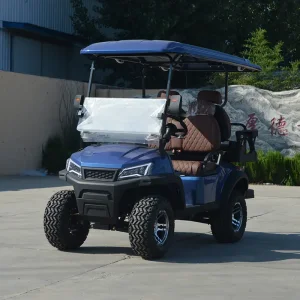
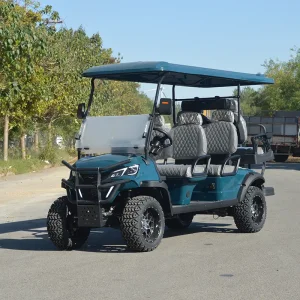
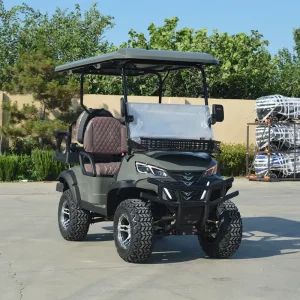
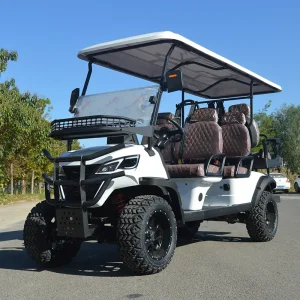
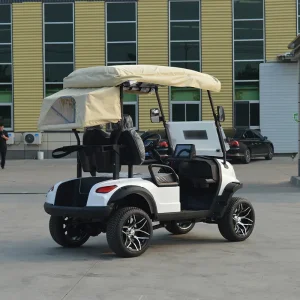
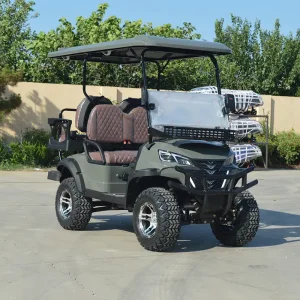
The Paradigm Shift: From Course Caddies to Low-Speed Utility Vehicles (LSVs)
The multi-passenger electric cart industry has transcended recreational greens. Today, 4-seat electric utility vehicles operate as critical zero-emission micro-transit nodes worldwide.
Over the past decade, the global market for electric utility carts has experienced a permanent architectural and commercial divergence. Originally conceptualized as utilitarian, lead-acid-powered shuttles restricted to 18-hole golf facilities, the modern 4-seat electric cart has evolved into a fully realized Neighborhood Electric Vehicle (NEV) and Low-Speed Vehicle (LSV). Modern demographic expansions in master-planned communities, eco-resort tourism, urban hospitality corridors, and sprawling industrial complexes have accelerated corporate procurement demands for four-passenger transport platforms capable of highway-adjacent transit, steep gradient navigation, and multi-shift continuous operation.
According to comprehensive micro-mobility market analytics, the global low-speed vehicle market is projected to reach an estimated valuation exceeding USD 16.8 billion by 2032, expanding at a robust Compound Annual Growth Rate (CAGR) of 8.4%. Notably, the 4-seater configuration commands the largest single revenue share—accounting for approximately 43% of total commercial output. This market preeminence is not accidental; four-passenger platforms represent the ideal operational equilibrium between physical footprint, payload capacity, energy efficiency, and turning radius, fulfilling both commercial passenger transport and light cargo utility requirements.
Corporate ESG Mandates
Global enterprises and municipal operators are under binding regulatory pressure to eliminate internal combustion engine (ICE) utility vehicles, making zero-emission electric buggy fleets a non-negotiable procurement standard.
High-Voltage Transition
Fleet operators are aggressively deprecating legacy 36V and 48V lead-acid systems in favor of 72V Lithium Iron Phosphate (LiFePO4) platforms, unlocking higher torque, rapid recharging, and maintenance-free longevity.
Telematics & Digitalization
Enterprise procurement now prioritizes vehicles equipped with integrated CAN-bus telemetry, GPS geo-fencing, dynamic speed limiting, and predictive battery management systems (BMS) for centralized fleet optimization.
Engineering Benchmarks: 48V vs. 72V Architectures and LiFePO4 Chemistry
A rigorous comparative analysis of thermal management, torque delivery, cycle life, and powertrain efficiency across modern low-speed electric mobility platforms.
In low-speed electric mobility, total drivetrain efficiency is governed by Ohm’s Law and Joule heating ($P = I^2 R$). Legacy golf carts engineered around 36V or 48V direct-current (DC) brushed motor systems suffer from excessive current draw during incline climbing or full-load acceleration. This elevated current produces intense thermal buildup within harnesses, contactors, and motor windings, severely degrading cycle efficiency and precipitating premature component degradation.
By contrasting this with contemporary 72V Alternating Current (AC) asynchronous or Permanent Magnet Synchronous Motors (PMSM), the technical advantages become absolute. At an equivalent power draw of 5.0 kW, a 72V architecture operates at approximately 69.4 Amperes, whereas a 48V system requires 104.2 Amperes. This 33.4% reduction in current directly cuts resistive thermal dissipation by over 55%, yielding extended operating ranges, superior torque retention under 25%+ gradients, and substantial energy preservation.
| Performance & Engineering Vector | Legacy 48V Lead-Acid System | Modern 48V Lithium (NMC) System | Advanced 72V LiFePO4 System (Leibin Benchmark) |
|---|---|---|---|
| Nominal Pack Voltage & Current Efficiency | 48V (High $I^2 R$ heat loss under load) | 48V (Moderate thermal efficiency) | 72V (Low current draw, maximum thermal headroom) |
| Motor Chemistry & Controller | DC Series / Shunt (3.0–3.8 kW) | AC Induction (4.0 kW) | AC Induction / PMSM (5.0 kW – 7.5 kW with Vector FOC) |
| Battery Pack Cycle Life (80% DoD) | 400 – 600 cycles (Rapid sulfation) | 1,200 – 1,500 cycles | 3,500 – 5,000 cycles (10+ year service life) |
| Curb Weight Delta (4-Passenger Config) | Baseline (+180 kg lead battery mass) | -120 kg vs. Lead-Acid | -140 kg vs. Lead-Acid (Superior power-to-weight) |
| Maintenance & Fluid Service | Bi-weekly distilled water replenishment | Zero scheduled fluid maintenance | Hermetically sealed, Zero Maintenance + Cloud BMS |
| Thermal Stability & Safety Rating | Acid spill risk; corrosive outgassing | Susceptible to thermal runaway >160°C | LiFePO4 chemical safety stable up to 270°C |
| Max Practical Incline Gradient | 12% – 15% with passenger rollback risk | 18% with continuous torque | 25% – 30% sustained incline climb with auto hill-hold |
Intelligent BMS Matrix
Real-time cell balancing, over-voltage clipping, short-circuit insulation, and thermal monitoring down to micro-second latencies ensure unconditional operational reliability.
Photovoltaic Integration
Monocrystalline roof-integrated solar arrays continuously deliver trickle charge (up to 350W output), augmenting daily operational range by 15–20% under sunlit conditions.
Regenerative Braking
Dual-circuit electronic regenerative deceleration recuperates kinetic inertia on downhill descents, funneling charge back into the pack while preserving hydraulic friction pads.
Cathodic E-Coat Chassis
Automotive-grade robotic welding and cathodic electrodeposition primer withstand up to 1,000 hours of continuous ASTM B117 salt spray testing in coastal resort environments.
China Factory 4.0: Supply Chain Resilience, Vertical Integration & Cost Precision
How the Dezhou, Shandong manufacturing cluster redefines low-speed EV manufacturing through robotic precision, localized supply webs, and end-to-end quality governance.
The manufacturing supremacy of China’s advanced low-speed electric cart sector is not simply grounded in labor scale; it is powered by dense geographic vertical integration and automated Industry 4.0 manufacturing processes. Within key specialized industrial hubs such as Dezhou (Shandong Province), the complete bill-of-materials (BOM) for an automotive-grade 4-seat electric cart—encompassing chassis tubular steel, injection-molded thermo-plastic ABS/PP body cowlings, transaxles, motor controllers, and lithium battery cell packs—is sourced within a 50-kilometer industrial radius.
This geographic density mitigates the supply chain friction that frequently handicaps Western and regional assembly operations. Rather than managing multi-tier intercontinental logistics for discrete chassis components, facilities like Dezhou Leibin Vehicle Industry Co., Ltd. control the entire engineering value chain across dedicated manufacturing complexes spanning tens of thousands of square meters. From automated CNC laser cutting of structural steel to six-axis robotic MIG welding cells, chassis geometry is locked within tolerances of ±0.5 mm, ensuring flawless alignment, torsional rigidity, and impact absorption.
Automated Robotic Assembly
Robotic welding fixtures eliminate manual weld porosity, providing uniform structural integrity that prevents chassis fatigue across years of heavy-duty commercial deployment.
Agile OEM & ODM Customization
Direct factory engineering enables modular design adaptations: lifted off-road suspensions, customized golf bag attachments, fold-down rear cargo utility beds, and corporate branding packages.
Container Optimization (SKD/CKD)
Factory engineers devise specialized steel-frame nesting systems, expanding 40-foot High Cube container loading density from 8 units (CBU) up to 24 units (SKD), slashing shipping overhead by 60%.
Localized Commercial Application Scenarios for 4-Seat Electric Fleets
Engineered to adapt seamlessly across diverse operational terrains, regulatory environments, and multi-shift institutional duty cycles.
Resorts & Hospitality
Whisper-quiet electric operation preserves guest tranquility across luxury island retreats, golf resorts, and safari lodges. The 4-seat configuration offers generous legroom, rear passenger entry ease, and integrated luggage trays.
Gated Master Communities
In planned retirement villages, beachfront enclaves, and private estates, 4-seat carts serve as primary micro-mobility shuttles. Street-legal safety packages (turn signals, DOT windshields, seatbelts) ensure road compliance.
Industrial & Tech Parks
Sprawling fulfillment hubs, semiconductor cleanroom zones, and automotive plants rely on 4-seat utility carts to move executives, maintenance personnel, and inspection engineers cleanly across indoor and outdoor corridors.
Municipal & Campus Security
Configured with top-mounted LED warning beacons, high-output PA speakers, and ruggedized brush guards, 4-seat patrol vehicles provide high-visibility law enforcement and rapid response capabilities in crowded pedestrian sectors.
Total Cost of Ownership (TCO) & Global Homologation Standards
A structured financial and regulatory appraisal for fleet procurement directors and international distributors.
When assessing a commercial fleet purchase of 10 to 200 electric utility carts, sophisticated buyers evaluate far beyond Initial Acquisition Cost (CapEx). The definitive metric is Total Cost of Ownership (TCO) measured across a 5-to-8 year amortization window. Traditional lead-acid carts appear artificially attractive on preliminary quotes; however, ongoing maintenance costs—acid watering labor, premature battery replacements at 24 months, high energy draw during inefficient charging cycles, and frequent terminal corrosion repairs—invariably invert the cost balance.
By comparison, an advanced 72V LiFePO4 4-seat electric cart provides an estimated 38% lower TCO over a 5-year operating window. With over 3,500 full charge cycles available at 80% Depth of Discharge (DoD), a single lithium pack survives the entire operational lifecycle of the vehicle chassis without replacement.
Operating Expense (OpEx) Efficiency
Grid charging costs average $0.45 to $0.80 per 100 kilometers compared to $6.50+ for gas-powered alternatives. Zero motor oil, spark plug, or belt replacements minimize routine maintenance shop downtime.
North America (FMVSS 500)
For street-legal LSV registration in the United States, carts are factory-fitted with DOT-certified AS4 laminated windscreens, 3-point seatbelts, dedicated turn signal assemblies, VIN plates, and 25 mph (40 km/h) speed regulators.
European Union (EEC L6e / L7e)
European road approval requires compliance with UNECE braking, dual-circuit hydraulic disc brakes, EMC electromagnetic compatibility verification, and CE certification standards, all supported directly by Leibin documentation.
Frequently Asked Questions: 4-Seat Electric Cart Procurement
Clear, engineering-backed explanations addressing technical specifications, global customs logistics, battery lifespan, and fleet maintenance.
What distinguishes a street-legal 4-seat LSV from a traditional golf cart?
Why is 72V LiFePO4 chemistry preferred over 48V ternary lithium (NMC) or lead-acid?
How are 4-seat electric vehicles packaged to maximize container space and reduce freight costs?
What maintenance procedures are required for high-duty 4-seat commercial electric fleets?
Can the vehicles be customized with proprietary corporate branding and custom utility features?
What warranties and international spare parts supply structures are provided?
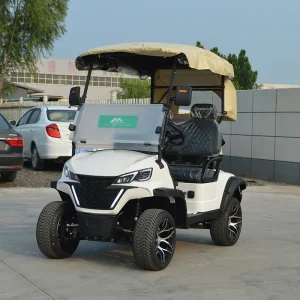
High-Capacity & Specialized Commercial Electric Mobility Solutions
Review our supplementary range of high-performance 2-seat, 4-seat, and 6-seat commercial carts ready for factory-direct container dispatch.
Initiate Your Commercial Fleet Procurement Review
Connect directly with factory automotive engineers in Dezhou, Shandong. Receive full engineering drawings, custom OEM homologation matrices, and direct container pricing tailored to your port of discharge.