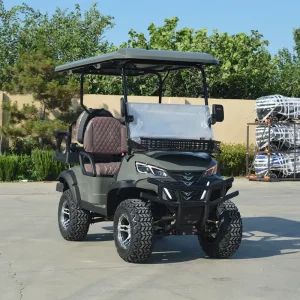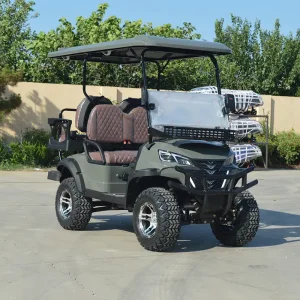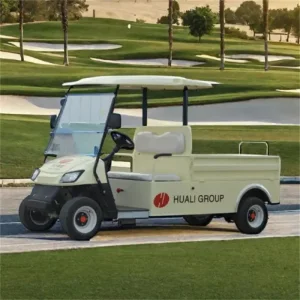
Flagship Cricket & Light Electric Cart Selections
Explore our high-performance 48V/72V micro-mobility platforms engineered for rugged terrain, tight spaces, resort hospitality, and low-speed urban community shuttles.
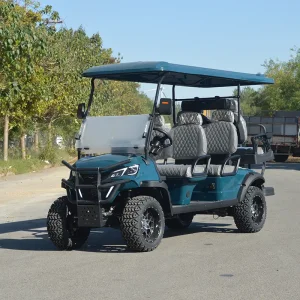
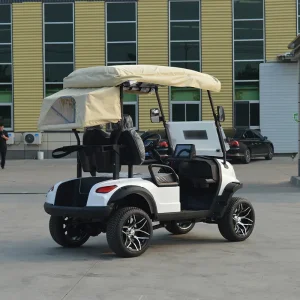
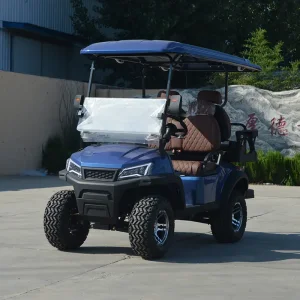
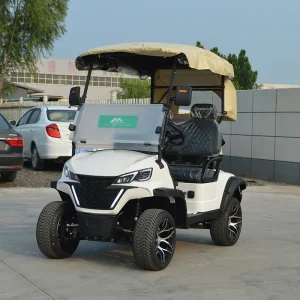
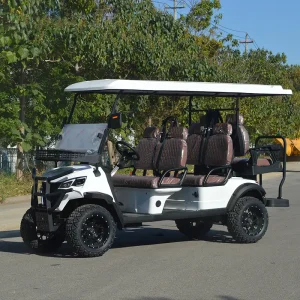
Evolution of the Cricket Electric Cart & Micro-EV Ecosystem
Analyzing the paradigm shift from traditional, heavy lead-acid utility runabouts to agile, high-payload, collapsible, and connected low-speed electric vehicles (LSVs).
Over the past decade, the global low-speed electric vehicle market has witnessed a distinct structural shift toward compact micro-mobility solutions, prominently represented by the "cricket-style" electric cart. Historically defined as ultra-compact, portable, and often foldable carts designed for horse shows, motorhome (RV) garages, small-footprint agricultural management, and light neighborhood transport, the modern cricket electric cart category has undergone an engineering renaissance. What was once viewed primarily as a niche hobby vehicle has evolved into an indispensable industrial and commercial operational asset.
The contemporary cricket electric cart bridges a critical operational gap that full-sized 6-passenger golf buggies and heavy industrial utility trucks cannot service. Compact chassis dimensions (often under 32 to 38 inches in width and sub-75 inches in length) combined with tight turning radiuses under 2.5 meters allow these agile electric carts to navigate dense indoor warehouse aisles, narrow equestrian stalls, multi-level resort corridors, and crowded event paddocks. With modern lightweight alloys, intelligent BMS-integrated lithium-iron-phosphate (LiFePO4) battery packs, and robust high-efficiency AC motors, today’s mini electric carts match or exceed the gradeability and operational torque of utility platforms twice their physical size.
Transportation & Storage Flexibility
Global demand from RV enthusiasts, sports outfitters, and mobile racing crews necessitates vehicles that fit inside standard pickup truck beds, toy-haulers, and van cargo bays without requiring specialized trailing equipment or commercial CDL transport permits.
Lithium-Driven Duty Cycles
Migrating from 36V/48V wet lead-acid cells to modular 48V/72V LiFePO4 battery modules has eliminated terminal maintenance and acid fumes while boosting continuous run-times to 8+ hours on a single 2-hour opportunity charge cycle.
Decarbonization Regulations
Stricter emissions protocols across corporate campuses, airport hangers, government parks, and luxury eco-resorts have accelerated the phasing out of small-displacement gas engines in favor of zero-emission, silent-operation micro-EV platforms.
China Industry 4.0: Supply Chain Resilience & Lean Engineering
Inside our Dezhou, Shandong production hub: Integrating automated robotic chassis welding, cathode-dip electrophoresis, and closed-loop dynamometer validation.
Evaluating an international manufacturing partner requires looking far beyond brochure renderings and aesthetic paint finishes. True reliability in low-speed electric carts originates within metallurgical discipline, powertrain software calibration, and supply chain vertical integration. Situated in the heart of Shandong province’s advanced equipment manufacturing corridor, our Dezhou factory deploys automated Industry 4.0 assembly principles across all micro-mobility vehicle series.
Our vertical integration model retains full internal control over core engineering workflows: CAD/CAM structural design, automated fiber-laser pipe cutting, multi-axis robotic jig welding, zinc-phosphate anti-corrosion dipping, electrostatic powder coating, and specialized harness looms. By keeping critical processes inside our 13,000 square meter plant rather than delegating them to fragmented sub-tier workshops, we maintain strict traceability on every batch of structural steel, controller microcontroller unit (MCU), transaxle gear, and battery cell.
Robotic Frame Precision
Precision-calibrated robotic welding fixtures eliminate chassis distortion, guaranteeing uniform load-bearing integrity, accurate suspension geometry, and lifelong alignment resistance on severe washboard roads.
Marine-Grade Cathodic Coating
Every welded tubular steel chassis receives an intensive multi-stage degreasing, electro-cleaning, and cathodic electrophoretic deposition process to resist coastal salt spray and high-humidity tropical microclimates.
Custom BMS Telematics
Lithium packs integrate proprietary smart Battery Management Systems (BMS) with CAN-bus communication, active cell balancing, high-temp cutoffs, and optional IoT telematics for live remote fleet monitoring.
100% End-of-Line Testing
Prior to crate packing, each vehicle undergoes rolling dyno testing for braking efficiency, acceleration curve verification, electrical insulation withstand checks, and high-pressure water ingress inspections.
Powertrain Matrix: Matching Voltage & Chemistries to Duty Cycles
A rigorous engineering comparison to guide commercial fleet managers, hotel procurement directors, and distributor buyers in making data-driven equipment purchases.
| Performance Parameter | Legacy 36V / 48V Lead-Acid | Leibin 48V High-Output Lithium | Leibin 72V AC-Drive Performance Lithium |
|---|---|---|---|
| Target Vehicle Applications | Flat turf golf tracks, small private yards | Light cargo utility, campus patrols, flat resorts | Extreme grades, 6-passenger buggies, high-speed LSVs |
| Battery Chemistry & Pack Life | Flooded / AGM (500-750 Cycles) | LiFePO4 (3,500+ Cycles) | Automotive-Grade LiFePO4 (4,000+ Cycles) |
| Pack Weight & Impact on Chassis | 140–200 kg (Causes chassis strain & turf damage) | 35–50 kg (Up to 70% reduction in curb weight) | 55–75 kg (Optimized center of gravity & ground clearance) |
| Motor Architecture & Control | DC Series / Shunt Wound (Brushed, high heat) | Brushless AC Induction / PMSM Vector Control | High-Torque Permanent Magnet AC Motor (Regen Braking) |
| Full Load Gradeability (%) | 12% to 15% Maximum | 20% to 25% Sustained | 30% to 35% Steep Incline Capability |
| Daily Operating Maintenance | Weekly water topping, acid corrosion scraping | Zero scheduled pack maintenance required | Zero maintenance, automated smart BMS balancing |
| Opportunity Charging Readiness | Unsuitable (Causes battery sulfation/memory loss) | Supported (1C to 0.5C rapid top-up) | Fully optimized (Charges from 20% to 80% in 90 mins) |
Localized Application Scenarios Across Global Commercial Sectors
From luxury equestrian facilities to sprawling manufacturing plants, discover how our custom compact golf buggy platforms integrate into daily operating routines.
Aviation Hangers & Tarmac Operations
Ground crews and private FBO hangars demand spark-free, zero-emission mini buggies that easily slip beneath aircraft wings to move tools, personnel, and light avionics cargo across sprawling tarmac aprons.
Equestrian Grounds & Rodeo Paddocks
Cricket-style electric buggies excel in equestrian complexes where standard gasoline UTVs spook prized competition horses. The silent electric drive allows trainers, vets, and event stewards to patrol rings quietly.
Luxury Resorts & Island Hospitality
Tropical island retreats, beachfront bungalows, and boutique hotels require low-impact electric vehicles that preserve peaceful surroundings while navigating narrow wooden boardwalks, garden pathways, and sand-dusted roads.
Industrial Parks & Giga-Factories
Maintenance engineers, quality inspectors, and logistics supervisors utilize our rapid-response 2-seater and cargo-deck electric carts to cut cross-facility transit times across multi-building campuses.
RV Toy-Hauler & Overlanding Fleets
Active retirees, motorsport racers, and mobile outdoor enthusiasts require mini carts that effortlessly roll into 8-foot toy-hauler garages or hitch racks, offering instant short-distance transport at campgrounds and tracks.
Gated Communities & Active Living
Master-planned residential neighborhoods, golf villages, and retirement estates prefer compact, street-legal LSVs with automotive safety lighting, hydraulic disc brakes, and seat belts for convenient daily social errands.
Frequently Asked Questions: Sourcing from Chinese Factories
Direct technical and operational answers covering homologation, container loading schemes, customization limits, and post-sales technical warranties.
What certifications are supplied for North American and European imports?
Our export vehicles conform to specific target regulatory frameworks. For EU markets, we supply CE documentation and configure lighting, sound horns, and speed limiters to comply with L6e/L7e low-speed vehicle homologation standards. For North American customers, models can be built to satisfy US DOT FMVSS Part 571.500 (Standard 500) low-speed vehicle (LSV) criteria, including AS4/AS5 tempered glass, automotive seatbelts, side mirrors, and VIN coding.
How does Leibin optimize ocean freight volume in 20ft and 40ft HQ containers?
Shipping costs directly determine landed unit profitability. Our cricket carts and modular electric buggies are engineered for rapid partial knockdown (SKD) packing. By utilizing custom steel-pallet stacking frames, we detach roofs and front windshield assemblies without disturbing electrical harnesses. A standard 40-foot High Cube (40HQ) container holds between 16 and 24 compact units (model-dependent), radically reducing per-unit transpacific freight costs.
Can our corporate brand get customized OEM liveries, seat stitching, and accessories?
Yes. As a direct-tier source manufacturer, our OEM/ODM service extends beyond simple decal placement. We accommodate Pantone/RAL body color matching via automotive-grade electrostatic paint, custom two-tone marine upholstery stitching, branded steering center-caps, integrated digital dashboard boot-screens, and bespoke utility racking systems (e.g., medical stretcher mounts, toolboxes, or turf-aerator carriers).
What is the factory warranty coverage and overseas spare parts supply mechanism?
All vehicles carry a comprehensive 24-month structural warranty on frames and chassis welds, and a 36-month limited warranty on LiFePO4 battery packs and smart controllers. For commercial distributors, we provide a recommended wear-and-tear initial spare-parts kit (brake pads, solenoids, switches, and steering tie-rods) alongside the container shipment, backed by prompt DHL air courier dispatch for critical components and dedicated factory video diagnostics.
High-Torque Utility, Sightseeing & Off-Road Platforms
Discover our extended commercial line of 72V lithium buggies, multi-passenger campus shuttles, and heavy-duty cargo utility transporters built for rigorous commercial workloads.