
High-Velocity Fleet Portfolio
High-Torque & High-Speed Commercial Electric Carts
Engineered with 48V/72V modular drive units, integrated battery management systems, and ISO-verified tubular chassis for elite commercial and resort deployment.
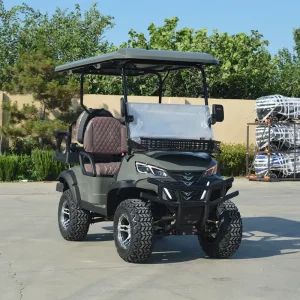
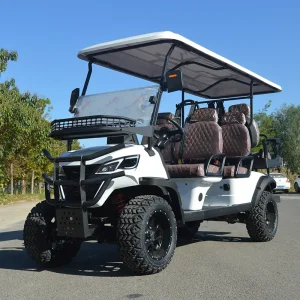
Buy 72V AC Mini Electric Golf Cart for Sale - China Suppliers & Factory, 4-Seat Lithium Battery Model, CE Certified Suppliers, Factory
Configure & View Specs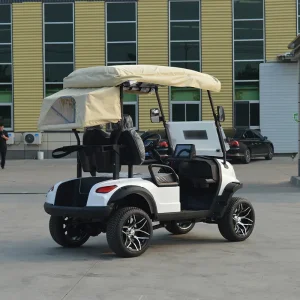
OEM Affordable 2 Seater Mini Sightseeing Car Golf Cart Electric Cars Manufacturer, Suppliers
Configure & View Specs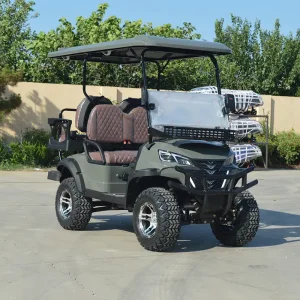
Cheap Cheap Small 4 Seater Electric Golf Carts, Golf Cart Battery, off Road Golf Carts Factory, Factories
Configure & View Specs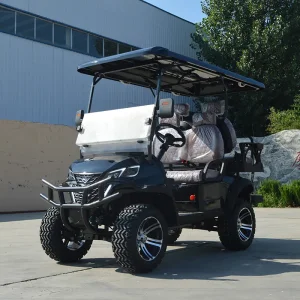
China China Suppliers Factory 72V Electric Golf Cart - 4-Seater Off-Road Buggy for Sightseeing, 35 km/h Speed, 150 km Range Suppliers, Factories
Configure & View Specs
China Affordable Electric 2 Seater Mini Sightseeing Car Golf Cart from China Suppliers and Factory Supplier, Factories
Configure & View Specs
Wholesale Electric Golf Cart 4seated Golf Buggy Sightseeing Bus off-Road 72vgolf Cart Manufacturers, Factory
Configure & View Specs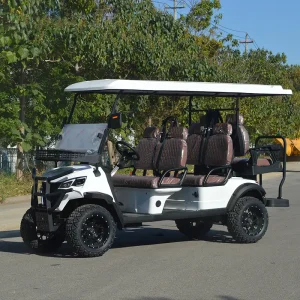
OEM Wholesale Electric Golf Carts from China Suppliers, 72V Lithium 6 Seat Golf Buggy Factory Made for Comfort and Performance Manufacturers, Factories
Configure & View Specs
Powertrain Transition
Engineering Paradigm: The Science Behind Fastest Golf Cars
The low-speed vehicle (LSV) ecosystem has transitioned from sluggish 48V DC lead-acid vehicles into ultra-responsive, thermal-managed 72V AC induction & PMSM powertrain platforms. Velocity is not merely an engine RPM metric; it is an integrated equilibrium of high-discharge C-rates, thermal mitigation, field-oriented control (FOC), and low-center-of-gravity chassis tuning.
45+ km/h
Max Regulated Speed
72V AC
High-Efficiency Architecture
3,500+
LiFePO4 Cycle Durability
< 3.8s
0-30 km/h Acceleration
72V High-Voltage Topologies
By shifting nominal operational voltage from standard 48V up to 72V, electrical current draw is diminished by 33% for the equivalent mechanical wattage. This dramatically curtails $I^2R$ resistive thermal generation across MOSFET controllers, enabling continuous peak torque outputs without thermal throttling.
Dynamic Vector FOC Control
Modern fast golf car manufacturers deploy algorithmic Field-Oriented Control (FOC). Real-time digital signal processing (DSP) measures rotor position via dual hall-effect encoders, executing regenerative magnetic braking and delivering instantaneous throttle linearity through complex grade variations.
Automotive Dual-Circuit Braking
High velocity necessitates rigorous kinetic safety. Top manufacturers implement automotive-grade four-wheel hydraulic disc brakes with auto-adjusting vacuum boosters, pairing electromagnetic park brake systems (EMB) that instantly lock the drivetrain when static zero-throttle state is detected.
Smart Manufacturing
China Industry 4.0: Supply Chain Resilience & Production Supremacy
The manufacturing epicenters of China—specifically advanced automotive industrial clusters such as Dezhou, Shandong—have redefined low-speed electric mobility production. By integrating full-cycle vertical fabrication, tier-1 supply networks, and rigorous electro-coating robotics, Chinese manufacturers provide unparalleled engineering consistency at superior unit margins.
Robotic Laser Welding & Jigs
Chassis assemblies are executed by 6-axis robotic arms using high-tensile carbon steel tubing, eradicating manual weld variability and providing 300% greater torsional rigidity on rough terrains.
E-Coat Cathodic Electrophoresis
Every welded frame passes through multi-stage chemical degreasing, zinc phosphating, and immersion electrophoresis bath lines. This guarantees 1,000+ hours of continuous salt-spray rust protection.
Localized Lithium Integration
Direct tier-1 strategic supply chains with global CATL, EVE, and BYD cell fabricators empower Chinese manufacturers with premium grade-A LiFePO4 cells, custom high-amperage BMS, and built-in remote CAN-bus diagnostics.
SKD / CKD Export Optimization
Modular packing strategies utilize custom laser-cut steel skids. Up to 24 completely knocked-down (CKD) or 8 semi-knocked-down (SKD) 4-seater buggies fit inside a single 40ft High Cube container, slashing ocean freight expenses.
Procurement Specification Matrix
Engineering Audit: Standard 48V vs. High-Output 72V AC
Direct procurement departments must balance initial capital expenditure (CapEx) against the lifetime cost of ownership (TCO) and grade climbing efficacy. The table below illustrates core parameters verified by factory dyno tests.
| Performance & Engineering Attribute | Standard Fleet (48V Lead-Acid) | High-Speed Industrial (72V AC Lithium) | Impact on Enterprise Operations |
|---|---|---|---|
| Sustained Top Speed | 18 – 24 km/h (11 – 15 mph) | 35 – 45 km/h (22 – 28 mph) | Reduces transit turnaround times by 45% in expansive industrial campuses. |
| Motor Continuous Output | 3.0 kW – 3.8 kW Shunt Wound DC | 5.0 kW – 7.5 kW AC Induction / PMSM | Maintains maximum target velocity under full 6-passenger load and payload. |
| Gradeability & Incline Torque | 15% – 20% Slope Limit | 30% – 35% Steep Terrain Capability | Eliminates stall conditions on hilly resorts, alpine parks, and mountain trails. |
| Battery Cycle Durability | 500 – 700 Cycles (Daily Maintenance) | 3,500 – 4,000 Cycles (Zero Maintenance) | Over 8 years of continuous fleet service life without pack swap replacements. |
| Weight & Energy Density | Heavy (~380 kg lead pack) | Ultra-light (~110 kg LiFePO4 pack) | Extends tire, brake, and bushing lifespan due to a 250+ kg vehicle tare weight reduction. |
| Thermal Dissipation Rating | High resistance heat losses ($I^2R$) | Integrated Aluminum Extrusion Sink | Zero power derating even during 45°C ambient mid-day desert resort patrols. |
Global Use-Case Scenarios
Commercial Deployment Horizons for High-Velocity Electric Carts
The contemporary fastest golf car is no longer confined to fairways. As modern master-planned communities, eco-resorts, logistics hubs, and aviation facilities scale, high-speed low-speed vehicles bridge the crucial gap between micro-mobility and full-sized road trucks.
Tier-1 Luxury Resorts & Mountain Escapes
Multi-hectare resorts in Southeast Asia, the Mediterranean, and the Caribbean demand smooth, whisper-quiet vehicles capable of shuttling VIP guests up steep gradients at 35 km/h with silent, zero-vibration power reserves.
Security Patrols & Rapid Emergency Fleets
Industrial parks, corporate mega-campuses, and international seaports deploy heavy-duty 72V patrol variants equipped with strobe arrays and digital sirens, facilitating swift situational responses across vast perimeter fences.
Airports & Smart Warehouse Intralogistics
With quick acceleration and responsive dynamic braking, 48V/72V utility cargo configurations transport technicians, air cargo baggage, and palletized assemblies across concourses and internal distribution corridors.
Specialized Utility & Sightseeing Lineup
Commercial Sightseeing, Cargo & Multi-Passenger Platforms
From solar-integrated long-range explorers to modular cargo haulers, discover precision-manufactured Chinese electric vehicles compliant with international safety directives.
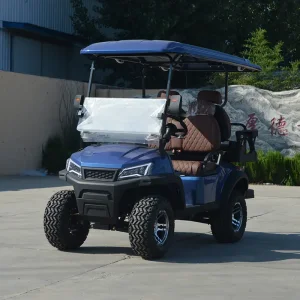
China Leibin (G90) 72V Lithium Battery Solar 4 Seaters off Road Electric Street Legal Golf Carts Manufacturers, Suppliers
Configure & View Specs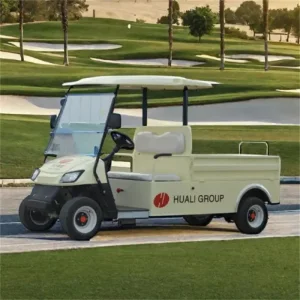
Cheap Cargo Electric Utility off Road Truck Golf Cart 48V Utility Gulf Cart Electric Golf Car Suppliers, Factory
Configure & View Specs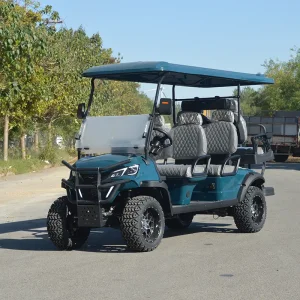
China 72V Electric Golf Cart - 6-Seater Modern Design | China Suppliers & Factory Quality Golf Buggy Manufacturer, Factory
Configure & View Specs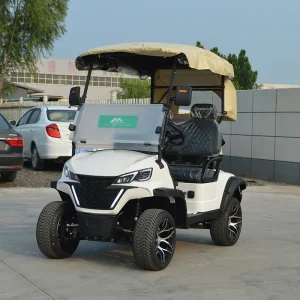
Best The Factory Directly Supplies 2-Seater Electric Sightseeing Cars, Golf Carts, Club Cars and Vans for Sale Manufacturers, Manufacturer
Configure & View Specs
China Wholesale 6 Seat Electric Golf Carts, 72V Lithium Customized Comfortable 4 Seat Electric Golf Buggy Supplier, Suppliers
Configure & View Specs
ODM Wholesale 6 Seat Electric Golf Carts - 72V Lithium, Customized Comfort from China Suppliers and Factory Supplier, Factory
Configure & View Specs
Wholesale China Factory Suppliers of 2-Seater Electric Sightseeing Cars, Golf Carts, and Versatile G70 Electric Vehicle Supplier, Suppliers
Configure & View Specs
OEM Affordable China 4-Seater Electric Golf Cart - Off-Road Adventure with Custom Battery Options from Trusted Suppliers & Factory Manufacturers, Supplier
Configure & View Specs
International Trade & Homologation
Navigating International Compliance: FMVSS 500, EEC L7e & CE Directives
Procuring fast low-speed electric vehicles across international borders demands comprehensive familiarity with regional road-safety standards. A cart operating safely at 40 km/h transforms from an off-course recreational vehicle into a Low-Speed Vehicle (LSV) subject to stringent vehicular homologation.
North America (DOT / FMVSS Part 500)
Vehicles exceeding 20 mph (32 km/h) up to 25 mph (40 km/h) fall under Low-Speed Vehicle regulations. Mandated components include certified DOT AS-4 laminated windshields, 3-point retractable seatbelts, side mirrors, illuminated reverse indicators, and 17-digit VIN stamping.
European Union (EEC / L6e & L7e-CP Quadricycles)
For street-legal municipal shuttling across Europe, carts must achieve EU Whole Vehicle Type Approval (WVTA). Requirements mandate electromagnetic compatibility (EMC test standard UN ECE R10), dual split-circuit hydraulic braking, and certified E-mark LED lighting clusters.
Battery & Logistics Directives (UN38.3 & MSDS)
Exporting high-capacity lithium packs requires rigorous adherence to maritime hazardous shipping protocols. Verified manufacturers furnish full UN38.3 vibration/shock test reports, CE certifications, and drop-tested sea-freight packing validation.
Procurement Engineering Q&A
Frequently Asked Questions for Fleet Importers & Distributors
Essential engineering and procurement considerations answered by factory technical directors.
What technical parameters define the fastest golf cars in commercial production? +
The transition from legacy golf carts (capped at 19-24 km/h) to fast LSV buggies (35-45+ km/h) requires a triad of mechanical and electrical upgrades: a 72V high-efficiency AC or Permanent Magnet Synchronous Motor (PMSM), a high-amp programmable Field-Oriented Controller (FOC), high C-rate Lithium Iron Phosphate (LiFePO4) battery chemistry with an automotive-grade BMS, four-wheel hydraulic disc brakes, and an automotive independent double A-arm front suspension.
Why is 72V AC superior to 48V DC in terms of acceleration and hill climbing? +
According to Ohm's and Joule's electrical laws, higher system voltage achieves equivalent wattage output at substantially lower amperage ($P = V \times I$). Lower amperage reduces thermal loss ($P_{\text{loss}} = I^2R$) across motor windings and controller switches. Consequently, 72V powertrains provide greater torque continuity, withstand steep gradients up to 35% without thermal limiting, and sustain target top speeds under full 6-passenger gross payloads.
How do Chinese manufacturers guarantee chassis longevity in corrosive coastal resort environments? +
Leading Industry 4.0 manufacturers employ cathodic electrodeposition (E-coating). Entire jig-welded carbon steel frames undergo a multi-stage chemical pre-treatment, pickling, phosphating, and full cathodic electro-bath immersion. This ensures a uniform epoxy resin coating across hidden internal tube cavities, delivering over 1,000 hours of continuous ASTM B117 salt-spray test endurance.
What are the minimum safety requirements to legally register these vehicles as LSVs in the USA or EU? +
For US road legality (FMVSS No. 500 / DOT), the vehicle requires an AS-4 laminated glass windshield with wiper, DOT-approved 3-point seatbelts, exterior rearview mirrors, illuminated front/rear LED turn signals, horn, reflex reflectors, parking brake, and a 17-digit VIN code. In the European Union (L6e/L7e type-approval), additional requirements include UN ECE R10 electromagnetic compliance, certified braking distances, and horn decibel compliance.
What after-sales and spare parts protocols exist for global container distributors? +
Tier-1 manufacturers supply containerized spare-part packages (including wearable brake pads, bushings, micro-switches, steering tie rods, and controllers) matched to fleet unit quantities. Technical support is facilitated via live CAN-bus remote diagnostic software, complete CAD wiring schematic repositories, and priority air-courier component dispatch under guaranteed factory warranties.