
Tier-1 Commercial Fleet Configurations
Direct-from-factory low-speed electric vehicles (LSVs) and golf buggies configured with 72V lithium architectures, automotive-grade controllers, and precision-welded frames for premier fleet performance.
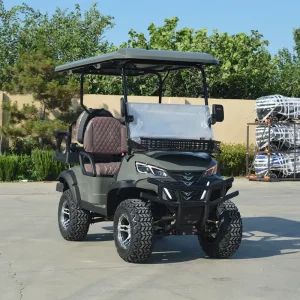
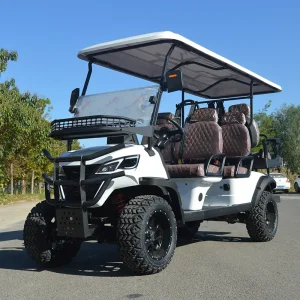
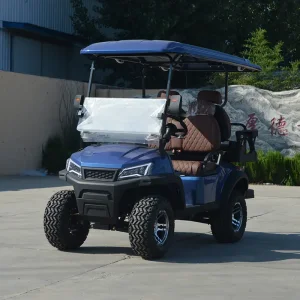
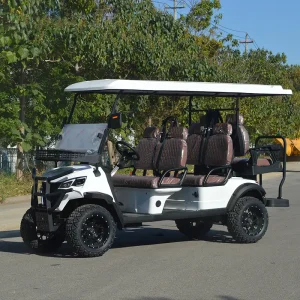
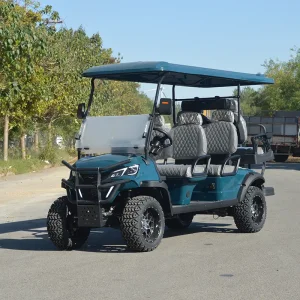
The Evolution of the First Golf Car Industry: From Pure Leisure to Critical Infrastructure
Over the past decade, the global low-speed electric vehicle (LSEV) landscape has undergone an unprecedented paradigm shift. Selecting the Best First Golf Car Supplier is no longer simply an operational checkbox for 18-hole sports management; it has evolved into a strategic infrastructure procurement decision for multinational resort developers, high-density residential conglomerates, industrial campuses, and municipal mobility authorities worldwide.
Historically, early golf buggies relied on inefficient lead-acid arrays mounted onto rudimentary steel ladder frames, primarily engineered for short, flat fairway transits. However, rapid urban decentralization, surging eco-tourism, and stringent ESG decarbonization mandates have catapulted commercial golf cars into multifaceted roles. Modern commercial platforms operate continuously for 12 to 16 hours a day across demanding topographies, transporting guests, cargo, security personnel, and utility maintenance equipment.
High-Voltage Architecture
Transition from legacy 36V/48V lead-acid configurations to integrated 72V LiFePO4 (Lithium Iron Phosphate) platforms, offering 3,500+ deep-discharge duty cycles, thermal stability, zero terminal maintenance, and instantaneous torque delivery under maximum passenger payloads.
Intelligent Telematics & CAN-Bus
Next-generation suppliers incorporate central CAN-bus telemetry, allowing fleet operators to monitor real-time State of Charge (SoC), remote geo-fencing speed restrictions, battery cell balancing, and predictive preventative maintenance alerts via cloud interfaces.
Automotive-Grade Homologation
Modern fleet buyers demand structural crashworthiness, three-point inertia seatbelts, four-wheel hydraulic disc braking systems, integrated LED lighting arrays, and compliance with international standards such as US DOT FMVSS 500 and European EEC L6e/L7e directives.
Enterprise Procurement Demand: Deconstructing Total Cost of Ownership (TCO)
When global procurement directors, fleet leasing managers, and hospitality asset holders evaluate candidates for their primary golf car suppliers, surface acquisition cost (Initial CapEx) represents merely 35% to 40% of the aggregate 7-year asset expenditure. The remaining 60% is dictated by energy conversion efficiency, unscheduled mechanical downtime, chassis corrosion cycles, battery replacement overhead, and warranty recourse agility.
| Evaluation Parameter | Conventional Tier-3 Carts (Lead-Acid / 48V) | Leibin High-Efficiency Fleet (72V LiFePO4 Platform) | Commercial Sourcing Impact |
|---|---|---|---|
| Battery Chemistry & Life | Lead-Acid (500 - 800 cycles, ~2.5 yrs) | Automotive LiFePO4 (3,500+ cycles, 8-10 yrs) | Eliminates 2 to 3 battery replacement cycles per unit lifecycle. |
| Powertrain Thermal Efficiency | DC Motor (Brush friction, 75-80% efficiency) | AC Asynchronous / PMSM (92-95% efficiency) | 18-22% reduction in kilowatt-hour utility consumption per charging session. |
| Chassis Metallurgical Integrity | Standard welded mild steel, spray enamel | Robotic jig-welded tubular steel with cathodic electrocoating (e-coat) | Superior rust protection in coastal resort and high-humidity salt environments. |
| Operational Gradeability | 12% - 15% grade maximum at full payload | 25% - 30% continuous slope climbing torque | Full stability on steep resort mountain trails and undulating fairway contours. |
| Preventive Fleet Maintenance | Bi-weekly distilled water topping, acid neutralization | Zero scheduled fluid maintenance, sealed modular BMS | Saves an estimated 48 man-hours per vehicle annually in routine technician labor. |
Macro Industry Solutions: Scenario-Tailored Turnkey Architectures
Enterprise deployment cannot rely on a generic, one-size-fits-all chassis. Dezhou Leibin Vehicle Industry Co., Ltd. custom engineers platform solutions categorized directly by operational duty cycle, passenger capacity, terrain profile, and aesthetic prestige.
Luxury Hospitality & Eco-Resorts
Ultra-quiet 72V AC drivetrains ensuring silent nighttime transport. Configurable in 4, 6, and 8-seat luxury forward-facing arrangements with weatherized marine-grade upholstery, integrated cooler boxes, and solar photovoltaic trickle-charging roofs.
- Zero operational emissions in sensitive ecosystems
- Whisper-quiet acoustic profile (<58 dBA)
- High-end custom metallic clear coats
Gated Communities & Smart Cities
Street-legal LSV homologation packages engineered for low-speed urban connectivity. Outfitted with automotive three-point seat belts, DOT-certified laminated glass windscreens, side-view mirrors with integrated LED blinkers, and high-intensity daytime headlights.
- FMVSS 500 Low-Speed Vehicle compliance
- Dual-circuit hydraulic regenerative braking
- Modern ergonomic digital dashboard clusters
Industrial Facilities & Campuses
Workhorse utility vehicles built on the Leibin G30 platform. Designed with reinforced rear diamond-plate cargo beds, hydraulic dump capabilities, heavy-duty rear coil-over suspension, and up to 1,000 kg operational towing capacity for sprawling manufacturing parks.
- High-payload alloy and steel cargo platforms
- Heavy-duty leaf spring rear suspension setup
- Reinforced tubular front steel brush guard
Perimeter Patrol & Law Enforcement
Specialized low-speed security configurations equipped with police-spec strobe lightbars, public address (PA) sirens, high-gain communications brackets, searchlights, and weather-proof cabin enclosures for 24/7 security patrol operations.
- Integrated auxiliary 12V 40A DC step-down converter
- Rugged all-terrain tire and lifted wheel geometry
- Lockable waterproof equipment storage consoles
Engineering Compliance, Quality Assurance & Localized Support
Navigating global tariff policies, border inspections, and regional safety mandates demands verifiable manufacturing credentials. Selecting Dezhou Leibin Vehicle Industry Co., Ltd. ensures direct alignment with internationally recognized testing standards.
Every vehicle dispatched from our 13,000 m² factory in Wucheng County, Dezhou City undergoes an exhaustive 5-stage verification protocol covering metallurgical weld penetration, salt spray anti-corrosion endurance, dynamic electronic chassis dynamometer testing, water ingress seal verification, and battery thermal runaway simulation testing.
North American Standards (FMVSS 500 & SAE J2258)
For US and Canadian operators, our street-ready Low Speed Vehicles (LSVs) satisfy Federal Motor Vehicle Safety Standard 500: rated for speeds up to 25 mph (40 km/h), equipped with AS4-certified automotive windscreens, parking brakes, reflex reflectors, and VIN assignment capabilities.
European Union CE & EEC Type Approval
Vehicles comply fully with Machinery Directive 2006/42/EC and Electromagnetic Compatibility (EMC) standards. For public road utility under L6e and L7e classifications, Leibin configures braking ratios, dual-horn arrays, LED E-mark lighting, and audited lithium pack isolation monitoring.
Lithium Safety: UN38.3 & ISO 9001:2015
All onboard lithium battery configurations are constructed with prismatic LiFePO4 cells certified under UN38.3, MSDS, and IEC 62619 standards. Integrated intelligent Battery Management Systems (BMS) provide multi-tier overcharge, over-discharge, over-temperature, and short-circuit protection.
Technology Roadmap: The Next-Generation Smart Low-Speed EV Architecture
The intersection of AI, autonomous geofencing, and photovoltaic micro-generation is transforming low-speed utility transport. Leibin’s continuous R&D investment establishes high-value competitive advantages across three foundational technology pillars:
High-Efficiency Solar Integration
As featured on the flagship Leibin G90 series, curved roof canopies integrate flexible monocrystalline silicon solar cells with maximum power point tracking (MPPT) regulators. This yields 15-25 km of supplementary autonomy daily solely via ambient solar irradiance, decreasing reliance on grid charging infrastructure.
Cloud-Based AI Fleet Telematics
Next-gen CAN-bus telemetry sends 120 key operating parameters to central dispatch consoles. Proprietary machine-learning algorithms analyze driver acceleration habits, thermal spikes in motor windings, and battery pack degradation curves, drastically curbing unforeseen field failures.
Autonomous RTK Geofencing & ADAS
Integration of centimeter-accurate RTK GPS geofencing prevents carts from deviating off approved pathways, automatically throttles velocity in crowded pedestrian precincts, and incorporates forward LiDAR collision avoidance sensors to eliminate resort property damage.
Strategic Q&A: B2B Sourcing & Procurement FAQ
Critical questions answered directly by the engineering and export logistics leadership at Dezhou Leibin Vehicle Industry Co., Ltd.
1. Why should our organization select a 72V AC platform over a traditional 48V DC powertrain? +
2. How does Leibin guarantee factory-direct quality compared to Chinese trading intermediaries? +
3. What is the process for ensuring street-legal homologation in our specific destination country? +
4. What are the packaging methods, container loading volumes, and shipping damage mitigations? +
5. What after-sales warranty, spare parts inventory, and field support are provided for export orders? +
6. Can Leibin execute complete OEM/ODM bespoke branding and livery customization? +
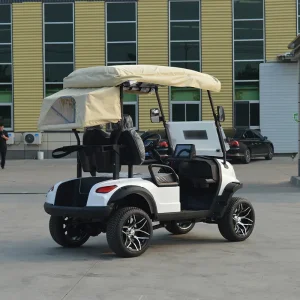
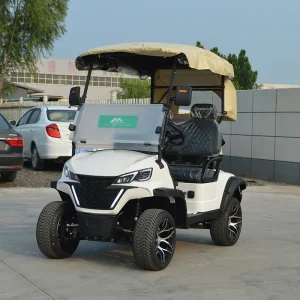
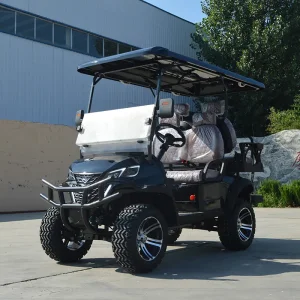
Specialty, Sightseeing & High-Capacity Utility Buggies
Comprehensive electric sightseeing cars, versatile club car models, and customized long-wheelbase carriers engineered for commercial duty cycles and maximum ROI.
Consult Directly with a Leibin Powertrain Engineer
Request complete model technical dossiers, custom container packing simulations, or schedule a real-time high-definition video walkthrough of our Dezhou assembly plant.