High-Performance Electric Golf Cars & Modular Seating
Explore commercial-spec electric buggies manufactured with premium modular seating platforms, advanced lithium integration, and international homologation readiness.
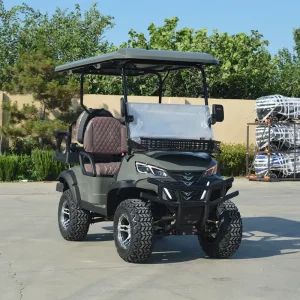
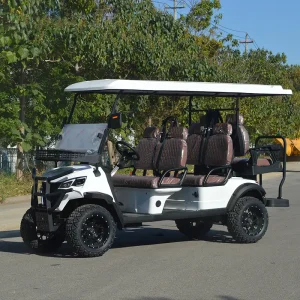
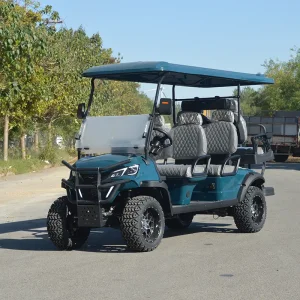
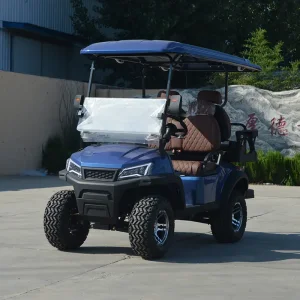
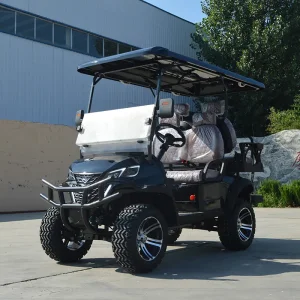
Macro Trends Reshaping Golf Car Seats & Fleet Engineering
The transition from utility transport to premium Low-Speed Vehicles (LSVs) and Personal Transportation Vehicles (PTVs) has positioned vehicle seating as a core engineering domain involving ergonomics, longevity, and automotive compliance.
Ergonomic Sculpting & Micro-Climate Tech
Traditional flat bench vinyl seating is rapidly giving way to dual-density molded polyurethane foam featuring integrated lateral bolstering and lumbar contours. Enterprise procurement contracts in warm climates increasingly mandate breathable marine-grade vinyl, micro-perforations, and thermal heat-dissipating core matrices that maintain low surface temperatures during intense UV exposure.
Automotive FMVSS & EU Homologation
As street-legal LSVs penetrate closed communities and municipal zones under FMVSS 500 and EU L6e/L7e type approvals, seat structural assemblies must meet rigorous static tensile pull tests for integrated 3-point seatbelts (FMVSS 209/210). Modern factories must transition from wood-backed frames to robotically welded steel cages and composite injection bases.
Modular 'Flip-Flop' Utility Conversions
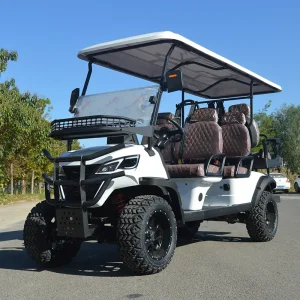
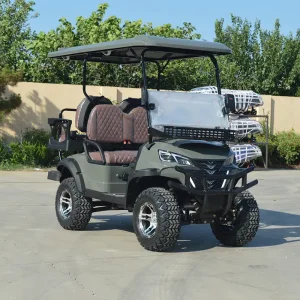
Modern fleet buyers demand dual-purpose versatility. Integrated 4-passenger and 6-passenger configurations rely on rear-facing flip-flop seating mechanisms that fold seamlessly into rugged, flat diamond-plate cargo beds. Engineering focuses on heavy-duty hinges, marine powder-coating, and anti-slip load capacities exceeding 400 lbs without chassis deflection.
Global Enterprise Procurement Specifications for Golf Car Seats
Enterprise procurement professionals and resort fleet managers demand clear verification metrics when evaluating Tier-1 seating suppliers and integrated EV manufacturers.
| Evaluation Parameter | Commercial Fleet Grade | Enterprise Luxury / Resort Spec | Validation / Test Protocol |
|---|---|---|---|
| Upholstery Substrate | 0.9mm Standard Marine Vinyl | 1.2mm Microfiber Anti-Microbial PU | ASTM G21 Anti-Fungal / 1000h Xenon Arc UV Test |
| Foam Core Technology | Cold-Cure Slab Polyurethane | High-Resilience Dual-Density Molded Foam | ASTM D3574 Indentation Force Deflection (IFD) |
| Frame & Base Substrate | Treated Plywood Core | Rotomolded HDPE / E-Coated Tubular Steel | ISO 9227 720-Hour Neutral Salt Spray Resistance |
| Safety Anchor Integration | Chassis Independent | Integrated Retractable 3-Point Belt Harness | FMVSS 210 / SAE J386 Occupant Restraint System |
| Utility Conversion Mechanism | Manual Stamped Brackets | Gas-Strut Assisted Diamond Poly Cargo Bed | 10,000 Cycle Dynamic Load Fatigue Test |
Macro-Industry Seating Solutions Engineered for Duty Cycles
A golf car's interior integrity determines fleet uptime, passenger satisfaction, and lifecycle cost. Our platform aligns seating architecture to specific operating landscapes.
5-Star Luxury Resorts & Hospitality
High-end properties require hand-stitched diamond patterns, integrated armrests with insulated cup holders, and plush bolstered seat contours. Seat surfaces are engineered with advanced UV barriers to resist fading under tropical sun and withstand guest sunscreen, salt air, and constant cleaning routines.
Municipal Security & Campus Patrols
Patrol officers operate in high-friction environments with tactical gear and frequent ingress/egress. Solutions feature reinforced ballistic cordura side shields, heavy-duty suspension-dampening bases, and ergonomic support matrices that prevent driver fatigue over 8- to 12-hour continuous shifts.
Industrial Cargo & Utility Maintenance
For operations handling tools, equipment, and facility upkeep, our heavy-duty rear utility benches convert swiftly from passenger seats to durable industrial cargo surfaces. Engineered with textured anti-scratch thermoplastic linings, reinforced perimeters, and integrated cargo tie-down loops.
Localized Support, Homologation & Lifecycle Integrity
From frame welding in our 13,000 m² factory to global export crating, each golf car seating and chassis interface is audited under rigorous quality frameworks.
CE & ISO Quality Control
All structural frame welds and seat mountings follow ISO 9001 certified protocols, ensuring high load integrity, weld penetration uniformity, and dependable dimensional tolerances across fleet orders.
Weather & UV Protection
Automotive-grade vinyl upholstery integrates advanced anti-microbial treatments, fire-retardant compliance (FMVSS 302), and cold-crack resistance rated down to -20°C for northern climates.
Field Replacement Spares
Standardized mold tooling guarantees modular cushion swap capabilities. Operators can easily replace bottom foam sections or swap upholstery skins in under 10 minutes without taking cars out of service.
Worldwide Crating Logistics
Export packaging features custom steel-frame crates or direct high-density container loading designed to protect molded cushions and stitched materials from moisture, friction, and pressure marks during ocean transit.
Technology Roadmap: Next-Gen Smart Seating for Low-Speed EVs
The integration of smart IoT telematics and battery management systems is expanding directly into interior passenger surfaces and intelligent cabin controls.
Embedded Biometric & Presence Sensors
Next-generation commercial seat bases integrate capacitive passenger presence detection. This prevents vehicle acceleration when an occupant is improperly seated, provides automatic golf bag security tracking, and triggers automatic parking brakes when the driver dismounts.
Integrated Climate & Heating Elements
Utilizing high-efficiency low-draw PTC carbon-fiber heating grids, luxury resort buggies extend their operating window into cooler seasons. Smart seat heating integrates directly with 48V/72V lithium battery management systems without significant range degradation.
Circular Bio-Based Synthetics
Fleet sustainability goals are accelerating the shift toward post-consumer recycled composite seat pans and eco-friendly bio-polyols for seat cushions. These recyclable materials lower carbon footprints while resisting chemical breakdown from commercial cleaning agents.
Frequently Asked Questions on Golf Car Seats & Fleet Manufacturing
Essential guidance on customization, materials, street legality, and engineering standards for institutional buyers.
What distinguishes commercial marine-grade vinyl from standard automotive upholstery?
Commercial golf car seats require marine-grade vinyl formulated with UV inhibitors (tested up to 1,000+ hours under ASTM G154) and anti-fungal biocides to prevent pink stain mildew. It also provides high abrasion resistance, enduring 50,000 to 100,000 double rubs on the Wyzenbeek method.
Are aftermarket replacement seat assemblies universally compatible across chassis?
Mounting bracket locations, hinge widths, and subframe bolt patterns vary significantly across manufacturers (such as Leibin G-Series, Club Car Precedent/Tempo, and EZ-GO TXT/RXV). OEM and ODM manufacturers supply laser-cut bracket adapters and vehicle-specific mounting plates for seamless retrofit compatibility.
How do seat frame materials impact long-term total cost of ownership (TCO)?
Traditional wood bases degrade and rot within 2-3 years in humid or rainy coastal climates. High-volume fleet operators should specify rotomolded polyethylene or composite HDPE seat pans paired with electrophoretically coated (e-coated) tubular steel subframes to eliminate moisture damage.
Can custom color matching and enterprise branding be applied during OEM production?
Yes. Factory-direct OEM/ODM orders support full customization of seat piping, custom vinyl grain textures, multi-tone color blocks, and laser-stitched or heat-embossed resort logos. Seat colorways can be precisely matched to body paint schemes during initial production.
Special-Purpose Sightseeing Buggies & Multi-Row Utility Carts
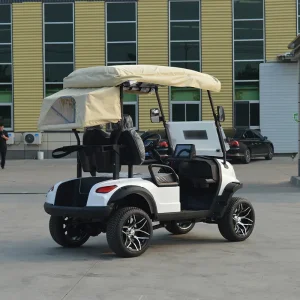
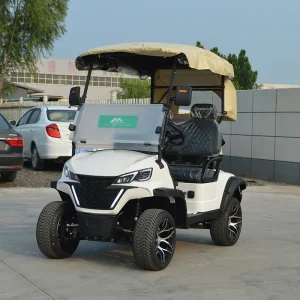
Procure versatile 2-seat, 4-seat, and 6-seat low-speed electric vehicles engineered for resort shuttles, estate mobility, and commercial operations.