
High-Efficiency 72V & 48V Electric Golf Power Carts
Verified manufacturing units equipped with intelligent BMS controllers, high-torque AC propulsion motors, and corrosion-inhibiting electrophoretic tubular steel chassis.

Best 72V Modern 6-Seater Electric Golf Cart - Factory Direct from China Suppliers, Ideal for On-Road and Off-Road Use Manufacturer, Suppliers

ODM Wholesale 6 Seat Electric Golf Carts - 72V Lithium, Customized Comfort from China Suppliers and Factory Supplier, Factory

Wholesale 72V AC Mini Electric Golf Cart Buggy Gold Color 4-Seat Golf Cart with Lithium Battery CE Certified and Tail Caddie Equipment Factory, Factories
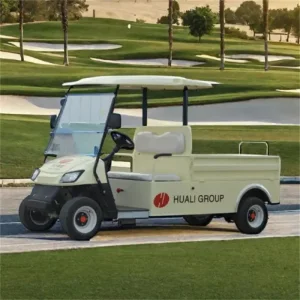
Cheap Cargo Electric Utility off Road Truck Golf Cart 48V Utility Gulf Cart Electric Golf Car Suppliers, Factory

ODM Low-Speed Electric Golf Car from China Suppliers - CE Approved 15-40km/H Beemotors G70-4+2 Factory Model Suppliers, Factories

Wholesale China Factory Suppliers of 2-Seater Electric Sightseeing Cars, Golf Carts, and Versatile G70 Electric Vehicle Supplier, Suppliers
China 72V Electric Golf Cart - 6-Seater Modern Design | China Suppliers & Factory Quality Golf Buggy Manufacturer, Factory
Best The Factory Directly Supplies 2-Seater Electric Sightseeing Cars, Golf Carts, Club Cars and Vans for Sale Manufacturers, Manufacturer
The Global Transition in Commercial Low-Speed Vehicles (LSV)
Decoupling reliance on obsolete lead-acid architectures toward high-density LiFePO4 cells, 72-volt AC asynchronous drivetrains, and connected telematics.
The commercial golf cart and light utility vehicle landscape is traversing an unprecedented structural shift. What was once recognized strictly as leisure equipment for eighteen-hole fairways has metamorphosed into the backbone of zero-emission local transit across master-planned resorts, international aviation hubs, manufacturing campuses, and gated urban developments. Global commercial demand for heavy-duty golf power carts is projected to exceed $4.8 billion by 2030, propelled by corporate sustainability mandates, rising fossil fuel prices, and municipal low-emission zone (LEZ) enforcement throughout North America, the European Union, and the Asia-Pacific region.
Historically, commercial fleet procurement was monopolized by a closed triumvirate of legacy North American brands whose supply models rested on heavy dealer margins, locked proprietary maintenance protocols, and high aftermarket parts markups. However, recent disruptions across global supply chains have redirected enterprise procurement officers toward tier-one original design manufacturers (ODMs) and specialized factories based in China. Modern industrial facilities, exemplified by enterprises located in heavy-industry corridors like Dezhou, Shandong, combine vertically integrated steel fabrication with sovereign battery supply lines to offer unprecedented technical customization, rapid container delivery, and up to 40% Total Cost of Ownership (TCO) reductions over a 5-year lifecycle.
Key Procurement Metric: Voltage Topology Evolution
Modern commercial fleet managers are systematically deprecating traditional 36V and 48V DC systems. Transitioning to a 72V Lithium Iron Phosphate (LiFePO4) platform decreases internal resistive cable heat (I²R losses) by over 55%, optimizes continuous torque under gradient ascent, and lowers battery draw cycle degradation under continuous passenger loads.
When selecting the best golf power cart suppliers and factories, fleet directors must evaluate beyond cosmetic finishes. Authoritative vendor evaluation demands scrutiny across structural metallurgy, cathodic electrodeposition coating tanks, closed-loop inverter calibration, battery management system (BMS) cell balancing mechanisms, and the supplier's capacity to deliver localized regulatory compliance packages such as FMVSS 500 (Low-Speed Vehicles) in the USA and EEC L6e/L7e type approvals across the European Union.
High-Torque 72V AC Powertrains
Delivers continuous peak power for 20-30% slope inclines while eliminating the maintenance overhead of carbon brushes in legacy DC motors.
LiFePO4 Battery Integration
Integrated automotive-grade lithium iron phosphate chemistry offering 3,500+ full charging cycles, sub-zero protection, and rapid thermal dispersion.
Robotic Cathodic Anti-Corrosion
Micro-welded steel chassis immersed in cathodic electrocoat baths ensures exceptional resistance against coastal marine mist, fertilizers, and de-icing chemicals.
Cloud-Linked Fleet Telematics
Factory-integrated CAN-bus IoT modules enabling real-time remote geofencing, driver credentialing, battery health analytics, and remote speed throttling.
Comparative Architectural Analysis: 48V vs. 72V Fleet Performance
Quantitative breakdown of powertrain dynamics, operational thermal limits, duty cycles, and real-world capital amortization across intensive usage profiles.
| Evaluation Parameter | Legacy 48V Lead-Acid Cart | 48V LiFePO4 Commercial Cart | 72V High-Output AC LiFePO4 Cart | Strategic Enterprise Benefit |
|---|---|---|---|---|
| Operating System Voltage | 48V Nominal (Series 8x6V or 6x8V) | 51.2V Nominal (16S LiFePO4) | 76.8V Nominal (24S LiFePO4) | Lower Current Thermal Load |
| Continuous Gradeability | 12% – 15% Maximum | 18% – 20% Sustained | 25% – 35% Full-Payload Incline | Hilly Resort & Off-Road Capable |
| Usable Battery Cycle Life | 500 – 750 cycles (50% DoD) | 2,500 – 3,000 cycles (80% DoD) | 3,500 – 4,500 cycles (90% DoD) | 8+ Year Battery Lifespan |
| Energy Density & Curb Weight | ~480 kg (Heavy, high soil compaction) | ~350 kg (Reduced rolling resistance) | ~380 kg (Reinforced 6-seat chassis) | Zero Turf Rutting / Wear |
| Full Charge Time | 8 – 10 Hours (Slow equalization) | 3.5 – 4.5 Hours (Standard AC wall) | 2.0 – 2.5 Hours (High-amp Level 2) | Rapid Turnaround & Two-Shift Duty |
| Maintenance Overhead | Distilled water top-offs, acid corrosion | Zero acid, minimal terminal checks | Hermetic BMS monitoring, plug & play | Over 70% Service Labor Savings |
As demonstrated in the empirical test matrix above, transitioning from conventional 48V lead-acid packages to advanced 72V LiFePO4 architectures provides substantial returns on capital investment. The primary physical limitation of 48-volt drivetrains stems from Ohm's Law: to generate equivalent kinetic power under steep climbs or six-passenger payloads, lower voltage systems must draw significantly higher current. This elevates temperatures across the motor armature, controller MOSFETs, and wire looms, triggering automated thermal throttling and accelerating internal resistance breakdowns.
Conversely, a 72V golf power cart platform engineered by high-caliber factories allows current to be reduced by approximately 33% for an identical kilowatt rating. This preserves controller longevity, reduces battery cell degradation, and provides predictable throttle response under tough terrain.
Localized Commercial & Industrial Application Scenarios
Tailored power, chassis, and passenger configurations matching specific regulatory and functional requirements worldwide.
Luxury Resorts & Eco-Lodges
Whisper-quiet 72V passenger shuttles featuring silent AC drive trains, custom luxury automotive upholstery, and roof-mounted solar photovoltaic charging panels to maintain continuous standby charge in tropical destinations.
Industrial Plants & Logistics Parks
Work-ready cargo buggies featuring aluminum diamond-plate truck beds, hydraulic assist tipping boxes, and 500kg payload capacities. Built for manufacturing maintenance crews, tool transit, and line inspection.
Airports & Intermodal Security Patrol
Equipped with auxiliary 12V DC-to-DC converters powering lightbars, public announcement sirens, high-intensity LED searchlights, and integrated tablet mounts for municipal security and terminal ground crews.
Gated Residential LSV Transit
Street-legal configurations compliant with FMVSS 500 and state low-speed EV frameworks, featuring automotive three-point seat belts, DOT-stamped AS4 windscreens with wiper assemblies, turn indicators, and dual mirrors.
Global Standards: From Factory Floor to Street-Legal Homologation
Navigating international regulatory frameworks to ensure frictionless customs clearance and regional certification.
FMVSS 500 & SAE J2358 Compliance
- Low-Speed Vehicle (LSV) Mandates: Factory speed governing to maximum 25 mph (40 km/h) on paved roadways with gross vehicle weight ratings (GVWR) under 3,000 lbs.
- Mandatory Safety Assemblies: DOT-certified safety glass windshields conforming to ANSI/SAE Z26.1, FMVSS 209 three-point seat belts, illuminated headlamps, side/rearview mirrors, and hazard flashers.
- 17-Digit VIN Stamping: Direct-factory ISO 3779 compliant VIN allocation facilitating seamless state DMV title registrations and commercial insurance underwriting.
EEC / ECE L6e & L7e Type Approvals
- L6e-BP Light Quadricycle Class: Regulates light micro-mobility with unladen mass ≤ 425 kg, continuous rated electric power output ≤ 6 kW, and maximum velocity capped at 45 km/h.
- L7e Heavy Quadricycle Certification: Permitted power envelopes up to 15 kW for 6-to-8 seat sightseeing shuttles and commercial utility transporters operating across urban low-emission zones.
- Electromagnetic Compatibility (EMC): Certified per UNECE Regulation 10, preventing powertrain inverter interference with hospital equipment, radio communications, and flight systems.
UN 38.3, MSDS & Global Shipping Protocols
- Hazardous Materials Transport: Lithium packs pass rigorous UN Manual of Tests and Criteria Section 38.3, covering altitude simulation, thermal tests, vibration, shock, and external short circuit.
- Container Loading Engineering: Knock-down (KD) and semi-knock-down (SKD) steel-frame crating maximizing 40HQ container packing volume up to 16-18 units per shipment.
- Complete Factory Documentation: Factory supplies Certificate of Origin (Form E, CO, EUR.1), CE Declarations of Conformity, and technical schematic books for straightforward customs entry.
Technology Roadmap: The Next Decade of Golf Power Carts
Strategic advancements driving powertrain efficiency, smart fleet connectivity, and next-generation power storage.
Silicon Carbide (SiC) Inverters & PMSM Motors
Transitioning from traditional silicon IGBT motor controllers to high-frequency Silicon Carbide (SiC) MOSFET inverters paired with Permanent Magnet Synchronous Motors (PMSM).
- Increases electrical powertrain efficiency from 89% to over 96%.
- Reduces controller thermal footprint by 40%, eliminating the need for bulky aluminum heat sinks.
- Delivers instantaneous regenerative braking torque that reduces brake pad friction wear by 65%.
Solid-State LiFePO4 & Bidirectional V2G Microgrids
Integration of semi-solid electrolyte battery chemistries combined with bidirectional smart inverters designed for resilient resort infrastructure.
- Eliminates thermal runaway risk, expanding operating temperatures down to -30°C.
- Vehicle-to-Grid (V2G) Capability: Fleet batteries serve as distributed stationary storage to support resort microgrids during grid brownouts.
- Roof-integrated Perovskite-Silicon tandem solar cells generating up to 25 km of supplementary daily range under direct sun.
Autonomous Yard Shuttling & Automated Wireless Docking
Deploying low-cost solid-state LiDAR and RTK-GNSS positioning modules for structured commercial facilities.
- Self-repositioning fleets returning autonomously to charging stations at closing time.
- Resonant magnetic induction charging pads embedded into parking surfaces, removing manual charging plugs.
- AI-driven predictive fleet maintenance alerting technicians to bearing wear and tire pressure imbalances before in-service failure.
Why Tier-1 Direct Factory Sourcing Outperforms Intermediary Channels
A transparent breakdown of engineering accountability, unit unit economics, and after-sales support.
When purchasing golf power carts for large commercial resorts, planned residential communities, or industrial properties, procurement departments typically encounter three procurement options: domestic brand re-sellers, general trading export agents, and direct-to-factory original equipment manufacturers (OEMs). Selecting the correct procurement channel directly impacts both your capital budget and long-term fleet uptime.
Domestic re-sellers and established western brands often license designs from Chinese manufacturing centers, re-badge the front cowl, and apply markups ranging between 50% and 100% to support extensive domestic dealer footprints. While this model provides local sales offices, replacement parts are often heavily marked up, and custom structural modifications—such as custom stretch chassis, non-standard paint configurations, or bespoke cargo load configurations—are rarely accommodated.
On the other hand, sourcing through non-manufacturing trading agents introduces communication delays and technical disconnects. Trading middlemen cannot alter chassis welding jigs, reprogram controller CAN-bus protocols, or guarantee standardized cell testing across consecutive shipment containers.
Partnering with a direct factory and established supplier provides immediate technical advantages:
- Direct Engineering Accountability: Collaborate directly with mechanical and electrical engineers who design the chassis fixtures, configure motor parameters, and validate the BMS software stack.
- Transparent Bill of Materials (BOM): Full visibility into controller brand names (e.g., Curtis, Enpower), lithium cell grades (Tier-1 automotive Grade-A cells), and suspension components.
- Bespoke Brand Styling: Comprehensive OEM/ODM personalization including customized thermoformed ABS body contours, laser-engraved corporate branding, luxury stitched seating, and tailored wheel/tire packages.
- Direct Spare Parts Pipelines: Secure wear-item maintenance packs—such as brake discs, bushings, steering racks, and contactors—packed directly with container shipments at true factory cost.
Frequently Asked Questions by Enterprise Fleet Buyers
Comprehensive engineering, certification, logistical, and warranty answers for corporate decision-makers.
What are the key technical differences between 48V and 72V golf power cart platforms?
The primary technical variance is system efficiency under load. Operating under a 72V architecture draws approximately 33% less continuous current than an equivalent 48V system to produce identical kilowatt outputs. This significantly decreases I²R thermal resistance across wiring harnesses, controller MOSFET arrays, and motor windings. Consequently, 72V platforms offer superior slope climbing capability (25–35% gradients), faster acceleration curves, and sustained operational uptime under heavy multi-passenger or cargo payloads, without triggering heat-related controller shutdowns.
How do Chinese factories ensure compliance with USA FMVSS 500 and EU L7e street-legal regulations?
Reputable manufacturing factories design Low-Speed Vehicles (LSVs) strictly to the statutory requirements of the importing territory. For the United States, vehicles destined for FMVSS 500 registration feature electronically governed top speeds of 25 mph, AS4/AS5 laminated DOT windshields with integrated wipe/wash motors, FMVSS 209 certified three-point seat belts, high-mount center stop lamps (CHMSL), dual side mirrors, horn, and 17-digit ISO-standard VIN engravings. For European Union deliveries, carts undergo third-party laboratory verification for EEC L6e/L7e type approvals, including E-mark lighting verification, hydraulic dual-circuit braking tests, and UNECE R10 electromagnetic shielding certifications.
What battery chemistries are deployed, and how does the BMS safeguard fleet investments?
Tier-1 factories predominantly deploy Lithium Iron Phosphate (LiFePO4) chemistry due to its exceptional thermal stability and chemical resilience against thermal runaway. Each lithium pack is managed by an intelligent Battery Management System (BMS) connected via CAN-bus communication to the main motor controller. The BMS conducts millivolt-level cell balance monitoring, short-circuit shutdown, dynamic temperature sensing across pack zones, low-voltage cutoff, and over-current protection, ensuring 3,500 to 4,500 charge cycles before reaching 80% retained capacity.
What are container loading capacities and shipping procedures for overseas orders?
Freight logistics are optimized using two main packaging methods: Semi-Knock-Down (SKD) and Completely Built-Up (CBU) inside stackable steel-angle crates. In a standard 40-foot High Cube (40HQ) maritime shipping container, an SKD configuration allows up to 16 to 18 units of 2-seat or 4-seat carts to be packed safely with specialized protective wheel fixtures and foam coverings. For large 6-seater or lifted off-road variants, 6 to 8 fully assembled CBU units are accommodated per container. Factories provide complete container loading drawings, verified gross mass (VGM) certificates, UN 38.3 lithium battery certifications, and packing lists ahead of port dispatch.
What warranty, replacement parts supply, and remote engineering support are provided?
Factory-direct contracts typically include comprehensive commercial warranties: 5 years on the structural galvanized chassis frame, 3 to 5 years on the LiFePO4 battery pack, and 2 years on electric motors, transaxles, and controllers. Suppliers support international buyers by including critical spare part packages (relays, switches, brake calipers, bushings) directly inside container shipments. Technicians receive remote support through digital multimeter diagnostic trees, CAN-bus USB programming interfaces, factory wiring schematics, and live video engineering consultations.
High-Capacity Specialty Fleet Vehicles & Shuttles
Explore specialized low-speed electric mobility equipment engineered for campuses, resorts, sightseeing loops, and industrial facilities.
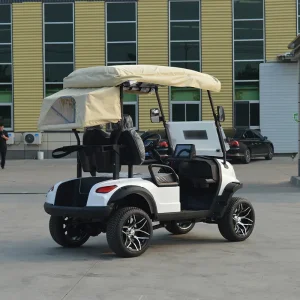
OEM Affordable 2 Seater Mini Sightseeing Car Golf Cart Electric Cars Manufacturer, Suppliers
China Wholesale 6 Seat Electric Golf Carts, 72V Lithium Customized Comfortable 4 Seat Electric Golf Buggy Supplier, Suppliers
Cheap Wholesale China 6 Seat Electric Golf Carts, 72V Lithium Battery, Comfortable Customized Golf Buggy from Suppliers & Factory Factory, Factories
Wholesale 72V Electric Golf Cart - Modern 6-Seater Buggy from China Suppliers | High-Quality Factory Manufacturing Suppliers, Factories

Wholesale Electric Golf Cart 4seated Golf Buggy Sightseeing Bus off-Road 72vgolf Cart Manufacturers, Factory
Cheap 72V New Style Modern Fashion 6 Seat Golf Cart Electric Golf Buggy Manufacturers, Supplier
China Affordable Electric 2 Seater Mini Sightseeing Car Golf Cart from China Suppliers and Factory Supplier, Factories
Wholesale Wholesale 6 Seat Electric Golf Carts from China Suppliers - Customized 72V Lithium Golf Buggy Factory Direct Supplier, Suppliers