
Enterprise Flagship Electric LSV Series
Engineered for continuous commercial duty cycles, zero-downtime micro-mobility, and extreme terrain adaptation with custom high-density battery matrices.
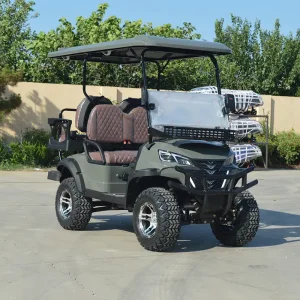
OEM Affordable China 4-Seater Electric Golf Cart - Off-Road Adventure with Custom Battery Options from Trusted Suppliers & Factory Manufacturers
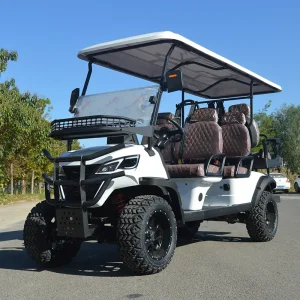
ODM Low-Speed Electric Golf Car from China Suppliers - CE Approved 15-40km/H Beemotors G70-4+2 Factory Model Suppliers
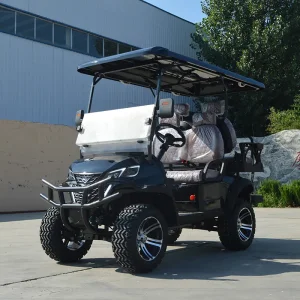
Wholesale Electric Golf Cart 4seated Golf Buggy Sightseeing Bus off-Road 72vgolf Cart Manufacturers, Factory
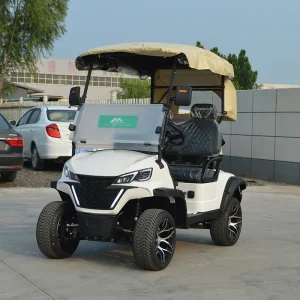
Best The Factory Directly Supplies 2-Seater Electric Sightseeing Cars, Golf Carts, Club Cars and Vans for Sale Manufacturers

Best 72V Modern 6-Seater Electric Golf Cart - Factory Direct from China Suppliers, Ideal for On-Road and Off-Road Use
Buy 72V Modern 6-Seater Electric Golf Cart from China Suppliers | Reliable Factory Golf Buggy for On-Road & Off-Road
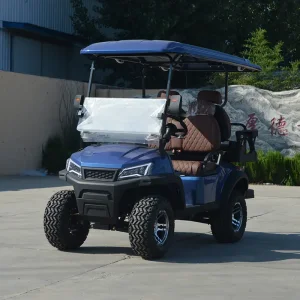
China Leibin (G90) 72V Lithium Battery Solar 4 Seaters off Road Electric Street Legal Golf Carts Manufacturers
Wholesale China Factory Suppliers of 2-Seater Electric Sightseeing Cars, Golf Carts, and Versatile G70 Electric Vehicle
The Engineering Evolution of Self-Powered Golf Carts & Micro-EV Fleets
The global low-speed electric vehicle (LSV) paradigm has shifted from basic golf buggies to intelligent, energy-harvesting utility transport systems. Sourcing direct from an advanced factory requires understanding the four technological pillars governing modern fleet autonomy.
Monocrystalline Solar Harvesting
Modern self-powered golf carts integrate high-efficiency (up to 23.4% conversion efficiency) flexible monocrystalline photovoltaic arrays into the overhead canopy. These systems generate 200W to 450W of continuous charging under ambient sunlight, extending daily operating range by 25% to 35% without plug-in infrastructure.
- Integrated MPPT (Maximum Power Point Tracking)
- Continuous trickle charging prevents battery sulfation
- Extended fleet up-time in resort & perimeter patrol cycles
Next-Gen 72V LiFePO4 Chemistry
Traditional 36V and 48V flooded lead-acid batteries are obsolete due to thermal runaway risks and high maintenance overhead. Leibin engineering standardizes on automotive-grade 72V Lithium Iron Phosphate (LiFePO4) systems with CAN-bus connected Smart BMS units for extreme thermal stability and superior life cycles.
- 3,500+ deep discharge cycles to 80% DoD
- Zero maintenance: no acid watering or terminal oxidation
- 60% reduction in curb weight increases payload efficiency
Regenerative Deceleration 2.0
Kinetic energy recapture systems transform vehicle braking into stored charge. On undulating terrain, downhills, and stop-and-go hospitality shuttle routes, our closed-loop AC motor controller reverses current back into the lithium pack, recapturing up to 18% of kinetic expenditure while reducing mechanical brake disc wear.
- Dynamic hill-hold control prevents roll-back
- Adjustable regenerative curves via factory programming
- Significant reduction in annual consumable brake pad costs
China Factory 4.0: Inside Leibin’s Dezhou Intelligent Production Facility
Enterprise procurement teams avoid trading brokers by partnering directly with vertically integrated manufacturing plants. Located in Dezhou, Shandong, our automated production ecosystem guarantees precision tolerance, corrosion resistance, and verified global homologation.
Robotic Laser & JIG Welding
Chassis frames constructed with high-tensile carbon steel using 6-axis robotic welding cells for structural rigidity and zero weld fatigue.
16-Stage Cathodic Electrodeposition
Automotive-grade E-coat dip tank treatment providing over 1,000 hours of ASTM B117 salt spray resistance for coastal and humid resort climates.
Modular Powertrain Mating
High-torque AC asynchronous and PMSM motors are dynamically balanced and mated to precision Italian-style helical transaxles.
End-of-Line Automated Dyno Testing
100% of rolling chassis pass through roller dyno speed calibration, 30° ramp grade holding, wet rain spray isolation, and safety circuit verification.
Powertrain Engineering: 48V vs. 72V Self-Powered Architectures
A comprehensive Total Cost of Ownership (TCO) and duty-cycle comparison to guide resort developers, fleet managers, and overseas equipment distributors in making data-driven procurement decisions.
| Evaluation Parameter | Legacy 48V Lead-Acid System | Modern 48V Lithium Standard | Leibin 72V Self-Powered Solar Lithium |
|---|---|---|---|
| Target Duty Cycle | Short-range flat golf courses, infrequent residential use | Flat to moderate grades, light commercial shuttles | Continuous all-day resort, off-road, hills & multi-passenger |
| Thermal & Amp Draw Efficiency | High I²R thermal losses under load; steep voltage sag | Moderate efficiency; standard current load | 33% lower current draw at identical wattage; minimal heat |
| Continuous Gradeability (Incline) | 12% - 15% maximum; rapid battery drain | 18% - 20% sustainable grade | Up to 30% sustainable incline with zero thermal derating |
| Autonomous Daily Range Addition | 0 km (Pure grid dependent) | 0 km (Pure grid dependent) | +20 km to +35 km daily via integrated solar canopy |
| Cycle Life Expectancy | 500 - 700 cycles (Requires watering) | 2,000 cycles (Maintenance free) | 3,500 - 4,000 cycles (10+ year service life) |
| 5-Year Fleet TCO Metric | High (Battery replacements, acid clean-up, power bills) | Moderate (Initial investment offset by longevity) | Lowest (Self-harvesting solar reduces charging costs by 40%) |
Worldwide Deployment: Mission-Specific LSV Solutions
From undulating mountain courses to sensitive island nature sanctuaries, our self-powered electric vehicles are engineered around local terrain profiles, ambient temperature extremes, and passenger configurations.
Eco-Resorts & Island Hospitality
Tropical destinations suffer from expensive localized grid electricity. The G90 Solar Series converts abundant island sunlight into quiet guest transportation, eliminating generator charging dependency and maintaining silent, zero-fume operation across private beaches and villa compounds.
Industrial Parks & Airport Logistics
High-utilization facilities like aerospace complexes, sea freight hubs, and university campuses run 16-hour shifts. Our G30 Utility variants feature heavy-duty steel cargo beds, hydraulic dumping options, and reinforced leaf springs capable of transporting maintenance tools and baggage containers.
Gated Communities & Urban Mobility
Street-legal configurations equipped with DOT-certified laminated windscreens, integrated LED turn indicators, 3-point seatbelts, electromagnetic park brakes, and rear-view camera systems comply with low-speed neighborhood vehicle (NEV) road regulations in North America and Europe.
International Homologation & Turnkey Export Packaging
Ensuring frictionless customs clearance, port transit, and local motor vehicle department registration through rigorous international certification compliance.
CE Machinery Directive
Complete electromagnetic compatibility (EMC) and low-voltage safety certification ensuring compliance with EN 1175 standards for European commercial distribution.
FMVSS 500 & SAE J2358
Configured specifically to meet US Federal Motor Vehicle Safety Standards for 20-25 mph low-speed electric vehicles with necessary safety lighting and mirrors.
UN38.3 Lithium Safety
Certified battery packs passing vibration, shock, external short circuit, and altitude simulation for compliant ocean freight and customs acceptance.
SKD / CKD Steel Crating
Reinforced angle-iron protective packaging engineered to maximize 40HQ container packing density (up to 18 units SKD) to optimize global freight costs.
Frequently Answered Technical & Sourcing Queries
Straightforward engineering responses addressing battery lifespans, solar charging efficacy, custom branding, and international warranty dispatch.
How much real-world range does the solar roof add under cloudy or shaded conditions?
Can Leibin configure vehicles specifically for US street-legal (LSV) and EU L7e homologation?
What are the minimum order quantities (MOQ) and lead times for custom OEM/ODM fleet orders?
Why choose a 72V AC or PMSM motor over a conventional 48V DC motor?
How does Leibin guarantee spare parts availability and remote troubleshooting for overseas fleet operators?
What packaging methods are utilized to prevent shipping damage during ocean transit?
Commercial Utility & Multi-Passenger Fleet Portfolio
Explore our full range of 2-seat utility buggies, 6-passenger shuttle platforms, and specialized cargo transporters manufactured to rigorous ISO 9001:2015 quality criteria.

Wholesale Wholesale 6 Seat Electric Golf Carts from China Suppliers - Customized 72V Lithium Golf Buggy Factory Direct

Wholesale 72V AC Mini Electric Golf Cart Buggy Gold Color 4-Seat Golf Cart with Lithium Battery CE Certified and Tail Caddie Equipment
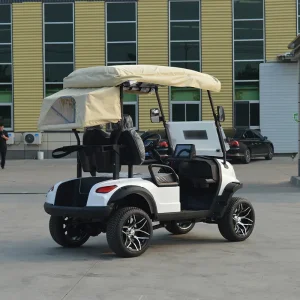
China Affordable Electric 2 Seater Mini Sightseeing Car Golf Cart from China Suppliers and Factory Supplier
Cheap Wholesale China 6 Seat Electric Golf Carts, 72V Lithium Battery, Comfortable Customized Golf Buggy from Suppliers & Factory
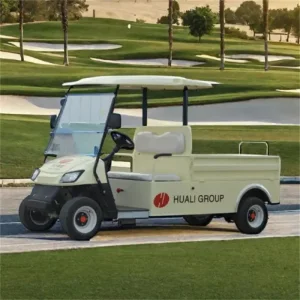
Cheap Cargo Electric Utility off Road Truck Golf Cart 48V Utility Gulf Cart Electric Golf Car Suppliers, Factory
Wholesale 72V Electric Golf Cart - Modern 6-Seater Buggy from China Suppliers | High-Quality Factory Manufacturing
ODM Wholesale 6 Seat Electric Golf Carts - 72V Lithium, Customized Comfort from China Suppliers and Factory Supplier
Buy 72V AC Mini Electric Golf Cart for Sale - China Suppliers & Factory, 4-Seat Lithium Battery Model, CE Certified
Ready to Optimize Your Fleet with Factory-Direct Engineering?
Contact our senior technical procurement team to request complete CAD dimensions, custom lithium battery sizing matrices, and containerized freight estimates.