Engineered Small Electric Golf Carts — Core Commercial Fleet
Explore precision-built electric buggies, utility carts, and personal transport vehicles (PTVs) developed for commercial hospitality, master-planned residential loops, and low-speed road homologation.

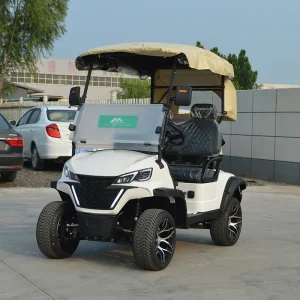
Cheap 72V New Style Modern Fashion 6 Seat Golf Cart Electric Golf Buggy
Configure Model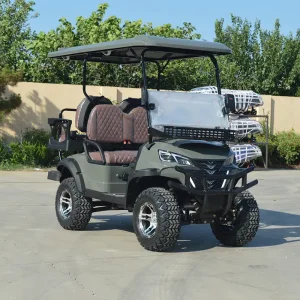
Cheap Small 4 Seater Electric Golf Carts, High-Output Battery Off-Road Platform
Configure Model
Wholesale 6 Seat Electric Golf Carts - Customized 72V Lithium Buggy
Configure Model
China 72V Electric Golf Cart - 6-Seater Modern Design Factory Quality Buggy
Configure Model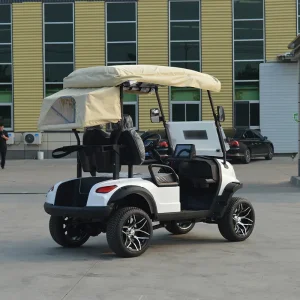
OEM Affordable 2 Seater Mini Sightseeing Car & Compact Golf Cart
Configure Model
72V AC Mini Electric Golf Cart, 4-Seat Lithium Model, CE Certified
Configure Model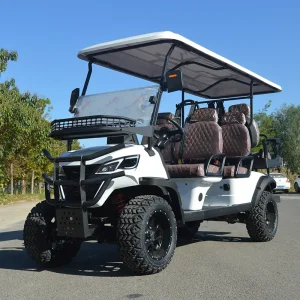
ODM Low-Speed Electric Golf Car - CE Approved 15-40km/h G70-4+2
Configure Model
OEM Wholesale Electric Golf Carts, 72V Lithium 6 Seat High Comfort Buggy
Configure ModelThe Paradigm Shift in Small Electric Golf Cart Manufacturing
From fairways to master-planned smart cities, the small electric vehicle (SEV) and Low-Speed Vehicle (LSV) ecosystem is undergoing rapid industrial consolidation driven by high-density lithium powertrains and IoT integration.
Across commercial hospitality, municipality security, retirement enclaves, and industrial micro-logistics, sourcing professionals no longer search for a simple motorized buggy. Global search intent queries reveal an aggressive migration toward high-durability, road-homologated, low-maintenance micro-mobility platforms. As legacy American and European assemblers face extended lead times and inflated tariff markups, B2B procurement heads are scrutinizing the engineering backbone of Chinese direct manufacturers.
A true Tier-1 manufacturer distinguishes itself not through rebranding catalog chassis, but via in-house structural robotics, proprietary cathode chemistry formulation in lithium systems, sub-frame cathodic electro-deposition (e-coat) finishing, and integrated Controller Area Network (CAN-bus) telematics. In this industrial paradigm, Dezhou Leibin Vehicle Industry Co., Ltd. serves as a benchmark of vertical integration, converting cold-rolled structural steel tubes into CE-certified, FMVSS 500-compliant LSVs under rigorous ISO 9001 quality audit loops.
Institutional Sourcing Intent
B2B procurement teams prioritize Total Cost of Ownership (TCO), sub-assembly supply continuity, factory-backed MTBF (Mean Time Between Failures) metrics, and custom OEM branding over retail aesthetics.
- Verified duty cycle testing exceeding 100,000 km
- Modular sub-assembly architecture for rapid repair
- Multi-unit container load engineering to minimize freight
Industrial Electrification
Legacy 48V flooded lead-acid batteries have reached technological obsolescence. High-rate discharging 72V Lithium Iron Phosphate (LiFePO4) systems now define commercial productivity benchmarks.
- 3,500+ full depth-of-discharge (DoD) cycles
- Zero terminal oxidation or acid-watering requirements
- Integrated regenerative braking restoring 12-18% kinetic energy
Multi-Jurisdiction Homologation
Navigating the cross-border legal frontier between off-road recreational buggies and street-legal low-speed passenger carriers requires deliberate automotive structural compliance.
- DOT FMVSS No. 500 configuration for US municipality roads
- EU L6e/L7e light quadricycle certification compatibility
- AS4732 / ISO safety glass and three-point harness anchors
Powertrain Engineering: 48V vs. 72V Architectural Analysis
Selecting the correct propulsion envelope determines operational lifecycle cost, thermal thresholds, and mechanical gradeability under severe duty-cycles.
A frequent failure point in large-scale fleet deployments stems from mismatches between electric motor excitation characteristics and geographic topographical gradients. Standard 48V DC shunt or basic AC asynchronous systems perform adequately on level, 18-hole sports turf. However, when loaded with 4 to 6 passengers on 20% hillside resort paths or carrying industrial maintenance tools, 48V architectures pull excessive current, generating severe thermal strain across the motor windings and speed controller.
By shifting to an advanced 72V Permanent Magnet Synchronous Motor (PMSM) platform with field-oriented vector control (FOC), current draw is lowered by 33% for equivalent mechanical wattage ($P=V \times I$). This translates directly into reduced thermal derating, extended operating range, increased torque at sub-500 RPM, and whisper-quiet acoustic signatures below 58 dBA.
| Performance Metrics | Legacy 48V DC Lead-Acid | Standard 48V Lithium AC | Leibin 72V High-Output LiFePO4 PMSM |
|---|---|---|---|
| Nominal Motor Power | 3.0 kW – 3.8 kW DC Series/Shunt | 4.0 kW AC Induction Motor | 5.0 kW – 7.5 kW PMSM Vector Control |
| Max Dynamic Torque | 58 Nm @ 1800 RPM | 76 Nm @ 2200 RPM | 120+ Nm Instantaneous from 0 RPM |
| Continuous Gradeability | 12% – 15% slope | 18% – 20% slope | 25% – 30% fully loaded (6 Passengers) |
| Battery Pack Gravimetric Density | 35 Wh/kg (Deep Cycle Flooded) | 110 Wh/kg (Standard NMC/LiFePO4) | 145 Wh/kg Grade-A Prismatic Cells |
| Recharge Window (0-100%) | 8.0 – 10.5 Hours (Equalization needed) | 3.5 – 5.0 Hours | 2.0 – 2.5 Hours (High-Rate Fast Charge) |
| BMS Telematics & Safety | Analog Hydrometer Checks Only | Standard Passive Cell Balancing | CAN 2.0B Smart BMS with Cloud Diagnostics |
| Sub-Zero Thermal Tolerance | -40% effective capacity at 0°C | -25% capacity loss without heater | Integrated PTC Thermal Pre-Heating Plate |
Factory Engineering Note: All Leibin G80 and G90 series integrate automotive-grade Curtis or Enpower vector controllers mated to liquid-dip insulated PMSM drivetrains, eliminating rotor slippage losses and extending single-charge autonomy beyond 120 km under continuous mixed-duty cycles.
Localized Deployment Scenarios for Small Electric Golf Carts
Engineered for diverse global terrain profiles, ambient climate extremes, and stringent regional zoning ordinances.
Luxury Coastal Resorts & Islands
High airborne salinity and humidity rapidly corrode standard commercial cart steel chassis. Leibin implements automated electrophoretic dipping and stainless-steel hardware packages.
- ASTM B117 salt spray certified chassis treatment
- IP67 ingress protection on controller and wiring looms
- Marine-grade UV-resistant marine vinyl seating
Gated Communities & Eco-Villages
In master-planned communities across Florida, California, Spain, and Dubai, golf carts act as primary family transit. High-speed stability and passenger containment are critical.
- 4-wheel hydraulic disc brakes with electric parking brake
- Automotive-style LED lighting with turn signals & hazards
- Bluetooth infotainment screens and USB 3.0 ports
Mega-Industrial Parks & Campuses
Sprawling manufacturing sites and intermodal ports demand 24/7 reliability, heavy tool transport, and clean zero-emission operation inside semi-enclosed assembly bays.
- Reinforced aluminum diamond-plate cargo beds
- Integrated tow hitch receivers rated up to 1,200 kg
- Lockable weather-resistant utility tool storage
Supply Chain Resilience & The Dezhou Manufacturing Hub
How Dezhou Leibin Vehicle Industry Co., Ltd. leverages vertical cluster integration, automated tooling, and high-efficiency logistics to outperform regional competitors.
In modern industrial sourcing, geographical clustering dictates delivery velocity and unit economics. Dezhou, situated within Shandong Province, represents the epicentre of China's light electric vehicle manufacturing corridor. This industrial cluster gathers tier-1 stamping facilities, automated tube laser-cutting centers, precision stamping dies, rubber tire vulcanization plants, and automotive-grade wiring harness producers within a 50-kilometer supply radius.
Occupying a modern 13,000 square meter standardized production base, Leibin converts this logistical concentration into direct competitive advantages for global B2B procurement partners:
In-House Structural Fabrication
We control structural frame welding via multi-axis automated robotic jigs. Unlike trading companies that outsource welding to variable subcontractors, every Leibin chassis undergoes rigorous dimensional laser inspection to maintain tight tolerances and squareness.
Sub-Assembly Cost Compression
Direct Tier-1 relationships with leading motor designers, lithium battery assemblers, and injection molding manufacturers eliminate intermediate markup. Fleet operators receive high-specification vehicles at realistic factory-direct FOB/CIF pricing.
Flexible OEM/ODM Scalability
Whether your fleet program demands right-hand drive steering conversions, customized corporate liveries, solar roof integration, or lifted heavy-duty off-road suspension setups, our engineering division produces 3D CAD prototypes within 7 days.
International Compliance, Safety & Homologation Frameworks
De-risking international import transactions with verifiable documentation, crash barrier safety parameters, and market-specific low-speed road homologation packages.
A primary risk in importing electric micro-mobility vehicles is regulatory detention at customs ports due to non-compliant electrical or safety configurations. In the United States, golf carts operating on public thoroughfares with posted speed limits up to 35 mph must qualify as Low-Speed Vehicles (LSVs) under Federal Motor Vehicle Safety Standard (FMVSS) No. 500. This mandates certified headlamps, reflex reflectors, tail lamps, stop lamps, rear-view mirrors, parking brakes, windshields meeting AS-1 or AS-4 specifications, 17-digit VIN stamps, and DOT-certified three-point seat belts.
In the European Union, similar requirements govern the L6e-A (Light On-Road Quadricycle) and L7e categories, demanding stringent Electromagnetic Compatibility (EMC) testing, UN ECE-certified lighting assemblies, dual-circuit hydraulic braking redundancy, and speed-limiting firmware calibrated to local statutes (e.g., 25 km/h or 40 km/h). Leibin pre-engineers these homologation packages directly into our production lines, providing full Declaration of Conformity dossiers and factory Certificates of Origin (CO) to facilitate seamless clearance and vehicle registration.
CE Machinery & EMC Directives
Full compliance with 2006/42/EC Machinery Directive, 2014/30/EU EMC Directive, and EN 1175 electrical safety standards, guaranteeing zero radio frequency interference with critical course communication equipment.
Battery Safety & UN 38.3 Testing
All Leibin lithium battery modules undergo rigorous thermal runaway, mechanical crush, overcharge, and altitude simulation testing, accompanied by certified UN 38.3 transport certificates and MSDS datasheets for safe ocean shipping.
Turnkey Export Logistics
Customs-ready steel-framed crating or direct 40ft High Cube container high-density packing schemes. We supply modular knock-down (SKD/CKD) documentation that optimizes local import duties in high-tariff destination markets.
Technology Roadmap: Solar PV, AI Telematics & Connected Fleets
How Leibin is driving the next decade of intelligent micro-mobility via cloud-connected BMS, solar auxiliary trickle charging, and geofenced fleet security.
The small electric vehicle sector is converging with modern automotive smart tech. As golf resorts and commercial fleet operators strive to minimize operational staff overhead, remote telemetry and onboard energy harvesting are transitioning from optional luxuries to operational imperatives. Leibin’s continuous investment in advanced product engineering focuses on three foundational pillars:
Monocrystalline Solar Roofs
Featured on the Leibin G90 flagship series, our high-efficiency curved photovoltaic roof panels generate up to 250W–350W peak solar power. In sunny operating environments, this provides continuous trickle-charging, replenishing 15 km to 25 km of supplementary autonomy per day, reducing grid dependency and eliminating dead-battery rescue calls across large golf courses.
IoT Fleet Telematics & Geofencing
Integrated 4G LTE/GPS modules communicate vehicle speed, battery state-of-charge (SoC), individual cell voltages, and thermal sensors back to a centralized cloud dashboard. Resort managers can set virtual geofences that automatically retard vehicle speed when moving off designated paths or outside property perimeters.
Predictive Remote Diagnostics
Our engineering support team in Dezhou can read error logs, diagnose CAN-bus controller status, and upload firmware parameter tweaks over-the-air (OTA). This dramatically shortens troubleshooting cycles for overseas distributors without requiring costly on-site specialized technician visits.
Procurement & Technical Frequently Asked Questions
Key engineering, warranty, customs, and lifecycle questions answered by our export engineering team.
What distinguishes a factory-direct manufacturer from a trading company when sourcing small electric golf carts?
Can Leibin small electric golf carts be certified as street-legal Low-Speed Vehicles (LSVs) in North America and Europe?
Why is 72V LiFePO4 preferred over traditional 48V lead-acid systems for commercial fleets?
What are the lead times, minimum order quantities (MOQ), and container loading capacities?
How does Leibin handle overseas warranty, parts supply, and post-sales technical service?
Specialized Utility, Sightseeing & Solar Golf Carts
Explore heavy-duty cargo utility haulers, solar-charging off-road cruisers, and extended passenger resort vehicles ready for worldwide fleet deployment.
China Wholesale 6 Seat Electric Golf Carts, 72V Lithium Customized Buggy
Configure Model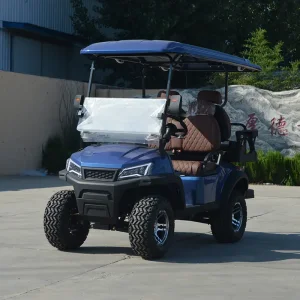
Leibin G90 72V Lithium Solar 4-Seater Off-Road Golf Cart (35 km/h)
Configure Model
Wholesale 6 Seat 72V Lithium Battery Comfortable Customized Golf Buggy
Configure Model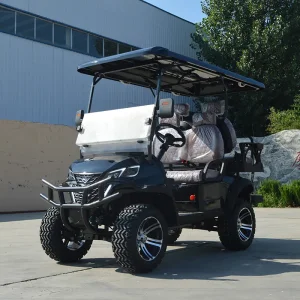
72V Electric Golf Cart - 4-Seater Off-Road Buggy (150 km Range)
Configure Model
Affordable Electric 2 Seater Mini Sightseeing Car Golf Cart
Configure Model
Leibin G90 72V Lithium Solar 4 Seaters Street-Legal Electric Golf Cart
Configure Model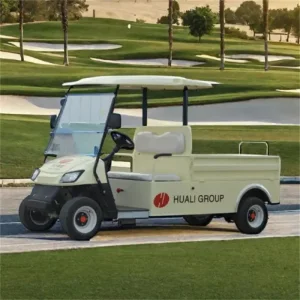
Cargo Electric Utility Off-Road Truck Golf Cart 48V Utility Car
Configure Model