
High-Torque 72V & 48V Commercial Electric Buggies
Direct manufacturer deployment of low-speed electric sightseeing vehicles, off-road terrain utility buggies, and solar-equipped commercial carts certified for worldwide fleet operation.

Wholesale 72V Electric Golf Cart - Modern 6-Seater Buggy from China Suppliers | High-Quality Factory Manufacturing Suppliers, Factories
Configure & Inquire
Best China Suppliers Factory 72V AC Mini Electric Golf Cart 4-Seat Buggy Gold Color Lithium Battery CE Certified Manufacturers, Supplier
Configure & Inquire
Best Electric Cars Buggy Golf Beemotors Supply CE Approved 15-40km/H Low Speed Electric Buggy Golf Car Manufacturers, Factories
Configure & Inquire
Cheap Cheap Small 4 Seater Electric Golf Carts, Golf Cart Battery, off Road Golf Carts Factory, Factories
Configure & Inquire
China Leibin (G90) 72V Lithium Battery Solar 4 Seaters off Road Electric Street Legal Golf Carts Manufacturers, Suppliers
Configure & Inquire
China China Suppliers Factory 72V Electric Golf Cart - 4-Seater Off-Road Buggy for Sightseeing, 35 km/h Speed, 150 km Range Suppliers, Factories
Configure & Inquire
Best The Factory Directly Supplies 2-Seater Electric Sightseeing Cars, Golf Carts, Club Cars and Vans for Sale Manufacturers, Manufacturer
Configure & Inquire
OEM Affordable China 4-Seater Electric Golf Cart - Off-Road Adventure with Custom Battery Options from Trusted Suppliers & Factory Manufacturers, Supplier
Configure & InquireThe Global Solar Electric Golf Cart Landscape: Macro Shift Toward Grid-Independent Fleets
A technical assessment of how photovoltaic integration, 72V lithium iron phosphate (LiFePO4) powertrains, and connected micro-mobility platforms are revolutionizing Total Cost of Ownership (TCO) across resorts, municipalities, and industrial complexes.
Global Market Decarbonization Mandates
Global low-speed electric vehicle (LSV/NEV) adoption is undergoing an unprecedented structural transition. Hospitality operators, industrial facilities, and master-planned gated communities are under stringent regulatory pressures to eliminate internal combustion utility buggies while reducing their reliance on local power grids. The integration of high-yield solar roofs directly addresses grid dependency, supplying up to 25%–35% of daily energy expenditure passively through sun-dwell exposure.
The 48V Lead-Acid to 72V Lithium Leap
Legacy golf fleets historically suffered from high operational overhead due to acid stratification, terminal corrosion, water replenishment schedules, and sluggish 48V lead-acid deep-cycle discharge rates. Modern tier-1 manufacturers have standardized on modular 72V LiFePO4 chemistry. This delivers significantly lower I²R thermal dissipation losses, immediate peak torque response across steep gradients, and battery lifecycles exceeding 3,500 full charge cycles at 80% DOD.
Stringent Regional Homologation Standards
International sourcing requires rigorous alignment with local transport frameworks. In the United States, commercial solar buggies must meet the safety and crash-readiness criteria of Federal Motor Vehicle Safety Standard 500 (FMVSS No. 500) for low-speed street legality. In the European Union, homologation under L6e/L7e classifications mandates certified three-point inertia seatbelts, dual-circuit hydraulic disc brakes, E-mark glass, and integrated roll-cage structures.
Photovoltaic Harvesting Architecture & MPPT Power Electronics
The core technological distinction between an aftermarket add-on solar canopy and an original-equipment-manufacturer (OEM) integrated solar electric golf cart lies within the power-harvesting electronic architecture. Leibin utilizes high-efficiency N-Type monocrystalline silicon wafers encapsulated within an ultra-durable, UV-stabilized fluoropolymer backsheet and tempered automotive polymer top-coat, capable of resisting mechanical micro-cracking caused by rough course undulations.
Energy harvested by the 240W to 360W solar array is managed through an onboard high-frequency Maximum Power Point Tracking (MPPT) DC-to-DC boost controller. Unlike rudimentary PWM regulators, this algorithm sweeps the photovoltaic I-V curve every 200 milliseconds, optimizing power point extraction under partial tree-shade and shifting cloud conditions. The boosted DC output directly supplements the 72V traction battery pack, maintaining an active float charge whenever ambient irradiance exceeds 200 W/m². This reduces total grid-draw cycles, mitigates battery sulfate passivation, and extends overall pack longevity by up to 40%.
Powertrain Architecture: Solar 72V Lithium vs. Conventional Platforms
Empirical performance data demonstrating the technical and commercial advantages of integrated solar electric systems over legacy golf cart powertrains.
| Engineering Parameter | Legacy 48V Lead-Acid System | Standard 48V Lithium (No Solar) | Leibin 72V Solar LiFePO4 Platform |
|---|---|---|---|
| Energy Harvesting Source | 100% Grid AC Plug Dependent | 100% Grid AC Plug Dependent | Dual-Source: High-Yield Solar Roof + Grid AC |
| Nominal Operating Voltage | 48V (High Current, Thermal Stress) | 48V Nominal | 72V (Low I²R Dissipation, High Torque) |
| Cycle Life (@ 80% DOD) | 450 – 700 Cycles | 2,000 – 2,500 Cycles | 3,500 – 5,000 Cycles |
| Pack Weight (4-Seat Unit) | ~130 kg – 180 kg (Heavy) | ~45 kg – 60 kg | ~55 kg – 70 kg (Optimized Chassis CoG) |
| Daily Range Extension | 0 km (Self-Discharges During Stasis) | 0 km (Pure Depletion) | +15 km to +30 km Passive Daily Charge |
| Maintenance Overhead | High (Acid, Watering, Terminal Cleans) | Low (Annual Inspections) | Zero Routine Cell Maintenance (Intelligent BMS) |
| Gradeability Performance | 15% – 18% Maximum Incline | 20% – 22% Smooth Slope | 28% – 35% Full-Load Gradeability |
Turnkey Fleet Solutions Across Demanding Commercial Verticals
Our solar-assisted utility vehicles and golf buggies are engineered not merely as recreational transport, but as enterprise assets built for mission-critical operations across diverse topographies.
Luxury Eco-Resorts & Island Hospitality
Tropical and isolated destination resorts face significant energy distribution challenges and high kilowatt-hour electricity costs. Leibin solar electric golf carts provide continuous, silent guest shuttling with minimal dependency on local diesel generators. Integrated solar roofs allow continuous float-charging while parked along beaches, golf greens, or villas, completely eliminating guest exposure to engine noise or exhaust emissions.
Commercial Campuses & Airport Logistics
Sprawling industrial complexes, university facilities, and airport tarmacs demand non-stop, multi-shift utility and personnel movement. Our 4-seat and 6-seat 72V utility chassis support heavy payloads, toolbox attachments, and cargo-bed configurations. Day-long external operations allow the solar array to harvest energy during idle periods, guaranteeing that vehicles remain operational without midday charging station downtime.
Master-Planned Communities & Smart Cities
Urban planning is rapidly integrating dedicated Low-Speed Vehicle (LSV) lanes within residential golf estates and mixed-use sustainable townships. Equipped with DOT-compliant automotive safety glass, integrated LED lighting assemblies, turn signals, hydraulic 4-wheel disc brakes, and horn units, Leibin solar street-legal carts deliver reliable, low-cost zero-carbon community mobility.
Municipal Security, Parks & Perimeter Patrol
For park districts, waterfront promenades, and commercial perimeter security, continuous slow-speed driving is notorious for draining standard EV batteries quickly. The Leibin 72V solar-augmented patrol vehicle balances the power draw of onboard light bars, communications equipment, and dash cameras directly with solar generation, keeping perimeter security teams moving around the clock.
Technology Roadmap: The Future of Clean Micro-Mobility Engineering
A strategic preview of advanced power electronics, materials science, and IoT integration driving our next generation of commercial solar-powered vehicles.
Phase 1: Perovskite-Silicon Tandem Solar Roofs
To overcome the theoretical 29% Shockley-Queisser limit of traditional silicon, our R&D roadmap is actively validating perovskite-on-silicon tandem photovoltaic cells for vehicle roofs. This innovation will elevate rooftop photon-to-electron conversion efficiencies beyond 31%, unlocking over 480W peak output from a standard 4-passenger cart roof footprint by late 2026.
Phase 2: Cloud Telematics & Fleet Smart-Harvesting
Future iterations of the Leibin Smart BMS feature native 4G/5G IoT controllers that monitor solar irradiance, battery cell impedance, thermodynamic distribution, and route gradient topography in real-time. Fleet managers can optimize dispatch based on battery state-of-health (SoH) and predict solar charging performance using local weather satellite feeds.
Phase 3: Bi-Directional V2X Micro-Generation
Treating parked solar golf fleets as distributed clean micro-power plants. Through bi-directional Vehicle-to-Building (V2B) and Vehicle-to-Grid (V2G) inverters, large commercial fleets parked under the sun will be capable of feeding accumulated surplus solar power back into resort clubhouses or emergency field systems during peak tariff hours.
Dezhou Leibin Vehicle Industry: Automotive Precision at Scale
Manufactured inside our modernized 13,000 square meter industrial complex in Dezhou, Shandong. We eliminate intermediaries through vertically integrated in-house stamping, automated welding, cathodic electrodeposition, and certified dyno verification.
Automotive Cathodic E-Coat Pretreatment
Standard painted chassis deteriorate quickly in maritime coastal resorts and high-humidity golf courses. Leibin uses fully automated 18-stage immersion degreasing, phosphating, and cathodic electrophoretic deposition (E-coat) followed by electrostatic powder baking, ensuring exceptional 1,000+ hour salt-spray corrosion resistance on all structural steel frames.
Precision AC Powertrain Integration
Our power systems are driven by high-torque AC asynchronous and permanent magnet synchronous motors (PMSM) paired with Curtis/Enpower digital vector controllers. These deliver smooth regenerative braking down slopes, returning kinetic energy to the battery while safeguarding brake pads from premature glazing and wear.
100% End-of-Line Multi-Point Quality Validation
Every single unit exiting our Dezhou assembly lines undergoes intensive end-of-line verification: chassis laser alignment, dynamometer top-speed acceleration, maximum ampere stall torque testing, 35-degree static ramp handbrake hold verification, and simulated tropical torrential rain water-ingress validation on all electrical enclosures.
Frequently Asked Questions by Commercial Procurement Directors
In-depth technical and regulatory guidance for international distributors, golf fleet operators, resort asset managers, and municipal planners.
How does an OEM solar roof function on overcast days or in continuous shade?
Our monocrystalline photovoltaic arrays feature advanced passivated emitter and rear cell (PERC) technology with responsive low-light irradiance absorption down to 100 W/m². Even under diffuse cloud cover, the array outputs approximately 20% to 35% of rated capacity. The integrated MPPT controller automatically boosts fluctuating low solar voltages up to the required 72V DC battery threshold, providing a consistent float charge whenever daylight is present.
Why is a 72V lithium platform superior to a 48V system for commercial use?
By raising operating voltage to 72V, electrical current draw is reduced by 33% for the exact same kilowatt mechanical power demand (P=V×I). This delivers lower heat buildup across the motor and wiring harness, significantly reduced resistance losses (I²R), stronger acceleration under full payload, superior continuous climbing ability on 30%+ grades, and longer runtime per charge cycle.
What specific homologation documents are supplied for US and EU street legality?
We supply complete Certificates of Conformity (COC), 17-digit ISO-standard Vehicle Identification Numbers (VIN), FMVSS 500 compliance documentation for North American Low-Speed Vehicle registration, and CE machinery/electrical directive documentation for the European Union. Factory-fitted safety items include AS4/DOT laminated windshields with wipers, DOT-rated seatbelts, side mirrors, and integrated horn/signal lighting.
What is the projected ROI payback period for commercial solar golf cart fleets?
In standard resort or campus settings, an OEM solar lithium cart pays back its initial cost differential within 14 to 22 months. This is driven by three factors: a 70% reduction in grid electricity recharging costs, complete elimination of battery water maintenance and terminal corrosion repairs, and doubling the battery service lifespan from 3 years (lead-acid) to 8-10 years (LiFePO4).
How are vehicles secured, packed, and crated for overseas containerized shipping?
Vehicles are secured inside custom heavy-duty tubular steel stacking racks or shipped in Semi-Knocked Down (SKD) configuration within 40-foot High Cube containers to optimize ocean freight efficiency. All painted body panels and sensitive electronic displays are wrapped in multi-layer anti-scratch foam with vapor-corrosion-inhibitor (VCI) desiccant bags to prevent moisture damage during transoceanic transit.
Can Leibin support custom OEM branding, custom seating, and chassis stretching?
Yes. As a direct source factory, we offer end-to-end ODM/OEM customization. This includes custom Pantone-matched exterior automotive paint finishes, marine-grade anti-microbial embroidered vinyl upholstery, custom alloy wheel packages, lifted off-road independent double-wishbone suspensions, extended 6-seater/8-seater frames, and specialized utility cargo beds tailored to your exact operational requirements.
Commercial Shuttle, Utility & Multi-Passenger Carts
Explore our versatile fleet models: extended wheelbase 6-seaters, heavy-duty cargo utility haulers, and versatile 2-seat campus runabouts manufactured to strict international quality standards.
Best 72V Modern 6-Seater Electric Golf Cart - Factory Direct from China Suppliers, Ideal for On-Road and Off-Road Use Manufacturer, Suppliers
Configure & Inquire
Wholesale Electric Golf Cart 4seated Golf Buggy Sightseeing Bus off-Road 72vgolf Cart Manufacturers, Factory
Configure & Inquire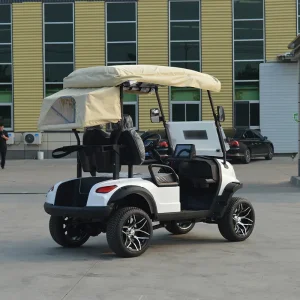
OEM Affordable 2 Seater Mini Sightseeing Car Golf Cart Electric Cars Manufacturer, Suppliers
Configure & Inquire
ODM Wholesale 6 Seat Electric Golf Carts - 72V Lithium, Customized Comfort from China Suppliers and Factory Supplier, Factory
Configure & Inquire
China Affordable Electric 2 Seater Mini Sightseeing Car Golf Cart from China Suppliers and Factory Supplier, Factories
Configure & Inquire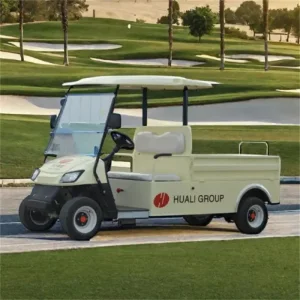
Cheap Cargo Electric Utility off Road Truck Golf Cart 48V Utility Gulf Cart Electric Golf Car Suppliers, Factory
Configure & Inquire
Wholesale China Factory Suppliers of 2-Seater Electric Sightseeing Cars, Golf Carts, and Versatile G70 Electric Vehicle Supplier, Suppliers
Configure & Inquire
Cheap Wholesale China 6 Seat Electric Golf Carts, 72V Lithium Battery, Comfortable Customized Golf Buggy from Suppliers & Factory Factory, Factories
Configure & InquireArchitect Your Sustainable Fleet with Factory Engineers
Eliminate broker margins, access uncompromised customization, and ensure seamless homologation for your commercial micro-mobility fleet. Connect directly with the Dezhou Leibin engineering and export division today.