

Best Star Golf Car Manufacturers & Factories
Industrial White Paper on Low-Speed Electric Vehicle (LSV) Engineering, Supply Chain Resilience, Industry 4.0 Smart Manufacturing, and Global Enterprise Procurement Standards.
Direct-From-Factory Lineup
Featured Engineering Models & Fleet Solvers
Precision-manufactured electric golf carts and specialized buggies tailored for resorts, institutional campuses, off-road applications, and modern commercial estates.
Cheap 72V New Style Modern Fashion 6 Seat Golf Cart Electric Golf Buggy Manufacturers, Supplier
Explore Specifications
China Wholesale 6 Seat Electric Golf Carts, 72V Lithium Customized Comfortable 4 Seat Electric Golf Buggy Supplier, Suppliers
Explore Specifications
ODM Low-Speed Electric Golf Car from China Suppliers - CE Approved 15-40km/H Beemotors G70-4+2 Factory Model Suppliers, Factories
Explore Specifications
OEM Affordable China 4-Seater Electric Golf Cart - Off-Road Adventure with Custom Battery Options from Trusted Suppliers & Factory Manufacturers, Supplier
Explore Specifications
China Leibin (G90) 72V Lithium Battery Solar 4 Seaters off Road Electric Street Legal Golf Carts Manufacturers, Suppliers
Explore Specifications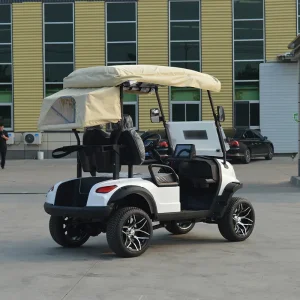
China Affordable Electric 2 Seater Mini Sightseeing Car Golf Cart from China Suppliers and Factory Supplier, Factories
Explore Specifications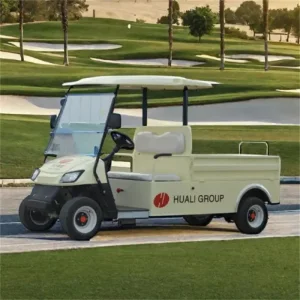
Cheap Cargo Electric Utility off Road Truck Golf Cart 48V Utility Gulf Cart Electric Golf Car Suppliers, Factory
Explore Specifications
Engineering Foresight
Technical Roadmap & Next-Gen Vehicle Architecture
Navigating the transition of Star Golf Car platforms toward connected intelligence, advanced solid-state energy storage, and automotive-grade functional safety.
72V/96V High-Voltage Powertrains
Moving beyond legacy 48V topologies, Star Golf Cars are rapidly standardizing on 72V and 96V permanent magnet synchronous motor (PMSM) configurations. Higher voltage enables thermal efficiency, extended torque curves under extreme gradeability (up to 30%), and minimizes cabling resistance losses for large commercial 6-to-8 passenger utility applications.
LiFePO4 & Smart Cloud BMS
Integration of automotive-class Lithium Iron Phosphate (LiFePO4) chemistry delivering over 3,500 continuous life cycles at 80% DoD. Coupled with CAN-bus-enabled Smart BMS, fleet managers achieve granular thermal dissipation metrics, sub-second cell balancing, remote voltage monitoring, and cloud-driven predictive fault detection.
Telematics, IoT & Edge Computing
Next-generation Star Golf Car platforms deploy 4G/5G telematics control units (TCU). Capabilities incorporate GPS geofencing with autonomous speed attenuation in restricted pedestrian zones, over-the-air (OTA) firmware calibrators, anti-theft immobilization, and automated reservation integration for smart hospitality facilities.
Operational Applications
Macro Industry Solutions: Beyond the Course
Enterprise-grade low-speed mobility architectures engineered to resolve high-frequency logistical bottlenecks across diversified global sectors.
Hospitality & Eco-Resorts
Luxury hotel guest shuttles with whisper-quiet, zero-tailpipe emission platforms. Equipped with ultra-soft hydraulic double wishbone suspension, weatherproof marine-grade upholstery, integrated concierge luggage provisions, and fast-charging capabilities between guest turnaround windows.
Corporate & University Campuses
Dense urban campuses and massive industrial facilities demand efficient, low-maintenance cross-facility transit. High-capacity 6-to-8 passenger configurations lower carbon footprints while optimizing internal mobility budgets through modular interchangeable structural components.
Security, Law Enforcement & Patrol
Specialized patrol modifications featuring integrated warning beacons, PA systems, all-weather transparent cabin enclosures, auxiliary searchlights, and heavy-duty front bull-bars for high-visibility perimeter deterrence in gated communities, stadiums, and logistics hubs.
Cargo Logistics & Facility Maintenance
Workhorse utility configurations engineered with hydraulic-lift rear flatbeds, aluminum drop-side boxes, high-payload leaf springs, and tow ratings up to 1,500 kg. Built to handle heavy maintenance equipment across maintenance yards, airports, and agricultural settings.
Manufacturing Precision
China Factory 4.0: Supply Chain Resilience & Lean Velocity
Inside the 13,000 m² advanced assembly ecosystem in Dezhou, Shandong. Translating industrial clustering into rock-solid cost predictability and quality supremacy.
Robotic Welding & Cathodic E-Coating
Structural longevity begins with high-tensile carbon steel tubular chassis welded by multi-axis ABB robotics. Every chassis passes through a 14-stage automotive cathodic electrophoretic deposition (E-coat) bath, ensuring complete internal rust impermeability that withstands 1,000+ hours of ASTM B117 salt spray testing.
Upstream Industrial Clustering
Located in the heart of Shandong’s vehicle manufacturing hub, 92% of tier-1 components—including high-efficiency transaxles, Curtis/Enpower microcontrollers, LED harness looms, and thermoformed TPO body panels—are sourced within a 100-kilometer radius. This localized agility guarantees 15-day factory turnaround speeds.
Dynamic Pre-Delivery Validation
Quality assurance goes far beyond bench trials. Every finished vehicle undergoes rigorous road dynamometer diagnostics, 20% incline static park hold trials, high-pressure 360-degree monsoon leak inspections, and automated electrical continuity insulation auditing before export packaging.
20+
Years of EV Engineering Expertise
13,000m²
Dedicated Production & Testing Facility
100+
Certified Engineers & Assembly Specialists
50+
Global Distributor & Dealer Partnerships
Regulatory Mastery
Global Compliance & Regional Homologation Standards
Bridging cross-border regulatory frameworks to ensure your fleet reaches street-legal status and complies with regional low-speed vehicle directives.
USA: FMVSS No. 500 & LSV Protocols
For the US market, Star Golf Cars are configured to meet Federal Motor Vehicle Safety Standard 500 requirements. Models feature DOT-certified AS4 shatterproof windshields, SAE-compliant three-point seat belts, rearview mirrors, turn signals, illuminated license brackets, and precision 20-25 mph speed governing mechanisms.
European Union: CE, EEC & L7e-CP
Full compliance with Machinery Directive 2006/42/EC and Low Voltage Directive 2014/35/EU. Factory engineers provide full Technical Documentation Files (TDF) and can configure lighting, hydraulic dual-circuit disc brakes, and electromagnetic compatibility (EMC) shielding to streamline localized EEC L6e/L7e type-approval filings.
Lithium Transport: UN38.3 & MSDS
Hazard-free maritime and intermodal transit. Every lithium energy pack is certified under UN38.3 vibration, altitude, thermal cycling, and crush tests. Vehicles are dispatched with Class 9 hazardous material compliance documentation, compliant steel shipping cradles, and ocean freight moisture-barrier packaging.
| Regulatory Specification | United States (FMVSS 500) | European Union (EEC L7e) | Standard Resort / Golf Course |
|---|---|---|---|
| Maximum Speed Range | 20 - 25 mph (32 - 40 km/h) | Up to 45 km/h (Configurable) | 15 - 24 km/h (Software Governed) |
| Lighting Architecture | DOT Headlights, Taillights, Brake, Turn | E-Mark Certified Complete LED Matrix | Front Halogen/LED & Rear Reflectors |
| Braking Configurations | Mechanical Drum or Hydraulic Disc | Dual-Circuit 4-Wheel Hydraulic Disc | Mechanical Drum / Electromagnetic Park |
| Occupant Restraints | DOT 3-Point Inertia Reel Belts | ECE-Approved 2 or 3-Point Belts | Optional Retractable Lap Belts |
| Chassis VIN Protocol | 17-Digit Standard Global VIN Plate | 17-Digit Stamped Frame & E-Plate | Factory Serial Sequence Traceability |
Strategic Sourcing
Global Enterprise Procurement: Total Cost of Ownership (TCO)
Key variables sophisticated procurement committees evaluate when selecting tier-1 electric cart manufacturers for multi-year fleet contracts.
OPEX Analysis: Lithium vs. Lead-Acid
While lead-acid configurations carry a modest ~20% discount on initial capital purchase, enterprise lithium installations yield an estimated 42% decrease in 5-year total lifecycle costs. Zero scheduled electrolyte watering, a 70% curb weight reduction that protects fairway turf, and fast 2-hour opportunistic charging drastically maximize fleet uptime.
Turnkey OEM/ODM Bespoke Tooling
We support extensive custom fabrication: tailored RAL color powder coating, custom embroidered marine seating, thermoformed fiberglass food-and-beverage utility boxes, rooftop crystalline solar panel integration, and specialized golf bag / caddie hardware fixtures engineered precisely to brand requirements.
Continuous Spare Parts & SLA Support
Mitigate fleet downtime through structured Service Level Agreements. Our factory maintains dedicated stock of critical consumables—including brake shoes, steering tie rods, transaxle bushings, controllers, and solenoid relays—with guaranteed 72-hour air-freight dispatch and real-time remote engineer video diagnostics.
Procurement Knowledge Base
Frequently Asked Questions: Technical & Logistics Insights
Clear, objective answers addressing engineering configurations, container loading metrics, battery selection, and homologation protocols.
What distinguishes an industrial Star Golf Car factory from a generic trading agency?
A legitimate manufacturing facility owns full production infrastructure: automated jig-welded chassis lines, cathodic electrophoresis (E-coating) tanks, in-house wiring harness looms, and comprehensive dynamometer test tracks. Trading agencies lack engineering control, customize by sub-contracting, and cannot directly guarantee structural longevity or furnish direct factory warranties.
What is the practical range difference between 48V and 72V configurations?
A 48V platform typically provides 50–70 km per charge on flat terrain, optimal for flat courses and light-duty private neighborhood mobility. A 72V system with a modern LiFePO4 pack delivers 80–120 km, supplies higher continuous torque without thermal degradation, and climbs gradients up to 30% effortlessly while fully loaded with 6 passengers.
How many fully assembled golf carts fit inside standard shipping containers?
Using our specialized space-optimized steel racking system (SKD/CKD methods): A 20ft GP container holds approximately 4 to 6 units (depending on 2-seat vs 4-seat wheelbases). A standard 40ft HQ high-cube container accommodates between 12 and 18 units, significantly reducing ocean freight expenditure per vehicle.
Can these vehicles be registered as Street Legal Low-Speed Vehicles (LSV)?
Yes. Street-legal classification requires compliance with market-specific parameters. For the USA, we build to FMVSS 500 standards (25 mph limit, certified seat belts, AS4 glass, mirrors, DOT turn indicators). For European territories, we build to EEC L7e specifications. Final road registration depends on local jurisdiction licensing procedures.
What are the primary advantages of solar-panel roof integration?
Integrated monocrystalline solar roof panels (typically 150W to 300W outputs) continuously trickle-charge the battery pack during daylight hours. This extends daily operational range by 15-20%, balances deep-discharge cycles, and preserves overall battery health, particularly in sunny resort environments.
Comprehensive Catalog
Wholesale & Commercial Fleet Procurement Options
Review our top-rated heavy-duty, off-road, and high-capacity electric golf cars engineered for global fleet buyers and institutional operators.

Wholesale 72V AC Mini Electric Golf Cart Buggy Gold Color 4-Seat Golf Cart with Lithium Battery CE Certified and Tail Caddie Equipment Factory, Factories
Explore Specifications
OEM Wholesale Electric Golf Carts from China Suppliers, 72V Lithium 6 Seat Golf Buggy Factory Made for Comfort and Performance Manufacturers, Factories
Explore Specifications
Best China Suppliers Factory 72V AC Mini Electric Golf Cart 4-Seat Buggy Gold Color Lithium Battery CE Certified Manufacturers, Supplier
Explore Specifications
Best The Factory Directly Supplies 2-Seater Electric Sightseeing Cars, Golf Carts, Club Cars and Vans for Sale Manufacturers, Manufacturer
Explore Specifications
Buy 72V AC Mini Electric Golf Cart for Sale - China Suppliers & Factory, 4-Seat Lithium Battery Model, CE Certified Suppliers, Factory
Explore Specifications
Wholesale Electric Golf Cart 4seated Golf Buggy Sightseeing Bus off-Road 72vgolf Cart Manufacturers, Factory
Explore Specifications
Best 72V Modern 6-Seater Electric Golf Cart - Factory Direct from China Suppliers, Ideal for On-Road and Off-Road Use Manufacturer, Suppliers
Explore Specifications