
High-Efficiency Security & Patrol Fleet Selection
Explore our factory-direct 72V and 48V electric patrol platforms engineered for continuous duty cycles across commercial facilities, resorts, university campuses, and municipal compounds.

China Wholesale 6 Seat Electric Golf Carts, 72V Lithium Customized Comfortable 4 Seat Electric Golf Buggy Supplier, Suppliers
View Vehicle Specs
Wholesale China Factory Suppliers of 2-Seater Electric Sightseeing Cars, Golf Carts, and Versatile G70 Electric Vehicle Supplier, Suppliers
View Vehicle Specs
China 72V Electric Golf Cart - 6-Seater Modern Design | China Suppliers & Factory Quality Golf Buggy Manufacturer, Factory
View Vehicle Specs
Buy 72V Modern 6-Seater Electric Golf Cart from China Suppliers | Reliable Factory Golf Buggy for On-Road & Off-Road Use Factory, Factories
View Vehicle Specs
Best The Factory Directly Supplies 2-Seater Electric Sightseeing Cars, Golf Carts, Club Cars and Vans for Sale Manufacturers, Manufacturer
View Vehicle Specs
Wholesale 72V AC Mini Electric Golf Cart Buggy Gold Color 4-Seat Golf Cart with Lithium Battery CE Certified and Tail Caddie Equipment Factory, Factories
View Vehicle Specs
Cheap China Supplier Factory Leibin G90 72V Lithium Battery Off-Road Electric Golf Cart - 4 Seaters, Solar Power, 35 km/h Speed Suppliers, Factory
View Vehicle Specs
Best 72V Modern 6-Seater Electric Golf Cart - Factory Direct from China Suppliers, Ideal for On-Road and Off-Road Use Manufacturer, Suppliers
View Vehicle SpecsGlobal Enterprise Sourcing Paradigms for Battery Powered Patrol Vehicles
Modern industrial campuses, airport facilities, commercial seaports, and municipal law enforcement agencies are aggressively phasing out internal combustion utility fleets in favor of specialized, battery-electric patrol vehicles (BEPVs).
Continuous Operational Duty Cycles
Security patrols demand non-stop, multi-shift availability. While conventional golf buggies suffer from thermal throttling under repetitive stop-and-go maneuvers, tier-one patrol platforms integrate brushless AC induction or permanent magnet synchronous motors (PMSM) paired with intelligent thermal dissipators and high-discharge BMS configurations.
Structural Crashworthiness & Ergonomics
Unlike lightweight leisure buggies, dedicated patrol variants feature reinforced robotically welded high-strength carbon steel or cathodic electro-deposition (ED) treated chassis. Enclosed lockable cabins, shatterproof polycarbonate windshields, and automotive-grade ergonomic seating prevent guard fatigue during extended 8-to-12-hour operational shifts.
Modular Auxiliary Power Architecture
Professional security operations require robust power take-off (PTO) capabilities to drive high-intensity LED light bars, 100W public address sirens, dual-band radio repeaters, automated license plate recognition (ALPR) cameras, and onboard mobile data terminals (MDT) without draining core traction battery banks.
Macro Industry Solutions: Tailored Deployment Environments
Different operational perimeters impose vastly diverging mechanical and electrical strains. A credible vehicle manufacturer must offer platform flexibility configured to distinct physical realities.
Critical Infrastructure & Industrial Plants
Petrochemical complexes, semiconductor foundries, and bulk logistics hubs demand spark-free electrical setups, intrinsic safety compliance, reverse audio alarms, and high-traction wheel assemblies to safely negotiate smooth polished concrete, oily work areas, and outdoor asphalt yards.
Airports, Seaports & Multimodal Terminals
With expansive physical footprints spanning runways, hangars, and dock aprons, terminal security units leverage 72V lithium architectures delivering 80-120 km of verified range per charge cycle. Dual hydraulic disc brakes ensure precise stopping distances under heavy passenger loads or emergency response conditions.
University Campuses, Gated Estates & Resorts
In pedestrian-dense zones, quiet operation and non-aggressive visual presence are essential. Our G70 and G80 patrol platforms operate under 55 decibels, outfitted with gentle daytime perimeter warning lights, turf-friendly low-pressure radial tires, and weather-resistant canvas enclosures for mixed seasonal climates.
Powertrain Engineering & Battery Chemistry Benchmark
When procuring enterprise patrol fleets, selecting the appropriate voltage architecture and cell chemistry directly dictates operational uptime, maintenance intervals, and 5-year capital expenditures.
| Evaluation Parameter | 48V Flooded Lead-Acid Platform | 72V High-Torque LiFePO4 Lithium Platform | Solar-Augmented Hybrid Electric Platform |
|---|---|---|---|
| Usable Battery Capacity | 8.5 kWh - 10.2 kWh (50% usable DoD) | 12.8 kWh - 18.5 kWh (90% usable DoD) | 14.4 kWh + 350W-550W Rooftop PV Photovoltaic |
| Continuous Gradeability | 15% - 18% slope under rated payload | 25% - 30% steep incline holding capability | 22% - 25% with dynamic torque vectoring |
| Cycle Life Expectancy | 500 - 800 cycles (Requires manual watering) | 3,000 - 4,000 cycles (Zero periodic electrolyte maintenance) | 3,500+ cycles (Continuous solar trickle cell balancing) |
| Typical Patrol Range | 40 - 55 km per single charge | 90 - 130 km per single charge | 110 - 150 km per day (variable by solar irradiance) |
| BMS Integration & CAN-Bus | Minimal / Analog telemetry | Automotive CAN-Bus with remote IoT fleet diagnostics | Integrated MPPT solar controller & real-time cloud BMS |
| Total Cost of Ownership (5-Yr) | High (Requires 2-3 Pack Replacements) | Optimal (Lowest Maintenance & Electricity Overhead) | Sub-Zero Grid Reliance for Outdoor Bases |
End-to-End Manufacturing Rigor & Global Compliance
Dezhou Leibin Vehicle Industry Co., Ltd. oversees more than 13,000 square meters of specialized production lines in Dezhou, Shandong. We eliminate intermediary trading brokers to deliver accountable quality assurance from raw metal tubing to seaworthy crating.
Automated Robotic Chassis Fabrication
Every vehicle frame is clamped in dedicated hydraulic welding jigs and joined via precision robotic MIG welding stations. Post-weld frames undergo immersion zinc phosphate cleaning, ultrasonic degreasing, and electrophoretic deposition (ED coating) to survive saline maritime and tropical operating conditions for over a decade without rust perforation.
Multistage Pre-Shipment Dynamic Testing
Prior to export packaging, 100% of manufactured units are subjected to chassis dynamometer testing, dynamic water-spray rain chambers, 30-degree incline holding checks, electrical insulation leakage tests, and laser wheel-alignment calibration to prevent premature tire wear.
International Homologation Support
We supply complete technical dossiers supporting low-speed vehicle homologation worldwide, including United States Department of Transportation (DOT / FMVSS No. 500 standards), European Union CE marking, L6e / L7e micro-mobility certifications, and ISO 9001:2015 production audits.
Technology Roadmap: The Decade of Connected & Autonomous Security
The low-speed electric patrol vehicle is evolving from a passive passenger cart into an intelligent edge-computing node within automated enterprise security ecosystems.
IoT Cloud Telematics & Predictive Maintenance
Real-time telemetry transceivers feed state-of-health (SoH), motor winding temperatures, speed violations, and geo-fence alerts directly into central control dispatch boards. Fleet managers predict brake pad wear and battery cell degradation months before field failures occur.
Sensor Fusion & 360° AI Surveillance
Mounting options for high-definition infrared PTZ cameras, LiDAR scanners, and onboard AI edge processors enable automated perimeter fence inspection, automatic number plate recognition (ANPR), and facial recognition during perimeter drive-bys without driver distraction.
Autonomous Waypoint Guidance Ready
Our drive-by-wire (DbW) electronic steering, electronic throttle, and hydraulic braking interfaces integrate seamlessly with third-party autonomous driving software for routine unmanned nighttime sweeps across private compounds.
Commercial Utility, Multi-Seater & Patrol Buggy Inventory
From compact two-seater emergency response units to 6-seat patrol and security escort cruisers, explore our wholesale factory-direct inventory with international shipping packaging.
ODM Wholesale 6 Seat Electric Golf Carts - 72V Lithium, Customized Comfort from China Suppliers and Factory Supplier, Factory
View Vehicle Specs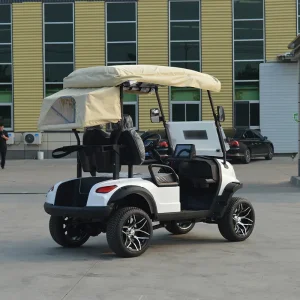
OEM Affordable 2 Seater Mini Sightseeing Car Golf Cart Electric Cars Manufacturer, Suppliers
View Vehicle Specs
OEM Affordable China 4-Seater Electric Golf Cart - Off-Road Adventure with Custom Battery Options from Trusted Suppliers & Factory Manufacturers, Supplier
View Vehicle Specs
Buy 72V AC Mini Electric Golf Cart for Sale - China Suppliers & Factory, 4-Seat Lithium Battery Model, CE Certified Suppliers, Factory
View Vehicle Specs
ODM Low-Speed Electric Golf Car from China Suppliers - CE Approved 15-40km/H Beemotors G70-4+2 Factory Model Suppliers, Factories
View Vehicle Specs
Best China Suppliers Factory 72V AC Mini Electric Golf Cart 4-Seat Buggy Gold Color Lithium Battery CE Certified Manufacturers, Supplier
View Vehicle Specs
OEM Wholesale Electric Golf Carts from China Suppliers, 72V Lithium 6 Seat Golf Buggy Factory Made for Comfort and Performance Manufacturers, Factories
View Vehicle Specs
Wholesale 72V Electric Golf Cart - Modern 6-Seater Buggy from China Suppliers | High-Quality Factory Manufacturing Suppliers, Factories
View Vehicle SpecsFrequently Asked Questions for Fleet Procurement Directors
Clear, engineering-backed answers addressing international homologation, battery chemistry lifespans, OEM customization lead times, and global after-sales warranty mechanisms.
What are the key differences between general golf carts and purpose-built battery patrol vehicles?
Can your patrol vehicles meet United States FMVSS No. 500 or European L6e/L7e street legal regulations?
Why should procurement officers prioritize 72V LiFePO4 battery platforms over traditional 48V lead-acid setups?
What OEM/ODM customization options are offered for police, security firms, and private campuses?
How are vehicles packed to prevent shipping damage during international oceanic container freight?
What warranty, replacement components, and technical field assistance are supplied to overseas buyers?
Consult Directly with Factory Automotive Engineers
Whether you require a single pilot evaluation unit or a turn-key container procurement contract of 50+ custom patrol vehicles, our factory engineering team will calculate your route gradients, power consumption curves, and provide comprehensive quotation sheets within 24 hours.