Featured Commercial Fleets
High-Performance Cit E Car Series & Utility Vehicles
Explore our top-tier export configurations engineered with automotive-grade robotic chassis welding, solid-state controllers, and high-efficiency AC powertrains built for resorts, golf clubs, and municipal campuses.

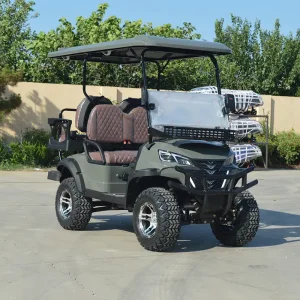
China Wholesale 6 Seat Electric Golf Carts, 72V Lithium Customized Comfortable 4 Seat Electric Golf Buggy Supplier, Suppliers
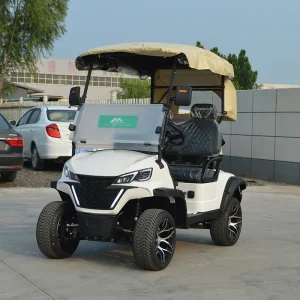
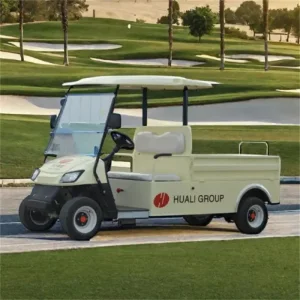
Wholesale China Factory Suppliers of 2-Seater Electric Sightseeing Cars, Golf Carts, and Versatile G70 Electric Vehicle Supplier, Suppliers
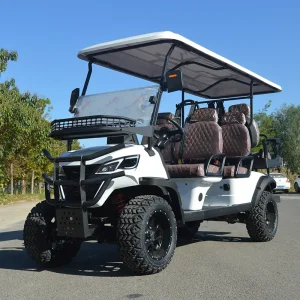
ODM Low-Speed Electric Golf Car from China Suppliers - CE Approved 15-40km/H Beemotors G70-4+2 Factory Model Suppliers, Factories
OEM Wholesale Electric Golf Carts from China Suppliers, 72V Lithium 6 Seat Golf Buggy Factory Made for Comfort and Performance Manufacturers, Factories
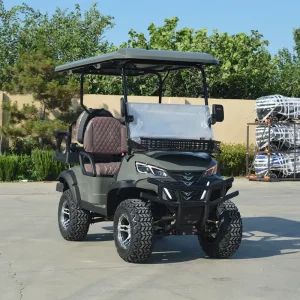
Buy 72V AC Mini Electric Golf Cart for Sale - China Suppliers & Factory, 4-Seat Lithium Battery Model, CE Certified Suppliers, Factory
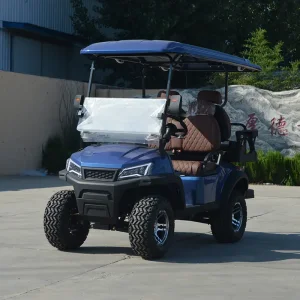
Cheap China Supplier Factory Leibin G90 72V Lithium Battery Off-Road Electric Golf Cart - 4 Seaters, Solar Power, 35 km/h Speed Suppliers, Factory
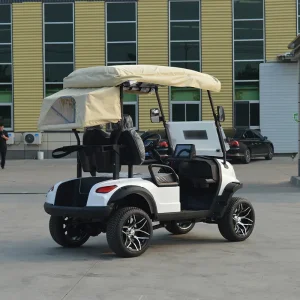
China Affordable Electric 2 Seater Mini Sightseeing Car Golf Cart from China Suppliers and Factory Supplier, Factories
Manufacturing Eminence
Engineering Superiority at Our 13,000 m² Dezhou Industrial Complex
Procuring commercial-grade golf carts and utility low-speed electric vehicles (LSVs) demands rigorous quality assurance, absolute supply-chain traceability, and vertically integrated manufacturing. Operating from our production base in Dezhou, Shandong, China, Leibin combines over two decades of mechanical lineage with cutting-edge robotic automation.
High-Tensile Robotic Chassis Welding
Unlike fragmented assemblers that outsource structural fabrication, our facility maintains automated multi-axis robotic welding cells. Every Cit E Car chassis utilizes seamless, cold-drawn micro-alloy tubular steel. Structural jigs ensure millimeter-level dimensional accuracy across 100% of production runs, completely eliminating suspension binding and long-term chassis fatigue under extreme terrain stresses.
Cathodic Electrophoretic Deposition (E-Coat)
Fleet longevity hinges on anti-corrosion chemistry. Our in-house metal finishing line implements full-submersion cathodic electrodeposition followed by automotive-grade thermoset powder coating. Achieving over 1,000 hours of ASTM B117 neutral salt spray resistance, our frames withstand aggressive saline, seaside resort environments, and acidic turf chemical washes without oxidation.
Proprietary Powertrain Calibration & BMS
We bypass generic off-the-shelf controllers. Our hardware engineers calibrate high-efficiency AC asynchronous and permanent magnet synchronous motors (PMSM) alongside Curtis and Enpower controllers. Integrated with smart Battery Management Systems (BMS) with CAN-bus communication, our 48V and 72V lithium packs ensure regenerative braking efficiency of up to 18%, cell-level thermal balancing, and overcurrent fail-safes.
13,000 m²
Dedicated Production Facility
20+ Years
Special-Vehicle Lineage
100+ Staff
Certified Engineers & QC Technicians
50+ Countries
Global Export Homologation
Global Transformation
Industry Macro Trends Reshaping the Low-Speed Vehicle (LSV) Market
The low-speed electric mobility sector is shifting from basic golf buggies to intelligent, durable micro-mobility platforms. Enterprise purchasers must navigate shifting regulatory frameworks, advanced chemistries, and interconnected fleet management systems.
72V LiFePO4 Chemistry Dominance
Heavy, toxic flooded lead-acid batteries are obsolete. Enterprise fleet operators are migrating to Lithium Iron Phosphate (LiFePO4) 72-volt platforms. High voltage halves operational amperage, minimizing heat generation, lowering wire gauge mass, extending cycle life beyond 3,500 charges, and delivering peak torque under heavy passenger payloads.
Strict Global Homologation (DOT/EEC)
The perimeter between golf course utility and street-legal transportation is merging. International procurement mandates vehicles compliant with US Federal Motor Vehicle Safety Standards (FMVSS 500 LSV regulations) and European L6e/L7e type approvals, requiring certified glass, 3-point seatbelts, illuminated indicators, hydraulic 4-wheel disc brakes, and dual braking circuits.
Fleet Telematics & IoT Monitoring
Modern golf course operations require cloud-connected telematics. Our intelligent controllers interface directly with GPS geofencing, remote battery telemetry, automated speed limiting across sensitive turf zones, remote firmware over-the-air (FOTA) diagnostics, and automated preventative maintenance alerts.
Onboard Solar PV Harvesting
With corporate ESG mandates dictating net-zero transitions, our G90 series integrates aerodynamic, roof-embedded monocrystalline solar modules with specialized MPPT solar charge controllers. This yields an additional 15–25 km of autonomous daylight driving range, drastically lowering grid dependence and keeping battery cell health optimized during extended outdoor parking.
Operational Versatility
Engineered Fleet Solutions Across Specialized Industrial Environments
Low-speed vehicle deployment demands unique powertrain configurations depending on duty cycle, topography, ambient climate, and passenger capacity. The Cit E Car platform adapts to diverse operational scenarios.
Championship Golf Courses & Country Clubs
Equipped with ultra-wide turf-friendly low-pressure radial tires, algorithmic soft-acceleration throttle curves, zero-emission quiet operation, and tailored rear golf bag caddies. Models like the 72V AC Mini Electric Buggy protect delicate golf turf while ascending 25% slopes effortlessly.
Luxury Eco-Resorts & Hospitality Escapes
Providing high-comfort 4-seater and 6-seater multi-passenger configurations (such as the G80 & G70-4+2 series) fitted with ergonomic, hand-stitched marine-grade vinyl upholstery, onboard USB-C high-speed passenger ports, sound-dampened drivetrains, and fold-down rear utility platforms for baggage transport.
Industrial Complexes & Corporate Logistics
The G30 Cargo Truck Series delivers heavy-duty flatbed utility capacity with a robust 500 kg payload rating. Featuring drop-down aluminum tailgates, heavy-duty rear leaf-spring suspension, and reinforced steel frame rails, it streamlines intra-facility parts delivery, maintenance support, and warehouse operations.
Municipalities, Campuses & Law Enforcement
Patrol models engineered with integrated emergency light bars, public address sirens, lockable polycarbonate weather enclosures, and extended 150 km per-charge range configurations for 24/7 security sweeps across international airports, universities, and pedestrian thoroughfares.
Master-Planned Smart Gated Communities
Street-configurable LSV options serving modern urban micro-mobility. Built with DOT-approved laminated glass windshields, automotive wipers, LED lighting arrays (high/low beams, DRLs, brake lights, hazards), rear-view digital monitors, and precise 25–40 km/h programmable governor settings.
Rugged Off-Road & Eco-Adventure Trails
The Leibin G90 Off-Road Buggy utilizes a 6-inch factory suspension lift, independent double A-arm front suspension, hydraulic coilover shock absorbers, heavy-duty brush guards, and all-terrain tread patterns capable of navigating loose sand, muddy terrain, and steep inclines.
Financial Engineering
Total Cost of Ownership (TCO) & Lifecycle Fleet Analysis
Procurement professionals assess vehicles based on the 5-year operating expenditure (OpEx) alongside capital acquisition (CapEx). Below is a verified engineering comparison between traditional architectures and our 72V LiFePO4 platform.
| Evaluation Parameter | Internal Combustion (Gas) | 48V Lead-Acid Flooded | Leibin 72V LiFePO4 Platform |
|---|---|---|---|
| Battery / Engine Useful Life | 5,000–8,000 Operating Hours | 450–650 Deep Discharge Cycles (1.5–2 Years) | 3,500+ Cycles (8–10 Years at 80% DoD) |
| Preventative Maintenance Routine | Frequent: Spark plugs, motor oil, filters, belts | Bi-weekly: Electrolyte watering, terminal corrosion cleaning | Virtually Zero: Solid-state battery management |
| Energy Conversion Efficiency | Low (~18–22% thermal efficiency) | Moderate (~70% charge efficiency) | Ultra-High (~96% round-trip efficiency) |
| Curb Weight & Turf Compaction | Heavy (~430 kg with wet engine fluids) | Very Heavy (~480–520 kg with lead packs) | Optimized (~360 kg, preserves delicate turf) |
| Partial State of Charge (Opportunity Charging) | N/A (requires gas fueling infrastructure) | Damaging (causes premature lead sulfation) | Safe: Full fast charge in 2.5 hours |
| 5-Year Combined TCO per Fleet Unit | High ($8,200–$11,500 USD running costs) | Substantial ($6,400–$8,200 incl. battery replacements) | Lowest ($1,850–$2,600 USD running costs) |
Turnkey Manufacturing
Global Enterprise Procurement: Direct Factory Customization & QC
From fleet color-matching to specialized homologation requirements, our turnkey OEM/ODM engineering department delivers bespoke vehicle production under rigorous ISO 9001 governance.
01
Design & Route Modeling
We evaluate operational gradients, expected payloads, daily mileage, and regional homologation criteria to establish motor torque ratings, gear ratios, and battery kilowatt-hour capacity.
02
Structural Prototyping
Computer-aided CAD modeling of custom body additions, utility flatbeds, custom seating layouts, and enclosure requirements, verified via finite element structural stress analysis (FEA).
03
Component Precision Assembly
Integration of IP67 water-sealed wire harnesses, precision electronic throttle units, dual master cylinder braking assemblies, and high-tensile tubular frames on dedicated manufacturing lines.
04
Dyno & Track Validation
Every rolling unit undergoes rigorous dynamic roller bench diagnostics, gradient climbing stress runs under full ballast, electrical insulation testing, and torrential water-spray ingress checks.
05
Export SKD/CKD Packing
Customized steel pallet cages or modular semi-knocked-down (SKD) and completely-knocked-down (CKD) packing maximizes container cube efficiency, reducing ocean freight costs per unit by up to 35%.
Expert Knowledge Center
Technical Procurement Q&A: Guidance for Fleet Purchasers
Clear answers to common questions about low-speed vehicle homologation, battery selection, maintenance schedules, and global logistics.
What compliance documentation is required to register a Cit E Car golf cart as a street-legal Low-Speed Vehicle (LSV)?
To achieve road legality in regulated territories such as the United States (under FMVSS 500) and the European Union (under L6e/L7e type homologation), vehicles must be factory-fitted with DOT-certified laminated glass windshields with wipers, automotive three-point seat belts, illuminated side turn signals, high/low beam headlights, dual-circuit hydraulic braking systems, an electronic horn, side and interior rear-view mirrors, and a certified Vehicle Identification Number (17-digit VIN). Leibin builds configurations engineered specifically to meet these target requirements and provides the Certificate of Origin (COO), bill of lading, and manufacturing declarations necessary for municipal DMV/transport authority inspections.
Why is a 72V LiFePO4 architecture preferred over a 48V system for commercial operations?
From an electrical engineering standpoint, Power (Watts) = Voltage × Current (Amperes). Operating at 72 volts allows the drivetrain to achieve the identical mechanical wattage output of a 48V system while drawing 33% less current. Lower amperage produces significantly less thermal buildup in motor coils and solid-state controller MOSFETs, extending component life. Furthermore, lower current demand minimizes I²R wiring resistance losses, improves hill-climbing acceleration torque under maximum passenger loading, and enables regenerative braking to recover more kinetic energy back into the LiFePO4 pack.
What preventative maintenance procedures do AC motor and lithium golf carts require?
Unlike legacy golf buggies with DC series-wound motors (requiring periodic carbon brush replacements and commutator smoothing) and lead-acid batteries (requiring bi-weekly distilled water topping and acid neutralizing), our AC asynchronous and PMSM systems are brushless and fully sealed to IP66 standards. Preventative maintenance is streamlined: inspecting tire pressures and tread wear, monitoring brake fluid levels in the master cylinder, checking hydraulic brake pad thickness, and lubricating steering linkage ball joints annually. The lithium BMS autonomously manages cell balancing, over-voltage protection, and thermal monitoring without human intervention.
How does onboard solar photovoltaic charging function in the Leibin G90 model?
The G90 integrates high-efficiency monocrystalline silicon photovoltaic cells into its composite roof. The system pairs with an intelligent Maximum Power Point Tracking (MPPT) solar charge controller that matches varying sunlight intensities to the 72V lithium pack's charging curve. Under standard ambient outdoor conditions (1,000 W/m² irradiance), the solar panel continuously trickles between 250W and 400W into the traction battery, adding approximately 15 to 25 kilometers of auxiliary driving range daily, offsetting power draw from air-conditioning, lights, and accessories, and preventing parasitic phantom drain.
What are the minimum order quantities (MOQ), warranty structures, and replacement part lead times?
For standard production specifications, our factory MOQ is flexible, supporting sample evaluation units for certified resort operators, government procurement tenders, and prospective multi-unit distributors. Standard structural warranties cover the galvanized welded chassis for 5 years, the LiFePO4 battery pack and smart BMS for 5 years (or 3,500 cycles), and powertrain electrical components for 24 months. We stock comprehensive replacement subassemblies—including motor controllers, digital instrument clusters, brake calipers, and body panels—with express air courier dispatch within 48 to 72 hours for global clients.
Global Commercial Fleet Inventory
Specialized Heavy-Duty & Passenger Cit E Car Inventory
Examine our extended product catalog encompassing 2-passenger runabouts, modern 6-seat shuttle buggies, and heavy off-road vehicles ready for custom factory branding and international logistics packaging.

Buy 72V Modern 6-Seater Electric Golf Cart from China Suppliers | Reliable Factory Golf Buggy for On-Road & Off-Road Use Factory, Factories
China 72V Electric Golf Cart - 6-Seater Modern Design | China Suppliers & Factory Quality Golf Buggy Manufacturer, Factory
Best China Suppliers Factory 72V AC Mini Electric Golf Cart 4-Seat Buggy Gold Color Lithium Battery CE Certified Manufacturers, Supplier
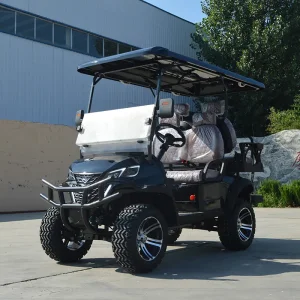
China China Suppliers Factory 72V Electric Golf Cart - 4-Seater Off-Road Buggy for Sightseeing, 35 km/h Speed, 150 km Range Suppliers, Factories
Best The Factory Directly Supplies 2-Seater Electric Sightseeing Cars, Golf Carts, Club Cars and Vans for Sale Manufacturers, Manufacturer
Best 72V Modern 6-Seater Electric Golf Cart - Factory Direct from China Suppliers, Ideal for On-Road and Off-Road Use Manufacturer, Suppliers
Wholesale 72V AC Mini Electric Golf Cart Buggy Gold Color 4-Seat Golf Cart with Lithium Battery CE Certified and Tail Caddie Equipment Factory, Factories