
Enterprise Fleet Vehicles & Multi-Purpose Utility Buggies
Explore certified commercial models manufactured with precision chassis welding, electro-coating, and high-duty off-road suspension packages ready for immediate global logistics dispatch.
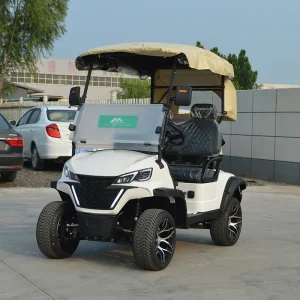
Wholesale China Factory Suppliers of 2-Seater Electric Sightseeing Cars, Golf Carts, and Versatile G70 Electric Vehicle Supplier, Suppliers
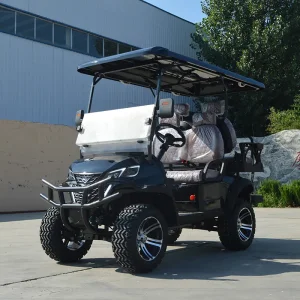
China China Suppliers Factory 72V Electric Golf Cart - 4-Seater Off-Road Buggy for Sightseeing, 35 km/h Speed, 150 km Range Suppliers, Factories
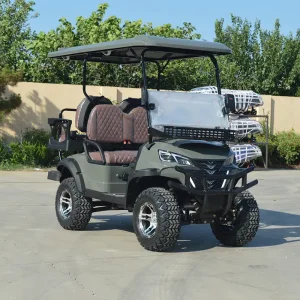
Cheap Cheap Small 4 Seater Electric Golf Carts, Golf Cart Battery, off Road Golf Carts Factory, Factories
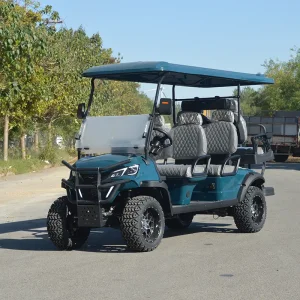
Cheap 72V New Style Modern Fashion 6 Seat Golf Cart Electric Golf Buggy Manufacturers, Supplier
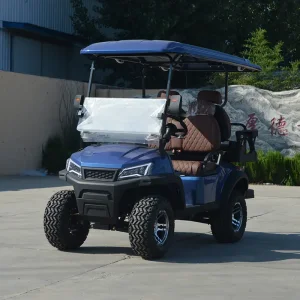
Cheap China Supplier Factory Leibin G90 72V Lithium Battery Off-Road Electric Golf Cart - 4 Seaters, Solar Power, 35 km/h Speed Suppliers, Factory
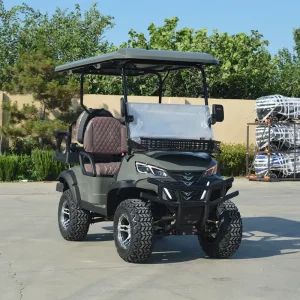
Best China Suppliers Factory 72V AC Mini Electric Golf Cart 4-Seat Buggy Gold Color Lithium Battery CE Certified Manufacturers, Supplier
Wholesale 72V Electric Golf Cart - Modern 6-Seater Buggy from China Suppliers | High-Quality Factory Manufacturing Suppliers, Factories
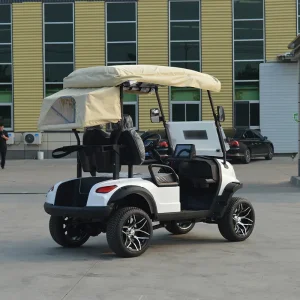
China Affordable Electric 2 Seater Mini Sightseeing Car Golf Cart from China Suppliers and Factory Supplier, Factories
Global Strategic Demand for Fast Gas Powered Golf Carts & Utility Vehicles
Enterprise procurement managers, luxury golf resort operators, municipal utility supervisors, and expansive industrial park directors face an evolving challenge: deploying low-speed vehicles (LSVs) that achieve both high transit velocity and continuous 24/7 operating availability. When businesses seek to buy fast gas powered golf carts from specialized manufacturers, their intent centers on eliminating charging bottlenecks, mastering severe geographic inclines, and executing continuous shift rotations where electrical charging infrastructure is logistically inaccessible.
Modern fast gas powered golf carts engineered by premier industrial manufacturers are built around high-displacement single-cylinder and twin-cylinder overhead valve (OHV) 4-stroke engines (ranging typically from 401cc up to 450cc with electronic fuel injection). Unlike standardized 15 mph (24 km/h) fairway buggies, high-speed gas utility vehicles are geared to reach sustained speeds of 25 to 35 mph (40 to 56 km/h) with governed throttle responsiveness, hydraulic disc braking assemblies, and high-tensile carbon steel tubular chassis.
For organizations operating in remote mining environments, sprawling desert eco-resorts, expansive agricultural ranches, and offshore island hospitality developments, gas combustion remains the primary operational backbone. Instant refueling in 2 to 3 minutes allows uninterrupted operational capability, bypassing 6 to 8 hours of downtime associated with conventional battery pack recharging cycles.
Direct-Factory Accountability vs. Intermediary Trading
Procuring low-speed utility vehicles from an accountable production manufacturer like Dezhou Leibin Vehicle Industry Co., Ltd. guarantees strict structural fidelity from raw metal tubing to export crating. Trading intermediaries frequently obscure component origins, whereas an original equipment manufacturer (OEM) provides full traceability across:
- Automated Robotic Chassis Welding: Submerged-arc and MIG-welded high-strength tubular steel with electro-deposition (ED) primer coating providing 1,000+ hours of salt-spray corrosion resistance.
- Optimized Continuously Variable Transmission (CVT): Precision-weighted centrifugal clutch systems tuned specifically for high-torque hill-climbing without belt slippage under heavy gross vehicle weight ratings (GVWR).
- Braking & Handling Dynamics: Four-wheel dual-circuit hydraulic disc brakes matched with MacPherson front struts and multi-leaf rear springs for balanced cornering at 30+ km/h.
- Integrated Emission Compliance: EPA/CARB-calibrated carburetors and closed-loop electronic fuel injection (EFI) systems engineered to minimize unburned hydrocarbons and ensure ambient noise attenuation below 68 dBA.
Engineering Fast Gas Powered Fleets vs. 72V High-Output Electric Architectures
Enterprise procurement requires matching propulsion technology directly with topographical duty cycle, thermal ambient extremes, and infrastructure readiness.
| Evaluation Parameter | High-Speed Gas (401cc–429cc EFI) | 72V High-Torque LiFePO4 Electric | Legacy 48V Lead-Acid Fleet |
|---|---|---|---|
| Governed Top Speed | 25 – 35 mph (40 – 56 km/h) | 22 – 32 mph (35 – 50 km/h) | 12 – 15 mph (19 – 24 km/h) |
| Refueling / Recharging Cycle | 2 – 3 Minutes (Gasoline) | 2.5 – 4 Hours (Fast Onboard Charger) | 8 – 10 Hours (Staged Trickle Charge) |
| Operating Range Per Cycle | 220 – 300+ km (approx. 6–7 Gal tank) | 100 – 150 km (LiFePO4 dependent) | 40 – 60 km (Significant voltage drop) |
| Continuous Heavy Gradeability | Continuous climbing with zero thermal throttling | High peak torque; requires BMS thermal monitoring | Rapid thermal cutoff and acid degradation |
| Maintenance Protocol | Oil filter, spark plugs, CVT drive belt checks | Virtually zero engine maintenance; BMS software | Bi-weekly distilled water topping; corrosion cleanup |
| Noise & Acoustic Profile | Low-rumble muffler (<68 dBA at 15m) | Near silent whisper (<48 dBA) | Low mechanical noise (<50 dBA) |
| Optimal Application Environment | Vast ranches, unpaved logging, zero-grid reserves | Luxury resorts, urban communities, green hotels | Level 18-hole municipal golf courses |
Thermal Equilibrium in Extreme Ambient Heat
In equatorial regions, Middle Eastern desert developments, and tropical resorts, ambient temperatures routinely surpass 45°C (113°F). Fast gas engines equipped with forced-air cooling, high-capacity finned aluminum cylinder heads, and remote oil coolers operate without battery protection shutdowns, ensuring uninterrupted logistical flow.
Heavy Duty Payload & Continuous Torque
When configured as 4-seater off-road buggies or 6-seater crew transporters, fast gas powertrains paired with secondary gear reduction differentials deliver instant mechanical torque. They carry payloads exceeding 450 kg (990 lbs) up 25-degree inclines without torque decay as fuel empties.
Modern Electronic Fuel Injection (EFI)
Legacy gas carts suffered from cold-start reluctance and carburetor clogging. Leibin's industrial engineering embraces precision EFI modules with oxygen sensors and barometric compensation, yielding effortless one-touch starting, reduced fuel consumption by 35%, and virtually smokeless combustion.
Enterprise Solutions Tailored by Functional Application Profile
A single universal cart design cannot address the diverse realities of high-intensity commercial transportation. We configure vehicles according to client operational requirements.
Eco-Tourism, Remote Reserves & Mountain Resorts
For safari reserves, national parks, and ski resort base operations spanning hundreds of hectares of hilly, unpaved terrain, fast gas-powered buggies offer uncompromised trail navigation. With reinforced underbody bash guards, 23-inch all-terrain aggressive tires, and independent double A-arm front suspension, guests and support staff move comfortably across rough gravel, mud, and washboard trails.
Commercial Campus & High-Frequency Security Patrols
Automotive assembly complexes, international airports, ports, and municipal energy installations require perimeter vehicles operating 24 hours a day across triple shifts. Fast gas-powered patrol carts configured with roof-mounted LED strobe bars, onboard communication PA systems, lockable weather-sealed equipment boxes, and impact-resistant front brush guards maintain security readiness with zero downtime for battery charging.
Heavy Facility Maintenance & Cargo Hauling
Facilities management teams demand more than passenger seating; they need high-speed load-bearing utility vehicles. Our specialized utility conversions replace rear seating with heavy-gauge diamond-plate aluminum or structural polymer cargo beds featuring fold-down tailgates. Coupled with standard 2-inch rear hitch receivers, these units haul landscaping gear, HVAC repair assemblies, and maintenance trailers across industrial facilities.
Engineering Roadmap: Hybridization, IoT Telematics & Autonomous Integration
The boundary between internal combustion reliability and digital powertrain intelligence is converging. Here is how Leibin shapes the next generation of fast commercial vehicles.
Closed-Loop EFI & High-Output Gas Engineering
Standardizing closed-loop ECU fuel mapping, integrated catalytic converters, hydraulic four-wheel braking, and CAN-bus diagnostic ports across all combustion platforms to meet strict international noise and carbon footprint regulations.
Gas-Electric Hybrid & Micro-Generator Range Extenders
Pairing 72V lithium battery architectures with clean 150cc–200cc auxiliary combustion range-extending generators. This provides silent, zero-emission hotel quiet-zone crawling alongside continuous long-range perimeter transit without charging posts.
Cloud Telematics, Fleet Geofencing & ADAS Autonomy
Embedding 4G/5G telematics modules for real-time fleet GPS tracking, automated speed-governing within high-density pedestrian corridors, predictive maintenance telemetry alerts, and remote asset shutdown capabilities.
Global Regulatory Frameworks, Street Legality & Export Homologation
Purchasing fast golf carts for public-road or multi-jurisdictional use requires strict adherence to international Low-Speed Vehicle (LSV) regulatory criteria.
North America: FMVSS 500 & SAE J2258
In the United States and Canada, vehicles operating on public roads posted up to 35 mph must conform to Federal Motor Vehicle Safety Standard (FMVSS) No. 500. Leibin equips target export models with DOT-certified AS4/AS1 laminated glass windshields with wipers, DOT-rated headlights and tail lamps, turn indicators, 3-point seatbelts, side/rearview mirrors, parking brakes, and 17-digit VIN encoding.
European Union: EEC L6e & L7e Type Approval
For European municipal shuttling and resort transit, vehicles are classified under L6e (light quadricycle, up to 350 kg unladen) and L7e (heavy quadricycle, up to 400 kg unladen, or 550 kg for commercial freight). Our manufacturing engineering supports the supply of CoC (Certificate of Conformity) documentation, E-mark certified glass and lighting, and dual-circuit braking architectures.
Middle East, LATAM & Asia-Pacific Compliance
GCC customs clearance demands GCC-standard air conditioning capabilities or optimized open-air UV ventilation roofs, extreme dust filtration for combustion intake paths, and high-ambient radiator/cooler sizing. For Latin American and APAC island territories, specialized packaging prevents ocean corrosion during transit.
Factory Direct Manufacturing Precision: Dezhou Leibin Vehicle Industry
Operating a modernized 13,000 m² manufacturing plant in Wucheng County, Dezhou, Shandong, Leibin manages the entire production cycle under an ISO 9001 quality management framework.
Laser Cutting & CNC Bending
Seamless high-strength carbon steel structural tubes are precision-cut by 3D fiber lasers and shaped with multi-axis CNC bending systems, ensuring frame dimensional tolerances within ±0.5 mm across all production runs.
Automated Electrophoresis
All structural metal chassis undergo a 14-stage chemical pre-treatment wash and submerged cathodic electro-deposition (ED) primer coating, providing rust defense for tropical, coastal, and winter salting duty.
Dyno & Brake Dynamometer
Before crating, every vehicle executes dynamometer testing: accelerating through governed speeds, validating mechanical brake stopping distances under maximum load, and analyzing steering return-to-center performance.
High-Density Export Crating
Vehicles are secured inside custom steel-frame shipping skeletons with shock-resistant moisture barriers, or optimized for SKD/CKD container loading configurations to minimize ocean freight costs per unit.
Specialized Passenger Buggies, Multi-Row Transporters & Off-Road Cruisers
Explore additional factory configurations: from compact 2-seater club cars to 6-passenger multi-row hotel shuttles, available in gas and high-voltage lithium configurations.
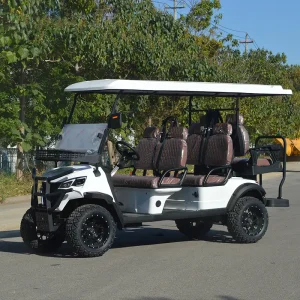
OEM Wholesale Electric Golf Carts from China Suppliers, 72V Lithium 6 Seat Golf Buggy Factory Made for Comfort and Performance Manufacturers, Factories
Buy 72V Modern 6-Seater Electric Golf Cart from China Suppliers | Reliable Factory Golf Buggy for On-Road & Off-Road Use Factory, Factories
Wholesale Wholesale 6 Seat Electric Golf Carts from China Suppliers - Customized 72V Lithium Golf Buggy Factory Direct Supplier, Suppliers
China Wholesale 6 Seat Electric Golf Carts, 72V Lithium Customized Comfortable 4 Seat Electric Golf Buggy Supplier, Suppliers
OEM Affordable China 4-Seater Electric Golf Cart - Off-Road Adventure with Custom Battery Options from Trusted Suppliers & Factory Manufacturers, Supplier
Best The Factory Directly Supplies 2-Seater Electric Sightseeing Cars, Golf Carts, Club Cars and Vans for Sale Manufacturers, Manufacturer
China 72V Electric Golf Cart - 6-Seater Modern Design | China Suppliers & Factory Quality Golf Buggy Manufacturer, Factory
OEM Affordable 2 Seater Mini Sightseeing Car Golf Cart Electric Cars Manufacturer, Suppliers
Enterprise Procurement & Manufacturing FAQ
Comprehensive technical and logistical answers prepared by Leibin export engineers to streamline international bidding and procurement processes.
What distinguishes a fast gas golf cart from a standard golf cart?
Standard golf course carts are factory-governed to 12–15 mph (19–24 km/h) with basic mechanical drum brakes designed solely for smooth turf transit. In contrast, fast gas-powered golf carts manufactured for commercial facilities utilize larger displacement engines (typically 401cc+ with EFI), high-ratio CVT transaxles, dual-circuit hydraulic four-wheel disc brakes, and reinforced suspension geometry capable of safely achieving and sustaining 25 to 35 mph (40 to 56 km/h) with heavy commercial loads.
How does Leibin address emissions and noise concerns with gas carts?
We incorporate closed-loop Electronic Fuel Injection (EFI) mapped by high-precision electronic control units (ECUs). This ensures optimal air-fuel stoichiometric combustion, eliminating unburned hydrocarbons and providing full EPA/CARB compliance. To address noise, our engine bays are enclosed within thermal-acoustic dampening cowls paired with multi-chamber labyrinth exhaust mufflers, keeping noise levels under 68 dBA at 15 meters.
When should an enterprise choose fast gas over 72V lithium battery carts?
Gas models are recommended when fleets operate in continuous multi-shift rotations (24/7) with no idle charging window, across remote undeveloped properties lacking electrical distribution, in regions with frequent electrical brownouts, or in environments experiencing sustained ambient temperatures above 45°C (113°F) or sub-zero winters that accelerate lithium battery degradation.
Can Leibin configure custom OEM/ODM brand identity and body colors?
Yes. As a direct factory manufacturer, we offer comprehensive OEM and ODM personalization. Fleet buyers can specify custom automotive polyurethane basecoat/clearcoat colors (matching corporate RAL or Pantone codes), embroidered weatherproof vinyl seating, customized dash layouts with 9-inch LCD infotainment screens, integrated fleet GPS telematics, solar roof assist panels, and proprietary badge tooling.
How are replacement components and maintenance kits handled globally?
We supply standardized consumable maintenance packages (filters, belts, brake pads, electrical relays, and spark plugs) bundled with vehicle shipments. All structural and powertrain components are mapped to serialized exploded parts diagrams. Critical replacement parts are dispatched via priority international air freight, backed by factory engineering video diagnostics for client maintenance personnel.
What container loading configurations ensure freight cost efficiency?
Depending on model dimensions, a standard 40ft High Cube (40HC) container accommodates 8 to 12 fully assembled units when utilizing customized steel multi-tier transport racking. In Semi-Knocked Down (SKD) form (roofs and wheels dismounted), container capacity expands up to 18 to 22 units, substantially lowering per-unit ocean freight expenditure.
Initiate Your Fleet Specification & Factory Sourcing Evaluation
Connect directly with technical sales directors and lead design engineers at our Dezhou production facility. We provide tailored CAD blueprints, comprehensive load simulations, export compliance documentation, and transparent volume tiered pricing.
Request Engineering Whitepaper & CAD Specs
Download technical spec sheets, chassis tensile load diagrams, engine performance curves, and container packing schemes tailored for commercial enterprise fleets.
Download Technical Catalog & Fleet Guides