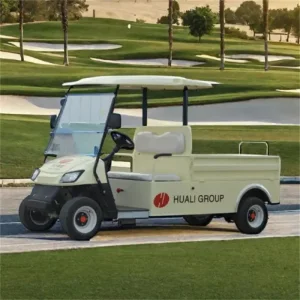
Featured Autonomous & Electric Fleet Models
Explore precision-engineered electric buggies, autonomous follow-behind caddies, and high-capacity resort transports direct from manufacturing lines.




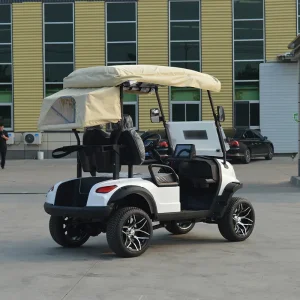


B2B Procurement Dynamics for Autonomous Walking Golf Carts
Institutional buyers, high-end resorts, and golf course syndicates face structural operational shifts requiring transition from legacy internal combustion fleets to intelligent self-navigating robotics.
Escalating Caddie Labor Shortages
Tier-1 golf resorts across North America, Europe, and the Middle East grapple with skyrocketing seasonal caddie recruitment costs and labor shortages. Deploying autonomous follow-behind self-walking carts reduces operational overhead by up to 64% over a 36-month horizon while delivering high-tech customer satisfaction.
Turf Preservation & Compaction Control
Traditional 1,000-pound ride-on golf carts inflict extensive sub-surface soil compaction and shear stress on bentgrass and Bermuda greens. Lightweight self-walking autonomous buggies distribute ground pressure evenly, dramatically mitigating turf wear and cutting greenskeeping maintenance budgets.
ESG Mandates & Zero Emissions
Regulatory pressure under European Green Deal directives and North American decarbonization initiatives forces facility operators to liquidate legacy lead-acid and gas buggies. Modern smart walking carts built on high-efficiency LiFePO4 platforms ensure regulatory compliance and align with institutional ESG targets.
Holistic Fleet Modernization Architecture
Industrial-scale low-speed transport systems demand robust powertrain synergy, structural rigidity, and cloud-interfaced fleet telemetry engineered to withstand harsh fairway conditions.
Sub-Centimeter RTK-GNSS + LiDAR Guidance
Engineered with multi-constellation RTK-GNSS transceivers combined with ultrasonic and solid-state LiDAR sensors, our self-walking navigation system yields real-time path deviation of less than 2cm. Course geofencing guarantees strict adherence to fairways, preventing cart track damage or bunker incursions.
Automotive-Grade LiFePO4 Architecture
Featuring 48V/72V modular lithium iron phosphate chemistry coupled with smart CAN-bus Battery Management Systems (BMS). The cells retain 80% original capacity after 3,500 continuous cycles, providing active thermal runaway mitigation, rapid dual-phase recharging, and integrated solar trickling arrays.
Ultra-Wideband (UWB) 'Follow-Me' Protocols
Equipped with wearable low-latency UWB transmitters, the cart seamlessly tracks the golfer’s gait at an adaptive, safe distance of 1.5 to 2.5 meters. Integrated digital slope braking (Electronic Downhill Assist) ensures that zero runaway events occur on undulating downhill grades.
Engineering Matrix: Conventional vs. Autonomous Golf Carts
Direct comparative overview for enterprise procurement officers assessing capital expenditures, longevity, and telemetry capabilities.
| Performance Dimension | Legacy Lead-Acid Carts | Commercial 72V Lithium Buggies | Autonomous Self-Walking Carts |
|---|---|---|---|
| Powertrain Efficiency | DC Brushed, 65-72% Efficiency | Permanent Magnet Synchronous AC (92%) | Brushless Hub / Direct Drive AC (95%+) |
| Battery Service Life | 400–600 Cycles (High Maintenance) | 2,500–3,500 Cycles (Zero Maintenance) | 3,500+ Cycles (Solid State BMS Interfaced) |
| Autonomous Capability | None (Driver Dependent) | Optional Geo-fence Governor | UWB Follow-Me + LiDAR Obstacle Bypass |
| Fairway Turf Compaction | Extremely High (450–600 kg) | Moderate (300–400 kg) | Minimal (35–65 kg Tare Load) |
| Fleet IoT Telemetry | Analog Meters / Unconnected | 4G Fleet Telematics & GPS Tracking | Real-Time Edge AI, Geo-Mapping & Cloud API |
| Total Cost of Ownership (5-Yr) | High (Battery watering, replacements) | Medium (Optimized ROI, low charging costs) | Lowest (Replaces caddie payroll & turf wear) |
| Global Regulatory Status | Local Course Permitted Only | CE, DOT FMVSS 500, EEC L6e/L7e | CE Machinery Directive, ISO 13849 Safety |
Global Industrial Status & Commercial Adoption
How regional resort ecosystems and industrial complexes capitalize on autonomous self-walking cart deployment.
North American Country Clubs
PGA-standard courses throughout Florida, Arizona, and California have initiated aggressive fleet transitions. By offering members hands-free walking caddie units, clubs report an average 28% increase in non-motorized round bookings, appealing to health-conscious demographic cohorts.
European Eco-Resort Belts
Across the UK, Spain, and the Scandinavian coastal links, golf course associations face stringent environmental mandates restricting gas-powered carts. Lightweight electric autonomous carts serve as the premier sustainable mobility standard, eliminating course noise and carbon footprints.
Asia-Pacific High-Density Venues
High-throughput golf clubs in Japan, South Korea, and Southeast Asia experience relentless round densities. Self-walking units maximize round pacing by automatically advancing toward tee boxes and greens without bottlenecks associated with manual driving or parking.
Industrial Campus Intralogistics
Beyond greens, enterprise buyers utilize autonomous walking carts within advanced aerospace assembly hangers, semiconductor fabrication hubs, and cleanroom facilities for hands-free tooling delivery and parts transfer across vast indoor spaces.
Engineering Compliance & Localized Support Infrastructure
Guaranteed OEM/ODM manufacturing integrity backed by comprehensive certification documents and worldwide after-sales supply chain nodes.
Rigorous International Homologation
Our autonomous and electric golf vehicles conform stringently to CE Low Voltage (LVD) and Machinery Directives, US DOT Low Speed Vehicle (FMVSS No. 500) prerequisites, as well as ISO 13849-1 functional safety architectures for autonomous stop/go routines.
Direct Factory Technical Troubleshooting
Fleet clients receive direct engineering channel integration: cloud-based over-the-air (OTA) algorithmic upgrades, exploded CAD assembly schematics, complete wiring diagrams, and real-time live video diagnostic sessions directly from the Dezhou plant engineers.
Steel-Crate Sea Freight Packaging
To prevent transit torsion or mechanical shock, all units are encased in internal structural steel-frame packaging, shrink-wrapped with moisture-desiccant membranes, and custom-packed for 20GP/40HQ container optimization with zero assembly delays upon field arrival.
Frequently Asked B2B Procurement Questions
Critical technical, regulatory, and purchasing answers for fleet managers and commercial buyers.
How does the self-walking cart track golfers and navigate terrain automatically?
What battery specifications power the units, and what is the typical round endurance?
Can our resort custom-brand and configure seating, payload, and color schemes (OEM/ODM)?
How are steep inclines and wet-turf braking handled by the drive system?
What warranty and replacement parts supply pipeline do overseas buyers receive?
Industrial Utility & Extended Fleet Portfolio
High-torque utility haulers, solar street-legal off-road platforms, and luxury resort passenger vehicles ready for direct-factory export.