

Direct OEM Fleet Portfolio
Flagship Commercial Electric Utility & Sightseeing Platforms
Explore factory-certified 72V and 48V electric golf buggy configurations engineered for extreme duty cycles, multi-passenger airport/resort transit, and robust off-road commercial deployment.

Cheap Wholesale China 6 Seat Electric Golf Carts, 72V Lithium Battery, Customized Buggy
Procurement Inquiries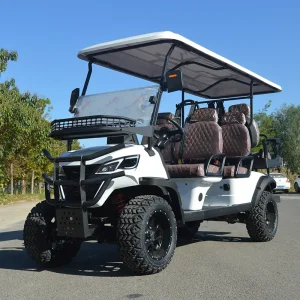
Best Electric Cars Buggy Golf Beemotors Supply CE Approved 15-40km/H LSV
Procurement Inquiries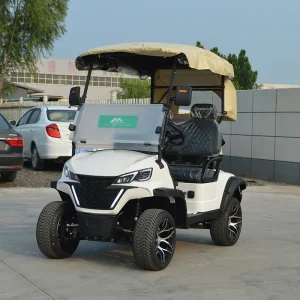
Wholesale China Suppliers of 2-Seater Sightseeing Cars, Golf Carts & G70 EV
Procurement Inquiries
Wholesale 6 Seat Electric Golf Carts - Customized 72V Lithium Buggy Factory Direct
Procurement Inquiries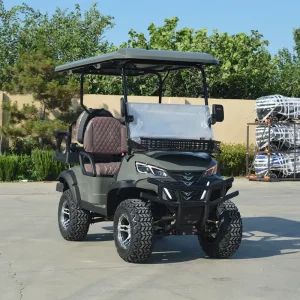
Wholesale 72V AC Mini Electric Golf Cart Buggy Gold 4-Seat Lithium CE Certified
Procurement Inquiries
Buy 72V Modern 6-Seater Electric Golf Cart for On-Road & Off-Road Utility
Procurement Inquiries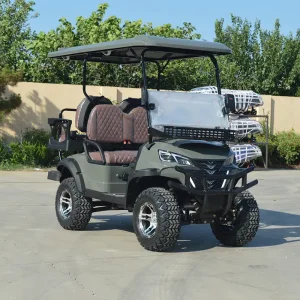
OEM Affordable China 4-Seater Electric Golf Cart Off-Road Custom Battery Systems
Procurement Inquiries
Enterprise Procurement Dynamics
The Paradigm Shift from Legacy Buggies to Smart Fleet Cart Architecture
Global industrial facilities, mega-resorts, municipal campuses, and high-density communities are transforming their ground mobility. Discover the market drivers behind the transition to connected, intelligent low-speed utility vehicles.
Lithium-Iron-Phosphate (LiFePO4) Dominance
The global total cost of ownership (TCO) equation has permanently marginalized flooded lead-acid systems. Modern LiFePO4 packs deliver over 3,500 full charge cycles at 80% depth of discharge, near-zero cell maintenance, zero gassing, and a 65% reduction in dead curb weight. This drastically increases gradeability, decreases turf shear stress, and cuts long-term energy consumption by up to 28% across high-frequency resort shuttle operations.
IoT Telematics & Predictive Maintenance
Tier-1 enterprise buyers now mandate CAN-bus integrated IoT telemetry units. Real-time controller telemetry transmits critical data: cell-level voltage variance, thermal thresholds, motor RPM, and brake-lining wear directly to centralized fleet software. Cloud-based geofencing automatically caps vehicle velocity in pedestrian precincts, enforces route boundaries, and triggers automated maintenance dispatches before unexpected downtime occurs.
Integrated Photovoltaic Solar Harvesting
High-efficiency monocrystalline solar canopy roofs provide continuous supplementary trickle charging. In sunny hospitality corridors (such as Florida, Southern Europe, Southeast Asia, and the GCC region), an integrated 250W–400W solar roof generates 2.5 to 4.5 additional kilowatt-hours per operational day. This extends fleet range by 15–25 km, minimizes grid dependence, and reduces daily deep-cycling degradation on the primary lithium pack.
Industrial Engineering Whitepaper
72V High-Torque Powertrain vs. Legacy 48V Architecture
A definitive engineering assessment of low-speed vehicle powertrains: analyzing thermal dissipation, torque output, wire harness resistive losses, and multi-passenger load factors across heavy-duty environments.
Historically, standard golf buggies relied on 36V or 48V DC series motors with basic mechanical speed switching. While sufficient for leisurely 2-passenger traversal over rolling greens, these outdated systems fall short under commercial demands: transporting six fully burdened adult guests, towing maintenance equipment, or ascending continuous 25% inclines in tropical resort terrains.
By upgrading to a 72V AC Induction or Permanent Magnet Synchronous Motor (PMSM) platform paired with an intelligent vector-controlled inverter (such as Curtis or Enpower), the vehicle achieves identical power delivery with significantly lower current draw. According to Joule's first law (Ploss = I2R), operating at 72V cuts thermal losses across the wiring harness and motor stator coils by up to 55% compared to an equivalent 48V system under identical mechanical load. This engineering shift resolves high-temperature motor shutdowns, extends controller life, and boosts hill-climbing torque by 35% without oversized conductors.
| System Metric | Legacy 48V Lead-Acid System | 48V LiFePO4 Commercial Baseline | Enterprise 72V AC / Lithium Architecture |
|---|---|---|---|
| Nominal Battery Voltage | 48V (6x 8V or 4x 12V Flooded/AGM) | 51.2V Nominal LiFePO4 Module | 76.8V Nominal LiFePO4 High-Current Pack |
| Motor Technology | DC Shunt-Wound or Brushed DC Motor | AC Asynchronous Induction Motor | AC PMSM / Liquid-Cooled Brushless Vector |
| Peak System Torque | 42 – 55 Nm | 65 – 85 Nm | 115 – 160 Nm Dynamic Vector Output |
| Curb Weight (Battery Pack) | ~190 kg – 240 kg (Heavy ballast) | ~48 kg – 65 kg | ~60 kg – 78 kg (Ultra-dense energy profile) |
| Regenerative Braking | Zero or inefficient mechanical drag | Standard single-phase regen (5–8%) | Proportional dual-threshold vector regen (15–22%) |
| Maximum Gradient Capability | 12% to 15% (With noticeable bog-down) | 18% to 22% Gradeability | > 25% to 30% Continuous climbing loaded |
| BMS Communications | None (Analog voltmeter monitor) | Discrete LED gauge / Basic UART | Isolated Dual CAN 2.0B / RS485 / Cloud API |
Chassis Kinematics & E-Coating
Chassis reliability hinges on structural integrity. Our vehicle architecture features seamless Q235B automotive-grade high-tensile carbon steel tubular frames, welded by multi-axis industrial robots. The complete chassis undergoes an 18-stage electro-dip immersion coating (e-coating) followed by high-bake powder painting. This delivers certified salt-spray corrosion resistance exceeding 1,000 hours—a non-negotiable metric for beachfront hotels, coastal communities, and high-humidity islands.
Suspension & Hydraulic Braking
Unlike traditional straight leaf-spring designs, our commercial buggy platforms utilize independent MacPherson strut or double wishbone front suspensions paired with coil-over hydraulic shock absorbers. Braking systems incorporate four-wheel hydraulic disc brakes with an integrated electronic electromagnetic parking brake (EMB). The EMB engages automatically upon stopping, preventing rollback on hills without manual lever engagement.
Multi-Voltage Auxiliaries & Ergonomics
An internal high-current DC-DC converter steps 72V down to a stable 12V bus for automotive peripherals. This supports DOT/E-Mark certified LED projector headlights, side-turn indicators, digital color LCD instrument clusters, high-output cabin ventilation fans, reversing cameras, and waterproof USB-C quick chargers—all without draining individual battery cells unevenly.
Global Fleet Homologation
Navigating Regional Compliance, Export Safety & Port Logistics
Deploying low-speed commercial vehicles requires adhering strictly to local transportation and road safety authorities. Here is how our engineering adheres to international regulatory frameworks.
North America: FMVSS 500 & SAE J2358
For street-legal LSV (Low-Speed Vehicle) registration across US states under 49 CFR § 571.500 (FMVSS 500), units are calibrated for a top speed between 20 mph and 25 mph (32–40 km/h). Essential hardware includes AS4/DOT-certified laminated safety glass windshields with electric wipers, three-point inertia-reel seatbelts, side/rearview mirrors, certified reflex reflectors, hazard warning lamps, VIN stamping, and backup safety alarms.
European Union: L6e & L7e Frameworks
In the European Union, light four-wheel low-speed vehicles fall within Regulation (EU) No 168/2013 under L6e-A (Light Quadrimobile) or L7e-CP/CU (Commercial Heavy Quadrimobile). Powertrains undergo EMC (electromagnetic compatibility) testing per ECE R10, dual-circuit hydraulic braking compliance, acoustic pedestrian warning system integration (AVAS), and full low-voltage directive traceability for CE mark documentation.
Safe Lithium Logistics: UN 38.3 & Sea Packing
Lithium battery systems are certified under UN 38.3 vibration, altitude, and thermal shock criteria, with complete MSDS and dangerous goods maritime paperwork for IMDG Code Class 9 hazmat transport. Carts are shipped in steel knock-down (SKD) modular racks or completely assembled inside custom 40ft High Cube containers. Heavy-gauge steel frames prevent intra-transit movement across sea journeys, cutting freight handling overhead.
Procurement Intelligence
Frequently Asked Questions for Fleet Importers & B2B Buyers
Detailed technical, operational, and commercial answers for institutional buyers, municipal agencies, resort managers, and regional golf cart distributors.
What is the engineering advantage of selecting a 72V system over a 48V electric golf cart?
A 72V architecture delivers higher electrical efficiency, increased torque output, and cooler motor operating temperatures. Because power equals voltage multiplied by current (P = V × I), a 72V system pulls approximately 33% less current than a 48V system to produce identical mechanical wattage. This reduced amperage minimizes resistive heat within the controller, battery, and motor windings. Consequently, 72V platforms offer superior hill climbing (up to 30% grades), maintain sustained top speeds with 6 passengers, and minimize risk of thermal shutdown in hot climates.
Can our engineering team specify custom OEM chassis dimensions, colors, and dashboard interfaces?
Yes. As an authentic end-to-end original equipment manufacturer (OEM), we offer comprehensive customization for commercial contracts. This includes extended wheelbases (4+2, 6, and 8-seat designs), custom cargo flatbed lengths, institutional RAL paint codes, marine-grade synthetic seat upholstery, hydraulic dump boxes, custom speed limit governors, and tailored dash consoles equipped with buyer-branded infotainment screens, GPS dispatch interfaces, or RFID card-swipe ignitions.
What certifications, documentation, and test reports accompany volume container shipments?
Every export consignment is supplied with an exhaustive compliance dossier: CE Declaration of Conformity (Machinery Directive 2006/42/EC and EMC 2014/30/EU), UN 38.3 test summaries for lithium packs, Material Safety Data Sheets (MSDS), factory ISO 9001:2015 audit certificates, individual chassis VIN lists, 17-digit WMI identification, complete electrical schematics, brake test deceleration reports, and country-of-origin documentation for expedited customs clearance.
How are replacement components, spare modules, and warranty claims managed for overseas fleets?
We structure clear SLA warranty policies with our fleet partners: 3 to 5 years for lithium battery packs and BMS modules, 2 years for motor controllers and transaxles, and 5 years on structural frame integrity. High-wear components (brake pads, bushings, tires, and switches) are included in initial container spare parts kits. For rapid troubleshooting, fleet mechanics can tap directly into the CAN-bus port using standard diagnostic handhelds, with our engineering team providing direct video diagnostic support and air-freighting critical components within 48 to 72 hours.
What is the typical manufacturing lead time and sea container load capacity (SKD vs. CBU)?
Standard manufacturing lead time ranges from 15 to 25 business days depending on order volume and custom options. For logistics optimization: a standard 40ft High Cube (HQ) container accommodates up to 18–24 units in Semi-Knocked-Down (SKD) configuration using stackable steel shipping racks, or 6–8 units in Completely Built Up (CBU) roll-on/roll-off readiness. SKD maximizes container freight economics for regional distributors with assembly facilities, while CBU suits turnkey resorts seeking instant deployment.
Specialized Utility & Off-Road Lineup
Customized Passenger, Patrol & Solar-Assisted Fleet Buggies
Factory-direct electric transport platforms tailored for heavy passenger transfers, security patrols, golf clubs, and green industrial logistics.
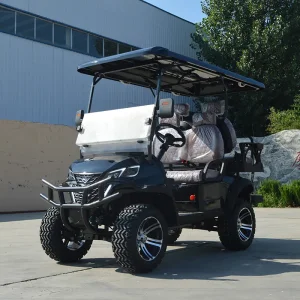
Wholesale Electric Golf Cart 4-Seated Buggy Sightseeing Off-Road 72V
Procurement Inquiries
China Wholesale 6 Seat Electric Golf Carts 72V Lithium Comfortable Buggy
Procurement Inquiries
Best Direct 2-Seater Electric Sightseeing Cars, Golf Carts & Club Cars
Procurement Inquiries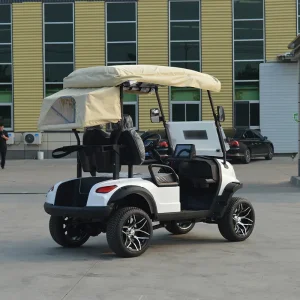
China Affordable Electric 2 Seater Mini Sightseeing Car Golf Cart
Procurement Inquiries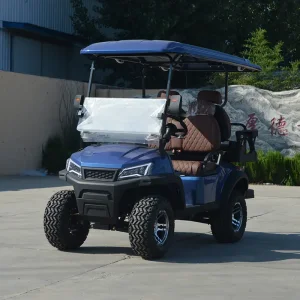
China Leibin (G90) 72V Lithium Solar 4 Seaters Off Road Street Legal Cart
Procurement Inquiries
Cheap Factory Leibin G90 72V Lithium Off-Road 4 Seater Solar 35 km/h
Procurement Inquiries
Best 72V Modern 6-Seater Electric Golf Cart - Direct On-Road & Off-Road
Procurement Inquiries
Buy 72V AC Mini Electric Golf Cart - 4-Seat Lithium CE Certified Factory
Procurement InquiriesConnect Directly with Factory Powertrain Engineers
Need customized 72V lithium pack configurations, custom paint liveries, or full container-load SKD pricing for institutional tenders? Request an engineer-led technical audit and customized spec sheet.
Initiate Fleet Engineering Consultation