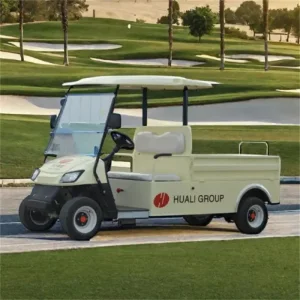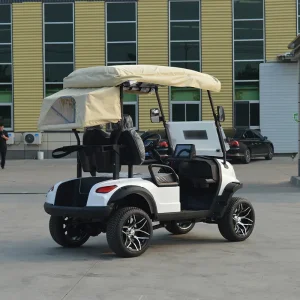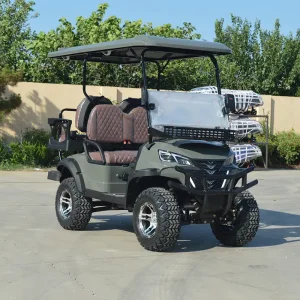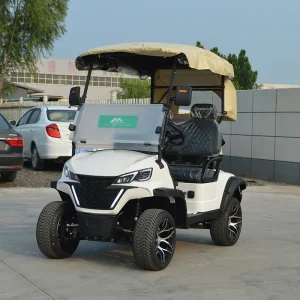
Featured Low-Speed Fleet Vehicles (Batch 01)
Explore our industrial baseline product catalog directly manufactured in our Dezhou smart automotive base with standardized global homologation support.
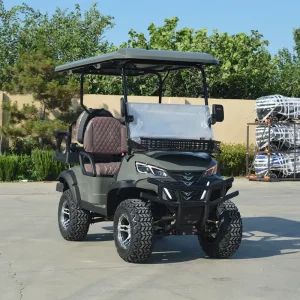
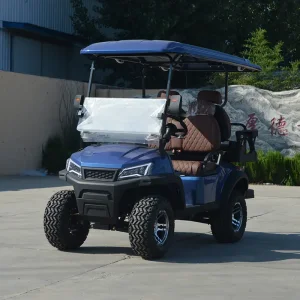
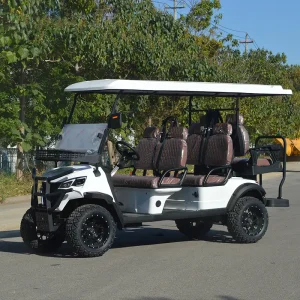
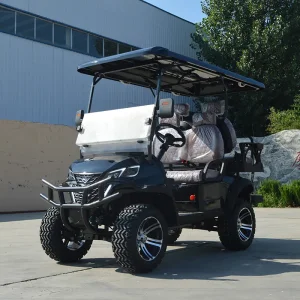
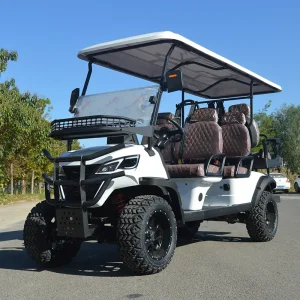
Global Commercial Dynamics of Gas-Powered & Low-Speed Utility Vehicles
A rigorous examination of initial procurement cost vs long-term total cost of ownership across volatile international markets.
Initial Capital Outlay vs Reality
Historically, commercial fleet buyers preferred gas-powered golf carts because of an attractive upfront wholesale cost and easy fueling. However, internal combustion engines incur accelerating costs over time, including mechanical wear, fluctuating fuel costs, carburetor rebuilds, and routine oil replacements.
Regulatory Shifts & Global Mandates
From North American municipal parks to European eco-resorts, stringent carbon limits and noise ordinances are forcing a fast transition away from small combustion engines. Fleets are shifting to high-efficiency platforms that deliver lower lifetime operating costs per running hour.
Powertrain Parity & Transition
Tier-1 Chinese automotive clusters now produce lithium-ion systems (LiFePO4) that match or exceed the torque curves and slope-climbing capabilities of traditional 4-stroke petrol carts, ending the trade-off between upfront cost and long-term operating expense.
Cost Matrix: Gas Engine vs Modern Lithium Architecture
Commercial assessment over a standard 5-year fleet lifecycle under heavy duty cycles.
| Evaluation Parameter | Gas-Powered Engine (4-Stroke) | 48V Standard Lead-Acid | 72V High-Torque LiFePO4 |
|---|---|---|---|
| Initial Fleet Unit Cost | Moderate to High ($5,200 - $7,800) | Low ($3,800 - $4,800) | Cost-Optimized direct from China factory |
| 5-Year Fuel / Energy Cost | $4,500 - $6,500 (Volatile petrol pricing) | $1,200 - $1,800 (Low electricity cost) | $800 - $1,100 (High regenerative efficiency) |
| Drivetrain Maintenance | Oil filters, spark plugs, belts, carburetors | Water refills, terminal corrosion checks | Zero maintenance; automated BMS balancing |
| Noise & Emission Footprint | 70-82 dB, exhaust fumes present | Silent, zero local emissions | Silent, zero emissions, optional solar topping |
| Effective Duty Range | Unlimited (via on-site fuel replenishment) | 40 - 55 km per charging cycle | 100 - 150 km per charge + fast charging |
Why Sourcing from Chinese Factories Lowers Total Fleet Cost
Dezhou Leibin Vehicle Industry combines scale, automated tooling, and integrated supply chains to drive structural cost efficiencies.
Chassis Stamping & Welding
Robotic precision jigs weld each tubular steel frame in-house. Submersion cathodic dip electrophoretic coating protects against salt fog and humidity for coastal operations.
Tier-1 Battery Integration
Direct supply partnerships with leading Chinese LiFePO4 cell makers deliver certified energy storage with high thermal stability, long cycle life, and low bill-of-materials cost.
Modular Customization
Adjust configurations from 2-seaters to 8-passenger commercial shuttles, elevated off-road utility carts, or specialized security patrol vehicles on shared chassis architectures.
Container Packaging Optimization
Engineered knockdown (SKD/CKD) and high-density loading plans lower oceanic freight expenses per unit, protecting procurement budgets against shipping rate shifts.
Localized Commercial Applications Across Key Sectors
How versatile low-speed utility vehicles solve real transport problems in diverse commercial and municipal environments.
Resorts & Hospitality
Luxury resort guests expect quiet transport. Zero-emission 72V vehicles eliminate exhaust odors and engine noise across beachfronts, private villas, and hotel pathways.
Campuses & Business Parks
Industrial campuses and university facilities need all-day duty cycles with frequent stops and starts. Electric drive systems eliminate fuel delivery infrastructure and prevent idle fuel waste.
Security & Municipal Operations
Equipped with LED emergency lights, PA systems, and street-legal equipment packages, these low-speed vehicles support municipal patrol routines across urban centers and events.
Future Trends: Where Utility Transport Is Headed
Telematics, solar integrations, and regulatory updates will define fleet operations over the coming decade.
IoT Telematics & Remote Management
Modern fleets use cloud telemetry for GPS geofencing, remote diagnostics, battery SOC tracking, and automated service alerts, lowering the risk of unexpected downtime.
Solar Canopy Integration
Monocrystalline panels built into the roof provide passive top-up charging while parked outdoors. This extends daily range by 15-25% and reduces grid charging cycles.
Harmonized Road Certifications
As micro-mobility rules expand, vehicles designed from the start to meet US FMVSS 500 LSV and European L6e/L7e type approvals simplify local road registration for buyers.
Frequently Asked Questions (FAQ)
Clear answers from factory engineers for municipal, industrial, and commercial purchasing teams.
Why is buying low-speed vehicles direct from Chinese factories more cost-effective?
China holds complete supply chain clusters for chassis stamping, electric traction motors, and lithium battery cell packs. Direct factory sourcing removes multi-tier dealer markups and gives you direct engineering access for OEM configurations and bulk pricing.
How does an electric golf cart's total cost compare to a gas-powered cart?
A gas cart usually carries an ongoing fuel expense of $1,000 to $1,500 per year under steady use, alongside periodic replacement of filters, oils, and ignition parts. A 72V lithium platform typically costs under $200 per year in electricity and requires minimal powertrain upkeep, producing a lower total cost of ownership within 18 to 24 months.
Are Leibin golf carts street legal in my destination market?
Road-use criteria depend on local regional authority rules. For US markets, vehicles must comply with FMVSS No. 500 Low-Speed Vehicle regulations; in the EU, public road operation typically requires L6e or L7e homologation. Leibin builds in essential road kits—including approved lighting, mirrors, 3-point seatbelts, digital speedometers, and horn systems—and supplies technical documentation to help your local homologation process.
Should our organization specify 48V or 72V, Lithium or Lead-Acid?
48V systems are well suited for flat terrain, residential settings, and light utility tasks. High-torque 72V AC motor platforms deliver stronger hill-climbing power and support heavier passenger loads. Lithium iron phosphate (LiFePO4) packs last 3 to 4 times longer than lead-acid batteries, charge faster, eliminate manual acid topping, and weigh roughly 60% less.
Can Leibin support complete OEM / ODM branding and technical modifications?
Yes. As a primary manufacturer, Leibin provides custom body colors, laser-cut branding, custom seat fabrics, suspension lifts, tire packages, cargo bed adaptations, and custom battery capacities. Our engineering team prepares complete 2D/3D specification sheets before bulk production begins.
How are export vehicles protected during intermodal maritime shipping?
We pack vehicles into reinforced steel frames wrapped in anti-static, moisture-barrier film, or load them directly into containers using engineered tie-downs and wheel chocks. Detailed container packing lists and customs manifests accompany every international shipment.
Commercial Low-Speed Vehicles & Buggies (Batch 02)
Explore our heavy-duty, off-road, and passenger vehicles for utility and commercial fleets.