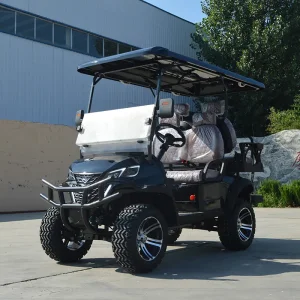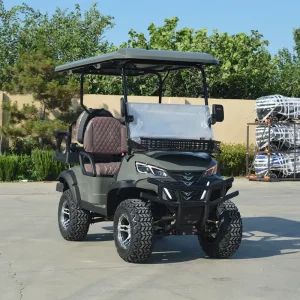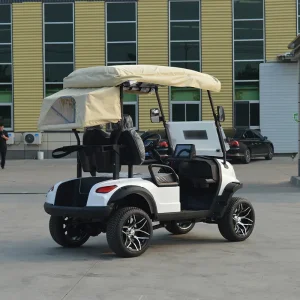
High-Torque Performance Fleet: Tier-1 Factory Series
Explore our export-certified 48V and 72V fast electric golf cars, sightseeing models, and utility runabouts assembled under rigorous ISO-grade production guidelines.
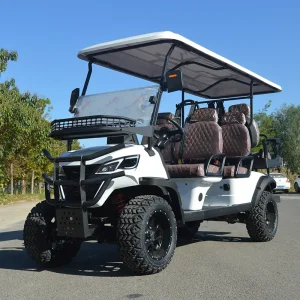
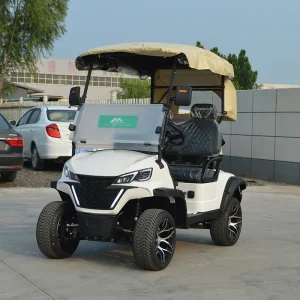
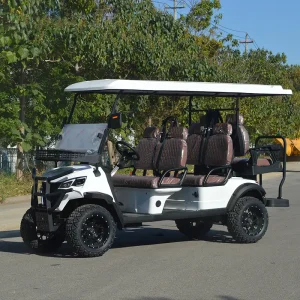
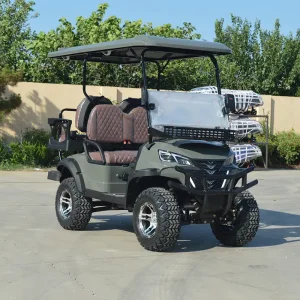
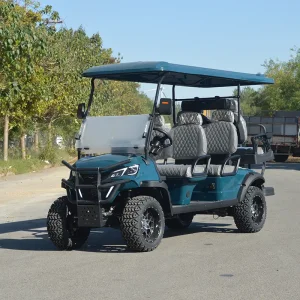
Global Low-Speed Vehicle Landscape & Supply-Side Engineering
The global low-speed electric mobility sector has shifted decisively from traditional golf buggies to multi-purpose, street-configured utility vehicles (LSVs) engineered for speed, long duty cycles, and industrial operations.
Total Cost of Ownership (TCO) Economics
By integrating automated chassis stamping, robotic welding lines, and direct source component procurement, our factory lowers capital expenditure by 30-45% compared to regional western assemblers, without compromising component longevity or safety thresholds.
72V AC High-Efficiency Powertrains
Modern fast golf carts require rapid thermal dissipation and immense low-end torque. Our 72V AC systems utilize intelligent Curtis or Enpower vector controllers paired with high-torque brushless motors, sustaining 40-45 km/h velocities up steep 25%+ inclines.
Automotive-Grade LiFePO4 Chemistry
Traditional lead-acid batteries fail under aggressive speed regimes due to voltage sag and thermal stress. Our integrated Lithium Iron Phosphate (LiFePO4) systems with smart BMS ensure high sustained discharge rates, zero maintenance, and 10-year design lifespans.
Engineered for High-Velocity Commercial Duty Scenarios
Fast electric golf cars are no longer confined to 18-hole fairways. Our high-speed LSV configurations address demanding real-world transit across diverse commercial micro-mobility environments.
Master-Planned Communities
DOT-compliant street packages with automotive lighting, hydraulic 4-wheel disc brakes, and horn setups, allowing residents to safely navigate multi-mile arterial community roadways at up to 40 km/h.
Eco-Resorts & Island Transport
Silent, zero-emission high-speed shuttle fleets designed to transport hotel guests and luggage across extensive, undulating landscapes without engine noise, toxic exhaust, or ground vibration.
Industrial Parks & Logistics Ports
Equipped with durable steel rear cargo dump beds and upgraded MacPherson front struts, facilitating rapid movement of inspection teams, maintenance gear, and emergency personnel across vast logistics hubs.
Campuses & Municipal Security
Rapid response vehicles equipped with high-intensity strobes, PA systems, and all-weather perimeter enclosures, enabling security officers to conduct reliable 24/7 rounds across municipal perimeters.
Global Homologation, Safety Protocols & Regional Support
Speed without safety is a liability. Every Leibin export vehicle is configured to meet regional homologation criteria before packing and crating at our factory.
FMVSS 500 & EEC L7e Conformance
We build to strict low-speed vehicle standards, integrating DOT-certified AS4/AS5 laminated windshields, three-point inertia seat belts, dual-circuit hydraulic braking, and calibrated programmable electronic speed governors.
OEM / ODM Engineering Flexibility
From private branding, custom RAL color palettes, and heavy-duty chassis lift kits to solar PV trickle charging roofs, our R&D engineering team translates bespoke fleet procurement briefs into certified production realities.
Direct-to-Dealer Parts & Tele-Support
Fleet uptime is protected by factory-direct wear-part supply agreements, containerized spare-part packages, comprehensive schematic documentation, and real-time remote video diagnostics directly from our engineering team.
Engineering Specification & Architectural Comparison
Understanding the hardware difference between conventional slow golf buggies and our advanced factory-direct 72V fast commercial platforms.
| Performance Metrics | Legacy Slow Carts (48V Lead-Acid) | Leibin High-Speed Series (72V Lithium) | Fleet Operational Advantage |
|---|---|---|---|
| Governed Top Velocity | 19 – 24 km/h (12 – 15 mph) | 35 – 45 km/h (22 – 28 mph) | Doubles transit capacity & ensures smooth street integration |
| Powertrain Architecture | DC Shunt Motor (3.0 – 3.8 kW) | AC Induction / PMSM (5.0 – 7.5 kW) | Higher torque, regenerative braking, zero brush maintenance |
| Battery Pack & BMS | Flooded Lead-Acid / AGM (Deep Cycle) | LiFePO4 Modular Pack with CAN-BMS | 60% weight reduction, zero watering, 3,500+ cycles |
| Gradeability (Slope Limit) | 12% – 15% under full load | 25% – 30% under full load | Tackles steep resort hills and elevated bridge ramps effortlessly |
| Braking & Suspension | Rear Mechanical Drum / Leaf Spring | 4-Wheel Hydraulic Disc + MacPherson | Superior stopping distance from 40 km/h and passenger comfort |
| Solar Range Extension | Not practical (high parasite loss) | Integrated Monocrystalline PV Roof | Adds 10-15 km daily range in sun-drenched resorts |
Technological Roadmap & Sustainable Manufacturing Vision
As micro-mobility converges with autonomous transit and digital fleet oversight, Leibin is advancing low-speed electric chassis engineering across four strategic domains.
IoT Telematics & Remote Geofencing
Factory-integrated 4G/GPS telematics providing commercial operators real-time speed governor locks, automated zone geofencing, battery health telemetrics, and remote lockouts.
Next-Gen High-Density Cells
Active pilot programs testing semi-solid-state lithium chemistry, unlocking wider operational temperature ranges (-20°C to +60°C) and superior thermal run-away margins for extreme climates.
Automated Shuttle Platforms (AV-Ready)
By-wire steering and braking modules allowing integration with third-party LiDAR and computer vision kits, creating autonomous sightseeing shuttles for smart theme parks.
Sustainable Monocoque Engineering
Adoption of lightweight, recyclable thermoformed ABS/PP body panels coupled with automotive electrophoretic coating (E-coat) processes to achieve zero corrosion in saline island environments.
Frequently Asked Questions: Fast Golf Car Manufacturing
Direct answers for fleet operators, resort owners, and commercial vehicle importers seeking clarity on speed governance, battery choices, and procurement logistics.
Q: How is a "cheap" factory price achieved without sacrificing quality?
Factory-direct economics remove multi-tier broker and importer markups. Operating our own 13,000 m² plant in Dezhou, Shandong with automated tube-cutting, chassis jig-welding, and deep regional supply integration reduces manufacturing overhead by up to 35% compared to western brand assemblies.
Q: Can the top speed be customized or restricted for specific resorts?
Yes. All Leibin 72V systems feature programmable electronic motor controllers. While our fast models can reach 40–45 km/h, controllers can be pre-configured at our factory or adjusted via handheld programmer to adhere to municipal 25 km/h limits or strict resort safety thresholds.
Q: Why is a 72V system superior to standard 48V for high-speed use?
Ohm's law governs electric vehicles: higher voltage produces the same mechanical power at lower amperage. A 72V system draws less sustained current than a 48V system at 40 km/h, significantly reducing heat buildup in the motor and controller, while boosting climbing torque and component life.
Q: Are your fast golf cars street-legal in Europe and North America?
Our vehicles are built to comply with FMVSS 500 (Low Speed Vehicle rules in the USA) and EEC L7e European light quadricycle standards. We equip units with DOT/E-Mark certified windscreens, seat belts, rear mirrors, turn signals, and horns to facilitate quick local inspection and registration.
Q: What is the standard lifespan and warranty on your lithium packs?
Our Grade-A LiFePO4 cells are rated for 3,500+ full charge-discharge cycles while retaining over 80% original capacity—translating to 8-10 years of reliable daily commercial fleet duty. Every lithium pack is monitored by an automotive-grade intelligent Battery Management System (BMS).
Q: How do you package and ship to prevent damage during sea transit?
Vehicles are secured inside reinforced tubular steel crating or custom ocean container rack structures. Critical surfaces are wrapped in anti-static moisture barriers, with wheels locked to container tracks to withstand rough oceanic transit without cosmetic or structural deflection.
Factory Direct Catalog: Sightseeing, Off-Road & Luxury Carts
Review additional commercial configurations including gold luxury editions, mini passenger coaches, and lifted all-terrain utility electric vehicles.