
Factory-Engineered Electric Golf Buggies & Fleet Utility Platforms
Explore our primary manufacturing line of high-torque, cost-optimized low-speed passenger vehicles, fully integrated with high-efficiency solid-state controllers and modular battery transaxles.


The Macroeconomics of Golf Car Engines & Powertrains
Evaluating structural shifts in the global small utility vehicle market: From legacy internal combustion engine (ICE) repowering to high-efficiency AC Induction and Permanent Magnet Synchronous Motors (PMSM).
Global Powertrain Shift
The traditional golf car engine landscape—historically dominated by 400cc single-cylinder four-stroke gas engines (Yamaha, Kawasaki, Kohler)—is undergoing a decisive transition. Global emission standards (EPA Tier 4, CARB, and EU Stage V) combined with municipal noise ordinances have compelled resort operators and golf courses to shift toward pure electric traction units. Over 78% of all commercial fleets ordered in 2024–2025 specified brushless electric powertrains rather than fossil-fuel ICE variants.
Tier-1 Manufacturing Consolidation
China has established unmatched industrial clustering for low-speed vehicle (LSV) powertrains. Integrated industrial zones across Shandong, Jiangsu, and Zhejiang house complete supply ecosystems: from rotor lamination stamping, automated copper winding, and transaxle helical gear grinding to algorithmic micro-controller SMD assembly. This cluster economics enables reputable Chinese suppliers to yield up to 42% cost advantages over Western aftermarket engine remanufacturers.
De-risking the "Cheap" Label
In B2B industrial procurement, seeking "cheap" engines is no longer a compromise on durability. Advanced precision die-casting, robotic dynamic balancing, and ISO/IATF 16949 quality controls mean that low-cost Chinese factory suppliers can provide high MTBF (Mean Time Between Failures) powertrains. Fleet operators eliminate middleman distributor markups, securing factory-gate unit pricing with robust OEM warranty coverage.
Powertrain Architectures: Comparative Benchmark
A granular technical comparison between traditional small-displacement gas engines, DC series wound units, and contemporary 48V/72V permanent magnet synchronous drivetrains.
| Evaluation Parameter | Legacy ICE Engine (350cc–429cc) | 48V DC Series/Shunt Motor | 48V AC Asynchronous Motor | 72V High-Torque PMSM |
|---|---|---|---|---|
| Nominal / Peak Power | 9.5 HP – 14.0 HP | 3.0 kW / 8.5 kW | 4.0 kW / 11.0 kW | 5.0 kW / 15.0 kW+ |
| Instantaneous Torque | 19.5 Nm @ 2600 RPM | 42 Nm @ 0 RPM | 65 Nm @ 0 RPM | 92 Nm @ 0 RPM (Gradeability >30%) |
| Energy Conversion Efficiency | 22% – 28% (Thermal Loss) | 72% – 78% (Brush Friction) | 86% – 89% | 92% – 95% (Field-Oriented Control) |
| Maintenance Overhead | Oil, filters, spark plugs, belts, carb tuning | Commutator cleaning, carbon brush replacement | Sealed bearings (Virtually Zero) | Zero wear items (Brushless & Sealed) |
| Acoustic Signature | 68 – 75 dBA at idle/cruise | 48 dBA (High-frequency whine) | 42 dBA | < 38 dBA (Whisper-Quiet Operation) |
| Regenerative Braking | None (Mechanical friction wear) | Limited (In motor braking models) | Dynamic regenerative charging | Full CAN-Bus Bi-directional Regeneration |
| Mean Sourcing Unit Cost (USD) | $650 - $980 (Bare Engine) | $280 - $420 (Bare Motor) | $350 - $550 (With Inverter) | $420 - $680 (Integrated Inverter/BMS) |
Variable Frequency Vector Control
Modern cheap golf car engine systems utilize high-resolution magnetic rotary encoders coupled with Field Oriented Control (FOC) algorithms. The inverter reads rotor electrical angles in sub-millisecond intervals, injecting sinusoidal currents that optimize torque per ampere (MTPA), eliminating jerky throttle response on steep gradients.
Thermal Dissipation Dynamics
Through finite-element heat transfer modeling, Chinese OEM factories manufacture motor housings featuring axial extruded aluminum fins and integral phase terminal potting. This dissipates rotor heat directly into surrounding airflow, preventing neodymium magnet demagnetization even under sustained max-payload hill climbs.
Helical Transaxle Coupling
Engine replacements cannot be viewed in isolation from transaxle gearing. Direct-mount factory assemblies feature high-precision ground helical gears (gear ratio 10.5:1 or 12.5:1) bathed in synthetic gear lube, dropping drivetrain mechanical friction by 14% compared to legacy splined shaft configurations.
How Top Factories Deliver Unrivaled Price-to-Performance
Navigating raw material supply, automated lamination tooling, and supply chain vertical integration without sacrificing industrial quality.
Rare Earth Magnet Proximity
With domestic access to over 70% of global refined neodymium and dysprosium ores, Chinese motor manufacturers procure sintered NdFeB magnets at baseline commodity rates, shielding buyers from volatile overseas surcharges.
Fully Integrated In-House Tooling
From stator core punching dies to robotic stator coil winding, production processes are unified within single industrial campuses. This eliminates subcontractor markups and reduces inter-facility transit times to zero.
Automated Quality Control (EOL)
End-of-Line (EOL) testing is 100% automated. Each motor-controller kit is subjected to dynamometer loads, high-voltage insulation tests, vibration FFT spectrum analysis, and environmental heat soaking before containerization.
Modular Bolt-On Retrofit Kits
Leading factories design standardized adapter plates and output splines compatible with Club Car DS/Precedent, EZGO TXT/RXV, and Yamaha G-series, slashing repowering conversion hours from days to under 90 minutes.
Technical Roadmap: The Next Decade of Light Mobility Engines
Forward-looking engineering architectures integrating Silicon Carbide (SiC) power semiconductors, IoT cloud telematics, and direct-integration solar photovoltaic tops.
Silicon Carbide (SiC) Inverters
Second-generation electric engine systems are replacing conventional silicon IGBTs with wide-bandgap SiC MOSFETs. This innovation reduces inverter switching losses by up to 60%, boosts switching frequencies past 40 kHz, and permits continuous operation at junction temperatures above 150°C. Fleet operators gain an immediate 8% boost in overall driving range without increasing battery amp-hour capacity.
Direct-Coupled Solar Energy Capture
Rather than treating roof panels as trickle chargers, next-gen systems integrate MPPT (Maximum Power Point Tracking) step-up charge controllers that feed directly into 72V DC buses. Monocrystalline flexible panels generate up to 350W peak, supplying 4–7 kWh of autonomous supplementary energy daily—granting zero-grid-draw functionality for sunny resort destinations.
OTA Telematics & Fleet AI Diagnostics
Integrated 4G/GPS telematics micro-modules embedded within the motor controller motherboard broadcast real-time internal winding thermals, individual cell voltage balance, acceleration g-forces, and fault codes to central cloud dashboards. Predictive maintenance algorithms detect bearing friction anomalies or insulation degradation weeks before on-course failures occur.
Mission-Critical Powertrain Applications
Configuring torque, battery discharge parameters, and motor gearing for divergent real-world terrain and payload realities.
Championship Golf Courses
Primary Challenge: Extreme turf preservation, minimal acoustic impact, and seamless traversal of 25-degree undulations.
Engine Spec: 48V 4.0kW AC motor with programmable soft-start acceleration ramps to prevent wheel spin and turf tearing. Intelligent regenerative downhill speed holding prevents runaway descents on fairway slopes.
Gated Master-Planned Communities
Primary Challenge: Sustained cruising at 25 mph (40 km/h) for Low-Speed Vehicle (LSV) road compliance, alongside passenger comfort.
Engine Spec: 72V 5.0kW PMSM platform with high top-end RPM curves. Paired with 105Ah LiFePO4 packs providing up to 90 km per charge with effortless merge speeds onto neighborhood roads.
Luxury Resorts & Theme Parks
Primary Challenge: Continuous 14-hour daily duty cycles carrying 6–8 adult passengers without mid-shift charging pauses.
Engine Spec: 72V 7.5kW heavy-duty motor with forced-air cooling or liquid-cooled inverter jackets, combined with high-C-rate fast charging capability (1.5-hour complete replenishment).
Industrial Warehousing & Heavy Utility
Primary Challenge: Stop-and-go payload hauling up to 1,000 kg with towing hitches over concrete ramps and expansion joints.
Engine Spec: Ultra-high-reduction transaxles (16:1 ratio) driven by heavy-duty 48V motors engineered for low-speed, high-amp peak current pulls and integral electromagnetic parking brakes.
Ensuring International Road Homologation & Safety Compliance
A primer for global B2B procurement officers: navigating international homologation standards for imported vehicles and powertrain components.
North America: FMVSS No. 500 & SAE J2358
For street-legal Low Speed Vehicle (LSV) classification in the United States, golf cars must be speed-governed between 20 mph and 25 mph. Powertrain controllers must feature tamper-evident firmware restrictions, dynamic brake-interlock circuits, and meet SAE J2358 electrical safety and roll-away mitigation protocols.
European Union: L6e & L7e Quadricycle Directives
Vehicles intended for European public road transit fall under UNECE Regulation (EU) No 168/2013. Cheap engine systems must furnish CE declarations, UN ECE R10 electromagnetic compatibility (EMC) testing certificates, and certified low-voltage DC bus insulation to satisfy strict TÜV and VCA approval bodies.
Battery & Powertrain Safety: UN 38.3 & ISO 9001
Direct supply contracts demand certified UN 38.3 lithium battery transport testing, UL 2580 fire safety compliance, and ISO 9001 manufacturing consistency. Trustworthy suppliers provide traceable material inspection sheets and IP67 ingress certification across all electrical enclosures.
Frequently Asked Questions for Fleet Buyers
Critical engineering answers regarding motor conversions, cost structures, MOQ policies, and overseas logistics from China suppliers.
Turnkey Fleet Vehicles Ready for Global Export
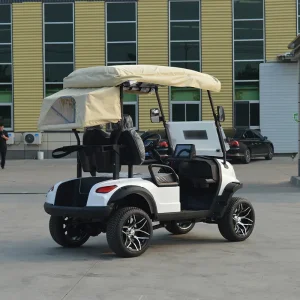
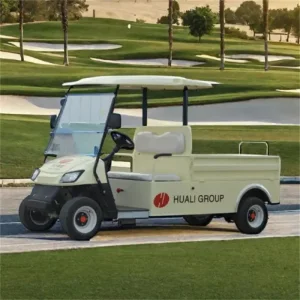
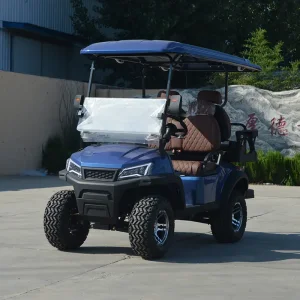
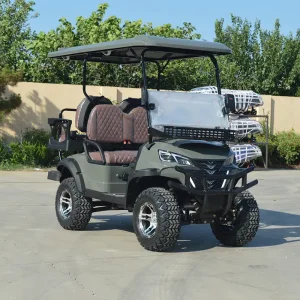
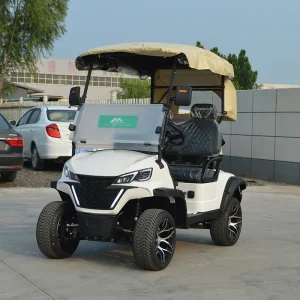
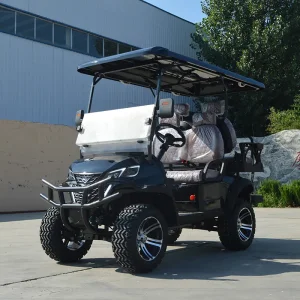
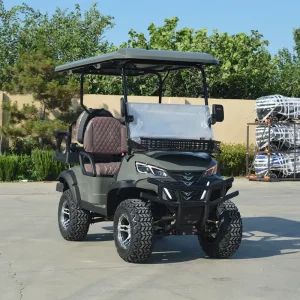
Fully assembled high-performance vehicles featuring factory-integrated 72V AC/PMSM engines, solar-ready canopies, and CE certification.
Engage Directly with Factory Powertrain Engineers
Optimize your fleet operating expenditure, tailor custom gear ratios, or request a complete OEM prototype sample. Speak directly with our powertrain and vehicle fabrication engineers in Dezhou, Shandong.